S’pore to drill deeper into geothermal energy after promising results of its potential: Tan See Leng新加坡在勘探地热能潜力取得令人鼓舞的成果后,将继续深入钻探地热能:陈思玲
Singapore's geothermal resources could generate over sixty times the current electricity consumption. Read more at straitstimes.com.
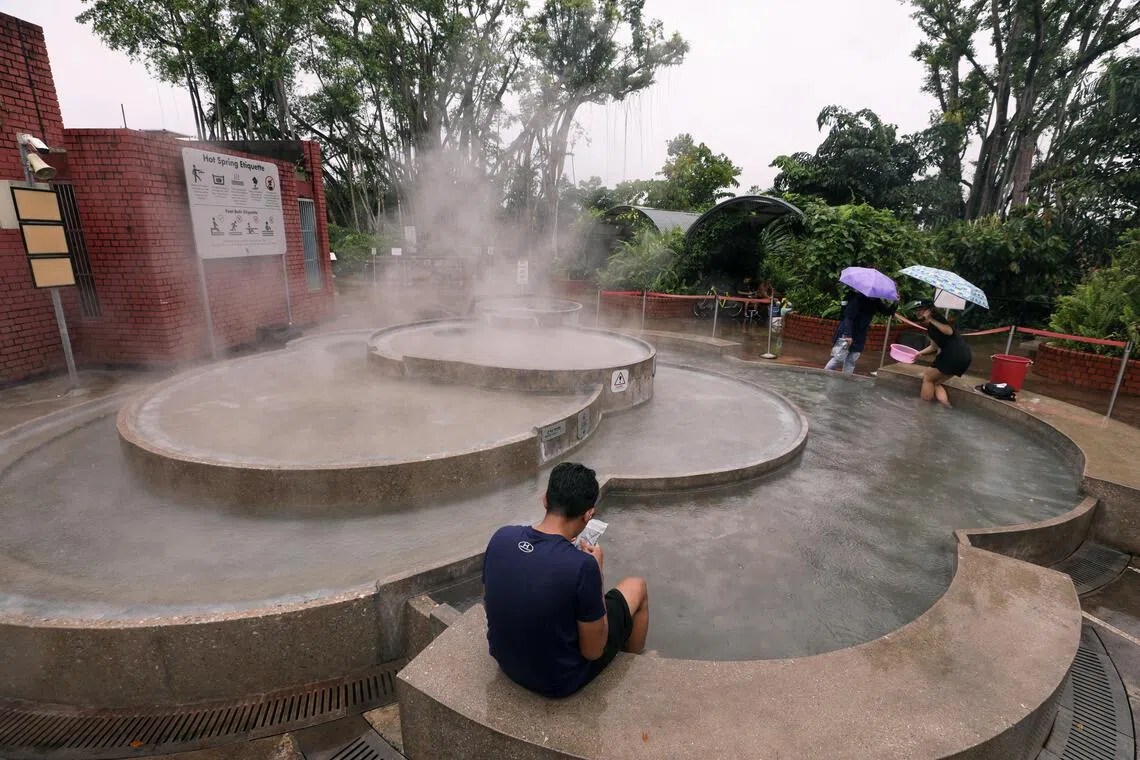
A national survey found that the potential of geothermal energy in Singapore is more than sixty times its yearly electricity consumption.
Published Oct 26, 2026, 11:08 AM
Updated Oct 26, 2026, 11:11 AM
SINGAPORE - The Republic’s pursuit of geothermal energy is heating up, after an earlier survey found that its heat sources underground had the potential to generate over sixty times the nation’s current annual electricity consumption.
Minister for Energy, Trade and Industry (Energy and Industry) Tan See Leng said on Oct 26 that Singapore will embark on a study to further assess the feasibility of harnessing heat from deep underground to produce energy for electricity, cooling and heating.
“We were very pleasantly surprised... If it is realised, it can power us for the next 60 odd years using geothermal energy,” said Tan, who announced the upcoming feasibility study on Oct 26.
He was speaking at the opening of the Singapore International Energy Week , an annual conference by Singapore’s energy regulator, the Energy Market Authority (EMA). The five-day event convenes politicians, policymakers and industries to discuss energy issues.
This 15-month study will start at the end of 2026. It will be done by a consortium formed by Surbana Jurong and energy consulting group GLJ.
The study will cover safety considerations, technical viability and the cost of harnessing geothermal energy.
It will also include assessments of the technical, environmental, and commercial feasibility of deploying deep geothermal systems. The consortium will identify areas for further assessment, which may include invasive methods like drilling.
Singapore’s geothermal resources are located several kilometres underground, and the nation’ s dense urban environment will affect the number of plants that can be deployed, noted Tan.
The amount of electricity that can be produced will depend on the cost and technical feasibility of extracting geothermal resources, including the pace of advances in deep drilling technology, added the minister.
“Most importantly, we must keep safety as a top-of-mind consideration,” he said.
His comments come as Singapore continues to explore cleaner, low-carbon energy options that are not yet commercially viable, including advanced nuclear and geothermal energy, to beef up its energy security.
Emerging technology, including nuclear and geothermal energy, could potentially supply around 10 per cent of Singapore’s energy needs by 2050, a 2022 report had found.
Both these emerging energy sources could improve Singapore’s energy security as they are resources that the country can tap from within its own borders, instead of relying on imported fuel.
Traditionally, geothermal energy is harnessed from hot water reservoirs underground. Volcanic countries like Iceland and the US are rich in such resources. Singapore’s geothermal resources, however, could come from dry, unfractured hot rocks deeper in the ground.
Singapore will thus need de ep geothermal systems to tap such a resource.
This could include injecting fluid further into the ground, where it is heated up and pumped back to the surface for electricity generation.
But Mark Lim, an adjunct research scientist at the Energy Research Institute @ NTU, explained that this method may involve widening existing fractures or creating new cracks, to pick up more heat. This carries the risk of causing tremors, earthquakes and other safety issues.
An alternative to this is to install a series of closed pipes underground that circulate fluids to absorb heat and bring it to the surface to produce power, he said. This is a closed loop system where the fluid does not directly mix with rock.
Tan said Singapore has not made a decision on tapping geothermal energy, and it could take many years to make a choice on this.
“No option is off the table for us here in Singapore. We will therefore explore this option seriously,” he said.
Quantifying Singapore’s geothermal potential
An earlier survey commissioned by the EMA, conducted between 2024 and 2026, had involved the use of a special aircraft and ground sensors to closely map Singapore’s underground geology, at depths of up to 10km .
That effort found that Singapore’s geothermal resources underground could potentially generate more than 60 times the nation’s electricity use, which currently is around 60 terawatt-hours.
EMA added in a statement that Singapore has high-temperature geothermal resources at depths of several kilometres underground, which may be suitable for electricity generation.
Once fluid injected into the ground is heated up and drawn to the surface, it is used to drive turbines that produce electricity.
The new study will help to confirm Singapore’s geothermal potential and provide greater clarity about the amount of energy that can be extracted, added EMA.
Separately, academic research by local researchers have pointed to parts of Sembawang, Admiralty and Pulau Tekong as harbouring possible sources of geothermal energy.
In July 2025, it was reported that a research team had made a second discovery of high temperatures underground in Sembawang, suggesting potential for electricity generation.
In March 2023, the team from Nanyang Technological University and Tumcreate – the multidisciplinary research platform of the Technical University of Munich – found temperatures of 70 deg C at a depth of 1.12km in Admiralty.
Besides Admiralty and Sembawang, another known hot spot is on Pulau Tekong, where a hot spring is located in the northern Unum region.
一项全国性调查发现,新加坡的地热能源潜力是其年用电量的六十多倍。
发布于 2026 年 10 月 26 日上午 11:08
更新于2026年10月26日上午11:11
新加坡——此前一项调查发现,新加坡地下的热源有潜力产生超过该国目前年用电量六十倍的地热能,因此,新加坡对地热能的追求正在升温。
新加坡能源、贸易及工业部长(能源及工业)陈世龙于10月26日表示,新加坡将着手进行一项研究,以进一步评估利用地下深处的热能生产电力、制冷和供暖能源的可行性。
“我们感到非常惊喜……如果能够实现,它可以利用地热能为我们提供未来60多年的能源,”谭先生说道。他于10月26日宣布即将开展可行性研究。
他是在新加坡国际能源周的开幕式上发表讲话的。新加坡国际能源周是由新加坡能源监管机构——能源市场管理局(EMA)举办的年度会议。为期五天的活动汇聚了政界人士、政策制定者和行业代表,共同探讨能源问题。
这项为期 15 个月的研究将于 2026 年底开始。它将由盛邦裕廊集团和能源咨询集团 GLJ 组成的联合体进行。
该研究将涵盖安全考虑因素、技术可行性以及利用地热能的成本。
该项目还将评估部署深层地热系统的技术、环境和商业可行性。该联盟将确定需要进一步评估的领域,其中可能包括钻探等侵入性方法。
谭指出,新加坡的地热资源位于地下数公里处,该国密集的城市环境将影响可部署的发电厂数量。
部长补充说,能够生产的电量将取决于开采地热资源的成本和技术可行性,包括深钻技术的进步速度。
“最重要的是,我们必须始终把安全放在首位,”他说。
新加坡正继续探索更清洁、低碳的能源选择,包括先进的核能和地热能等,这些能源选择目前尚不具备商业可行性,以加强其能源安全。他发表这番言论之际,正值新加坡不断探索这些选择。
2022 年的一份报告发现,包括核能和地热能在内的新兴技术,到 2050 年有可能满足新加坡约 10% 的能源需求。
这两种新兴能源都能提高新加坡的能源安全,因为新加坡可以从自己的国界内获取这些资源,而不是依赖进口燃料。
传统上,地热能是从地下的热水储层中获取的。冰岛和美国等火山国家拥有丰富的地热资源。然而,新加坡的地热资源可能来自地下更深处的干燥、未开裂的热岩层。
因此,新加坡需要深层地热系统来开发这种资源。
这可能包括将液体注入地下更深处,在那里加热后再泵回地面用于发电。
但南洋理工大学能源研究所的兼职研究员马克·林解释说,这种方法可能涉及扩大现有裂缝或产生新的裂缝,以吸收更多热量。这会带来引发震动、地震和其他安全问题的风险。
他说,另一种方法是在地下安装一系列封闭管道,循环流体以吸收热量并将其输送到地面发电。这是一个闭环系统,流体不会直接与岩石混合。
谭表示,新加坡尚未就开发地热能做出决定,可能需要很多年才能做出选择。
他说:“在新加坡,我们不会排除任何选项。因此,我们会认真考虑这个选项。”
量化新加坡的地热潜力
新加坡环境管理署 (EMA) 于 2024 年至 2026 年间委托进行的一项早期调查,使用了特殊飞机和地面传感器,对新加坡地下地质进行了精确测绘,深度达 10 公里。
该研究发现,新加坡地下的地热资源有可能产生超过该国当前用电量 60 倍的电力,而该国目前的用电量约为 60 太瓦时。
EMA在一份声明中补充说,新加坡地下数公里深处拥有高温地热资源,可能适合用于发电。
注入地下的液体被加热并被抽到地表后,就可以用来驱动涡轮机发电。
EMA补充说,这项新研究将有助于确认新加坡的地热潜力,并更清楚地了解可以提取的能源量。
另外,当地研究人员的学术研究指出,三巴旺、海军部和德光岛的部分地区可能蕴藏着地热能源。
2025 年 7 月,有报道称一个研究团队在三巴旺地下第二次发现了高温,这表明有发电的潜力。
2023 年 3 月,南洋理工大学和慕尼黑工业大学多学科研究平台 Tumcreate 的研究团队在海军部 1.12 公里深处发现了 70 摄氏度的温度。
除了海军部和三巴旺之外,另一个著名的温泉胜地是德光岛,那里北部的乌努姆地区有一处温泉。