Sembcorp, Keppel stand to benefit as Singapore steps up energy infrastructure investments随着新加坡加大能源基础设施投资,胜科集团和吉宝集团有望从中受益。
Singapore energy infrastructure plan could boost Sembcorp and Keppel as power demand rises and gas supply concerns persist. Read more at straitstimes.com.
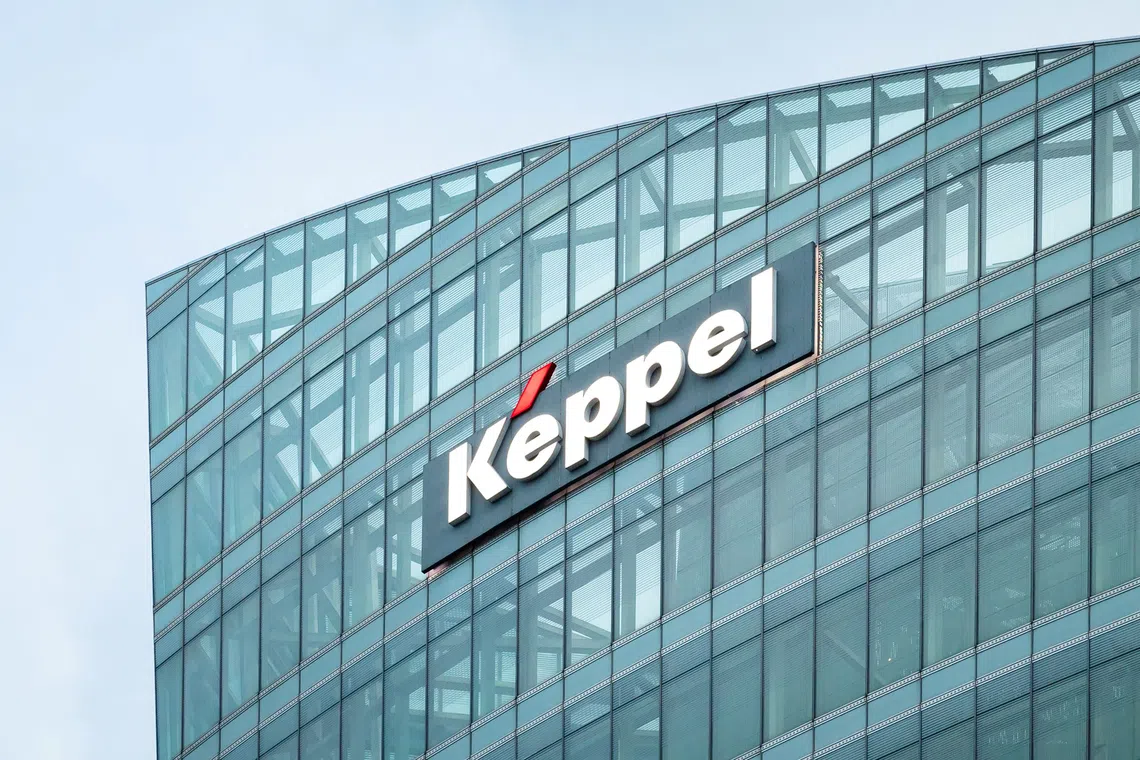
Keppel is less exposed to Indonesian gas because most of its supplies come from Malaysia and LNG imports, according to JPMorgan analysts.
Published Oct 26, 2026, 06:00 PM
Updated Oct 26, 2026, 09:17 PM
Singapore will spend more on energy infrastructure over five years. It plans new gas plants, more LNG capacity, and a bigger power grid to meet rising demand and improve fuel security.
Sembcorp and Keppel could benefit from tighter power markets. Morgan Stanley expects wider power spreads and higher earnings as many of their power contracts come up for renewal.
Indonesia has cut piped gas exports, but the shortfall is small. Singapore can use more LNG or Malaysian gas, though higher import costs may add to inflation and affect policy.
SINGAPORE – Sembcorp Industries and Keppel could benefit from Singapore’s plans to strengthen its energy infrastructure over the next five years, as rising electricity demand and concerns over fuel security keep the power market tight.
The Energy Market Authority (EMA) announced a five-year plan on Oct 26 covering electricity generation, natural gas supplies, the power grid, solar deployment, energy storage and electricity imports.
Singapore’s peak electricity demand reached 8.6 gigawatts (GW) in August and is projected to rise to between 9.9GW and 13GW by 2031, driven partly by data centres, semiconductor manufacturing and electric transport.
Morgan Stanley analysts expect the tighter market to lift power margins for Sembcorp and Keppel, whose power contracts are due for renewal in the coming quarters.
About 33% of Sembcorp’s power contracts and 20% of Keppel’s are due for renewal, the analysts said.
They forecast a 15% increase in contract power spreads, potentially raising earnings estimates for the two companies by 15% to 20% for the second half of 2026 and the whole of 2027.
Power spreads refer to the difference between the price that generators receive for electricity and the cost of the fuel used to produce it. Wider spreads can improve margins, although actual profits also depend on plant efficiency, operating costs and contract terms.
Morgan Stanley expects power margins to settle at about $45 to $50 per megawatt-hour, compared with its previous estimate of $40, as the market remains tight despite new generation capacity coming online.
Under EMA’s plan, five natural gas-fired power plants are expected to become operational between 2026 and 2031, increasing Singapore’s electricity generation capacity by about 26% from around 12GW today.
EMA is also evaluating proposals for additional gas-fired plants that could begin operating by 2032, and may call for more proposals over the next five years if demand continues to grow strongly.
Natural gas accounts for about 95% of Singapore’s electricity needs. To strengthen supply security, Singapore plans to raise its liquefied natural gas (LNG) regasification capacity from 10 million tonnes a year to 15 million tonnes a year when a second LNG terminal at Jurong Port becomes operational by 2030.
The push comes amid concerns over the reliability of piped gas supplies from Indonesia. Since Oct 24, Indonesia has cut pipeline gas exports to Singapore by 31 billion British thermal units a day.
Indonesia supplies about 70% of Singapore’s piped natural gas and around 30% of its total natural gas imports. The latest cuts affect less than 2% of the Republic’s daily gas needs .
Analysts do not expect Singapore to struggle to make up the shortfall, as it can import more gas from Malaysia or buy additional LNG on the spot market.
Singapore is better prepared than during previous Indonesian supply curtailments in 2021, although global gas supplies remain tight, said Macquarie Capital research analyst Zhiwei Foo.
Morgan Stanley expects gas costs to continue rising until 2027, before increased US exports potentially lead to a global glut and lower prices.
Higher import costs could also feed into domestic inflation.
Standard Chartered Bank chief economist Edward Lee said economists were monitoring whether imported inflation would push up underlying inflation.
If inflation broadens while economic growth remains firm, the Monetary Authority of Singapore could tighten monetary policy again as early as January, although StanChart expects policy to remain unchanged.
For Sembcorp and Keppel, the availability and cost of fuel will remain important determinants of earnings.
Sembcorp gets about two-thirds of the gas it needs for power generation and piped natural gas from Indonesia. The supply cuts could affect 4% to 5% of the group’s gas needs, Morgan Stanley estimates.
Sembcorp shares fell more than 4% when the market opened on Oct 26, while Keppel shares rose 1%.
Beyond generation and gas infrastructure, Singapore plans to invest up to $5.3 billion between 2025 and 2029 to expand its power grid. This is 11 times the investment in the preceding five years.
The broader infrastructure expansion could create opportunities for companies involved in energy projects, grid equipment, engineering and storage technologies, although the eventual beneficiaries will depend on which firms secure contracts, analysts said.
Sembcorp shares eventually closed 2.8% lower, at $5.84, while Keppel ended 0.9% higher at $10.09 on Oct 26.
摩根大通分析师表示,吉宝集团对印尼天然气的依赖程度较低,因为其大部分天然气供应来自马来西亚和液化天然气进口。
发布于2026年10月26日下午6:00
更新于2026年10月26日晚上9:17
新加坡将在未来五年内增加能源基础设施投入。该国计划新建天然气发电厂、扩大液化天然气产能并扩建电网,以满足不断增长的需求并提高能源安全。
胜科和吉宝集团或将受益于电力市场供需趋紧。摩根士丹利预计,随着两家公司众多电力合同到期续签,电力价差将扩大,盈利也将提高。
印尼已削减管道天然气出口,但缺口不大。新加坡可以更多地使用液化天然气或马来西亚天然气,但更高的进口成本可能会加剧通货膨胀并影响政策。
新加坡——随着电力需求不断增长以及对燃料安全的担忧导致电力市场供应紧张,胜科工业和吉宝集团可能会从新加坡未来五年加强能源基础设施的计划中受益。
能源市场管理局 (EMA) 于 10 月 26 日宣布了一项五年计划,涵盖发电、天然气供应、电网、太阳能部署、储能和电力进口。
新加坡8月份的用电高峰达到8.6吉瓦(GW),预计到2031年将上升至9.9吉瓦至13吉瓦之间,部分原因是数据中心、半导体制造和电动交通的推动。
摩根士丹利分析师预计,市场供应趋紧将提升胜科集团和吉宝集团的电力利润率,这两家公司的电力合同将在未来几个季度到期续签。
分析师表示,胜科集团约 33% 的电力合同和吉宝集团约 20% 的电力合同即将到期续签。
他们预测合同电力价差将增长 15%,这可能会使这两家公司 2026 年下半年和 2027 年全年的盈利预期增长 15% 至 20%。
电力价差是指发电企业售电价格与生产燃料成本之间的差额。较大的价差可以提高利润率,但实际利润还取决于电厂效率、运营成本和合同条款。
摩根士丹利预计,尽管新的发电容量不断投入使用,但由于市场供应依然紧张,电力利润率将稳定在每兆瓦时 45 至 50 美元左右,高于此前 40 美元的预期。
根据 EMA 的计划,预计 2026 年至 2031 年间将有五座天然气发电厂投入运营,使新加坡的发电能力从目前的约 12 吉瓦增加约 26%。
EMA 还在评估有关在 2032 年前开始运营的其他燃气发电厂的提案,如果需求继续强劲增长,EMA 可能会在未来五年内要求提交更多提案。
天然气约占新加坡电力需求的95%。为加强供应安全,新加坡计划在裕廊港第二座液化天然气接收站于2030年投入运营后,将其液化天然气(LNG)再气化能力从每年1000万吨提高到每年1500万吨。
此次行动的背景是人们对印尼管道天然气供应可靠性的担忧。自10月24日以来,印尼已将对新加坡的管道天然气出口量每日削减310亿英热单位。
印尼供应新加坡约70%的管道天然气和约30%的天然气进口总量。此次减产措施影响新加坡每日天然气需求的不到2%。
分析人士预计新加坡不会难以弥补天然气缺口,因为它可以从马来西亚进口更多天然气,或在现货市场上购买更多液化天然气。
麦格理资本研究分析师傅志伟表示,尽管全球天然气供应仍然紧张,但新加坡比2021年印尼此前的天然气供应削减时期准备得更加充分。
摩根士丹利预计,天然气成本将持续上涨至 2027 年,之后美国出口增加可能会导致全球天然气供应过剩,价格下降。
进口成本上升也可能导致国内通货膨胀。
渣打银行首席经济学家李伟强表示,经济学家们正在密切关注输入型通胀是否会推高潜在通胀。
如果通胀扩大而经济增长保持强劲,新加坡金融管理局最早可能在1月份再次收紧货币政策,尽管渣打银行预计政策将保持不变。
对于胜科和吉宝而言,燃料的供应情况和成本仍将是决定盈利的重要因素。
胜科集团发电和管道天然气所需天然气约三分之二来自印尼。摩根士丹利估计,此次供应削减可能会影响该集团4%至5%的天然气需求。
10月26日开盘时,胜科集团股价下跌超过4%,而吉宝集团股价上涨1%。
除了发电和天然气基础设施外,新加坡计划在2025年至2029年间投资高达53亿美元用于扩建其电网。这相当于前五年投资额的11倍。
分析人士表示,更广泛的基础设施扩张可能会为从事能源项目、电网设备、工程和储能技术的公司创造机会,但最终的受益者将取决于哪些公司获得合同。
10 月 26 日,胜科集团股价最终收跌 2.8%,报 5.84 美元;吉宝集团股价收涨 0.9%,报 10.09 美元。