Nearly 72pc of major hospitals record bed waiting times under eight hours, says Dzulkefly祖基菲里表示,近72%的大型医院的床位等待时间少于8小时。
KUALA LUMPUR, Oct 27 — The Ministry of Health (MOH) is stepping up short- and long-term measures to ease overcrowding and reduce patient waiting times at public healthcare...
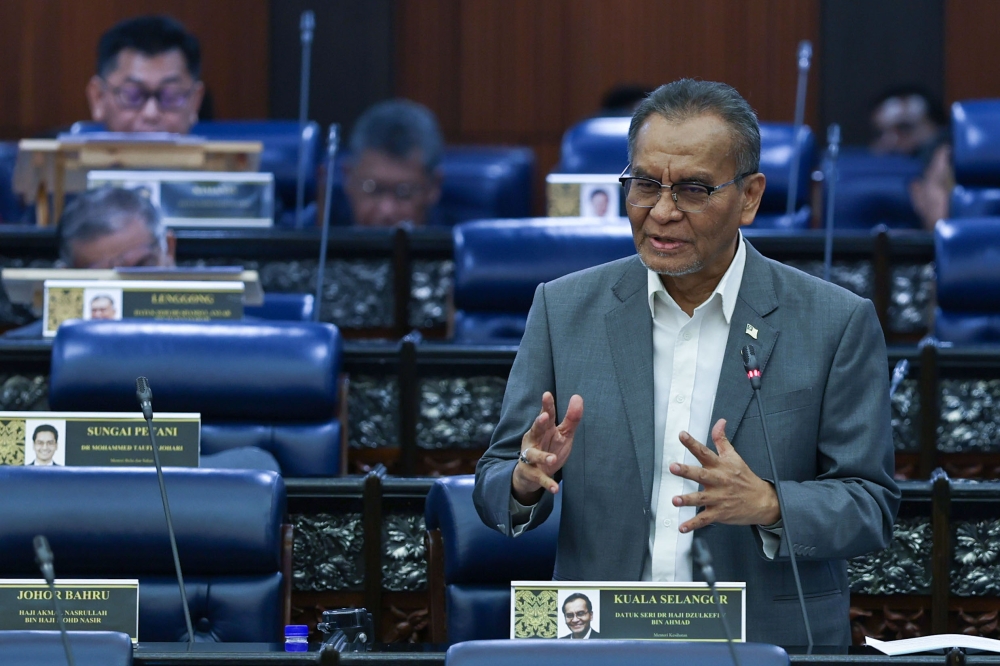
KUALA LUMPUR, Oct 27 — The Ministry of Health (MOH) is stepping up short- and long-term measures to ease overcrowding and reduce patient waiting times at public healthcare facilities nationwide.
Health Minister Datuk Seri Dzulkefly Ahmad said sustained efforts were showing positive results, with nearly 72 per cent of major hospitals nationwide reporting average waiting times for beds of under eight hours as of June, compared with 55 per cent in the previous year.
As of June 2026, 28 of the country’s 39 Type 1 and Type 2 hospitals, or 71.8 per cent, recorded average waiting times of less than eight hours for admission from Emergency Departments. These hospitals include state hospitals and major specialist hospitals that handle high numbers of emergency patients and referrals from surrounding districts.
“Relatively speaking, this represents an improvement on 2025, when 55.26 per cent of the hospitals involved recorded an average bed waiting time of less than 480 minutes,” he said during a question-and-answer session in the Dewan Rakyat today.
He was responding to Datuk Seri Aminuddin Harun (PH-Port Dickson), who asked how many government hospitals were experiencing ongoing congestion in their Emergency Departments, how long patients waited on average for treatment and ward admission, and what concrete steps the ministry was taking to resolve the problem and ensure prompt treatment.
Dzulkefly added that 94 of 103 Type 3 and Type 4 hospitals (91.3 per cent), including minor specialist hospitals and hospitals without specialists, had average bed waiting times under four hours.
On efforts to ease congestion at major hospitals, he said one short-term measure was the Hospital Services Outsourcing Program (HSOP).
“Since 2024, the HSOP has provided 14 outsourced services, including nephrology and cardiology, benefiting more than 50,000 patients at 75 MOH hospitals,” he said, describing it as a short-term measure.
As part of a comprehensive patient management strategy, the ministry is also strengthening Lean Healthcare initiatives, establishing Bed Management Units (BDUs), expanding day-care services and adopting the hospital cluster approach.
Responding to a supplementary question from Roslan Hashim (PN-Kulim-Bandar Baharu) on alternative measures to ease congestion at healthcare facilities, Dzulkefly said the MOH was actively exploring pilot projects involving the cottage hospital concept and step-down care.
“This includes a step-down care approach, under which patients are transferred to district hospitals once they are confirmed to be stable, without compromising the quality of care.
“We are also reviewing the cottage hospital concept, particularly for rural areas, as practised in the UK and other countries. In Sabah, Sarawak and Peninsular Malaysia, clinics with the capacity and demand could be upgraded to provide inpatient care,” he said.
He said the MOH was also looking into implementing Integrated Clinical Care Management and global surgery, which would allow hospitals without specialists to carry out selected surgical procedures for uncomplicated cases, reducing patient congestion at larger hospitals. — Bernama
Ramanan: More funding being considered for Uyarvu Madani to help small Indian entrepreneurs
MMEA officer killed, two injured during operation in Kuala Perlis waters
Sarawak Assembly dissolution notification sent to EC, says Speaker
吉隆坡,10月27日讯——卫生部正在加强短期和长期措施,以缓解全国公共医疗机构的拥挤状况,并减少患者的等待时间。
卫生部长拿督斯里祖基菲里·艾哈迈德表示,持续的努力正在取得积极成果,截至6月份,全国近72%的主要医院报告称,平均床位等待时间不到8小时,而去年同期这一比例为55%。
截至2026年6月,全国39家一级和二级医院中有28家(占71.8%)急诊入院平均等待时间少于8小时。这些医院包括公立医院和接收大量急诊患者及周边地区转诊患者的大型专科医院。
“相对而言,这比 2025 年有所改善,届时参与调查的医院中有 55.26% 的平均床位等待时间少于 480 分钟,”他今天在国会下议院的问答环节中说道。
他是在回应拿督斯里阿米努丁·哈伦(希望联盟-波德申)的提问,后者询问有多少家政府医院的急诊科持续拥挤,病人平均需要等待多长时间才能得到治疗和入院,以及卫生部正在采取哪些具体措施来解决这个问题并确保及时治疗。
祖基菲里补充说,103 家 3 类和 4 类医院中有 94 家(91.3%),包括小型专科医院和没有专科医生的医院,平均床位等待时间不到 4 小时。
关于缓解主要医院拥堵状况的努力,他表示,一项短期措施是医院服务外包计划(HSOP)。
“自 2024 年以来,HSOP 已提供 14 项外包服务,包括肾脏病学和心脏病学,使 75 家卫生部医院的 5 万多名患者受益,”他说道,并将其描述为一项短期措施。
作为综合患者管理战略的一部分,该部还在加强精益医疗保健计划,建立床位管理单元 (BDU),扩大日间护理服务,并采用医院集群方法。
针对罗斯兰·哈希姆(国盟-居林-万达巴鲁)提出的关于缓解医疗机构拥挤状况的替代措施的补充问题,祖基菲里表示,卫生部正在积极探索涉及乡村医院概念和过渡护理的试点项目。
“这包括分级护理方法,即一旦确认患者病情稳定,就将其转送到地区医院,而不会降低护理质量。
“我们也在重新审视乡村医院的概念,尤其是在农村地区,这种模式在英国和其他国家已经得到应用。在沙巴、砂拉越和马来西亚半岛,有能力且有需求的诊所可以升级改造,提供住院服务,”他说道。
他表示,卫生部也在研究推行综合临床护理管理和全球手术模式,这将允许没有专科医生的医院为一些病情较轻的患者开展部分手术,从而缓解大型医院的患者拥堵状况。——马新社
拉马南:正在考虑为Uyarvu Madani项目提供更多资金,以帮助印度小型创业者。
马来西亚海事执法局一名官员在瓜拉玻璃市水域行动中丧生,另有两人受伤。
砂拉越议长称,已向执行委员会发出州议会解散通知。