Law minister: Coroners Bill to be tabled next year法律部长:验尸官法案将于明年提交
KUALA LUMPUR, Sept 3 — The Coroners Bill, aimed at clarifying the management of death cases, is expected to be tabled in Parliament next year, said Minister in the Prime...
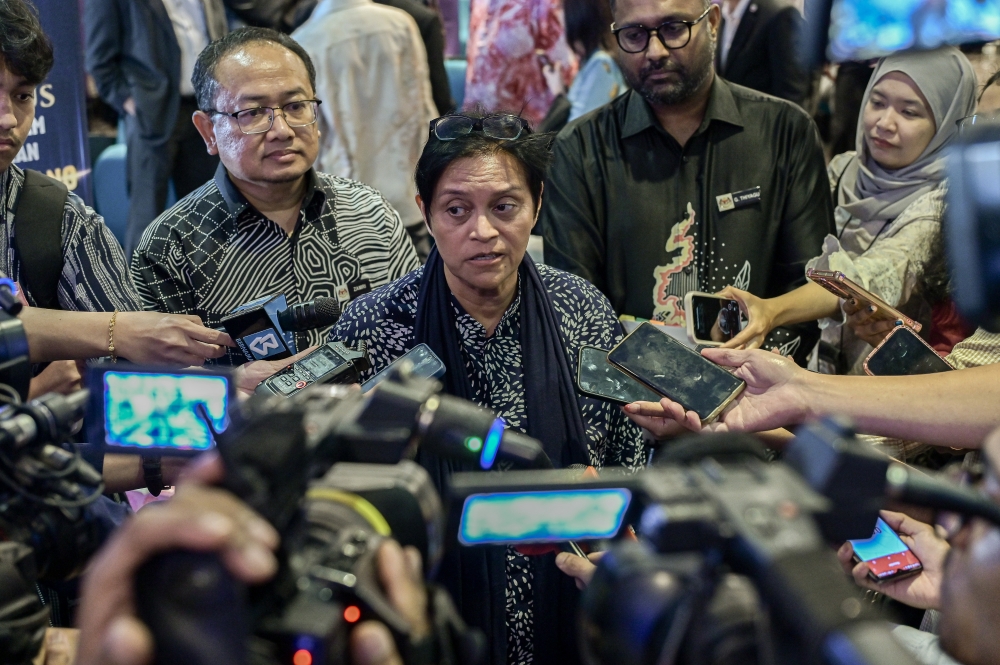
The Coroners Bill, intended to streamline death case management and establish standard operating procedures, will be tabled in Malaysia's Parliament next year, as stated by Datuk Seri Azalina Othman Said.
The legislation aims to create a clear and transparent legal framework for coroners, complementing existing laws to improve the handling of death investigations.
Highlighting the complexity of modern investigations, Azalina emphasized the bill's role in addressing weaknesses and enhancing accountability.
The proposal follows calls for reform by several bodies and aims for a consistent justice system irrespective of a case's public prominence.
Additionally, the government is considering establishing a Law Reform Commission to systematically update the national legal framework.
KUALA LUMPUR, Sept 3 — The Coroners Bill, aimed at clarifying the management of death cases, is expected to be tabled in Parliament next year, said Minister in the Prime Minister’s Department (Law and Institutional Reform) Datuk Seri Azalina Othman Said.
She said the bill was originally targeted for tabling this year, but with the Budget 2027 session in October, it is more suitable to bring it next year.
Azalina said drafting the law is expected to establish standard operating procedures (SOPs) and detail the roles of coroners and relevant parties in handling death cases.
“We hope that with this act, we can establish SOPs and answer questions that arise. We do not want families searching for answers when a death occurs,” she told reporters after launching the Public Opinion Survey on the Drafting of the Coroners Bill here today.
Azalina said, although procedures for death investigations exist under current legislation, the Coroners Act will complement them and offer clearer guidance on implementation.
Earlier in her speech, Azalina said specific legislation on coroners is being considered with three main goals: establishing a clear and comprehensive legal framework; creating a more structured, independent and transparent coroner system; and clarifying each party’s responsibilities when a death is reported.
“We also want a system that not only determines the cause of death but also identifies weaknesses to prevent similar tragedies from recurring.
“If a death reveals weaknesses in the system, the coroner’s findings should not end up buried in a file because the lessons learned from a case should help us protect other lives,” she said.
Azalina added that Malaysia currently has an inquest implementation framework under the Criminal Procedure Code, specifically Sections 328 to 341A, as well as Practice Direction No. 2 of 2019.
However, she said that death investigations have become more complex, involving digital evidence, forensic analysis, medical records, institutional safety, and inter-agency coordination.
Azalina said that the ongoing inquest proceedings into the death of the late Zara Qairina Mahathir serve as a reminder of the importance of evidence management, post-mortems, inter-agency coordination, and early communication with families.
She also cited the cases of the late Muhammad Adib Mohd Kassim and the late Teoh Beng Hock, as well as custodial deaths such as those of the late A. Kugan and the late S. Balamurugan, as reminders of the need for an independent, thorough, and credible process when serious questions arise surrounding a death.
She said the need for this legal reform had also been raised by the Human Rights Commission of Malaysia (SUHAKAM), the Malaysian Bar, the Tun Dzaiddin Royal Commission Report, and the Royal Commission of Inquiry into the death of Teoh Beng Hock.
“The principle is simple: justice should not depend on whether a case goes viral. Every death that must be reported deserves the same scrutiny, whether it catches nationwide attention or is mourned by a single family,” she said.
Meanwhile, Azalina said the government is examining a proposal to establish a Law Reform Commission as a permanent, dedicated, and structured mechanism to review national laws and systematically submit reform recommendations on an ongoing, independent, and evidence-based basis.
She stressed that law reform need not be ad hoc or driven solely by crises but should be executed in a planned way to ensure the national legal framework remains relevant and responsive to current social needs. — Bernama
Azalina: PM term limit and AG/PP separation Bills ready for Parliament
Tabung Haji Act amendments in final stages before parliamentary tabling, says TH CEO
Senior Citizens Bill delayed to early 2027, says Nancy Shukri
据拿督斯里阿扎丽娜·奥斯曼·赛义德称,旨在简化死亡案件管理并建立标准操作程序的验尸官法案将于明年提交马来西亚国会审议。
该立法旨在为验尸官创建一个清晰透明的法律框架,补充现有法律,以改善死亡调查的处理。
阿扎利娜强调了现代调查的复杂性,并着重指出该法案在解决薄弱环节和加强问责制方面的作用。
该提案是在多个机构呼吁改革之后提出的,旨在建立一个无论案件是否受到公众关注都保持一致的司法体系。
此外,政府正在考虑成立法律改革委员会,以系统地更新国家法律框架。
吉隆坡,9月3日讯——首相署(法律及体制改革)部长拿督斯里阿扎丽娜·奥斯曼·赛义德表示,旨在明确死亡案件管理的《验尸官法案》预计将于明年提交国会审议。
她说,该法案原本计划今年提交,但考虑到 2027 年预算案会议将于 10 月举行,明年提交更为合适。
阿扎利娜表示,起草该法律预计将建立标准操作程序 (SOP),并详细说明验尸官和相关各方在处理死亡案件中的角色。
“我们希望通过这项法案,能够建立标准操作程序,并解答出现的问题。我们不希望在亲人去世后,家属们四处寻找答案,”她在今天于此地启动关于验尸官法案草案的公众意见调查后对记者说。
阿扎利娜表示,虽然现行法律中已有死亡调查程序,但《验尸官法》将对其进行补充,并为实施提供更清晰的指导。
阿扎利娜在演讲早些时候表示,正在考虑制定关于验尸官的具体立法,其主要目标有三个:建立清晰全面的法律框架;建立更加结构化、独立和透明的验尸官制度;以及明确死亡报告时各方的责任。
“我们还希望建立一个不仅能确定死因,还能找出薄弱环节以防止类似悲剧再次发生的系统。”
“如果一起死亡事件揭示了制度的缺陷,验尸官的调查结果不应该被束之高阁,因为从案件中吸取的教训应该帮助我们保护其他生命,”她说。
阿扎丽娜补充说,马来西亚目前根据《刑事诉讼法》第 328 至 341A 条以及 2019 年第 2 号实践指南,制定了死因研讯实施框架。
然而,她表示,死亡调查变得更加复杂,涉及数字证据、法医分析、医疗记录、机构安全以及跨部门协调。
阿扎丽娜表示,对已故扎拉·凯丽娜·马哈蒂尔的死因进行的持续调查提醒人们,证据管理、尸检、机构间协调以及与家属的早期沟通至关重要。
她还列举了已故的穆罕默德·阿迪布·莫哈末·卡西姆和已故的张明福的案例,以及已故的A·库根和S·巴拉穆鲁根等羁押期间死亡的案例,以此提醒人们,当死亡事件出现严重问题时,需要进行独立、彻底和可信的调查程序。
她表示,马来西亚人权委员会 (SUHAKAM)、马来西亚律师公会、敦扎伊丁皇家委员会报告以及对张明福死亡事件的皇家调查委员会也提出了进行这项法律改革的必要性。
“原则很简单:正义不应取决于案件是否引起广泛关注。每一例必须报道的死亡都应该受到同样的审查,无论它是否引起全国关注,或者只是单个家庭的哀悼,”她说。
与此同时,阿扎利娜表示,政府正在研究一项提案,即设立一个法律改革委员会,作为一个常设的、专门的、结构化的机制,审查国家法律,并在持续、独立和基于证据的基础上系统地提出改革建议。
她强调,法律改革不应是临时性的,也不应仅仅由危机驱动,而应以计划性的方式进行,以确保国家法律框架与时俱进,并能满足当前的社会需求。——马新社
阿扎利娜:总理任期限制法案和总检察长/人民党分立法案已准备提交议会
朝圣基金局首席执行官表示,朝圣基金局法案修正案已进入最后阶段,即将提交议会审议。
南希·舒克里表示,老年人法案将推迟至2027年初。