Motor Traders Association proposes using car length to distinguish mass-market cars in COE review汽车贸易商协会提议在拥车证审查中使用车身长度来区分大众市场汽车。
Motor Traders Association proposes car length and OMV criteria in Singapore COE review to better distinguish mass-market cars. Read more at straitstimes.com.
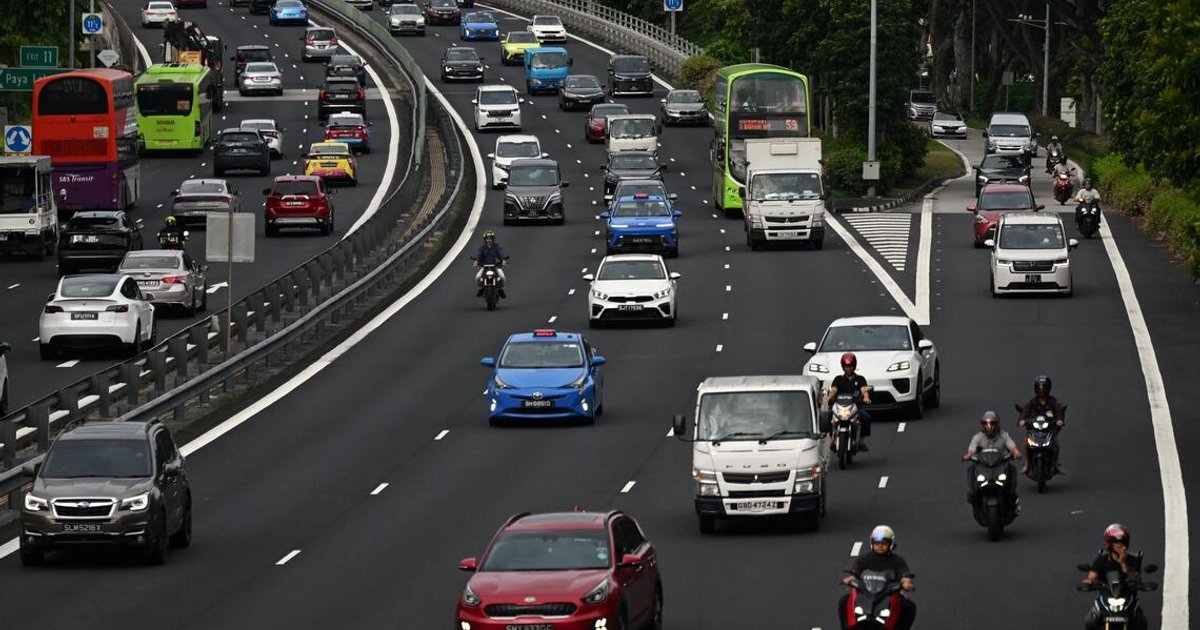
A review of the COE categorisation framework is underway to better differentiate mass-market cars from non-mass-market ones.
ST PHOTO: SUHANA ABDUL SAMAT
Published Oct 29, 2026, 09:54 PM
Updated Oct 29, 2026, 09:54 PM
MTA wants car length added to COE rules. It says smaller cars should stay separate from larger, more powerful models.
LTA proposes to merge the two car COE categories into one pool. It will use open market value, or OMV, to set rebates or surcharges.
MTA warns OMV alone could blur the line between mass-market and luxury cars. It prefers OMV with engine size, power output, and fixed thresholds to keep the system clear.
SINGAPORE – The industry body representing authorised car distributors in Singapore has proposed using vehicle length as an additional criterion to determine the amount a car buyer pays for a certificate of entitlement (COE).
The Motor Traders Association (MTA) set out its recommendations in a document in response to the proposed revision to the COE categorisation framework that the Land Transport Authority (LTA) announced on Oct 8.
LTA had sought public feedback on its proposal to merge the existing COE car categories and use a rebate and surcharge system to better differentiate the price of certificates used to register mass-market cars and higher-end models.
Under the authority’s proposed system , a vehicle’s base cost, known as the open market value (OMV), will be used to determine whether a car will incur a surcharge or get a discount off its COE price.
Instead of using OMV to determine a rebate or surcharge, the MTA mooted retaining existing limits on engine capacity and power output and setting exterior length limits for various types of cars, including multi-purpose vehicles, sports cars and coupes.
It said including this measure is in line with the “original intent and definition” of a mass-market car: that it should be smaller in exterior size, have a smaller engine, and lower power output than a non-mass-market one.
The association said it supports LTA’s proposal to merge the two car COE categories to create a single, larger pool for buyers instead of restricting them to bid in either one of the car categories.
LTA’s review of the COE system stems from the price of Category A COEs rising faster than Category B’s recently, narrowing the gap between the two categories.
Between January and October, the price of Category A certificates exceeded Category B’s in four tender exercises, which led the COE for a mass-market family car like the Toyota Corolla Altis costing more than the COE for a luxury car like a BMW 5-series.
The association noted that the arrival of less-powerful EVs have resulted in the Category A COE segment becoming overcrowded. This pushed up demand and hence, premiums.
It said that if the decision is to use OMV, the criterion should be used in conjunction with the existing engine size and power output determinants. This will reduce the number of models that would be considered as “mass-market,” thus alleviating overcrowding, MTA said.
MTA said using only OMV as a differentiator will make it easier for car models to qualify as mass-market, resulting in a potential influx of more models that come into this category.
Another possible outcome is that larger engine cars and more powerful EVs, which are currently Category B COE models, may become considered as mass-market models, it added.
In the event that OMV is used as a criterion, the association also proposed using a fixed OMV threshold instead of the median OMV of models registered.
LTA had proposed grouping cars based on the median OMVs of the models registered in the previous year. From this database, the cars are grouped into bands, determining if the car qualifies for a discount on the COE price or incurs a surcharge.
MTA said basing the ranking on past registrations means that the OMV used does not reflect prevailing market conditions. It added that the methodology in LTA’s proposal is “unnecessarily convoluted and difficult for stakeholders and consumers to understand”.
Under its proposal, cars that fall below a fixed OMV threshold, in addition to fulfilling the engine capacity and power output requirements, will be considered as “mass-market”.
This, the MTA said, will allow LTA to maintain a clear and consistent distinction.
The association also proposed retaining the Open category of COE , which can be used to register any type of vehicle except motorcycles, but subjecting the bidder to the same rebate or surcharge as the single car category.
Similarly, when a car COE is being renewed, the price will factor the applicable rebate or surcharge, depending on its OMV.
An ongoing public consultation exercise to review the COE categorisation framework will close on Nov 2, 11.59pm. People can go to https://go.gov.sg/coe-pcd-feedback to provide feedback.
Lee Nian Tjoe is senior transport correspondent at The Straits Times, where he also oversees the Motoring section.
目前正在对拥车证分类框架进行审查,以便更好地区分大众市场汽车和非大众市场汽车。
ST 摄影:苏哈娜·阿卜杜勒·萨马特
发布于 2026 年 10 月 29 日晚上 9:54
更新于2026年10月29日晚上9:54
纽约大都会运输署(MTA)希望将车辆长度纳入拥车证(COE)规则。MTA表示,小型车辆应与更大、动力更强的车型分开管理。
陆路交通管理局提议将两类汽车拥车证合并为一个资金池,并采用公开市场价值(OMV)来设定回扣或附加费。
MTA警告称,仅靠统一车辆计量标准(OMV)可能会模糊大众市场汽车和豪华汽车之间的界限。MTA更倾向于采用结合发动机排量、功率输出和固定阈值的OMV,以保持系统的清晰性。
新加坡——代表新加坡授权汽车经销商的行业机构提议将车辆长度作为一项附加标准,以确定购车者为拥车证(COE)支付的金额。
针对陆路交通管理局 (LTA) 于 10 月 8 日宣布的拥车证 (COE) 分类框架修订提案,汽车贸易商协会 (MTA) 在一份文件中提出了其建议。
陆路交通管理局曾就其合并现有拥车证汽车类别并使用回扣和附加费制度来更好地区分用于注册大众市场汽车和高端车型的证书价格的提案征求公众意见。
根据该机构提出的制度,车辆的基本成本(称为公开市场价值 (OMV))将用于确定汽车是否需要缴纳附加费或获得拥车证价格折扣。
MTA 不采用 OMV 来确定回扣或附加费,而是提议保留现有的发动机排量和功率输出限制,并为各种类型的汽车(包括多用途汽车、跑车和轿跑车)设定外部长度限制。
它表示,纳入这一措施符合大众市场汽车的“最初意图和定义”:即与非大众市场汽车相比,大众市场汽车的外部尺寸应该更小,发动机更小,功率输出更低。
该协会表示,他们支持陆路交通管理局的提议,将两种汽车拥车证类别合并,为买家创建一个更大的单一市场,而不是限制他们只能在其中一个汽车类别中竞标。
陆路交通管理局对拥车证制度的审查源于近期A类拥车证价格上涨速度快于B类拥车证,导致两类拥车证价格差距缩小。
从 1 月到 10 月,A 类拥车证的价格在四次招标中都超过了 B 类拥车证,导致丰田卡罗拉 Altis 等大众市场家用轿车的拥车证价格高于宝马 5 系等豪华轿车的拥车证价格。
该协会指出,低功率电动汽车的涌入导致A类拥车证市场竞争激烈,推高了需求,进而推高了溢价。
报告指出,如果决定采用OMV标准,则应将该标准与现有的发动机排量和功率输出标准结合使用。MTA表示,这将减少被视为“大众市场”车型的数量,从而缓解拥挤状况。
MTA表示,仅使用OMV作为区分标准将使汽车型号更容易符合大众市场标准,从而可能导致更多车型涌入该类别。
报告还补充说,另一种可能的结果是,目前属于 B 类 COE 车型的更大排量发动机汽车和更强大的电动汽车可能会被视为大众市场车型。
如果将 OMV 用作标准,该协会还建议使用固定的 OMV 阈值,而不是注册模型的 OMV 中位数。
陆路交通管理局曾提议根据上一年注册车型的市场市场价值中位数对车辆进行分组。根据该数据库,车辆被划分成不同的等级,从而确定车辆是否符合拥车证价格折扣条件或需缴纳附加费。
MTA表示,以过往注册数据为基础进行排名意味着所使用的OMV(官方市场价值)无法反映当前的市场状况。MTA还补充说,LTA提案中的方法“过于复杂,利益相关者和消费者难以理解”。
根据该提案,低于固定 OMV 阈值的汽车,除了满足发动机排量和功率输出要求外,还将被视为“大众市场”汽车。
MTA表示,这将使LTA能够保持清晰一致的区别。
该协会还提议保留拥车证的开放类别,该类别可用于注册除摩托车以外的任何类型的车辆,但竞标者需缴纳与单车类别相同的折扣或附加费。
同样,当汽车拥车证续期时,价格将根据其市场价值计入适用的回扣或附加费。
正在进行的关于审查拥车证分类框架的公众咨询活动将于11月2日晚上11点59分结束。公众可访问https://go.gov.sg/coe-pcd-feedback 提供反馈意见。
李念祖是《海峡时报》的高级交通记者,同时负责汽车版块。