Perak-Penang water deal cheaper than large-scale seawater desalination, says state exco霹雳州行政议员称,霹雳-槟城水务协议比大规模海水淡化更便宜。
GEORGE TOWN, Oct 30 — Penang state exco Zairil Khir Johari told the state legislative assembly that there were risks identified in the Perak-Penang water project such as...
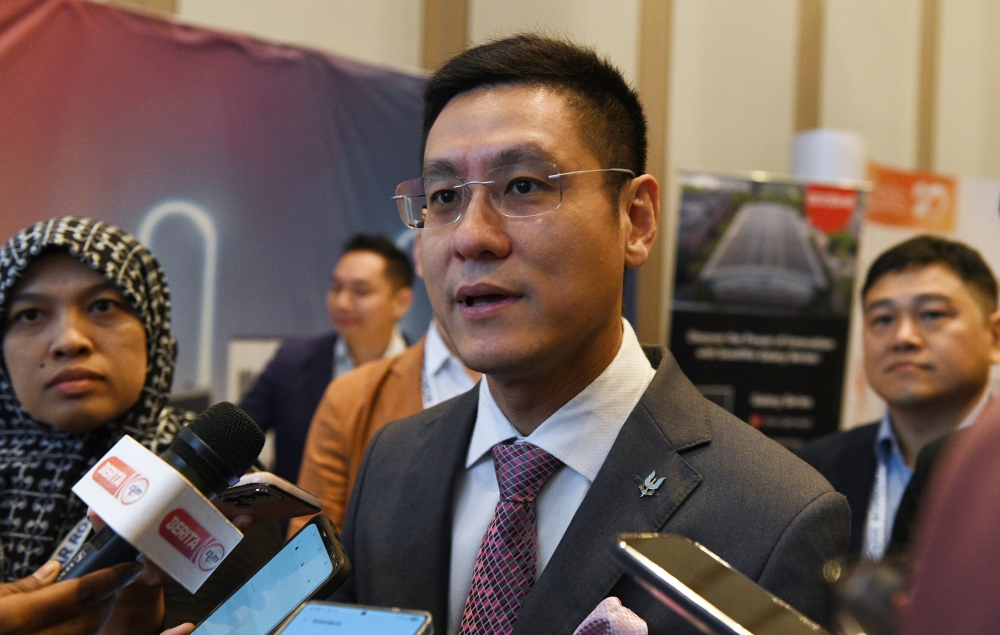
GEORGE TOWN, Oct 30 — Penang state exco Zairil Khir Johari told the state legislative assembly that there were risks identified in the Perak-Penang water project such as insufficient tariff adjustments, rising costs and supply disruptions but buying treated water from Perak was still more economical and practical than large-scale seawater desalination.
The state infrastructure and transport committee chairman said there were risks such as delayed or insufficient water tariff adjustments and rising electricity and chemical costs identified in a due diligence review of the project.
In comparison to seawater desalination, he said desalination process requires not only substantial capital expenditure but also operating expenditure.
“The highest cost of desalination is its operating expenditure, as the process requires a great deal of electricity to remove salt from seawater,” he said.
Zairil said there are clauses in the Perak-Penang water project agreement to ensure there are specific exit provisions or mitigation measures to address certain risks.
He was replying to a question by Machang Bubuk assemblyman Lee Khai Loon, who asked about the main risks identified in the due diligence report, including stress tests on water demand and the Penang Water Supply Corporation’s (PBAPP) financial capacity.
Lee said he supported efforts to secure Penang’s water supply, but raised concerns about the state’s financial security under the 40-year agreement, which he said involved capacity charges of around RM210 million a year.
He asked whether a summary of the due diligence report could be presented to the state assembly members before approvals were finalised and asked for details of any penalties associated with terminating the agreement.
Zairil said any detailed disclosure would require the Perak state government’s consent because the agreement was between two government-owned companies and was considered a government-to-government arrangement.
He said the conditional bulk water supply agreement was signed on July 15 between PBAPP and Prasarana Air dan Irigasi Perak Sdn Bhd (PAIP) for the purchase of at least 300 million litres of treated water daily from 2032 to 2072.
However, he said the agreement is still subjected o approval by the National Water Services Commission (SPAN) and shareholders of PBAPP’s parent company, PBA Holdings Berhad.
“An extraordinary general meeting for shareholders’ approval would be held next month,” he said.
He said PAIP would bear the estimated RM8.4 billion cost of infrastructure development, including construction, operation, maintenance and land acquisition.
The project is intended to provide Penang with a second water source and reduce its dependence on Sungai Muda.
He said the state’s water demand is projected to exceed 1,162 million litres per day by 2032.
“Penang had limited options for new raw water sources after 2030, when projects to maximise the state’s available surface water were expected to be completed,” he said.
The cost to consumers from the Perak water project had yet to be finalised and would depend on several factors, including future tariff rates, he added.
“Implementing this water supply project from Sungai Perak does not automatically mean that water tariffs will increase,” he said.
Any proposed tariff adjustment would require SPAN’s approval before being brought to the federal Cabinet, he explained.
Zairil also listed circumstances under which the agreement could lapse or be terminated, including failure to meet its conditions precedent, supplier default, insolvency and prolonged supply disruption followed by unsuccessful renegotiation.
He said if the conditions for supply were not met by January 1, 2035, PBAPP could agree to an extension or allow the agreement to lapse.
In another clause, he said conditional termination is available if the parties fail to agree on a rate review before the 22nd contract year.
“This would include payment of the net present value of the remaining capacity charges and any outstanding amounts,” he said.
Good air quality prevails, no areas record hazardous or unhealthy API levels as haze eases nationwide
PJ police hunt foreign man who allegedly threw acid at girlfriend after break-up
Floods: 119 evacuees remain at relief centres in Negri Sembilan, Perak and Kedah
乔治市,10 月 30 日讯——槟城州行政议员扎伊里尔·基尔·佐哈里向州立法议会表示,霹雳-槟城供水项目存在一些风险,例如水费调整不足、成本上升和供水中断,但从霹雳购买处理过的水仍然比大规模海水淡化更经济、更实用。
州基础设施和交通委员会主席表示,在对该项目进行尽职调查审查时,发现了一些风险,例如水费调整延迟或不足以及电力和化学品成本上涨。
他表示,与海水淡化相比,海水淡化过程不仅需要大量的资本支出,还需要运营支出。
他说:“海水淡化的最大成本是运营支出,因为该过程需要大量电力来去除海水中的盐分。”
扎伊里尔表示,霹雳州-槟城州供水项目协议中有相关条款,以确保有具体的退出条款或缓解措施来应对某些风险。
他是在回答马章武北州议员李凯伦提出的问题时做出上述表述的。李凯伦询问了尽职调查报告中确定的主要风险,包括对用水需求和槟城供水公司(PBAPP)财务能力的压力测试。
李表示他支持保障槟城供水的努力,但对该州在为期 40 年的协议下的财政安全表示担忧,他说该协议涉及每年约 2.1 亿令吉的容量费。
他询问是否可以在最终批准之前向州议会成员提交一份尽职调查报告摘要,并要求详细说明终止协议的任何处罚措施。
扎伊里尔表示,任何详细披露都需要霹雳州政府的同意,因为该协议是在两家国有公司之间达成的,属于政府间安排。
他表示,7月15日,霹雳州公共事业局 (PBAPP) 与霹雳州水利灌溉公司 (PAIP) 签署了有条件的散装供水协议,约定从2032年到2072年,每天至少购买3亿升处理过的水。
但他表示,该协议仍需获得国家水务委员会 (SPAN) 和 PBAPP 母公司 PBA Holdings Berhad 的股东的批准。
他说:“下个月将召开一次特别股东大会,以获得股东批准。”
他表示,PAIP将承担预计84亿令吉的基础设施开发成本,包括建设、运营、维护和土地征用。
该项目旨在为槟城提供第二个水源,并减少其对慕达河的依赖。
他表示,预计到 2032 年,该州的用水需求将超过每天 11.62 亿升。
“到 2030 年,槟城用于开发利用地表水的项目预计将全部完成,届时槟城可选择的新原水来源将十分有限。”他说。
他补充说,霹雳州供水项目给消费者带来的成本尚未最终确定,将取决于多种因素,包括未来的水价。
他说:“从霹雳河实施这项供水项目并不意味着水费一定会上涨。”
他解释说,任何拟议的关税调整都需要先获得SPAN的批准,才能提交给联邦内阁。
扎伊里尔还列举了协议可能失效或终止的情况,包括未能满足其先决条件、供应商违约、破产以及长期供应中断后重新谈判失败。
他表示,如果到 2035 年 1 月 1 日仍未满足供应条件,PBAPP 可以同意延期,也可以让协议失效。
他在另一条款中表示,如果双方在第 22 个合同年度之前未能就费率审查达成一致,则可以有条件地终止合同。
“这将包括支付剩余容量费的净现值以及任何未付金额,”他说。
全国空气质量良好,无地区空气污染指数(API)达到危险或不健康水平,雾霾逐渐消退。
PJ警方正在追捕一名涉嫌在分手后向女友泼硫酸的外国男子。
洪水:119名撤离者仍留在森美兰州、霹雳州和吉打州的救援中心