From ramen to $9.90 steaks: Japan Foods cuts a third of outlets but serves up profit with Steak 99从拉面到9.90美元的牛排:Japan Foods削减了三分之一的门店,但凭借Steak 99餐厅依然保持盈利。
Japan Foods returns to profit after outlet cuts and growth in halal Steak 99, despite lower revenue and a tougher Singapore F&B market. Read more at straitstimes.com.
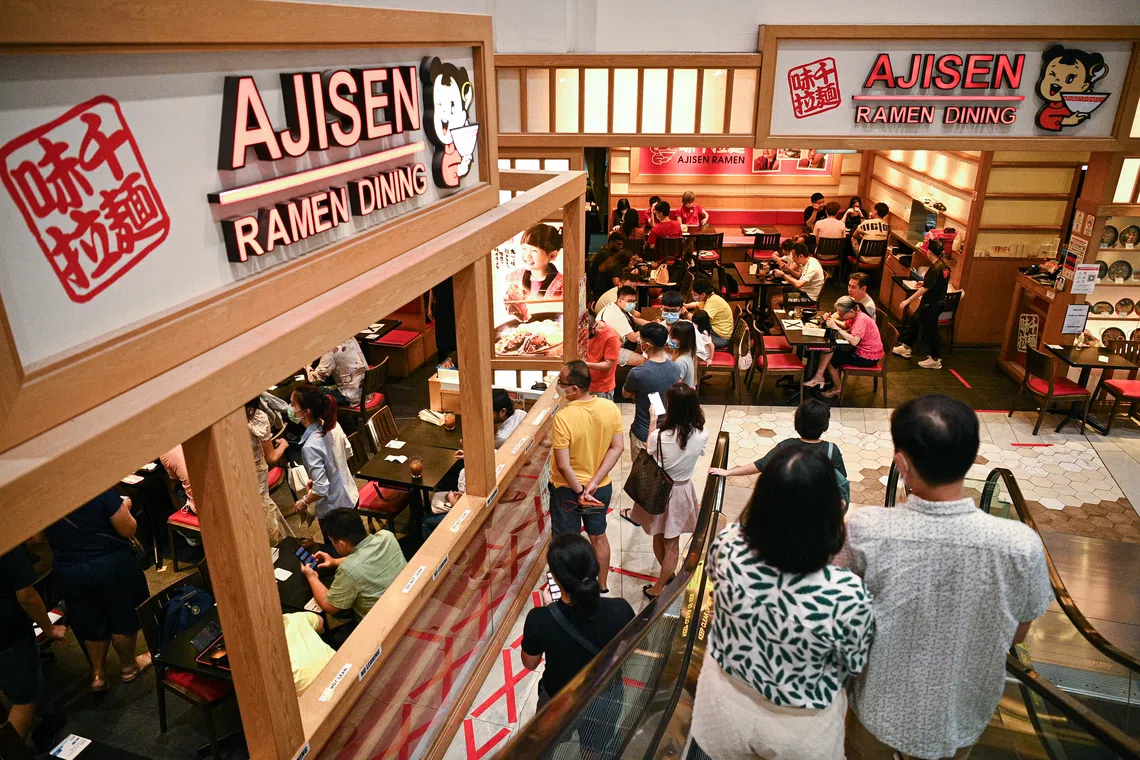
Ajisen Ramen at AMK Hub on Feb 2, 2022. This outlet has since been converted to a Steak 99 restaurant, based on Google search.
ST PHOTO: LIM YAOHUI
Published Oct 30, 2026, 11:30 AM
Updated Oct 30, 2026, 04:38 PM
SINGAPORE – Japan Foods has returned to profit after cutting nearly a third of its outlets in Singapore and turning its focus to halal dining concepts and affordable meals .
The Singapore-listed restaurant operator had been loss-making since 2023.
The group, which operates Japanese cuisine brands including Ajisen Ramen and Yakiniku Shokudo, had 46 restaurants as at Sept 30, down from 68 a year ago.
Besides closing poorly performing outlets, it also converted some existing restaurants to newer concepts, including its proprietary halal Steak 99 brand. Launched in October 2025, Steak 99 had grown to 14 outlets by Sept 30.
As a result, Japan Foods posted a net profit of $234,000 for the six months ended Sept 30, against a loss of $3.3 million a year ago. This was despite revenue falling 18% to $30.2 million as its restaurant network shrank.
In response to questions from The Straits Times, Japan Foods said its halal concepts have shown encouraging performance and growth potential.
“Halal dining also allows us to cater to a broader customer base, including both Muslim and non-Muslim diners, providing opportunities to reach a wider market,” it said, adding that it would continue investing in both halal and non-halal brands.
Steak 99, which serves steaks starting from $9.90 and free-flow sides, generated $9.5 million in revenue for the first half, making up nearly a third of group sales.
Besides having new outlets, it also occupies outlets previously taken up by Ajisen Ramen, including those at Plaza Singapura, Bedok Mall and Tampines Mall.
Japan Foods has also launched Wagyu Steak 99, Shabu Suki 99 and Yaki Zakana 99 under its “99” series. Each brand offers a $9.90 value menu item aimed at cost-conscious diners.
The company will monitor the newer brands’ performance and customers’ response to them , in order to determine its next steps .
Asked how it decides on which outlets to close and if more closures are on the cards, Japan Foods said it regularly reviews the performance of individual restaurants and brands to assess their long-term viability. This includes discontinuing poorly performing brands and, where appropriate, terminating leases early.
It expects the pace of closures to slow in the financial year ending March 31, 2027, as it focuses on improving efficiency and the performance of its remaining outlets.
The changes have reshaped Japan Foods’ restaurant portfolio as it took steps to cut costs. Ajisen Ramen had eight outlets as at Sept 30, down from 12 a year ago, while Tokyo Shokudo’s network fell from 14 to two. Other brands, including Menya Musashi and Osaka Ohsho, no longer have outlets in the group’s network.
As a result, selling and distribution expenses fell 27.8% to $22.3 million, reflecting lower manpower costs, utilities and depreciation of leased assets. Administrative expenses declined 22.4% to $1.4 million, while other operating expenses nearly halved to $747,000.
Despite its return to profit, Japan Foods expects Singapore’s food and beverage industry to remain challenging over the next year, citing rising operating costs, persistent manpower shortages and intense competition from local and foreign operators.
It also expects diners to remain price-sensitive as economic uncertainty and global trade and geopolitical tensions weigh on sentiment.
The group declared an interim dividend of 0.13 cent a share, payable on Dec 15. No interim dividend was declared a year ago.
Shares of Japan Foods, which is listed on Catalist, closed on Oct 29 at 10 cents, up more than 5%. That gives it a market capitalisation of just over $17 million.
Food and beverage sector
2022年2月2日,AMK Hub的味千拉面店开业。根据谷歌搜索结果,该店现已改建为Steak 99餐厅。
ST 照片:林耀辉
发布于2026年10月30日上午11:30
更新于2026年10月30日下午4:38
新加坡——日本食品公司在新加坡关闭了近三分之一的门店,并将重心转向清真餐饮理念和价格实惠的餐食后,已恢复盈利。
这家在新加坡上市的餐饮运营商自 2023 年以来一直处于亏损状态。
该集团旗下经营着味千拉面和烤肉食堂等日本料理品牌,截至 9 月 30 日,共有 46 家餐厅,低于一年前的 68 家。
除了关闭业绩不佳的门店外,该公司还将一些现有餐厅改造为新概念餐厅,包括其自有的清真牛排品牌 Steak 99。Steak 99 于 2025 年 10 月推出,截至 9 月 30 日已发展到 14 家门店。
因此,截至9月30日的六个月内,日本食品公司实现净利润23.4万美元,而去年同期则亏损330万美元。尽管由于餐厅网络萎缩,其收入下降了18%,至3020万美元,但仍实现了盈利。
针对《海峡时报》的提问,日本食品公司表示,其清真食品概念已展现出令人鼓舞的业绩和增长潜力。
“清真餐饮也使我们能够服务更广泛的客户群体,包括穆斯林和非穆斯林食客,从而有机会接触到更广阔的市场,”该公司表示,并补充说将继续投资清真和非清真品牌。
Steak 99 提供 9.90 美元起的牛排和无限量供应的配菜,上半年创造了 950 万美元的收入,占集团销售额的近三分之一。
除了开设新店外,它还占据了之前味千拉面的店面,包括新加坡广场、勿洛购物中心和淡滨尼购物中心的店面。
Japan Foods 还推出了“99”系列产品,包括和牛牛排 99、涮火锅 99 和烤杂菜 99。每个品牌都提供一款售价 9.90 美元的超值菜品,旨在吸引注重性价比的食客。
公司将密切关注新品牌的表现和顾客的反应,以确定下一步的行动方案。
当被问及如何决定关闭哪些门店以及是否还有更多门店即将关闭时,日本食品公司表示,他们会定期审查各个餐厅和品牌的业绩,以评估其长期生存能力。这包括停止运营业绩不佳的品牌,并在适当情况下提前终止租赁合同。
该公司预计,在截至 2027 年 3 月 31 日的财政年度,随着其专注于提高效率和剩余门店的业绩,关店速度将会放缓。
这些调整重塑了日本食品集团的餐饮布局,旨在削减成本。截至9月30日,味千拉面仅剩8家门店,低于一年前的12家;东京食堂的门店数量也从14家锐减至2家。其他品牌,例如面屋武藏和大阪王将,则已从该集团的门店网络中移除。
因此,销售和分销费用下降27.8%至2230万美元,主要原因是人力成本、水电费和租赁资产折旧减少。管理费用下降22.4%至140万美元,其他运营费用几乎减半至74.7万美元。
尽管日本食品公司已恢复盈利,但该公司预计新加坡的食品饮料行业在未来一年仍将面临挑战,原因包括运营成本上升、持续的人力短缺以及来自本地和外国运营商的激烈竞争。
报告还预计,由于经济不确定性以及全球贸易和地缘政治紧张局势影响市场情绪,食客们仍将对价格保持敏感。
该集团宣布派发每股0.13美分的期中股息,将于12月15日支付。一年前未派发期中股息。
在凯利板上市的日本食品公司股票10月29日收于每股10美分,上涨超过5%。这使得该公司的市值略高于1700万美元。
食品和饮料行业