Room with a mew: More cat hotels open, what to know before you book猫咪主题房间:更多猫咪酒店开业,预订前需要了解哪些信息
Singapore cat hotels expand as more licensed boarding facilities open for pet owners and entrepreneurs enter the market. Read more at straitstimes.com.
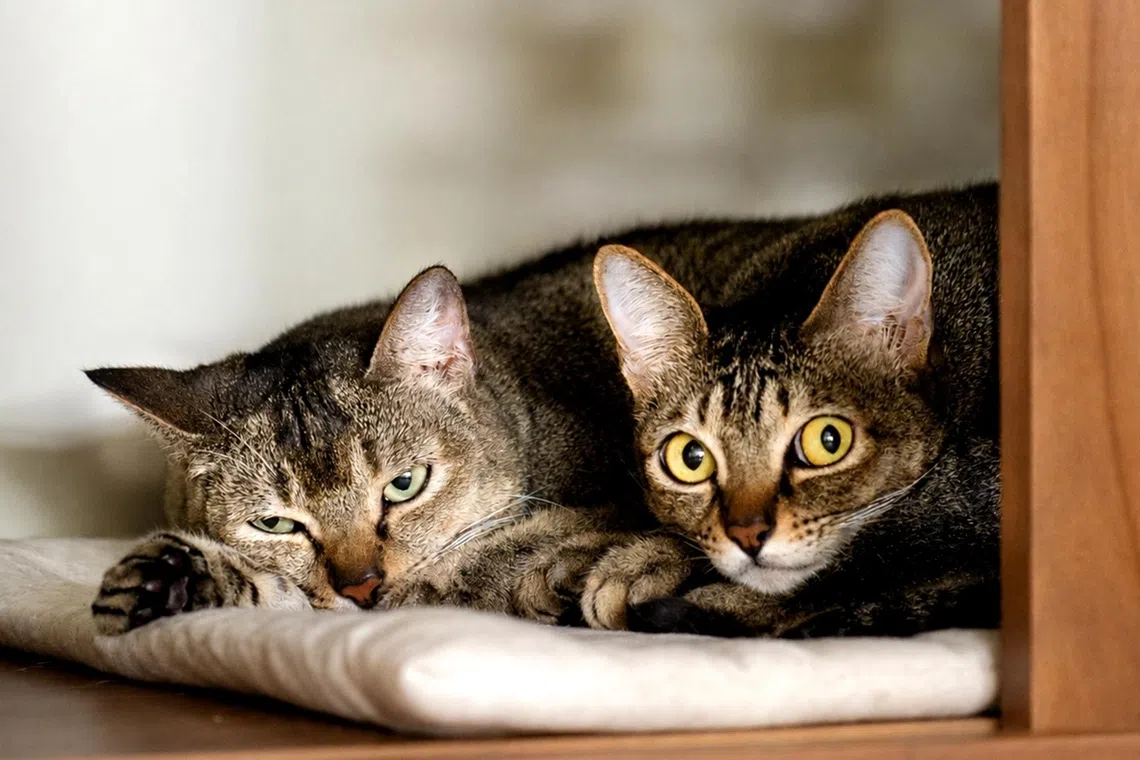
The supply of cat hotels has increased by a third in the last two years, including new players like Sundays Cat Hotel & Resort.
PHOTO: SUNDAYS CAT HOTEL & RESORT
Published Oct 31, 2026, 08:55 AM
Updated Oct 31, 2026, 08:55 AM
Singapore has more cat hotels, with licensed cat boarding facilities rising from 35 in 2024 to 47 by end-September.
New operators are a mixed bag of those already in the cat services industry and cat owners who have turned entrepreneurs.
Vets warn to choose AVS-licensed, cat-only, well-designed facilities, as mixed or poor boarding can stress cats and trigger illness; unlicensed home boarding is illegal.
SINGAPORE – At these cat hotels, rooms are called suites, villas and salons.
Some are lofts with plenty of vertical space to explore. Other premium room types accommodate multiple feline guests and have picture windows looking out onto the streetscape or nature.
A few hotels boast an instrumental music soundtrack and, at others, kitties can watch their favourite wildlife videos on TV.
During peak travel seasons such as during school holidays and long weekends, these hotels are often booked out, even though there are now more choices than ever.
The number of licensed facilities that board cats jumped by a third from 35 in 2024 to 47 as at end-September. The figures include those that board only cats and operators that board both cats and dogs, says Jessica Kwok, group director of the Animal & Veterinary Service (AVS) at the National Parks Board.
There are now more than 111,000 licensed pet cats in Singapore registered under the pet cat licensing scheme, according to a Straits Times report in August.
Housing Board residents have been allowed to keep up to two pet cats since September 2024 when the scheme’s two-year transition period started. Those with more than two existing cats could keep them if they licensed them during that period and ensured their welfare.
Since Sept 1, 2026, keeping unlicensed pet cats is an offence under the Animals and Birds Act, with a fine of up to $5,000.
Some of these new cat hotels are ventures by entrepreneurs already involved in feline-related services.
Neko Neko, which started in 2012 as an online pet supplies store, added a fifth boarding location in October. Housed within the premises of retailer Pet Lovers’ Centre in Holland Village, its four suites can take up to four cats from the same household. They cost $118 a night. Neko Neko also offers grooming services at the location.
Neko Neko's newest cat boarding facility in Holland Village has suites that can accommodate up to four cats from the same household. PHOTO: NEKO NEKO
Neko Neko's newest cat boarding facility in Holland Village has suites that can accommodate up to four cats from the same household.
Its new cat hotel offers more spacious accommodation than its older outlets in Sembawang, Jalan Kayu, Kampong Bahru and Bukit Timah, and was set up to serve cat owners in western Singapore, says its founder and chief executive Debrah Lau, who is in her 30s,
Cat groomers like PetPat are also padding in. It introduced boarding in its second and third outlets in Joo Chiat and Upper Thomson, both of which opened in 2025. It offers two room types with rates from $45 to $72 a night and now boards about 88 cats a month across both facilities.
Founder Jen Alexandra Toh, 46, says: “Boarding was a natural extension of the relationships we had built through grooming. When owners have seen how you handle their cat, especially one that is nervous or difficult to groom, that trust carries over into other aspects of its care.”
PetPat, a cat grooming business, expanded into cat boarding in 2025 when it opened its second and third outlets in the Joo Chiat and Upper Thomson neighbourhoods. PHOTO: PETPAT
PetPat, a cat grooming business, expanded into cat boarding in 2025 when it opened its second and third outlets in the Joo Chiat and Upper Thomson neighbourhoods.
Sundays Cat Hotel & Resort, which opened in mid-2024, similarly felt like “a natural progression” for owner and manager Jing Wang, who is in her 30s and who ran a pet shop for a decade.
She has a conversion diploma in veterinary technology from Ngee Ann Polytechnic and completed an 18-month cat behaviour course with International Cat Care, a registered charity in England, among other pet-related qualifications.
Located in a 2,000 sq ft landed property in Serangoon Gardens, its 30 rooms come in three room types ranging from $54 to $128 a night.
Sundays Cat Hotel & Resort is a 30-room cat boarding facility in Serangoon Gardens that opened in 2025. PHOTO: SUNDAYS CAT HOTEL & RESORT
Sundays Cat Hotel & Resort is a 30-room cat boarding facility in Serangoon Gardens that opened in 2025.
Similar to other cat boarding centres, Sundays’ clients mostly comprise leisure and business travellers, as well as home owners doing renovations. It also houses cats that have to fulfil entry requirements before relocating to another country.
Most of her customers have one or two cats, who stay around a week on average, says Wang.
Rates across the six cat-only boarding operators that ST interviewed typically include services such as twice-daily feeding (owners pack the cat’s usual food), air-conditioning , play time, litter boxes and daily updates.
Clients may also add on other chargeable services, such as transport , early check-in or medical-related tasks. Some cat hotels add surcharges for peak season bookings and to house additional cats in the room.
Cat owners to boarders
Among many new players in the scene are cat fanciers who took the plunge into entrepreneurship and landed on their feet .
Charlotte Ang, 29, and her husband Royston Shieh, 32, co-founded Kuro Cat Hotel in a Chinatown shophouse after being dissatisfied with offerings available for their adopted domestic shorthair, Kuro. The spaces were often small and operators charged extra for services like CCTV access, says Ang, who used to cat-sit for friends and family.
Opened in January 2026 , Kuro has 31 rooms and four room types which cost $60 to $120 a night.
Kuro Cat Hotel in Chinatown opened in January 2026 and has 31 rooms. PHOTO: KURO CAT HOTEL
Kuro Cat Hotel in Chinatown opened in January 2026 and has 31 rooms.
PHOTO: KURO CAT HOTEL
Cats stay there about nine days on average and owners have been known to text her at midnight to check on their pets, says Ang, who has an accounting background. Her husband is an engineer.
A similar dissatisfaction with boarding facilities and a desire to build something of their own inspired sisters Gail and Dawn Low to open & Cat Studio in Kampong Glam in November 2025.
“We experienced the anxiety of travelling while worrying about our cats back home. We would often wonder: Are they eating well? Are they being cared for the way we would care for them? We found ourselves travelling less,” says Gail, 45, a former marketeer and creative who has worked in the pet industry and is a certified feline groomer.
& Cat Studio co-founder Gail Low playing with a cat. The cat hotel is in Kampong Glam. PHOTO: & CAT STUDIO
& Cat Studio co-founder Gail Low playing with a cat. The cat hotel is in Kampong Glam.
Dawn, 53, is a former corporate executive and public servant who holds specialist diplomas in veterinary wellness care and clinic practices from local polytechnics. She also volunteers with animal welfare groups.
& Cat Studio has seven room categories costing $40 to $140 a night. It also has an isolation room for cats with special care needs, such as those requiring post-operative care or those with feline leukaemia virus and feline immunodeficiency virus, which are contagious and incurable viral infections.
Among its most memorable guests were a pair of cats which , the Lows noticed, preferred to dine on high perches about 2m up during their five-night stay. This meant standing on a ladder to feed them during mealtimes.
In Viola Chee’s case, opening the 19-room Kitnap Cat Hotel in August 2025 was “a weird but wonderful combination of all my worlds”.
Kitnap Cat Hotel opened in Serangoon Gardens in August 2025. PHOTO: KITNAP CAT HOTEL
Kitnap Cat Hotel opened in Serangoon Gardens in August 2025.
PHOTO: KITNAP CAT HOTEL
Chee, a certified public accountant who worked in real estate investments for two decades, is also a groomer certified by the US-based International Society of Feline Cosmetologists. Her cat hotel in Serangoon Gardens offers three room types from $60 to $110 a night.
“One thing I’ve learnt in my first year is that running a cat hotel is really about understanding people as much as cats. They’re handing over a family member and many feel anxious through the process. If we can give them genuine peace of mind, we’ve done our job,” says Chee, who is in her 40s.
Is the market purring?
With more competition in the feline boarding scene, is there enough catnip to go around?
After all, there are an unknown number of home-based cat boarders competing for customers, although this is illegal. AVS’ Kwok says it has investigated 17 feedback cases of such unlicensed facilities since 2024 and taken appropriate enforcement action where the offences were substantiated.
SPCA Singapore also says the number of animal adoptions has fallen from almost 900 in 2021 to fewer than 300 in 2025. Cats make up a significant proportion of that figure and the decline shows no sign of reversal, it adds.
The limit of two cats an HDB unit also imposes a ceiling that stops residents from adopting more, it notes. The SPCA has had to turn away such adopters and encourages them to consider fostering under a new pilot scheme from AVS (l earn more at str.sg/L5Yb ).
At the same time, SPCA is seeing many requests from pet owners to rehome or surrender their pets. A “notable proportion” cite financial challenges in the current economy.
However, all six cat boarding operators interviewed are optimistic that there is room to grow.
“We see the growing number of cat hotels in Singapore as a positive sign. It reflects how cats are increasingly regarded as family and how owners are looking for quality, thoughtful care for their cats when they travel or need alternative accommodation during home renovations ,” says Gail Low from & Cat Studio .
Lau from Neko Neko, one of the bigger players, sees the growing number of cat hotels as a reflection of increasing awareness and demand for specialised feline care.
“Rather than focusing solely on competition, my goal is to continue raising the standard of cat care through thoughtful facilities, knowledgeable teams and a comprehensive range of services,” she says.
Before you book cat boarding
Jessica Kwok, group director of the Animal & Veterinary Service (AVS) at the National Parks Board , reminds cat owners that they should engage only AVS-licensed pet boarders. Its registry covering cat and dog boarding is available at str.sg/6Bji
Here are top tips from veterinarians and cat owners when choosing a boarding facility.
Is it just for cats?
If the cats are not accustomed to dogs, they may remain on high alert throughout their stay, says Geetha Nellinathan, a feline-focused vet from private veterinary practice The Cat Vet.
Being in an environment with the smell and sound of dogs can lead to stress-related symptoms such as a lack of appetite, says Sandhya Nair from private veterinary practice Oasis Vet. It may also affect their immune system and trigger illnesses such as cat flu flare-ups or urinary problems.
She is a certified cat-friendly veterinarian with the Cat Friendly Homes programme by the US-based Feline Veterinary Medical Association.
Is it well-designed?
A good facility should protect cats from both infectious diseases and stress, says Sandhya . Each unit should be separated by an impermeable “sneeze barrier” so cats cannot touch, sneeze on or breathe directly onto each other through mesh.
“Look at the materials too. Surfaces should be easy to clean and disinfect thoroughly between guests,” she says.
Nellinathan says cats should not be facing other cats directly or sharing airspace as far as possible. Bonded cats , who share a close emotional bond, should be housed in the same unit.
Some cat hotels have Fear Free certification from the US-based organisation Fear Free, which offers courses on practices that reduce fear and anxiety to different segments of the animal care industry.
Sandhya says this is a good sign that staff are trained to handle animals with their emotional well-being in mind. But since cats have relatively little handling during boarding, the environment shapes their experience more.
She often sees eye flare-ups after boarding stays as many cats carry the feline herpesvirus without symptoms. The stress of an unfamiliar or noisy environment can reactivate it, leading to red, watery or painful eyes , and sometimes, corneal ulcers .
“A calm, well-designed cattery can make a real difference in preventing this. When choosing a facility, I’d look at its design and how well the staff understand cats, rather than relying on a certificate alone,” she says.
Can you take a tour?
Always visit before booking, advises Sandhya. “Ask questions and watch the cats already staying there. Relaxed cats that are eating, resting and grooming are a good sign; cats that are hiding constantly or look tense are not,” she says.
Avoid operators who do not ask about your cat’s routine, habits, feeding preferences, medical history, vaccination or parasite-prevention records; and do not offer updates during the stay. Cats from different households sharing spaces is also a red flag, she adds.
Is your cat prepared?
It pays to prep your cat in advance. Sandhya says: “Most cats see their carrier only when they’re about to be taken somewhere unpleasant, so they learn to dread it. Leave the carrier out at home for weeks beforehand, with a comfy blanket inside, so your cat uses it as a normal r esting spot.”
Familiar scents will reassure your cat in a new environment, so pack items that smell of home, such as your unwashed T-shirt or your cat’s bedding. Take along your cat’s usual food too, since sudden diet changes can upset the stomach.
If your cat returns home squinting, with watery or cloudy eyes, see the vet as herpes-related ulcers can worsen quickly, she adds.
Cat owners welcome the wider spread of cat hotels, yet they tend to return to the same ones their furry felines feel at home in.
Having tried several cat boarding places over the past three years, retired communications professional Myrna Thomas says: “There are two different types of cat hotels – those who just run it purely as a business and those who care about the animals.”
The latter “try to understand the animal and ask questions about its routine, likes and dislikes, like where it likes to be petted. They’re very involved. It’s almost like a hotel for people, where they customise what the guest – in this case, the cat – wants and needs”, she adds.
Thomas, who is in her 70s, has one senior cat but used to own multiple cats, as well as dogs, over the years.
She was impressed when & Cat Studio suggested that she take her cat in before her trip earlier in 2026 so it could acclimate as cats are very sensitive to changes in their environment.
“We spent three to four hours there; she walked around and smelled the place. Two days later when we sent her in for the stay, it was not such a strange environment any more.”
Thomas also suggests boarding for a shorter period the first time and choosing facilities that offer 24-hour CCTV access instead of daily video updates for better peace of mind.
Civil servant Junainah Md Eusuff, 46, boards her four cats at PetPat for one to three weeks, up to four times a year, when travelling. She considers the location, cleanliness, grooming services and cost, as well as how gentle staff are, when choosing cat boarding.
She has visited other cat hotels’ open houses, but has not changed her preference so far. “The cats always seem to know which is their cabin the moment they arrive at the location,” she says.
过去两年,猫咪酒店的数量增加了三分之一,其中包括像 Sundays Cat Hotel & Resort 这样的新晋酒店。
照片:星期日猫酒店及度假村
发布于 2026 年 10 月 31 日上午 8:55
更新于2026年10月31日上午8:55
新加坡的猫咪酒店数量更多,持牌猫咪寄宿设施的数量将从 2024 年的 35 家增加到 9 月底的 47 家。
新加入的经营者形形色色,既有已经在猫咪服务行业工作的人,也有从猫主人转型为企业家的人。
兽医警告说,应该选择获得 AVS 许可、仅限猫咪入住、设计良好的寄养设施,因为混养或条件差的寄养场所会让猫咪感到压力,并引发疾病;无证家庭寄养是违法的。
新加坡——在这些猫咪酒店里,房间被称为套房、别墅和沙龙。
有些是阁楼式客房,拥有充足的垂直空间供猫咪探索。其他高级房型可容纳多只猫咪入住,并设有落地窗,可欣赏街景或自然风光。
有些酒店以播放器乐音乐为卖点,有些酒店则允许猫咪在电视上观看它们最喜欢的野生动物视频。
在学校假期和长周末等旅游旺季,这些酒店经常爆满,尽管现在的选择比以往任何时候都多。
截至9月底,持有执照的猫咪寄养机构数量较2024年的35家增加了三分之一,达到47家。国家公园管理局动物及兽医服务处(AVS)组长郭慧玲表示,这些数字包括只寄养猫咪的机构以及同时寄养猫狗的机构。
据《海峡时报》8 月份的报道,目前新加坡已有超过 111,000 只宠物猫根据宠物猫许可计划注册登记。
自2024年9月起,建屋发展局居民获准饲养最多两只宠物猫,该计划的两年过渡期也于当日开始。此前已饲养两只以上猫的居民,若在此期间办理猫咪登记并确保猫咪福利,则仍可继续饲养。
自 2026 年 9 月 1 日起,根据《动物和鸟类法》,饲养无证宠物猫属于违法行为,最高可处以 5,000 美元的罚款。
这些新开的猫咪酒店中,有些是由已经从事猫科动物相关服务的企业家创办的。
Neko Neko 于 2012 年创立,最初是一家线上宠物用品商店,今年 10 月新增了第五家寄宿中心。该中心位于荷兰村的宠物爱好者中心 (Pet Lovers' Centre) 内,设有四个套房,每个套房最多可容纳来自同一家庭的四只猫咪,每晚收费 118 美元。Neko Neko 还在该中心提供宠物美容服务。
Neko Neko在荷兰村开设的最新猫咪寄宿中心设有套房,最多可容纳来自同一家庭的四只猫咪。图片:NEKO NEKO
Neko Neko 在荷兰村新开的猫咪寄宿设施设有套房,最多可容纳来自同一家庭的四只猫。
其新开设的猫咪酒店提供比位于三巴旺、惹兰加由、甘榜峇鲁和武吉知马的旧店更宽敞的住宿环境,旨在服务新加坡西部的猫主人。创始人兼首席执行官黛布拉·刘(Debrah Lau)表示,她今年 30 多岁。
像PetPat这样的猫咪美容店也开始涉足寄宿服务。它在位于如切和汤申路上段的第二家和第三家分店推出了寄宿服务,这两家分店均于2025年开业。PetPat提供两种房型,价格从每晚45美元到72美元不等,目前两家分店每月寄宿约88只猫。
46岁的创始人Jen Alexandra Toh表示:“寄养服务是我们通过宠物美容建立起来的关系的自然延伸。当主人看到我们是如何对待他们的猫,特别是那些紧张或难以美容的猫时,这种信任就会延伸到宠物护理的其他方面。”
PetPat是一家猫咪美容公司,2025年,该公司在如切和汤申路上段开设了第二家和第三家分店,业务拓展至猫咪寄养领域。图片:PETPAT
PetPat 是一家猫咪美容公司,于 2025 年在如切和汤申路上段开设了第二家和第三家分店,从而拓展了猫咪寄养业务。
Sundays Cat Hotel & Resort 于 2024 年年中开业,对于 30 多岁的店主兼经理 Jing Wang 来说,这同样感觉像是“自然而然的发展”。Jing Wang 曾经营宠物店十年之久。
她拥有义安理工学院兽医技术转换文凭,并在英国注册慈善机构国际猫科动物护理协会完成了为期 18 个月的猫行为课程,此外还拥有其他与宠物相关的资格证书。
酒店位于实龙岗花园一栋 2,000 平方英尺的独立式住宅内,拥有 30 间客房,分为三种房型,每晚价格从 54 美元到 128 美元不等。
Sundays Cat Hotel & Resort 是一家位于实龙岗花园的猫咪寄宿酒店,拥有 30 间客房,于 2025 年开业。图片:SUNDAYS CAT HOTEL & RESORT
Sundays Cat Hotel & Resort 是一家位于实龙岗花园的猫咪寄宿酒店,拥有 30 间客房,于 2025 年开业。
与其他猫咪寄养中心类似,Sunday's 的客户主要包括休闲和商务旅客,以及正在进行房屋装修的房主。此外,它也收容一些需要满足入境要求才能移居其他国家的猫咪。
王女士说,她的大多数顾客都养了一两只猫,平均停留一周左右。
ST 采访的六家只提供猫咪寄养服务的机构,其收费通常包括每天两次喂食(主人自带猫咪的日常食物)、空调、玩耍时间、猫砂盆和每日更新等服务。
客户还可以选择其他收费服务,例如接送、提前入住或医疗相关服务。部分猫咪酒店会在旺季预订或房间内饲养多只猫咪时收取额外费用。
猫主人寄养
众多新晋创业者中,不乏一些投身创业并取得成功的爱猫人士。
29岁的夏洛特·昂和32岁的丈夫谢瑞森在唐人街的一间店屋里共同创办了“黑猫酒店”。起因是他们对市面上现有的宠物寄养服务并不满意,尤其是对他们收养的家猫黑猫而言。昂说,这些猫舍通常空间狭小,而且像监控录像之类的服务还要额外收费。昂以前经常帮朋友和家人照看猫咪。
Kuro酒店于2026年1月开业,拥有31间客房和四种房型,每晚价格为60至120美元。
位于唐人街的黑猫酒店于2026年1月开业,拥有31间客房。图片:黑猫酒店
唐人街的黑猫酒店于 2026 年 1 月开业,共有 31 间客房。
照片:黑猫酒店
安格说,猫咪平均会在那里待九天左右,主人有时会在半夜发短信询问宠物的情况。安格本身有会计背景,她的丈夫是一名工程师。
对寄宿设施的类似不满以及想要打造属于自己事业的愿望,促使姐妹俩 Gail 和 Dawn Low 于 2025 年 11 月在甘榜格南开设了 & Cat Studio。
“我们一边旅行一边担心家里的猫咪,这种焦虑让我们很困扰。我们经常会想:它们吃得好吗?它们能像我们一样得到照顾吗?结果,我们发现自己旅行的次数减少了。”45岁的盖尔说道。她曾是一名市场营销人员和创意人员,在宠物行业工作过,并且是一名持有执照的猫咪美容师。
& Cat Studio联合创始人Gail Low正在和一只猫玩耍。这家猫咪酒店位于甘榜格南。照片:& Cat Studio
Cat Studio联合创始人Gail Low正在和一只猫玩耍。这家猫咪酒店位于甘榜格南。
现年53岁的道恩曾任企业高管和公务员,拥有当地理工学院颁发的兽医保健和临床实践专业文凭。她还积极参与动物福利组织的志愿活动。
& Cat Studio 提供七种房型,每晚价格从 40 美元到 140 美元不等。此外,它还设有隔离房,供有特殊护理需求的猫咪使用,例如需要术后护理的猫咪,或患有猫白血病病毒和猫免疫缺陷病毒(均为传染性强且无法治愈的病毒感染)的猫咪。
在他们入住的五晚期间,最令人难忘的客人是一对猫。洛氏夫妇注意到,这对猫喜欢在离地约两米高的栖木上进食。这意味着他们每次喂食时都得站在梯子上。
对于 Viola Chee 来说,在 2025 年 8 月开设拥有 19 个房间的 Kitnap 猫咪酒店是“我所有世界的奇妙结合”。
Kitnap 猫咪酒店于 2025 年 8 月在实龙岗花园开业。图片:KITNAP 猫咪酒店
Kitnap 猫咪酒店于 2025 年 8 月在实龙岗花园开业。
照片:KITNAP 猫咪旅馆
Chee是一位注册会计师,拥有二十年的房地产投资经验,同时也是一位获得美国国际猫科动物美容师协会认证的宠物美容师。她在实龙岗花园经营的猫咪酒店提供三种房型,每晚价格从60美元到110美元不等。
“我第一年经营猫咪旅馆最大的体会就是,不仅要了解猫咪,更要了解人。他们把家人托付给我们,很多人在这个过程中都会感到焦虑。如果我们能让他们真正安心,那我们的工作就完成了。”四十多岁的Chee说道。
市场运行良好吗?
随着猫咪寄养市场的竞争日益激烈,猫薄荷是否足够多?
毕竟,有数量不明的家庭式猫咪寄养服务商在争夺顾客,尽管这是违法的。AVS的郭先生表示,自2024年以来,他们已调查了17起此类无证猫咪寄养场所的反馈案例,并在违法行为属实的情况下采取了相应的执法行动。
新加坡防止虐待动物协会(SPCA Singapore)还表示,动物领养数量已从2021年的近900只下降到2025年的不足300只。该协会补充说,猫占了其中很大一部分,而且这种下降趋势没有逆转的迹象。
报告指出,组屋单位限养两只猫的规定也限制了居民领养猫的数量。新加坡防止虐待动物协会(SPCA)不得不拒绝一些领养申请,并鼓励他们考虑参与新加坡动物服务中心(AVS)推出的一项新试点计划,成为寄养家庭(了解更多信息,请访问str.sg/L5Yb)。
与此同时,防止虐待动物协会(SPCA)收到许多宠物主人的请求,希望重新安置或放弃他们的宠物。其中“相当一部分人”表示,在当前的经济形势下,他们面临着经济困难。
然而,接受采访的六位猫咪寄养经营者都乐观地认为,该行业还有发展空间。
“我们认为新加坡猫咪酒店数量的增长是一个积极的信号。这反映出猫咪越来越被视为家庭成员,以及主人在旅行或房屋装修期间需要临时住所时,都在寻求高质量、贴心的猫咪照护,”& Cat Studio 的 Gail Low 表示。
Neko Neko 是业内规模较大的公司之一,其负责人 Lau 认为,猫咪酒店数量的增长反映了人们对专业猫咪护理的认识和需求的不断提高。
“我的目标不是仅仅关注竞争,而是通过周到的设施、知识渊博的团队和全面的服务,不断提高猫咪护理的标准,”她说。
预订猫咪寄养服务前,请务必仔细阅读相关文档。
新加坡国家公园局动物及兽医服务处(AVS)组长郭慧玲提醒猫主人,务必选择持有AVS执照的宠物寄养机构。AVS的猫狗寄养机构登记册可在str.sg/6Bji查询。
以下是兽医和猫主人在选择寄养机构时给出的一些重要建议。
只适合猫吗?
猫科动物专科兽医吉塔·内利纳坦 (Geetha Nellinathan) 表示,如果猫不习惯与狗相处,它们在寄养期间可能会一直保持高度警惕。吉塔·内利纳坦是私人兽医诊所“猫科兽医”的兽医。
私人兽医诊所Oasis Vet的桑迪亚·奈尔表示,猫咪身处充满狗的气味和声音的环境中,会导致食欲不振等与压力相关的症状。这还可能影响它们的免疫系统,并引发猫流感发作或泌尿系统疾病等。
她是经美国猫科兽医协会“猫友好家庭计划”认证的猫友好型兽医。
它设计得好吗?
桑迪亚表示,一个好的猫舍应该保护猫咪免受传染病和压力的侵害。每个猫舍单元之间应该用不透水的“防喷溅屏障”隔开,这样猫咪就无法通过网状屏障互相接触、打喷嚏或直接呼吸。
“还要注意材质。表面应该易于清洁,并且在每位客人入住之间要彻底消毒,”她说道。
内利纳坦表示,猫应该尽可能避免与其他猫直接面对面接触或共享同一空间。感情深厚的猫应该饲养在同一个猫舍里。
有些猫咪酒店获得了总部位于美国的 Fear Free 组织的 Fear Free 认证,该组织为动物护理行业的各个领域提供减少恐惧和焦虑的实践课程。
桑迪亚表示,这表明工作人员接受过培训,懂得如何照顾动物的情感健康,是个好兆头。但由于猫在寄养期间受到的关注相对较少,因此环境对它们的体验影响更大。
她经常发现寄养猫咪在离开后出现眼部炎症,因为很多猫咪携带猫疱疹病毒却没有症状。陌生或嘈杂的环境带来的压力会使病毒重新激活,导致眼睛发红、流泪或疼痛,有时甚至会引发角膜溃疡。
“一个安静、设计良好的猫舍可以真正有效地预防这种情况。在选择猫舍时,我会关注它的设计以及工作人员对猫的了解程度,而不是仅仅依赖于证书,”她说。
你能参加旅行团吗?
桑迪亚建议,预订前一定要亲自去看看。“多问问情况,观察一下已经住在那里的猫咪。那些放松自在、吃喝休息、梳理毛发的猫咪是好兆头;而那些总是躲起来或者看起来很紧张的猫咪则不是好兆头。”她说。
要避免选择那些不询问您猫咪日常作息、习惯、饮食偏好、病史、疫苗接种或驱虫记录,并且在寄养期间不提供任何更新信息的猫咪饲养员。她还补充说,让来自不同家庭的猫咪共用空间也是一个危险信号。
你的猫准备好了吗?
提前做好猫咪的准备工作是值得的。桑迪亚说:“大多数猫只有在要被带到不愉快的地方时才会看到猫包,所以它们会因此而感到害怕。提前几周就把猫包放在家里,里面铺上舒适的毯子,这样你的猫就会把它当作一个普通的休息场所。”
熟悉的味道能让猫咪在新环境中感到安心,所以可以带上一些有家的味道的物品,比如你没洗过的T恤或者猫咪的窝。也别忘了带上猫咪平时吃的食物,因为突然改变饮食可能会引起肠胃不适。
她补充说,如果你的猫回家后眯着眼睛,眼睛流泪或浑浊,请带它去看兽医,因为与疱疹相关的溃疡会迅速恶化。
猫主人欢迎猫咪酒店的普及,但他们往往会回到那些让自家猫咪感觉像在家一样舒适的酒店。
退休通讯专家米尔娜·托马斯在过去三年里尝试过几家猫咪寄养中心,她说:“猫咪酒店有两种类型——一种只是纯粹为了赚钱而经营,另一种则真正关心动物。”
她补充说,后者“会努力了解动物,询问它的日常作息、喜好和厌恶,比如喜欢被抚摸的部位。他们非常投入。这几乎就像是为人类打造的酒店,他们会根据客人——在这个例子中是猫——的需求和愿望进行个性化定制。”
托马斯今年70多岁,养了一只老年猫,但她过去曾养过多只猫和狗。
当 & Cat Studio 建议她在 2026 年初旅行前将她的猫带去那里适应环境时,她感到非常惊喜,因为猫对环境变化非常敏感。
“我们在那里待了三四个小时;她四处走走,闻了闻周围的东西。两天后我们让她去那里住的时候,那里的环境对她来说已经不再那么陌生了。”
Thomas 还建议第一次登船时间缩短,并选择提供 24 小时闭路电视监控而不是每日视频更新的设施,以便更好地安心。
46岁的公务员朱奈娜·穆罕默德·尤苏夫(Junainah Md Eusuff)每年出差四次,每次将她的四只猫寄养在PetPat宠物寄养中心,每次寄养时间为一到三周。她在选择宠物寄养中心时,会考虑地理位置、清洁程度、美容服务、价格以及工作人员的温柔程度。
她参观过其他猫咪旅馆的开放日,但至今仍未改变自己的选择。“猫咪们似乎总能在抵达旅馆的那一刻就知道哪个小屋是自己的,”她说。