Slop or savour: AI food images take over Singapore邋遢还是美味:人工智能美食图片席卷新加坡
AI helps restaurants save time and money, but not all customers find AI-generated images appetising. Read more at straitstimes.com.
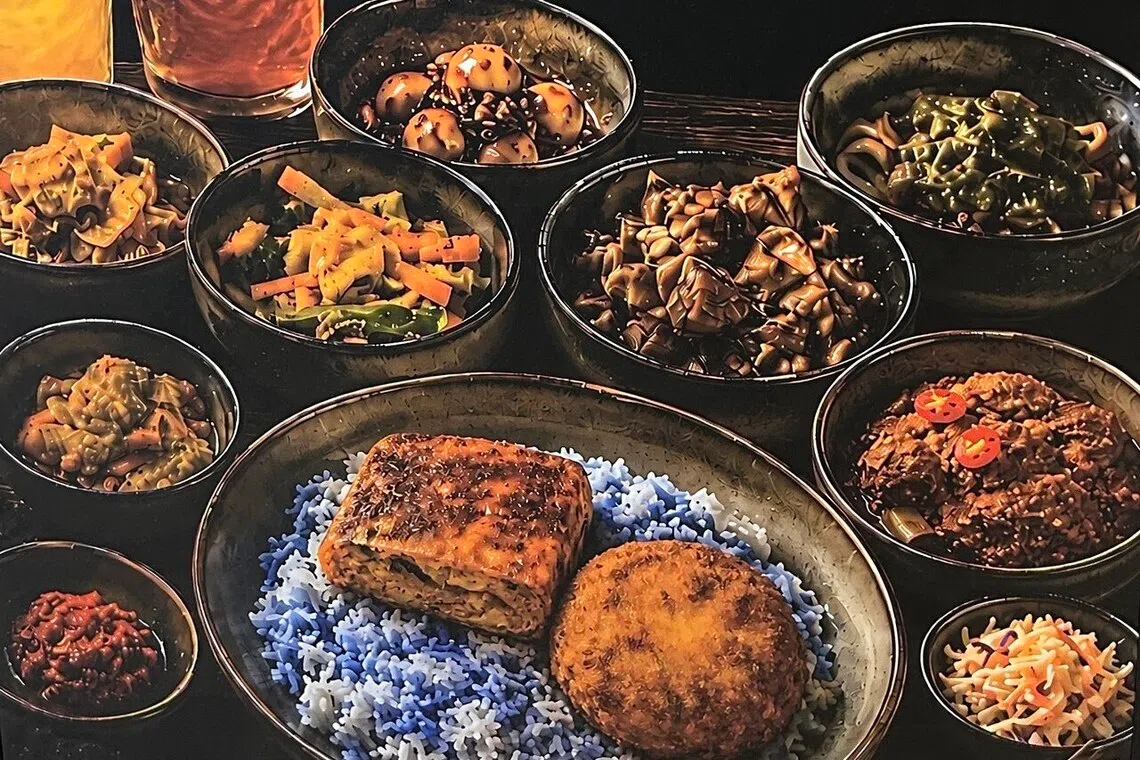
AI helps restaurants save time and money, but not all customers find AI-generated images appetising.
ST PHOTO: CHERIE LOK
Published Oct 31, 2026, 09:05 AM
Updated Oct 31, 2026, 09:05 AM
Singapore restaurants are using AI food images to cut costs and save time. Owners say they can launch marketing in days, not weeks, and spend far less than on traditional photo shoots.
The trend is growing as the F&B industry grows more volatile, with some businesses and agencies making AI images look more realistic and brand-safe. Demand for these services has risen.
Many customers dislike the images and fear the food will not match. Experts warn AI can mislead if it changes ingredients or portions, and it may damage trust at higher-end venues.
SINGAPORE – From a distance, everything looks about right.
Take a step closer, though, and the feeling of unreality settles in : The vegetables look webby and geometric, like the exoskeleton of a bug. Waxy, indistinct cuts of meat are glazed with the same tessellated pattern, approximating the texture of skin, herbs, spices.
And the rice – there is just something off about it.
Technically, it looks like rice, grains and all. But the longer you stare, the more your skin starts to itch. You wonder if you will ever crave rice again.
Behold: food marketing in 2026.
All around Singapore, in cafes and coffee shops, malls and markets, consumers are drawn into an inescapable game of Is This Cake? Except that instead of cake, the question is now: Is this real? Or was it coughed up by a machine that has never seen and tasted the delights of actual food?
This is not a local phenomenon. The world over, publications from The New York Times to The Guardian are asking the same question: Why does food look like this now?
A banner outside Sandaime Hiraki with AI-generated chicken wings. PHOTO: ST READER
A banner outside Sandaime Hiraki with AI-generated chicken wings.
Perhaps Singapore has been spared the worst of it. AI food advertisements have coughed up some unappetising conjurations of noodles and meat, but, mercifully, no ring shrimp or trypophobic burritos yet.
Still, why do restaurants choose to do this to themselves and their customers? What do they stand to gain from melting their lovingly honed creations into these uncanny AI facsimiles? And is the trade-off worth it?
Saving thousands of dollars
Apparently so, judging by the proliferation of AI food photos.
According to restaurants, AI is simply too cheap and too convenient to resist, especially with the F&B industry in this state.
Data from the Accounting and Corporate Regulatory Authority reveals that 2,101 F&B businesses here ceased operations in the first seven months of 2026 – a 25.1% jump from 2025. Many were plagued by the one-two punch of rising costs and inconsistent spending.
Faced with these vagaries, F&B operators are doing what they can to cut costs.
Take nasi padang chain Serangoon BBQ & Curry, for instance.
Two years ago, owner Eugene Tan would have had to budget around $2,000 for a full day of photography. He would have had to cook and plate all his new dishes, wait for the restaurant to clear out, hire a food stylist and wait for the photos to be edited – all of which could take several weeks.
“It’s just too much of a hassle in terms of labour and money,” says the 47-year-old, who switched to using AI photos to market his offerings in 2025.
New products can now be launched and promoted in as few as five days. No need to stage a whole photo shoot for a single dish any more. All he needs is his phone.
He photographs the various components of the dish, then feeds the pictures into ChatGPT, along with a reference image. And just like that, his marketing material is sorted in a few minutes, for around $25 a month.
“We were quite excited when we first used it,” Tan recalls. “Immediately, what came to mind was, ‘Wow, imagine the time and money we can save.’”
Time saved has also proven the key dividend for chef Vincent Pang, who uses AI to generate backgrounds and format posters in a matter of minutes.
“A designer’s final artwork may look more natural and have a human touch, and I recognise the value of that. But for us, the speed and flexibility of AI make a big difference,” says the 40-year-old founder of Thai restaurant IM JAI by Pun Im. “It allows us to move much faster when launching new menu items or marketing campaigns.”
But for Elaine Seah, owner of acai and protein bowl brand EnSeeds, this is not a process that can be rushed. In her case, a menu could take around a week to perfect, even with the help of AI.
When it comes to her protein bowls, she photographs each layer of ingredients individually, then feeds the photos into ChatGPT and asks it to put everything together. The result is a stack of ingredients meant to look “real”, but also a bit stylised.
“Sometimes, AI doesn’t give me the image I want and if you ask it to generate a new image too many times, the image will look very artificial. So you have to let it rest for a while, then open a new chat and ask another AI software to do it,” says Seah, who is in her 40s.
Once, she spent 15 hours trying to get the perfect photo. It was too much even for her valiant bot, which gave up at around 2am. “At that point, ChatGPT asked me if we could rest because it was tired.”
Acai and protein bowl brand EnSeeds uses AI to enhance its marketing photos. PHOTO: ENSEEDS
Acai and protein bowl brand EnSeeds uses AI to enhance its marketing photos.
Approximating reality
As AI reshapes the marketing industry, it is spawning a sub-sector of services primed to help companies thrive in this new frontier.
AI Studio, a local marketing agency founded in 2024, is one such firm.
It generates promotional images, menus, social media posts, delivery apps and anything else clients may need to promote their restaurant or business. So far, its clientele ranges wide, from small and medium-sized enterprises to enterprise businesses.
“The difference between coming to us and generating the image themselves is that we make sure everything’s consistent for the brand,” says founder Carol Tan, 36.
She charges a fee, but estimates that her services are still 50% to 70% cheaper than those of a traditional agency because she trims external manpower such as chefs and actors. And demand seems to be growing – she says i nquiries have multiplied by three to five times since May.
The shame surrounding using AI no longer exists, she says. “In the beginning, maybe they were embarrassed. But now, honestly, no. They want to be cutting edge, they want to scale.”
An AI-enhanced photo of a burger generated by AI Studio. PHOTO: AI STUDIO
An AI-enhanced photo of a burger generated by AI Studio.
She has developed a workflow that generates remarkably realistic images, just imperfect enough to almost pass off as the real thing: a flaking croissant, a burger surrounded by crumbs. Too glossy and the image will not pass muster.
“We do a lot of trial and error to make it look as real as possible,” she says. Of paramount importance to her team is trying to understand how textures differ across similar types of food.
“So when clients send us a photo of the food, our AI can identify what it is and then we can prompt it to keep the correct texture when we generate the image.”
The original photo which AI Studio used to generate its image of a burger. PHOTO: AI STUDIO
The original photo which AI Studio used to generate its image of a burger.
The reason most AI food looks off-putting is because business owners do not understand how the model works, she adds.
“If you don’t give the AI model specific information, it hallucinates and starts changing a lot of things because there are no clear instructions on where to go. You have to tell it what you don’t want it to adjust.”
The problem, according to IM JAI by Pun Im’s Pang, is that the chatbot does not always listen.
When he generates posters, ChatGPT often insists on distorting his food images and casting a telltale sheen over them, despite explicit instructions not to do so.
“We sometimes have to correct this manually in Canva by replacing the altered food images with the original images,” he says.
What customers think
AI, to put it lightly, is something of a controversial topic even in Singapore, whose future-anxious population seems to have largely embraced the use of chatbots in work, school and life.
Still, sceptics remain. A 2026 report by research firm YouGov and media intelligence company Meltwate, found that misinformation remains a top concern, with 74% of Singaporean respondents worrying that AI could be used to create fake news or scams.
Grace Tay, a 33-year-old account director, says she will avoid a restaurant she has never tried if it uses AI photos to market its food. “What if the food doesn’t end up looking like what is shown?”
A menu at a hawker stall with AI food images. ST PHOTO: CHERIE LOK
A menu at a hawker stall with AI food images.
Administrative assistant Ruby Chan, 24, is also turned off by such images. “It feels insincere and sad,” she says.
To other consumers like Desiree Koh, a 49-year-old writer, AI content inspires stronger feelings of revulsion: “Horrible”, “tasteless” and “distasteful” were her few choice words.
“If they can’t discern how aesthetically unappealing AI slop looks, and actually don’t mind their food represented as AI slop, I can’t imagine they take higher pride in what they cook,” she says.
“I understand these may be casual eateries and small businesses without spacious marketing budgets, but it doesn’t cost much more to design a poster using pictures taken with a smartphone, which is what businesses have been doing for the last decade.
“Even if these posters and menus are more simple in design, they exude much more sincerity and ownership of the food cooked and presented.”
But if consumers are voting with their feet, then the verdict so far seems to be that these images can stay.
“They don’t really care, ” says Seah from EnSeeds, who says her business has not been affected by her turn to AI.
Serangoon BBQ & Curry’s owner Tan is not about to let a little criticism force him to reverse course either.
Twice already he has had to appease unhappy customers. One customer e-mailed to complain that the image advertised did not resemble the real dish, to which his team responded by handing out vouchers as apology and regenerating a more realistic image.
Another left a Google review urging the chain to change the AI images that did not “do justice” to the real-life dish.
His response: “Now, we’re using version three of our photos. I think this version looks a little bit closer to what the actual food looks like because, over time, we’ve been training ChatGPT to generate what we want.”
Ultimately, those who bother to voice their objections to AI images are but a small minority, he concludes.
By and large, he believes most customers are aware that many businesses are using AI to generate marketing collateral. “They’ll also take it with a pinch of salt when they see something being publicised.”
Who can get away with it
Besides, he points out, even before AI came along, businesses were dressing up their products with plastic models and Photoshop.
Consumers , he says, have been conditioned to overlook these exaggerations – few people seriously expect to receive two perfect buns and thick, glistening beef patties from McDonald’s , after all.
Alison Ang, senior lecturer at Republic Polytechnic’s School of Hospitality, notes that consumers are more willing to allow fast-food chains a certain amount of slack.
“We accept that food styling represents an idealised, staged version of the real physical dish,” she says.
A dramatised image of tiramisu by AI Studio. PHOTO: AI STUDIO
A dramatised image of tiramisu by AI Studio.
But AI images are fundamentally different because, in many cases, they are “created entirely out of data without ever touching real food”, she adds.
According to Bryan Tan, chairman of the Advertising Standards Authority of Singapore, AI images of food are considered misleading or false if they do not truthfully represent the actual product that the consumer receives – for instance, by adding components not actually included in the dish or skewing its proportions.
“AI can go much further,” adds Samer Elhajjar, senior lecturer of marketing at the National University of Singapore.
So the question he would ask as a consumer is: Is this still an enhanced representation of the product or is it showing people something that does not really exist? “The further we move towards the latter, the more problematic it becomes.”
His advice to businesses is that their AI images should remain reasonably faithful to what customers will receive, especially when it comes to portion sizes, ingredients, colours and presentation.
That said, while customers might be willing to forgive the cost-saving efforts of a casual food business, Ang warns that heritage institutions, fine-dining restaurants and artisanal eateries that bank on authenticity might not be permitted such leniency.
“Research has shown that consumers evaluate heritage dining based on food authenticity, nostalgia and cultural craftsmanship. Introducing AI imagery contradicts the core brand promise of heritage, causing severe consumer pushback and loss of faith,” she says.
Similarly, customers at high-end restaurants pay a premium for excellence and culinary artistry. “Using synthetic images cheapens the establishment, signals brand insincerity and, ultimately destroys trust.”
To balance cost savings with brand integrity, researchers suggest limiting the use of AI to side tasks – for example, by generating background elements instead of the dish itself, as Pang says he tries to do.
But what does the rise of AI mean for food photographers, whose livelihoods depend on demand for professional food photos?
While Brian Bong’s earnings have not been affected overall, he has noticed a shift in client budgets. Whereas in the past, he might have handled the entire process, from set-up to editing, clients are now asking him to leave the post-production work to AI.
“The mindset now is that they just need a photo of the food against a clean white background, which eliminates all that pre-planning. It’s like doing green-screen work,” says the 32-year-old food photographer.
He now earns 10% to 15% less on certain jobs, but shorter projects also mean more time to take on commissions. And the numerical fluctuations do not bother him as much as the satisfaction he derives from his work – or lack thereof.
“At the end of the day, with my job, I love the different creative aspects that come into it, from the pre-production down to the final result. That’s what makes my job so fulfilling,” he says.
So when a part of that process is stripped away and fed to a machine, it erodes his sense of ownership. “You just don’t feel proud of sharing that work. It’s also like you don’t really want people to acknowledge that this is your work.”
Singapore-based photographer Nikko Pascua, 34, has also turned down jobs that require him to collaborate with AI instead of fellow creatives like food stylists.
He says: “Just thinking about how many jobs I’ll be cutting, to me, it felt a bit insane to ask creatives who value their craft to integrate gen AI into their work.”
Food and drink at Cudo, photographed by Nikko Pascua. PHOTO: NIKKO PASCUA
Food and drink at Cudo, photographed by Nikko Pascua.
Although it has resulted in a slight dip in business, these companies were not his main target audience anyway.
“I’m thankful to be working with clients who have enough respect for their own products, so it hasn’t affected me that badly so far,” he says, adding that he harbours no ill will towards those that turn to AI.
“As a business owner, I understand. If something isn’t really a priority and I feel that my money could go to other things like paying my team properly, then it’s completely understandable.”
Dishes at The Coach Restaurant in Jewel. PHOTO: NIKKO PASCUA
Dishes at The Coach Restaurant in Jewel.
But what these restaurants save in money, they lose in craveability , he charges.
AI images might be able to imitate the visual details of a dish or ingredient, he says , but they often fail to capture the essence of a scene.
These are the tiny details informed by years of practice that draw viewers into a photo to imagine themselves seated at that table, about to tuck into a meal prepared, plated and served hot by human hands.
Restaurants/Eateries
AI/artificial intelligence
Advertising and marketing
人工智能可以帮助餐厅节省时间和金钱,但并非所有顾客都觉得人工智能生成的图像诱人。
《海峡时报》照片:洛克·谢丽
发布于 2026 年 10 月 31 日上午 9:05
更新于2026年10月31日上午9:05
新加坡的餐厅正在利用人工智能生成的食品图像来降低成本并节省时间。餐厅老板表示,他们现在可以在几天内而不是几周内开展营销活动,而且花费也远低于传统的照片拍摄。
随着餐饮行业波动性加剧,这一趋势日益明显,一些企业和机构致力于使人工智能生成的图像更加逼真且符合品牌安全标准。对这类服务的需求也随之增长。
许多顾客不喜欢这些图片,担心食物实物与图片不符。专家警告说,如果人工智能更改食材或份量,可能会误导消费者,并可能损害高端餐厅的信誉。
新加坡——从远处看,一切似乎都很正常。
然而,走近一些,那种不真实的感觉便油然而生:蔬菜看起来像蛛网般交错,几何形状交织,如同昆虫的外骨骼。蜡质的、形状模糊的肉块上也涂着同样的镶嵌图案,近似于皮肤、香草和香料的质感。
还有那米饭——总感觉哪里不对劲。
从外形上看,它确实像米饭,粒粒分明。但你盯着它看的时间越长,皮肤就越痒。你开始怀疑自己是否还会想吃米饭。
请看:2026年的食品营销。
在新加坡各地,咖啡馆、商场和市场里,消费者们都无法摆脱“这是蛋糕吗?”这个游戏。只不过,现在的问题不是蛋糕,而是:这是真的吗?还是从未见过、尝过真正食物美味的机器吐出来的?
这并非局部现象。世界各地的媒体,从《纽约时报》到《卫报》,都在提出同样的问题:为什么现在的食物看起来是这个样子?
三代目平木餐厅外的横幅上印着人工智能生成的鸡翅。(图片来源:ST读者)
三代目平木店外挂着一条横幅,上面印着人工智能生成的鸡翅。
或许新加坡已经躲过了最糟糕的情况。人工智能食品广告虽然炮制出了一些令人倒胃口的面条和肉类组合,但值得庆幸的是,目前还没有出现环虾或密集恐惧症患者才会喜欢的墨西哥卷饼。
然而,餐厅为什么要选择这样做来对待自己和顾客呢?将他们精心打造的菜肴融入这些逼真的AI复制品中,他们能获得什么好处?这种权衡值得吗?
节省数千美元
从人工智能美食照片的激增来看,情况似乎确实如此。
餐饮业人士表示,人工智能价格太低、使用太方便,难以抗拒,尤其是在餐饮业目前这种状态下。
会计与企业管理局的数据显示,2026 年前七个月,本地共有 2101 家餐饮企业停业,比 2025 年增长了 25.1%。许多企业受到成本上升和支出不稳定的双重打击。
面对这些变数,餐饮经营者正在尽一切可能削减成本。
以巴东炒饭连锁店实龙岗烧烤和咖喱为例。
两年前,餐厅老板尤金·谭(Eugene Tan)如果要拍摄一整天的菜肴,预算大约需要2000美元。他需要烹饪并摆盘所有新菜品,等待餐厅清空,聘请美食造型师,并等待照片后期处理——所有这些可能需要几周时间。
“这在人力和金钱方面都太麻烦了,”这位 47 岁的企业家说道,他于 2025 年转而使用 AI 照片来推销自己的产品。
新产品现在只需五天即可上市推广。再也不用为一道菜拍全套照片了。他只需要一部手机。
他拍摄菜肴的各个组成部分,然后将照片连同参考图片一起上传到 ChatGPT。就这样,他的营销素材几分钟内就整理好了,每月费用大约 25 美元。
“我们第一次使用它的时候非常兴奋,”谭回忆道。“我们当时立刻想到的是,‘哇,想想我们能节省多少时间和金钱啊!’”
节省的时间也证明了人工智能对厨师 Vincent Pang 的重要性,他利用人工智能在几分钟内生成背景并制作海报。
“设计师的最终作品可能看起来更自然,更有人工痕迹,我认可这一点。但对我们来说,人工智能的速度和灵活性至关重要,”40岁的泰式餐厅IM JAI by Pun Im的创始人说道。“它让我们在推出新菜品或营销活动时能够更快地行动。”
但对于巴西莓和蛋白碗品牌 EnSeeds 的创始人 Elaine Seah 来说,这个过程急不得。即使借助人工智能,她也需要大约一周的时间来完善菜单。
制作蛋白碗时,她会分别拍摄每层食材的照片,然后将照片导入 ChatGPT,让它自动将所有食材组合在一起。最终呈现的食材堆看起来“真实”,但又略带一些风格化的效果。
“有时候,人工智能无法生成我想要的图像,如果你让它生成新图像的次数过多,图像看起来就会非常不自然。所以你必须让它休息一段时间,然后再打开一个新的聊天窗口,让另一个人工智能软件来完成这项工作,”40多岁的Seah说道。
她曾花了15个小时试图拍出一张完美的照片。即使是她英勇的机器人也力不从心,最终在凌晨2点左右放弃了。“那时,ChatGPT问我我们能不能休息一下,因为它累了。”
巴西莓果碗和蛋白碗品牌 EnSeeds 利用人工智能技术优化其营销图片。图片来源:ENSEEDS
巴西莓果和蛋白碗品牌 EnSeeds 利用人工智能技术增强其营销照片。
近似现实
随着人工智能重塑营销行业,它正在催生一个服务子行业,旨在帮助企业在这个新领域蓬勃发展。
AI Studio 是一家成立于 2024 年的本地营销机构,就是这样一家公司。
它能生成宣传图片、菜单、社交媒体帖子、外卖应用以及客户推广餐厅或业务所需的任何其他素材。目前,其客户群体十分广泛,涵盖中小企业到大型企业。
“客户来找我们和他们自己创作形象的区别在于,我们会确保一切都与品牌保持一致,”36岁的创始人Carol Tan说道。
她收取服务费,但估计她的服务价格仍然比传统经纪公司便宜50%到70%,因为她省去了厨师和演员等外部人员的费用。而且需求似乎还在增长——她说自5月份以来,咨询量增加了三到五倍。
她表示,人们对使用人工智能的羞耻感已经消失了。“一开始,他们或许会感到尴尬。但现在,说实话,不会了。他们想要走在时代前沿,他们想要扩大规模。”
一张由AI Studio生成的、经人工智能增强的汉堡照片。照片:AI STUDIO
由 AI Studio 生成的经 AI 增强的汉堡照片。
她开发了一套工作流程,可以生成极其逼真的图像,这些图像恰到好处地保留了一些瑕疵,几乎可以以假乱真:比如酥脆的牛角面包,裹满面包屑的汉堡。如果图像过于光滑,就达不到标准。
“我们反复试验,力求做到尽可能逼真,”她说。对她的团队来说,至关重要的是要了解相似食物类型之间质地上的差异。
“所以当客户向我们发送食物照片时,我们的人工智能可以识别出这是什么食物,然后我们可以指示它在生成图像时保持正确的质地。”
AI Studio 用来生成汉堡图像的原始照片。照片:AI STUDIO
AI Studio 用来生成汉堡图像的原始照片。
她补充说,大多数人工智能食品看起来令人反感的原因是,企业主不了解这种模式是如何运作的。
“如果你不给人工智能模型提供具体信息,它就会产生幻觉,开始随意改变很多东西,因为没有明确的指令告诉它该怎么做。你必须告诉它你不希望它调整什么。”
据 Pun Im 的 Pang 所称的 IM JAI 指出,问题在于聊天机器人并非总是听从用户的指令。
ChatGPT 在制作海报时,经常坚持扭曲食物图片,并在图片上添加明显的光泽,尽管有明确的指示要求不要这样做。
他说:“我们有时需要在 Canva 中手动纠正这个问题,将修改过的食物图片替换成原始图片。”
顾客的看法
即使在新加坡,人工智能也是一个颇具争议的话题,尽管新加坡民众对未来感到焦虑,但他们似乎已经普遍接受了在工作、学习和生活中使用聊天机器人。
尽管如此,怀疑者依然存在。市场调研公司YouGov和媒体情报公司Meltwate联合发布的一份2026年报告显示,虚假信息仍然是人们最担忧的问题之一,74%的新加坡受访者担心人工智能可能被用于制造假新闻或诈骗。
33岁的客户总监Grace Tay表示,如果餐厅使用人工智能拍摄的照片来宣传菜品,她会避免去尝试。“万一食物实物和照片上的不一样怎么办?”
小贩摊位上的菜单,配有人工智能生成的食品图片。(海峡时报摄影:CHERIE LOK)
小贩摊位上的菜单,配有人工智能生成的食品图片。
24岁的行政助理Ruby Chan也对这类照片感到反感。“感觉很不真诚,也很可悲,”她说。
对于像 49 岁的作家 Desiree Koh 这样的其他消费者来说,人工智能内容会激起更强烈的反感:“可怕”、“没品”和“令人厌恶”是她最常用的几个词。
“如果他们无法分辨人工智能烹饪出来的食物在美学上有多么糟糕,而且实际上并不介意自己的食物被描述成人工智能烹饪出来的食物,我无法想象他们会对自己烹饪的食物有更高的自豪感,”她说。
“我知道这些可能是休闲餐馆和小企业,没有充足的营销预算,但是用智能手机拍摄的照片设计海报并不会花费太多钱,而这正是企业在过去十年中一直在做的事情。
“即使这些海报和菜单的设计比较简单,但它们却散发出更多的真诚和对所烹饪和呈现的食物的掌控感。”
但如果消费者用脚投票,那么目前的结论似乎是这些形象可以保留下来。
“他们其实并不在意,”来自 EnSeeds 的 Seah 说,她表示自己的业务并没有因为转向人工智能而受到影响。
实龙岗烧烤咖喱店的老板陈先生也不会因为一点批评就改变主意。
他已经两次不得不安抚不满的顾客。一位顾客发邮件投诉说广告图片与实物不符,他的团队对此的回应是发放代金券作为道歉,并重新制作了一张更真实的图片。
另一位顾客在谷歌上留下评论,敦促该连锁餐厅更改人工智能生成的图片,因为这些图片“未能真实展现”菜肴的美味。
他的回应是:“现在,我们使用的是照片的第三版。我认为这个版本看起来更接近食物的真实样子,因为我们一直在训练 ChatGPT 来生成我们想要的内容。”
他总结道,最终,那些费心表达对人工智能图像反对意见的人只是少数。
他认为,总体而言,大多数消费者都知道许多企业正在使用人工智能来制作营销材料。“但他们看到相关宣传时也会持怀疑态度。”
谁能逃脱惩罚?
此外,他还指出,即使在人工智能出现之前,企业就已经用塑料模型和 Photoshop 来美化他们的产品了。
他说,消费者已经习惯于忽略这些夸张的说法——毕竟,很少有人会真的期望从麦当劳得到两个完美的面包和厚厚的、闪闪发光的牛肉饼。
新加坡共和理工学院酒店管理学院高级讲师艾莉森·昂指出,消费者更愿意对快餐连锁店给予一定的宽容。
“我们认为食物造型代表的是真实菜肴的理想化、摆拍版本,”她说。
AI Studio 制作的提拉米苏精美图片。图片:AI STUDIO
AI Studio制作的提拉米苏的戏剧化图像。
但她补充说,人工智能图像从根本上来说是不同的,因为在很多情况下,它们“完全由数据创建,从未接触过真正的食物”。
新加坡广告标准局主席布莱恩·谭表示,如果人工智能生成的食物图像不能真实反映消费者实际收到的产品,例如添加菜肴中实际不存在的成分或扭曲其比例,则这些图像将被视为误导性或虚假的。
“人工智能还可以做得更好,”新加坡国立大学市场营销高级讲师萨默·埃尔哈贾尔补充道。
所以,作为消费者,他会问自己:这究竟是对产品的一种增强展示,还是在向人们展示一些并不真正存在的东西?“我们越是倾向于后者,问题就越严重。”
他给企业的建议是,他们的 AI 图像应该与顾客将收到的实物保持相当程度的一致性,尤其是在份量、成分、颜色和摆盘方面。
也就是说,虽然顾客可能愿意原谅休闲餐饮企业节省成本的做法,但Ang警告说,依靠正宗风味的传统机构、高级餐厅和手工餐馆可能不会被允许给予这种宽容。
“研究表明,消费者评价传统餐饮的标准包括食物的真实性、怀旧情怀和文化工艺。引入人工智能图像与传承这一核心品牌承诺背道而驰,导致消费者强烈抵制和信任度下降,”她说道。
同样,高档餐厅的顾客愿意为卓越的品质和精湛的烹饪技艺支付更高的价格。“使用合成图像会降低餐厅的档次,传递出品牌不真诚的信号,最终破坏信任。”
为了在节约成本和维护品牌完整性之间取得平衡,研究人员建议将人工智能的使用限制在辅助任务上——例如,生成背景元素而不是菜肴本身,正如 Pang 所说,他正在尝试这样做。
但人工智能的兴起对美食摄影师意味着什么呢?他们的生计依赖于对专业美食照片的需求。
虽然布莱恩·邦的整体收入并未受到影响,但他注意到客户预算发生了变化。过去,他可能包揽从前期筹备到后期剪辑的整个流程,而现在客户则要求他将后期制作工作交给人工智能。
“现在的想法是,他们只需要一张食物在纯白色背景下的照片,这就省去了所有前期准备工作。这就像做绿幕拍摄一样,”这位32岁的食品摄影师说道。
他现在某些工作的收入减少了10%到15%,但项目周期缩短也意味着他有更多时间接一些委托。而且,收入的波动远不如工作本身(或者说缺乏工作)带给他的满足感来得重要。
“说到底,我热爱我的工作,因为它包含了各种各样的创意环节,从前期制作到最终成果。这正是我的工作如此令人满足的原因,”他说。
所以,当创作过程中的一部分被剥离并交给机器处理时,他的主人翁意识就会被削弱。“你不会为分享自己的作品感到自豪。而且,你似乎也不希望别人承认这是你的作品。”
现年 34 岁的新加坡摄影师 Nikko Pascua 也拒绝了一些需要他与人工智能合作而不是与食品造型师等其他创意人士合作的工作。
他说:“一想到要裁掉多少工作岗位,我就觉得,要求那些重视自己技艺的创意人员将人工智能融入到他们的作品中,这简直有点疯狂。”
Cudo餐厅的美食和饮品,由Nikko Pascua拍摄。照片:NIKKO PASCUA
Cudo餐厅的美食和饮品,由Nikko Pascua拍摄。
虽然这导致业务略有下滑,但这些公司本来就不是他的主要目标客户。
“我很庆幸能与那些足够尊重自己产品的客户合作,所以到目前为止,这件事对我的影响还不算太大,”他说,并补充说,他对那些转向人工智能的人没有任何恶意。
“作为企业主,我能理解。如果某件事并非当务之急,我觉得我的钱可以用于其他方面,比如合理支付员工工资,那完全可以理解。”
Jewel购物中心The Coach餐厅的菜肴。摄影:NIKKO PASCUA
Jewel购物中心Coach餐厅的菜肴。
但他指出,这些餐厅虽然省了钱,却失去了食物的吸引力。
他表示,人工智能图像或许能够模仿菜肴或食材的视觉细节,但往往无法捕捉到场景的精髓。
这些经过多年实践积累的细微之处,能够吸引观者进入照片,想象自己坐在那张桌子旁,即将享用由人手准备、摆盘和端上的热腾腾的饭菜。
餐厅/餐馆
人工智能
广告与营销