Project Wolbachia now covers more than half of all households in Singapore沃尔巴克氏体项目目前已覆盖新加坡超过一半的家庭。
Project Wolbachia now covers 53% of Singapore households as dengue cases fall, but officials warn the fight against mosquitoes must continue. Read more at straitstimes.com.
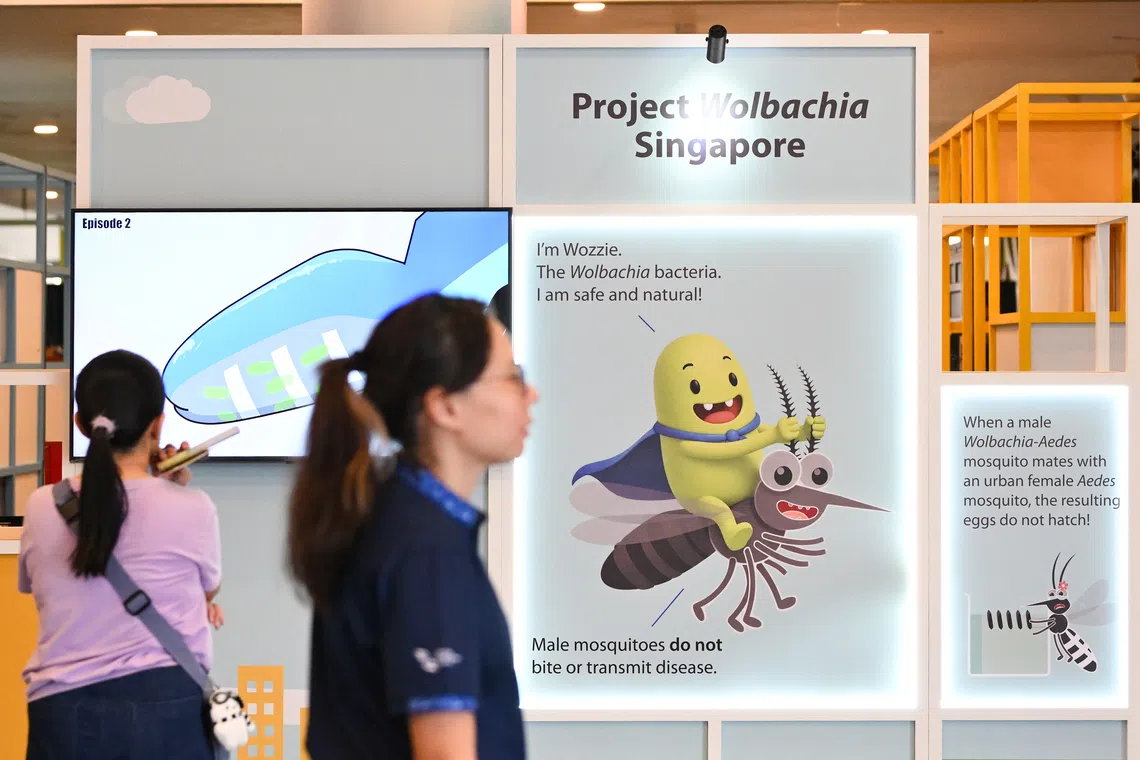
From a small-scale field study at three sites in 2016, Project Wolbachia – Singapore has expanded to cover more than 840,000 households, or 53 per cent of all households in Singapore.
ST PHOTO: LIM YAOHUI
Published Oct 31, 2026, 05:00 PM
Updated Oct 31, 2026, 05:00 PM
Project Wolbachia now covers 53% of Singapore households, or more than 840,000 homes, after 10 years.
Research found Aedes aegypti numbers fell 80% to 90% in covered areas, and dengue risk dropped by more than 70%.
NEA warns dengue is not over. Cases rose in the third quarter of 2026, DENV-3 became the main strain, and officials say people must remove stagnant water and stay alert.
SINGAPORE - A decade after being introduced, Project Wolbachia – an initiative to control dengue through the release of lab-grown mosquitoes – now covers over half of all households in Singapore.
Following a launch in Ang Mo Kio on Oct 6, Project Wolbachia now covers more than 840,000 households – or 53% of all households here – covering most of the areas at risk of large dengue outbreaks.
This was announced on Oct 31 by Senior Minister of State for Sustainability and the Environment Janil Puthucheary at an event marking the initiative’s 10th anniversary, held at Our Tampines Hub.
Beginning in 2016, Project Wolbachia aims to control the Aedes mosquito population here via the release of male mosquitoes infected with the Wolbachia bacteria.
Female mosquitoes that mate with these males produce eggs that do not hatch, thus reducing the mosquito population over time.
In February, research published in the New England Journal of Medicine found that the Aedes aegypti mosquito populations were reduced by 80 to 90 % in areas covered by Project Wolbachia , while the dengue risk for residents in these areas fell by over 70 % .
Dengue cases here have been decreasing amid the project’s expansion, with the number of reported cases hitting a seven-year low of 4,036 in 2025 – a 70 % drop from the 13,651 recorded in 2024 .
Lee Tee Loon, chairman of the Citizens’ Consultative Committee in Braddell Heights – one of the first sites for Project Wolbachia in 2016 – noted some anxiety among residents when the initiative was first launched.
“After some time, they understood that it was something good for the community, in terms of addressing the dengue fever issue,” he said.
Speaking at the Oct 31 event, Janil cautioned that Project Wolbachia is not a silver bullet.
“Dengue prevention remains a shared responsibility. We must continue to keep our homes and neighbourhood free of mosquito breeding, so that we can sustain the progress we have made,” he said.
He noted also that while the initiative specifically targets the Aedes aegypti species, Singapore hosts many different mosquito species, some of which can also transmit diseases like dengue, Zika and chikungunya.
“By keeping our homes and surroundings free of stagnant water, we can prevent mosquitoes from breeding and protect our families and neighbours,” he said.
(3rd from left onwards) Grassroots Adviser for Tampines West Masagos Zulkifli, Senior Minister of State for Sustainability and the Environment Janil Puthucheary, Grassroots Adviser for Nee Soon Link Syed Harun Alhabsyi and Grassroots Adviser for Serangoon Chan Hui Yuh interacts with the public at the Project Wolbachia 10th Anniversary Community Carnival on Oct 31. ST PHOTO: LIM YAOHUI
(3rd from left onwards) Grassroots Adviser for Tampines West Masagos Zulkifli, Senior Minister of State for Sustainability and the Environment Janil Puthucheary, Grassroots Adviser for Nee Soon Link Syed Harun Alhabsyi and Grassroots Adviser for Serangoon Chan Hui Yuh interacts with the public at the Project Wolbachia 10th Anniversary Community Carnival on Oct 31.
When asked about plans to expand Project Wolbachia, Ng Lee Ching – group director of the National Environment Agency’s (NEA) Environmental Health Institute – said NEA would assess the current situation before making any further decisions.
The event also saw NEA launch a new children’s book, featuring Project Wolbachia’s mascot Wozzie.
To be available at public libraries, Kai’s Tiny Adventure with Wozzie aims to introduce young readers to the science behind the initiative and encourage them to keep their communities safe from dengue.
Dengue deaths in 2026
Mosquito larvae on display during Project Wolbachia 10th Anniversary Community Carnival at Our Tampines Hub on Oct 31. ST PHOTO: LIM YAOHUI
Mosquito larvae on display during Project Wolbachia 10th Anniversary Community Carnival at Our Tampines Hub on Oct 31.
NEA data showed that there have been 2,564 cases of dengue reported here in the first three quarters of 2026, a 25% decrease from the 3,457 recorded over the same period in 2025.
However, the number of dengue cases in the third quarter increased 79.7% from the previous quarter, with 1,384 cases recorded between July and September, compared to 770 for the period between April and June.
There was also one reported death from the disease in the third quarter, bringing the total number of dengue deaths to three for 2026.
This comes as the DENV-3 serotype makes up 45.9% of dengue cases here as of end-September, replacing DENV-2 as the dominant strain of dengue.
A switch in the dominant serotype is typically followed by a spike in dengue cases, due to lower immunity to the new strain.
NEA’s Ng noted the increase occurred during the peak dengue season, which usually falls between May and October as warmer weather accelerates mosquito breeding.
Another possible factor is the ongoing El Nino phenomenon, she added.
El Nino – a climate pattern associated with the unusual warming of surface waters in the eastern tropical Pacific Ocean – brings hotter and drier weather that accelerates the life cycle of Aedes mosquitoes and increases the risk of a dengue outbreak.
Raman Velayudhan, deputy chair of the NEA’s dengue expert advisory panel, noted that dengue cases worldwide had fallen in recent years, with the European Centre for Disease Prevention and Control recording about two million cases so far in 2026, down from 14 million in 2024.
However a combination of factors – including the El Nino phenomenon and changing weather patterns as a result of climate change – could result in 2027 seeing an increase in case numbers worldwide, including in Singapore, he said.
Raman, who previously headed the veterinary public health, vector control and environment unit of the World Health Organization’s Global Neglected Tropical Diseases Programme, said: “So, we need to be on our guard.”
Zhaki Abdullah is a correspondent at The Straits Times. He is on the health beat, in addition to occasionally covering science, environmental, tech and Muslim affairs issues.
National Environment Agency
从 2016 年在三个地点进行的小规模实地研究开始,沃尔巴克氏体项目——新加坡已经扩展到覆盖超过 84 万户家庭,占新加坡所有家庭的 53%。
ST 照片:林耀辉
发布于2026年10月31日下午5:00
更新于2026年10月31日下午5:00
经过 10 年的时间,沃尔巴克氏体项目现已覆盖新加坡 53% 的家庭,即超过 84 万户家庭。
研究发现,在覆盖区域内,埃及伊蚊的数量下降了 80% 至 90%,登革热风险下降了 70% 以上。
国家环境局警告称,登革热疫情尚未结束。2026年第三季度病例数上升,DENV-3毒株成为主要流行毒株,官员表示民众必须清除积水并保持警惕。
新加坡——沃尔巴克氏体计划(一项通过释放实验室培育的蚊子来控制登革热的计划)推出十年后,现已覆盖新加坡一半以上的家庭。
继 10 月 6 日在宏茂桥启动后,沃尔巴克氏体项目现已覆盖超过 84 万户家庭,占新加坡所有家庭的 53%,覆盖了大部分可能爆发大规模登革热疫情的地区。
10 月 31 日,永续发展及环境部高级政务部长贾尼尔·普图切里在淡滨尼天地举行的该倡议成立 10 周年纪念活动上宣布了这一消息。
从 2016 年开始,沃尔巴克氏体项目旨在通过释放感染了沃尔巴克氏体细菌的雄性蚊子来控制这里的伊蚊数量。
与这些雄蚊交配的雌蚊产下的卵不会孵化,从而随着时间的推移减少蚊子的数量。
今年 2 月,《新英格兰医学杂志》发表的一项研究发现,在沃尔巴克氏体项目覆盖的地区,埃及伊蚊的数量减少了 80% 到 90%,而这些地区居民感染登革热的风险下降了 70% 以上。
随着该项目的扩展,这里的登革热病例一直在减少,2025 年报告的病例数达到七年来的最低点 4,036 例,比 2024 年记录的 13,651 例下降了 70%。
布莱德尔高地市民咨询委员会主席李迪伦(Lee Tee Loon)指出,该计划最初启动时,布莱德尔高地是 2016 年沃尔巴克氏体项目最早的试点地区之一,当时居民们对此感到有些焦虑。
“过了一段时间,他们意识到这对于社区来说是一件好事,有助于解决登革热问题,”他说。
在 10 月 31 日的活动上,贾尼尔提醒说,沃尔巴克氏体项目并不是万灵药。
他说:“预防登革热仍然是我们共同的责任。我们必须继续保持家庭和社区没有蚊子滋生地,这样才能巩固我们已经取得的进展。”
他还指出,虽然该倡议专门针对埃及伊蚊,但新加坡有很多不同的蚊子种类,其中一些还可以传播登革热、寨卡病毒和基孔肯雅热等疾病。
他说:“保持房屋和周围环境清洁,避免积水,可以防止蚊子滋生,保护我们的家人和邻居。”
(从左起第三位)淡滨尼西区基层顾问马善高、永续发展及环境部高级政务部长普图切里、义顺连区基层顾问赛哈伦·阿尔哈布西以及实龙岗区基层顾问陈慧瑜于10月31日在沃尔巴克氏体计划十周年社区嘉年华上与公众互动。(海峡时报摄影:林耀辉)
(从左数第三位开始)淡滨尼西区基层顾问马善高、永续发展及环境部高级政务部长贾尼尔·普图切里、义顺连区基层顾问赛义德·哈伦·阿尔哈布西和实龙岗区基层顾问陈慧瑜于 10 月 31 日在沃尔巴克氏体项目 10 周年社区嘉年华上与公众互动。
当被问及扩大沃尔巴克氏体项目的计划时,国家环境局(NEA)环境卫生研究所组长吴丽清表示,NEA将在做出任何进一步决定之前评估当前情况。
活动期间,美国国家艺术基金会还推出了一本新的儿童读物,书中的主角是沃尔巴克氏体计划的吉祥物沃兹。
《凯与沃兹熊的小小冒险》将在公共图书馆提供,旨在向小读者介绍这项倡议背后的科学原理,并鼓励他们保护自己的社区免受登革热的侵害。
2026年登革热死亡人数
10月31日,在淡滨尼天地举办的“沃尔巴克氏体计划十周年社区嘉年华”上,展出了蚊子幼虫。(海峡时报摄影:林耀辉)
10 月 31 日,在淡滨尼天地举办的“沃尔巴克氏体计划 10 周年社区嘉年华”上,展出了蚊子幼虫。
国家环境局数据显示,2026 年前三个季度,新加坡共报告了 2564 例登革热病例,比 2025 年同期记录的 3457 例减少了 25%。
然而,第三季度登革热病例数比上一季度增加了 79.7%,7 月至 9 月期间记录了 1384 例病例,而 4 月至 6 月期间记录了 770 例病例。
第三季度报告了一例因该疾病导致的死亡病例,使 2026 年登革热死亡总数达到三例。
截至 9 月底,DENV-3 血清型占本地登革热病例的 45.9%,取代 DENV-2 成为登革热的主要毒株。
由于对新毒株的免疫力较低,登革热主要血清型的转变通常会导致登革热病例激增。
国家环境局的吴指出,病例增加正值登革热高发季节,通常在 5 月至 10 月之间,因为天气转暖会加速蚊子的繁殖。
她补充说,另一个可能的因素是持续的厄尔尼诺现象。
厄尔尼诺现象是一种与东太平洋热带海域表层水异常变暖相关的气候模式,它会带来更热更干燥的天气,加速伊蚊的生命周期,增加登革热爆发的风险。
国家环境局登革热专家咨询小组副主席拉曼·韦拉尤丹指出,近年来全球登革热病例有所下降,欧洲疾病预防控制中心记录显示,2026 年迄今为止约有 200 万例病例,低于 2024 年的 1400 万例。
但他表示,多种因素共同作用——包括厄尔尼诺现象和气候变化导致的天气模式变化——可能导致2027年全球病例数量增加,包括新加坡。
曾任世界卫生组织全球被忽视的热带病规划兽医公共卫生、病媒控制和环境部门负责人的拉曼说:“所以,我们需要保持警惕。”
扎基·阿卜杜拉是《海峡时报》的记者。他主要负责健康新闻报道,偶尔也报道科学、环境、科技和穆斯林事务等议题。
国家环境局