Why is Putien’s founder working as an outlet manager despite running a $400 million F&B group?为什么莆田的创始人经营着一家价值 4 亿美元的餐饮集团,却只担任门店经理?
Putien founder Fong Chi Chung returns as outlet manager at Kitchener Road as the restaurant marks its 26th anniversary. Read more at straitstimes.com.
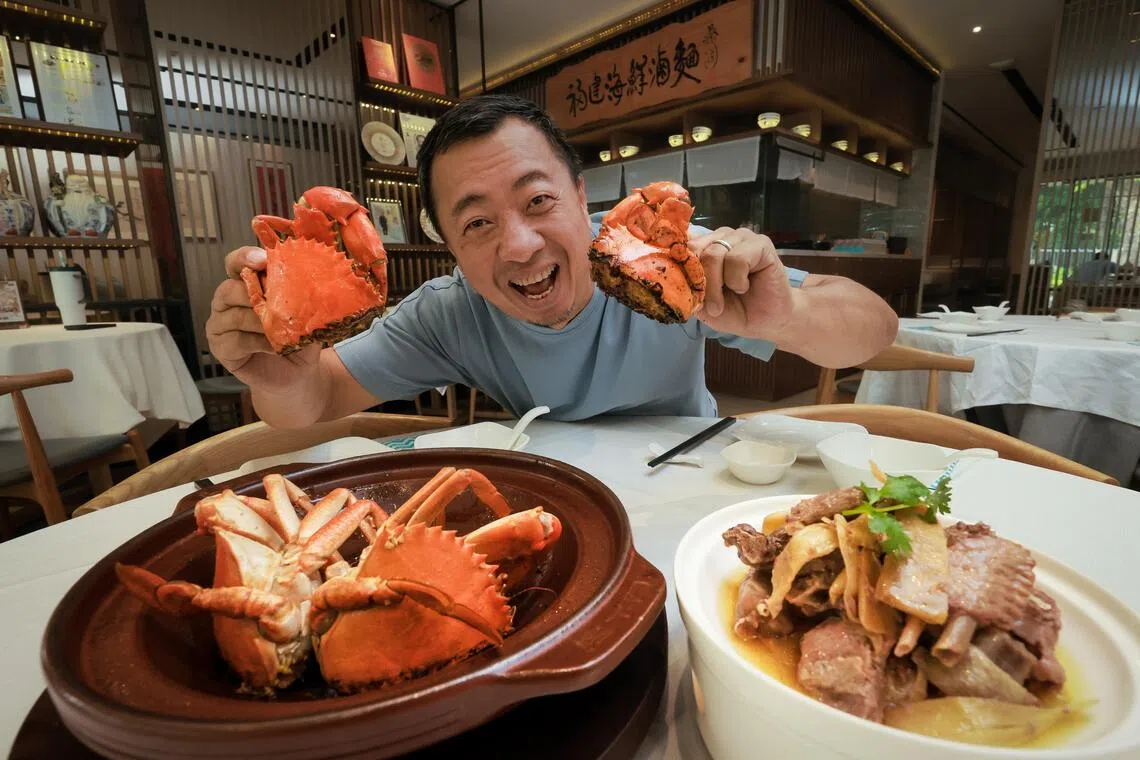
Putien founder Fong Chi Chung with two new dishes, Tong’an Pan-fried Crab and Di Lu Muscovy Duck in Natural Essence, at the restaurant’s Kitchener Road outlet.
Published Oct 31, 2026, 08:15 AM
Updated Oct 31, 2026, 08:15 AM
Fong Chi Chung, founder of Putien, began selling tea and books as a boy. He later built a $400 million F&B group with about 2,500 staff and outlets across Asia.
He returned as outlet manager at Kitchener Road for Putien’s 26th anniversary. He checks the kitchen, greets diners, and keeps the original standards and family feel.
Putien started in 2000 with $200,000 and survived early chaos, SARS, and cash problems. It later grew with branding help, new outlets, and new brands in Singapore and beyond.
SINGAPORE – Long before he became a restaurateur, Fong Chi Chung honed his knack for business.
He was 11 when he began peddling tea to quarry workers in his home town of Putian in Fujian province in China.
During summer holidays, when temperatures soared to 39 deg C , he would brew 20 litres of fragrant tea and push it on a trolley to the foot of a nearby mountain where the men worked.
At one cent a cup, business was brisk. The thirsty workers were happy to see him and the school boy was thrilled with his earnings.
He used the money to buy ice popsicles for three cents each in a town 5km away, hitching a bicycle ride there, then selling them for five cents back in his village.
To prevent melting, he wrapped the icy treats in a baby blanket and packed them tightly in a wooden crate. His customers were the better-off children in his village, where few shops had refrigerators.
His next venture was less laborious and the most lucrative.
He rented out his family’s used collection of about 100 illustrated Chinese classic books, including Romance Of The Three Kingdoms and Journey To The West, for one cent a read.
He displayed the cut-out book covers outside a provision shop and paid the shopkeeper a commission. As most of the village children could not afford to buy books, his business proved a hit.
More than four decades later, Fong, 58, is founder and chief executive of Putien Holdings, a food and beverage group with about 2,500 employees and $400 million in annual revenue.
His two sons are also involved in the family business.
Elder son Fong Chak Ka, 34, is regional general manager of Putien Group Singapore, managing Putien’s outlets and its affiliate brands here. Younger son Fong Chak Wai, 32, is director of Pu Tien Services, which operates a central kitchen that provides food services to Putien as well as other F&B clients.
Its flagship brand, Putien, started as a coffee-shop eatery in Kitchener Road in 2000 and now has about 90 outlets across Asia, including 18 in Singapore.
As Putien marks its 26th anniversary on Oct 31, Fong has returned to the Kitchener Road flagship as outlet manager since the beginning of October to get back to his roots.
He greets diners, checks on the kitchen and, after years expanding the business behind the scenes, spends his time reacquainting himself with customers.
He arrives at 9am to work in the company’s fourth-floor office, heads downstairs before lunch to inspect the kitchen and chats with diners during service.
He is not above doing menial chores like sweeping the floor and wiping the glass panels whenever necessary – mainly because he is impatient and wants chores done quickly.
He then heads for the gym at 4pm before returning for dinner service.
Staff, suppliers and customers call him Uncle Fong, or Fang Shu Shu, in Mandarin. He detests being addressed as boss or by formal titles , refers to his employees as colleagues and addresses everyone by name , regardless of rank . He says he feels most at home sharing staff meals with the kitchen and service crew.
Humble but happy beginnings
The fourth of five children, Fong grew up in a family that he says was not well-off but lived comfortably and happily.
His father was a Chinese-language teacher. Both parents later moved to Hong Kong to do factory work, while Fong remained in Putian under the care of his maternal grandmother.
Today, his father, aged 89, and his mother, 83, are both retired and living in Hong Kong.
Fong grew up sharing a close bond with his grandmother, helping to feed the two pigs she reared each year. Money made from selling them paid for clothes, shoes and school supplies. She taught him how to cook, work hard and entertain guests.
Fong loved drawing from the age of eight , crafting posters for school activities . He originally harboured hopes of becoming an art teacher.
After completing a three-year fine arts course in 1987, he joined his family in Hong Kong. For two years, he painted birds and flowers on furniture screens destined for Europe and luxury hotels worldwide .
In January 2000, his elder brother enlisted his help to establish an electronics parts assembly factory in Singapore. Fong welcomed the chance for his two sons, then six and eight, to study here.
The factory began operating by April 2000, as he grappled with Singapore’s high cost of living. He gave up drinking beer after discovering that a bottle of Tiger cost $5, compared with 50 cents a bottle back home.
Family conversations often centred on the food they missed from home, such as Heng Hwa lor mee, fried Heng Hwa bee hoon and razor clam soup.
Fong knew how to cook, but found sourcing the necessary ingredients difficult. Putian’s small, sweet oysters were unavailable here, while local bee hoon was coarser than the delicate, fine-textured Heng Hwa variety.
Despite having no experience in the food business, he decided to start a restaurant in Kitchener Road as an acquaintance had told him that early Heng Hwa immigrants mostly settled around the Jalan Besar area.
Putien founder Fong Chi Chung at the restaurant’s Kitchener Road outlet. ST PHOTO: GAVIN FOO
Putien founder Fong Chi Chung at the restaurant’s Kitchener Road outlet.
With his chef brother-in-law as partner, he soft-launched Putien on Oct 12, 2000, with a capital of $200,000. The non-air-conditioned eatery had eight tables seating 60 diners and seven staff.
Although business was brisk, he shut the restaurant after two weeks of opening because he felt the kitchen was chaotic and the cooking fell short of his standards. It reopened on Oct 31, after he sorted out the workflow.
A local Cantonese chef he hired created what would become Putien’s signature Spice Mum Chilli Sauce, figuring that Singapore diners would welcome a piquant condiment with the lighter-flavoured Heng Hwa dishes. The tangy sauce, created with three different chilli peppers and without preservatives, was made available for diners to buy in 2010. It now costs $3.60 a jar at its outlets.
Putien’s signature SPice Mum Chilli Sauce. ST PHOTO: GAVIN FOO
Putien’s signature SPice Mum Chilli Sauce.
Through the years, Fong refused to spice up or season his dishes more heavily, despite requests from local diners. It is always about letting the ingredients shine for him.
Till today, his chain’s signature Fried Heng Hwa Bee Hoon ($13 for small, $25 for medium) remains lightly seasoned.
Gruelling early years
In the early days, Fong bought all the ingredients himself , refusing wholesalers’ offers of cheaper but lower-grade chillies and mushrooms . He drove an $8,000 rickety second-hand car which often broke down , loading it with boxes of oil, sauces, onions and ginger on his weekly trips to stock up on provisions.
His workday began at noon, taking orders and serving customers. He would get some shuteye between 3pm and 5pm when the restaurant took a break.
After the busy dinner service, he would have a quick dinner at 10pm before wiping down the dining area, mopping the kitchen and scrubbing the toilet. At midnight, he drove to Jurong Fishery Port, six nights a week, to buy seafood.
Initially, wholesalers scolded him for asking too many questions. Over time, he befriended them and they would keep their freshest produce for him, knowing he was willing to pay for premium items.
He remembers discovering fresh red groupers weighing about 400g, priced at just $6 each.
“I was so shocked they were so fresh and cheap,” he says, his eyes lighting up at the memory.
He bought up to 50 at a time when they were available.
Back in Kitchener Road around 3am, he scaled, gutted and packed them for lunch service. Steamed Teochew-style, they sold for $12 each, compared with about $18 at other zi char stalls, and were a n instant hit.
By the time he finished his food prep work at 8am, he barely managed three hours of sleep at his rented Tampines flat before returning for lunch service. “I didn’t call myself boss because the reality was I had to do the work of three workers in order to save money,” he recalls.
Even his chefs treated him as part of the kitchen crew. One banged a ladle on the table when he was too slow in preparing ingredients.
Despite his long hours, the restaurant struggled financially up until 2004. He had priced the dishes low to attract Singaporeans who lapped up Teochew, Hokkien and Cantonese fare, but were unfamiliar with Heng Hwa cuisine.
The severe acute respiratory syndrome outbreak in 2003 dealt him another blow and emptied the company’s coffers. His brother-in-law left the business and Fong sunk in another $20,000 to keep it afloat.
To this day, he speaks fondly of his Kitchener Road landlord of 26 years, a fellow Heng Hwa, who lowered the monthly rent from $6,500 to $5,800 for about a year to help the restaurant ride out its most challenging period that year.
Business picked up after a television programme featured Putien. The restaurant broke even in 2004 and Fong asked his landlord to restore his original rent.
In 2005, he expanded to the adjacent unit and upstairs, adding air-conditioning, private dining rooms and valet parking later. Weekend queues were a common sight.
A turning point came in 2007 when officers from Spring Singapore, now Enterprise Singapore, introduced him to management and branding consultants. He engaged them for six months, paying them fees amounting to $200,000.
Despite an initial bank loan rejection, he eventually secured funds to open new outlets in Tampines Mall, Marina Square and Jurong Point in 2008. Each outlet cost about $800,000 to set up. Outlets in City Square Mall and Parkway Parade followed in 2009, along with a central kitchen.
Today, the 18 Singapore outlets include Putien Reserve at Marina Bay Sands, a 150-seat elevated dining concept which soft-opened in August after a $3 million investment.
The group employs 750 people in Singapore and generates $200 million in local annual revenue.
Overseas, Putien has outlets in China, Malaysia, Indonesia and the Philippines, among other places.
In August 2024, against his management team’s advice, Fong scrapped service charge and decided to absorb the good and services tax at Putien’s regular restaurants.
A Singapore citizen since 2008, he says: “We need to thank our diners for their support and I want them to not feel the burden of these charges when dining at our outlets.”
He estimates that the decision cost $1 million a month for nearly a year before business finally stabilised as customers repaid his gesture by visiting more often.
He takes pride in how his service staff continued to uphold high standards of customer service across the outlets. Putien was first runner-up for Best Customer Service (Casual Dining) at the Restaurant Association of Singapore’s 2026 Epicurean Star Awards.
For his 26th anniversary in the F&B business, Fong has personally curated a menu mixing classics with lesser-known Fujian dishes. Exclusively in Kitchener Road, a horizontal single-page menu has replaced the glossy book-style version, reminiscent of Putien’s original menu when it first opened.
Among the new dishes is Tong’an Pan-fried Crab ($38 a crab). Fresh Sri Lankan crab weighing about 600g is pan-fried with ginger, without pepper or wine to mask its sweetness.
Tong’an Pan-fried Crab is a new dish. ST PHOTO: GAVIN FOO
Tong’an Pan-fried Crab is a new dish.
Di Lu Muscovy Duck in Natural Essence ($29 for regular, $58 for large) uses a traditional method he remembers from his home town. Duck was steamed without added water to obtain a nourishing essence for boys undergoing puberty.
Putien specially sources Muscovy ducks weighing 5kg to 6kg and cooks them with ginger and white rice wine. Served in a ceramic vessel kept hot by a flame beneath, the duck is tender and flavourful, reminiscent of a rich duck confit.
Di Lu Muscovy Duck in Natural Essence is made with specially sourced Muscovy duck. ST PHOTO: GAVIN FOO
Di Lu Muscovy Duck in Natural Essence is made with specially sourced Muscovy duck.
Fong says he once planned to take Putien to the United States, Britain and Japan, but changed course in 2024 to focus on bringing established brands to Singapore, Malaysia and Hong Kong.
Instead of venturing into uncharted territory, he prefers to anchor his business in locations where he has an established base.
New brands he has brought to Singapore include Hakka Yu, which debuted in December 2024 and now has five outlets , and Japanese hamburg steak concept Niku Niku Oh!! Kome at Resorts World Sentosa and Westgate. The group also runs Uncle Fong Hotpot at Great World and Suntec City.
In 2027, he plans to bring in Hong Kong’s Cai Lan Dim Sum and Japan’s Yakiniku King.
Fong has also started a new policy for all Putien outlet managers and executive chefs, in Singapore and overseas, to spend one week a year at the Kitchener Road flagship to understand the restaurant’s origins and the values and standards he expects them to uphold.
For him, returning to Kitchener Road to play his part as outlet manager means getting a better feel of the ground, taking a closer look at operations and understanding what diners want today.
He enjoys reconnecting with long-time customers, some of whom first dined at Putien when they were 10 and now return in their 30s with children in tow.
He says: “Coming back to the outlet where everything started is a homecoming for me. It is important to focus on diners and interact with them. I can view my business from a different perspective and make adjustments where needed.”
He has no plans for retirement and adds : “I still feel as passionate about my business as I did when I started.”
Hedy Khoo is senior correspondent at The Straits Times. She covers food-related news, from reviews to human interest stories.
Restaurants/Eateries
莆田餐厅创始人方志忠在餐厅位于基奇纳路的分店推出了两道新菜:同安煎蟹和原汁底料的迪鲁麝香鸭。
发布于 2026 年 10 月 31 日上午 8:15
更新于2026年10月31日上午8:15
莆田集团创始人方志忠从小就开始卖茶卖书。后来,他建立起一个市值4亿美元的餐饮集团,拥有约2500名员工,门店遍布亚洲各地。
在莆田餐厅成立26周年之际,他回到基奇纳路店担任分店经理。他负责检查厨房,迎接顾客,并保持餐厅原有的水准和家庭般的氛围。
莆田餐厅于2000年以20万美元起家,经历了早期的混乱局面、非典疫情和资金短缺等困境。之后,在品牌推广、开设新店以及在新加坡及其他地区引进新品牌的帮助下,餐厅不断发展壮大。
新加坡——早在成为餐馆老板之前,方志忠就磨练出了经商的才能。
他11岁时就开始在家乡福建省莆田市向采石场工人兜售茶叶。
暑假期间,气温飙升至 39 摄氏度,他会煮 20 升香茶,然后用手推车推到附近山脚下,那里是工人们工作的地方。
一杯饮料一分钱,生意兴隆。口渴的工人们见到他很高兴,而那个小学生也对自己的收入欣喜若狂。
他用这笔钱在 5 公里外的小镇上搭自行车去买冰棍,每个 3 分钱,然后回到村里以每个 5 分钱的价格卖掉。
为了防止融化,他把冰冻甜点用婴儿毯包起来,然后紧紧地装进木箱里。他的顾客是村里家境较好的孩子,因为村里很少有商店有冰箱。
他的下一个项目比较轻松,而且利润最高。
他将家里收藏的约 100 本中国古典名著插图本(包括《三国演义》和《西游记》)以每本一分钱的价格出租。
他把剪下来的书皮摆放在一家杂货店外面,并付给店主佣金。由于村里大多数孩子买不起书,他的生意非常成功。
四十多年后,现年 58 岁的方先生是莆田控股的创始人兼首席执行官,该集团是一家食品饮料集团,拥有约 2500 名员工,年收入达 4 亿美元。
他的两个儿子也参与了家族企业。
长子方泽嘉,34岁,是莆田集团新加坡区域总经理,负责管理莆田在新加坡的门店及其附属品牌。次子方泽伟,32岁,是莆田餐饮服务有限公司董事,该公司运营一个中央厨房,为莆田及其他餐饮客户提供餐饮服务。
其旗舰品牌莆田于 2000 年在基奇纳路以咖啡店起家,如今在亚洲拥有约 90 家分店,其中 18 家位于新加坡。
10 月 31 日是莆田餐厅成立 26 周年纪念日,方先生自 10 月初起回到基奇纳路旗舰店担任分店经理,回归初心。
他会迎接用餐的客人,检查厨房的情况,并且在幕后多年拓展业务之后,现在他会花时间与顾客重新建立联系。
他早上 9 点到达公司四楼的办公室工作,午饭前下楼检查厨房,并在用餐期间与顾客聊天。
他并不介意做一些琐碎的家务,比如扫地、擦玻璃等等——主要是因为他性子急,希望家务活能尽快完成。
下午 4 点,他会去健身房锻炼,然后再回来准备晚餐服务。
员工、供应商和顾客都叫他方叔,或者用普通话说方叔叔。他讨厌别人称呼他为老板或使用正式头衔,称员工为同事,并且无论职位高低,都直呼其名。他说,和厨房及服务人员一起用餐让他感到最自在。
卑微而幸福的开端
方在家中五个孩子中排行第四,他说他的家庭虽然并不富裕,但生活舒适幸福。
他的父亲是一名中文教师。后来,他的父母都搬到香港去工厂工作,而方则留在莆田,由他的外祖母照顾。
如今,他的父亲(89岁)和母亲(83岁)都已退休,居住在香港。
方从小就和祖母关系亲密,每年都帮着喂她养的两头猪。卖猪的钱用来买衣服、鞋子和学习用品。祖母教他做饭、勤劳劳动和待客之道。
方从八岁起就喜欢画画,经常为学校活动制作海报。他最初的梦想是成为一名美术老师。
1987年完成三年美术课程后,他前往香港与家人团聚。接下来的两年里,他为销往欧洲和世界各地豪华酒店的家具屏风绘制花鸟图案。
2000年1月,他的哥哥请他帮忙在新加坡创办一家电子零件组装厂。方先生很高兴他的两个儿子(当时分别为6岁和8岁)有机会来这里读书。
工厂于2000年4月开始运营,与此同时,他也在努力应对新加坡的高昂生活成本。他发现一瓶虎牌啤酒要5美元,而家乡一瓶只要50美分,于是便戒了啤酒。
家人之间的谈话常常围绕着他们想念的家乡食物,例如兴华卤面、兴华炒米粉和蛏子汤。
方先生会做饭,但发现采购所需食材很困难。莆田鲜甜的小牡蛎在这里买不到,而本地的米粉又比口感细腻的兴化米粉粗糙得多。
尽管他没有任何餐饮业经验,但他还是决定在基奇纳路开一家餐馆,因为一位熟人告诉他,早期的兴华移民大多定居在惹兰勿刹一带。
莆田餐厅创始人方志忠在餐厅位于基奇纳路的分店。(海峡时报摄影:Gavin Foo)
莆田餐厅创始人方志忠在餐厅位于基奇纳路的门店。
2000 年 10 月 12 日,他与身为厨师的姐夫合伙,以 20 万美元的资本低调推出了莆田餐厅。这家没有空调的餐馆设有 8 张桌子,可容纳 60 位食客,并有 7 名员工。
尽管生意兴隆,但他开业两周后就关门了,因为他觉得厨房混乱不堪,菜品质量也达不到他的标准。10月31日,在理顺了工作流程后,餐厅重新开业。
他聘请的一位本地粤菜厨师调制出了莆田招牌辣椒酱,他认为新加坡食客会喜欢用辛辣的酱料来搭配口味清淡的兴化菜。这款酸甜可口的酱料由三种不同的辣椒制成,不含防腐剂,于2010年开始销售。现在,每罐售价3.60新元。
莆田招牌辣妈辣椒酱。海峡时报摄影:Gavin Foo
莆田招牌辣妈辣椒酱。
多年来,尽管当地食客多次要求,方师傅始终拒绝在菜肴中添加过多香料或调味料。他始终坚持让食材本身的美味得以充分展现。
时至今日,他旗下连锁店的招牌炒兴华米粉(小份 13 美元,中份 25 美元)依然保持着清淡的口味。
艰苦的早年生活
创业初期,方先生坚持自己采购所有食材,拒绝批发商提供的价格更低但品质较差的辣椒和蘑菇。他开着一辆价值8000美元、经常抛锚的破旧二手车,每周都开着它去采购食材,车里装满了油、酱料、洋葱和生姜。
他的工作日从中午开始,负责接单和招待顾客。下午3点到5点餐厅休息的时候,他会小睡一会儿。
晚餐高峰过后,他会在晚上十点匆匆吃完晚饭,然后擦拭餐厅、拖地、刷洗厕所。午夜时分,他会开车去裕廊渔港采购海鲜,每周六晚都是如此。
起初,批发商们责备他问的问题太多。随着时间的推移,他与他们建立了友谊,他们知道他愿意为优质产品支付高价,便会把最新鲜的农产品留给他。
他记得自己发现过新鲜的红石斑鱼,每条重约 400 克,售价仅为 6 美元。
“我当时非常震惊,它们既新鲜又便宜,”他回忆起往事时,眼睛闪闪发光。
他每次最多会买50个,只要有货就买。
凌晨3点左右,他回到基奇纳路,把鱼去鳞、去内脏,打包好准备午餐。这些潮州风味的蒸鱼每个售价12新元,而其他煮炒摊位的售价约为18新元,一经推出便大受欢迎。
早上八点完成备餐工作后,他在租住的淡滨尼公寓里勉强睡了三个小时,就又得赶回来准备午餐服务。“我没自称老板,因为实际上我一个人干三个人的活才能省钱,”他回忆道。
就连他的厨师们都把他当成厨房团队的一员。有一次他准备食材太慢,厨师们就用勺子敲桌子。
尽管他工作时间很长,但直到 2004 年,这家餐厅的财务状况仍然很艰难。他将菜品定价很低,以吸引那些喜欢潮州菜、福建菜和粤菜,但对兴化菜不熟悉的的新加坡人。
2003年的严重急性呼吸综合征疫情对他来说又是一次沉重打击,公司资金链也因此断裂。他的姐夫离开了公司,方又投入了2万美元来维持公司的运营。
时至今日,他仍然深情地谈起他在基奇纳路的房东,这位房东也是兴华人,与他共事了 26 年。为了帮助餐厅度过那一年最艰难的时期,房东将每月租金从 6500 美元降至 5800 美元,持续了大约一年。
莆田餐厅在一档电视节目播出后生意有所好转。2004年,餐厅收支平衡,方先生要求房东恢复原先的租金。
2005年,他将店面扩展到隔壁单元和楼上,后来又增设了空调、私人餐厅和代客泊车服务。周末排队等候是常有的景象。
2007年,一个转折点出现了。当时,新加坡企业发展局(现为新加坡企业发展局)的官员向他介绍了管理和品牌顾问。他聘请了他们六个月,支付了总计20万美元的费用。
尽管最初银行贷款申请被拒,他最终还是获得了资金,于2008年在淡滨尼购物中心、滨海广场和裕廊坊开设了新店。每家店的筹建成本约为80万新元。2009年,他又在城市广场购物中心和百汇广场开设了分店,并设立了中央厨房。
目前,新加坡的 18 家分店包括滨海湾金沙的莆田臻选餐厅,这是一家拥有 150 个座位的高档餐饮概念餐厅,在投资 300 万美元后于 8 月试营业。
该集团在新加坡雇佣了 750 名员工,每年在当地创造 2 亿美元的收入。
在海外,莆田在中国、马来西亚、印度尼西亚和菲律宾等地均设有分店。
2024 年 8 月,方不顾管理团队的建议,取消了莆田普通餐厅的服务费,并决定自行承担商品及服务税。
他自 2008 年起成为新加坡公民,他说:“我们需要感谢顾客的支持,我希望他们在我们餐厅用餐时不会感到这些费用带来的负担。”
他估计,这项决定在近一年的时间里每月造成 100 万美元的损失,直到顾客更频繁地光顾以回报他的善举,业务才最终稳定下来。
他为旗下所有门店的服务人员始终保持高水准的客户服务而感到自豪。莆田餐厅在新加坡餐饮协会2026年度美食之星奖评选中荣获最佳客户服务(休闲餐饮)亚军。
为庆祝入行26周年,方先生亲自设计了一份融合经典菜式与鲜为人知的福建特色菜的菜单。位于基奇纳路的这家餐厅,以横向单页菜单取代了以往的精装书式菜单,让人不禁想起莆田餐厅初创时的菜单。
新推出的菜品中包括同安煎蟹(每只38元)。选用约600克的斯里兰卡新鲜螃蟹,用姜汁煎制而成,不加胡椒或酒,以掩盖螃蟹本身的鲜甜。
同安煎蟹是一道新菜。海峡时报摄影:Gavin Foo
同安煎蟹是一道新菜。
迪鲁麝香鸭(普通装29美元,大份58美元)采用他记忆中家乡的传统方法烹制而成。鸭子不加水蒸制,以提取滋养精华,专为青春期男孩设计。
莆田餐厅特选5至6公斤重的番鸭,以姜和白米酒烹制而成。盛于陶瓷锅中,锅底明火保温,鸭肉鲜嫩多汁,风味浓郁,令人想起油封鸭。
迪鲁天然风味麝香鸭采用特选麝香鸭制成。ST 摄影:GAVIN FOO
Di Lu 天然香精麝香鸭采用特选麝香鸭制成。
方先生表示,他曾计划将莆田品牌带到美国、英国和日本,但在 2024 年改变了方向,专注于将成熟品牌引入新加坡、马来西亚和香港。
他不会冒险进入未知领域,而是更喜欢将业务扎根于他已经建立起稳固基础的地方。
他引入新加坡的新品牌包括于2024年12月开业、目前已拥有五家分店的客家料理(Hakka Yu),以及位于圣淘沙名胜世界和西城购物中心的日式汉堡牛排概念餐厅Niku Niku Oh!! Kome。该集团还在伟乐坊和新达城经营着Uncle Fong火锅。
2027年,他计划引进香港的蔡兰点心和日本的烤肉王。
方先生还制定了一项新政策,要求所有莆田餐厅的经理和行政总厨,无论在新加坡还是海外,每年都要在基奇纳路旗舰店待上一周,以了解餐厅的起源以及他希望他们坚持的价值观和标准。
对他来说,回到基奇纳路担任门店经理意味着更好地了解情况,更仔细地了解运营情况,并了解如今食客想要什么。
他很享受与老顾客重聚的时光,其中一些顾客10岁时第一次在莆田用餐,现在30多岁了,带着孩子再次光顾。
他说:“回到一切开始的地方对我来说就像回家一样。专注于顾客并与他们互动非常重要。我可以从不同的角度审视我的生意,并在需要的地方做出调整。”
他没有退休计划,并补充道:“我对我的事业仍然像刚开始创业时一样充满热情。”
Hedy Khoo是《海峡时报》的资深记者。她报道与食品相关的新闻,包括食品评论和人物故事。
餐厅/餐馆