‘Truly scared’: Indonesian firefighters struggle to contain Borneo blazes as haze chokes communities“真的吓坏了”:印尼消防员奋力控制婆罗洲大火,浓烟笼罩社区
PONTIANAK, Sept 7 — Toiling around the clock, haggard Indonesian firefighters on Borneo island cannot keep up with the blazes devouring landscapes and shrouding communities in a...
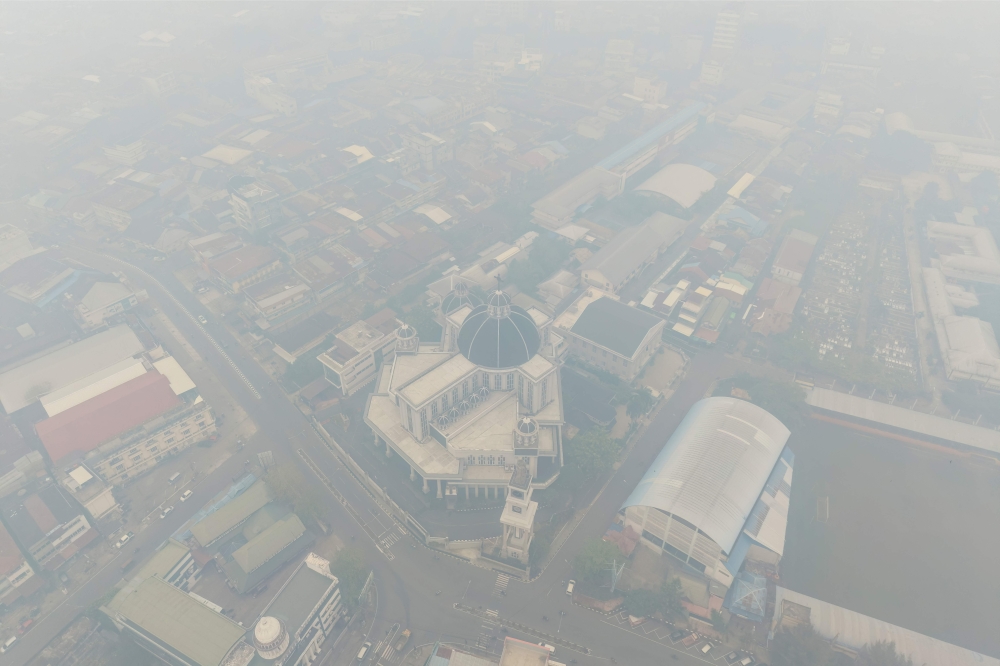
Indonesian firefighters on Borneo are struggling to control fires exacerbated by El Nino, climate change, and harmful land practices.
Over 285,000 hectares have burned in Indonesia this year, with significant health impacts and school closures in West Kalimantan.
Environmentalists urge for more resources and declare the fires a national disaster, impacting millions in Indonesia and neighbouring regions.
PONTIANAK, Sept 7 — Toiling around the clock, haggard Indonesian firefighters on Borneo island cannot keep up with the blazes devouring landscapes and shrouding communities in a cloying haze.
They are fighting a perilous battle with limited weapons against fires blamed in part on a stronger-than-usual episode of the El Nino climate phenomenon parching Southeast Asia.
Experts also blame climate change, decades of forest degradation and slash-and-burn land clearing practices that have changed the naturally fire-resistant landscape.
“We are exhausted. Sometimes we carry out firefighting until dawn. Sometimes we don’t sleep,” said Sampe Ritonga, fire chief for Sintang regency.
“Our facilities and infrastructure for firefighting are very limited,” he told AFP, standing on the smouldering embers of a peatland fire separated from a residential settlement by a narrow dirt road.
Behind him, veiled by the haze, the sun appeared as an eerie, rust-coloured ball in the brown-grey sky.
Sampe’s team only has two 6,000-litre fire engines, and deploys one at a time while the other refills. They also face a shortage of hoses.
The team has fought dozens of fires this month.
With river levels low, “we look for available water in ditches... (and) small rivers”, some far from active burn sites, Sampe said.
“So there are difficulties because they have to first carry out firefighting with high intensity, and second look for water,” he added.
“With the limitations we have, we try as hard as we can to extinguish the fires and also to reduce the smoke.”
Nearby, locals gathered to observe the team’s efforts, offering drinking water to first responders.
“There are many houses here, and that is what we have to protect,” said Sampe.
Resident Sutrismi, 47, said she was at home on Saturday when she heard a “crackling sound”, looked out of the window and saw smoke rising from the peatland across the road.
Peatland fires, common in the area, generally smoulder and spread under the soil for weeks or months, emitting huge quantities of smoke and only rarely causing surface blazes.
“First thing, I looked for help. I contacted the village head, asked for assistance,” Sutrismi told AFP.
“I am scared. Truly scared.”
Some 400 kilometres (250 miles) away in Pontianak — the capital of West Kalimantan province — people have been breathing foul air for weeks.
The haze can be smelled even indoors in the city of about 700,000 people.
At one point on Sunday, the level of PM2.5 pollution exceeded 500 micrograms per cubic metre, according to IQAir, a Switzerland-based monitor.
That is more than 100 times the World Health Organization’s recommended safe limit for airborne particles so small they can enter deep into the lungs and even the bloodstream, with potentially dire consequences for health.
Hundreds of schools have been closed indefinitely in West Kalimantan due to air pollution, with about 200,000 pupils learning from home, according to the education ministry.
The province has also recorded a surge in respiratory ailments.
“We really hope there will be some assistance or grants for us, so we can be faster, more alert and more responsive,” said Sampe.
West Kalimantan governor Ria Norsan said the province was doing its best.
“We do not want officers in the field to work with limitations,” he said in a statement to AFP.
“Every report regarding shortages of personnel, equipment, water, or other needs must be conveyed immediately so that solutions can be found.”
The provincial government has said it has nearly 14,500 fire-fighting personnel out in the field, with nine aircraft available for water-bombing, three for patrols and one for cloud-seeding operations trying to make rain.
Environmental campaigners say rapacious forest and peatland destruction is the root cause of the fires.
“The peat is drained by extractive plantations, monoculture plantations, whether oil palm or pulpwood,” Greenpeace Indonesia forest campaigner Belgis Habiba told AFP in Pontianak.
“When the water is drained, the peat dries and becomes flammable.”
According to Greenpeace estimates using government data, some 35 million people in Indonesia are exposed to toxic haze.
Smoke from the fires has also affected communities in the neighbouring Malaysian part of Borneo and beyond.
“The haze is massive and everywhere, and it’s actually very unfit for people to breathe,” Belgis said.
She urged the Indonesian government to declare the fires a national disaster, “so that all resources are mobilised... to build health access for residents, rescue wildlife and so on”.
According to the Nusantara Atlas fire tracker, more than 285,000 hectares have burnt in Indonesia so far this year.
Official data show 38,000 hectares have burnt in West Kalimantan.
The current El Nino event, which will last into next year, is likely to be one of the strongest in decades, according to the United Nations. — AFP
‘Trumpapalooza’ puts Republican strategy to the test as president’s popularity sinks
Nepal holds day of mourning as families pray missing still alive
Germany’s AfD landslide piles pressure on Merz as far right eyes first state govt
Nepal floods: What we know so far about unaccounted Malaysians and Malaysia’s relief efforts
MAHB: 41 flights to Jakarta cancelled following Anak Krakatau eruption
Four-month old baby dies after found unconscious at Dungun childcare centre
婆罗洲的印尼消防员正努力控制因厄尔尼诺现象、气候变化和有害土地利用方式而加剧的火灾。
今年印度尼西亚已有超过 285,000 公顷土地被烧毁,对当地居民健康造成了严重影响,西加里曼丹省的学校也因此关闭。
环保人士呼吁投入更多资源,并宣布火灾为国家灾难,影响到印度尼西亚及周边地区的数百万人。
坤甸,9 月 7 日——在婆罗洲岛上,疲惫不堪的印尼消防员日夜奋战,却仍然无法控制吞噬大地、笼罩社区的熊熊烈火,更无法让社区沉浸在令人窒息的烟雾之中。
他们正用有限的武器与肆虐东南亚的火灾进行着一场危险的战斗,而这场火灾的部分原因是比往常更强烈的厄尔尼诺气候现象导致东南亚干旱。
专家们还将气候变化、数十年的森林退化以及刀耕火种的土地清理方式归咎于这些因素,这些都改变了原本天然耐火的地貌。
“我们筋疲力尽。有时我们一直灭火到天亮。有时我们根本睡不着觉,”辛唐县消防队长桑佩·里通加说道。
“我们的消防设施和基础设施非常有限,”他站在一片泥炭地火灾的余烬上告诉法新社,这片火灾与居民区之间隔着一条狭窄的土路。
在他身后,被薄雾笼罩着的太阳,在棕灰色的天空中呈现出一个诡异的锈红色球体。
桑佩的队伍只有两辆6000升的消防车,每次只能派出一辆,另一辆则需要补充水。他们还面临水带短缺的问题。
该团队本月已扑灭了数十起火灾。
桑佩说,由于河流水位低,“我们会在沟渠……(和)小河中寻找可用的水源”,其中一些距离正在燃烧的地点很远。
“所以他们面临的困难在于,他们首先要高强度地进行灭火,其次还要寻找水源,”他补充道。
“在现有条件下,我们会尽最大努力扑灭火灾并减少烟雾。”
附近,当地居民聚集在一起观看救援队的救援工作,并向急救人员提供饮用水。
“这里有很多房屋,这就是我们必须保护的东西,”桑佩说。
47 岁的居民苏特里斯米说,周六她在家时听到“噼啪声”,她向窗外望去,看到马路对面的泥炭地冒出浓烟。
该地区常见的泥炭地火灾通常会在土壤下阴燃并蔓延数周或数月,释放出大量的烟雾,但很少引起地表火灾。
“我做的第一件事就是寻求帮助。我联系了村长,请求援助,”苏特里斯米告诉法新社。
“我害怕,真的害怕。”
大约 400 公里(250 英里)外的西加里曼丹省首府坤甸,人们已经呼吸污浊的空气数周之久。
在这个拥有约 70 万人口的城市里,即使在室内也能闻到雾霾的味道。
据总部位于瑞士的空气质量监测机构 IQAir 的数据显示,周日一度 PM2.5 污染水平超过每立方米 500 微克。
这比世界卫生组织建议的空气传播颗粒物安全限值高出 100 多倍,这些颗粒物非常小,可以进入肺部深处甚至血液,对健康造成潜在的严重后果。
据教育部称,由于空气污染,西加里曼丹数百所学校无限期关闭,约有 20 万名学生在家学习。
该省呼吸系统疾病病例也激增。
桑佩说:“我们真心希望能够获得一些援助或拨款,以便我们能够更快、更警觉、反应更迅速。”
西加里曼丹省省长里亚·诺尔桑表示,该省正在尽最大努力。
“我们不希望一线警员在工作中受到限制,”他在给法新社的一份声明中说。
“任何有关人员、设备、水或其他需求短缺的报告都必须立即上报,以便找到解决办法。”
省政府表示,目前有近 14,500 名消防人员在现场,有 9 架飞机可用于洒水灭火,3 架飞机可用于巡逻,1 架飞机可用于人工降雨作业。
环保人士表示,肆意破坏森林和泥炭地是火灾的根源。
“无论是油棕种植园还是纸浆林种植园,泥炭地都会被过度开采,导致单一作物种植园枯竭,”绿色和平组织印尼森林活动家贝尔吉斯·哈比巴在坤甸告诉法新社。
“当水排干后,泥炭会干燥并变得易燃。”
根据绿色和平组织利用政府数据进行的估计,印度尼西亚约有3500万人暴露于有毒雾霾中。
火灾产生的烟雾也影响了邻近的马来西亚婆罗洲地区及其他地区的社区。
“雾霾非常严重,到处都是,实际上非常不适合人们呼吸,”贝尔吉斯说。
她敦促印尼政府宣布火灾为国家灾难,“以便调动一切资源……为居民提供医疗服务,拯救野生动物等等”。
根据 Nusantara Atlas 火灾追踪器的数据,今年到目前为止,印度尼西亚已有超过 285,000 公顷的土地被烧毁。
官方数据显示,西加里曼丹已有38000公顷土地被烧毁。
据联合国称,目前正在发生的厄尔尼诺现象将持续到明年,而且很可能是几十年来最强烈的厄尔尼诺现象之一。——法新社
随着总统支持率下滑,“特朗普狂欢节”考验共和党的战略
尼泊尔举行哀悼日,家属为失踪者祈祷,希望他们仍然活着。
德国另类选择党(AfD)大获全胜,给梅尔茨施加巨大压力,极右翼势力觊觎首个州政府。
尼泊尔洪灾:关于失踪马来西亚公民和马来西亚的救灾工作,我们目前了解的情况
MAHB:阿纳克喀拉喀托火山喷发后,41个飞往雅加达的航班被取消
一名四个月大的婴儿在登嘉楼托儿中心被发现昏迷后死亡