Finding a sounding board, stress-testing solutions: The network preparing S’pore tech leaders for global roles寻找交流平台,对解决方案进行压力测试:该网络旨在帮助新加坡科技领袖为全球角色做好准备
A former Gojek chief operating officer and leaders from Meta, Accredify and Codex share what the first SGLN TECH leadership programme taught them. Read more at straitstimes.com.
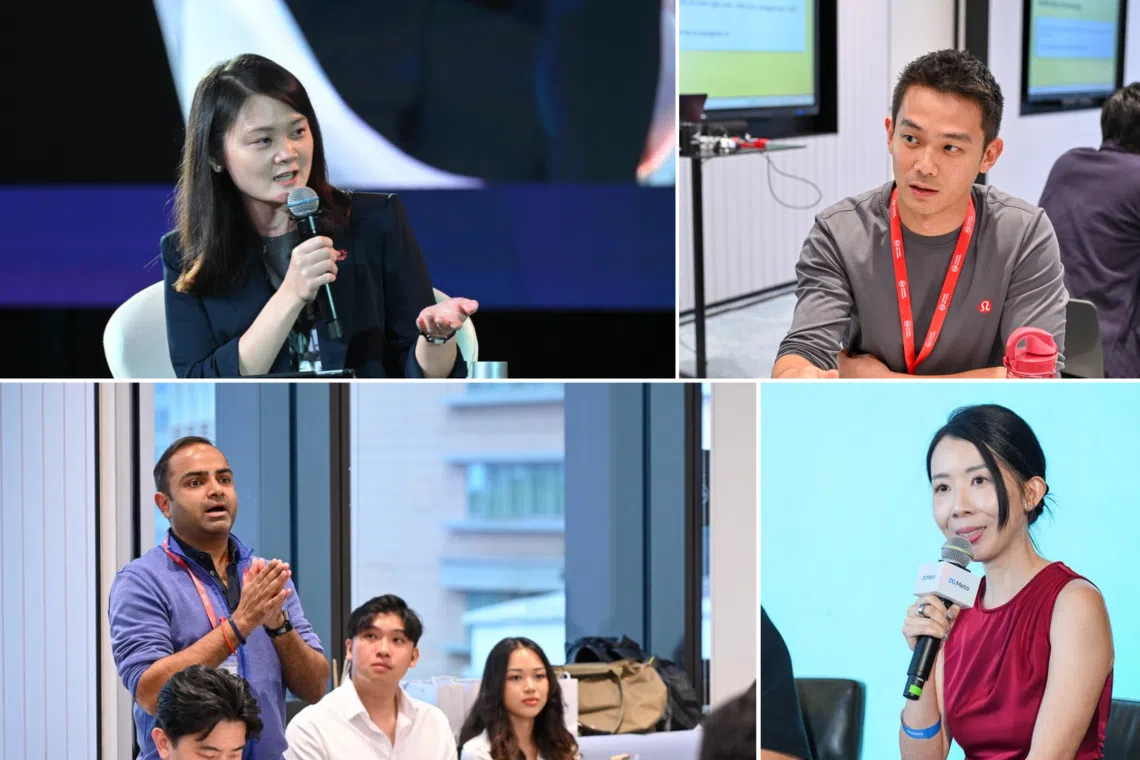
From a Meta director to a start-up CTO, the first SGLN TECH cohort learnt alongside peers from across the sector, gaining a wider frame for making decisions when there is no template to follow
(Clockwise from top left) Codex Solutions chief executive officer Tracie Teo, Accredify co-founder and chief technology officer Derrick Lee, Meta client solutions director Melissa Kwek and former Gojek chief operating officer Shobhit Singhal say learning alongside peers from different parts of the technology sector gave them a wider frame for thinking through leadership decisions.
PHOTOS: COURTESY OF TRACIE TEO AND MELISSA KUEK; HUMAN CAPITAL LEADERSHIP INSTITUTE
Published Nov 03, 2026, 04:00 AM
If Melissa Kwek is offered a leadership role in an unfamiliar region, she will now look beyond her inner circle for advice, and turn to a trusted network of peers in Singapore.
She met these fellow professionals as part of the inaugural cohort of the Singapore Leaders Network Tech (SGLN TECH) programme . This initiative, open to Singaporeans and Permanent Residents, is supported by the Singapore Economic Development Board and Infocomm Media Development Authority (IMDA).
It is dedicated to helping talented Singaporeans prepare to take on senior regional and global leadership roles in the tech industry.
The candid discussions during leadership modules and dialogues stretched Kwek’s thinking and helped her test her assumptions against perspectives different from her own, says the Hong Kong-based client solutions director at Meta. This has helped her make better decisions as a leader.
Kwek presenting her team’s concept for a voice-led AI device for the elderly developed as part of an SGLN Tech project where participants team up to find solutions to a real-world problem. PHOTO: COURTESY OF MELISSA KWEK
Kwek presenting her team’s concept for a voice-led AI device for the elderly developed as part of an SGLN Tech project where participants team up to find solutions to a real-world problem.
PHOTO: COURTESY OF MELISSA KWEK
The experience showed her how even seasoned leaders can benefit from sounding boards, such as when they are weighing decisions in unfamiliar markets, she adds.
SGLN TECH was developed by the Singapore Leaders Network, which runs a suite of initiatives including SGLN Fellowship, SGLN Launchpad, Overseas Transition Support. These programmes are aimed at supporting leaders at different career stages, and as they take on overseas or global roles.
Ultimately, SGLN aims to strengthen the pool of Singapore leaders in industries and functions essential to the economy – including biopharmaceutical manufacturing, technology and supply chain.
Writing a new playbook and navigating a changing environment
A veteran in the field, Singaporean Kwek spent 16 years moving across the public service, Procter & Gamble and Meta, while building a career that now spans different markets and cultures.
Experience alone, she says, is not enough when the environment itself keeps changing.
“In technology, what you know last week may change this week, and then you have to relearn, unlearn and relearn,” she adds. “The playbook for the AI era is not defined yet, so companies need someone to write its chapters.”
That means leaders increasingly need to be comfortable operating without a clear template – experimenting, adapting their approach and learning from people whose experiences differ from their own.
“Having a network of people out of work, whom I can seek advice from is very important now as a leader, because we all learn from each other,” she says.
Kwek was among the 50 leaders from all corners of the technology ecosystem, such as multinational companies, large local enterprises, and small and medium-sized enterprises.
Over six months from April to September this year, they spent time learning together through leadership modules, masterclasses and closed-door conversations with technology and public sector leaders. They also worked in teams to develop and pitch a solution to a real-world problem.
Lee (top row, second from right) says making time to connect with his team outside day-to-day work matters when leading a growing company. PHOTO: COURTESY OF DERRICK LEE
Lee (top row, second from right) says making time to connect with his team outside day-to-day work matters when leading a growing company.
PHOTO: COURTESY OF DERRICK LEE
The biggest takeaway for another participant Derrick Lee was that technical expertise could only take him so far as his company – and his responsibilities – grew.
Derrick Lee is the co-founder and chief technology officer (CTO) of verifiable document management platform Accredify. He had spent much of his career doing what came naturally to him – building technology.
As Accredify grew, he found that being CTO meant not just innovating tech, but also getting people to understand his thinking and on board with where he was taking the company. SGLN TECH gave Lee an opportunity to learn how other leaders approached similar challenges as their roles and organisations grew.
One area he has been working on is how to make his ideas easier for others to understand.
During a communication masterclass, Lee was introduced to the idea of using stories to explain complex points more clearly. He began keeping a “story bank” of everyday experiences he could draw on when trying to make an idea more relatable.
“Leadership and communication are what we have to constantly work on, and something that we constantly have to get feedback on from people,” he says.
That becomes more important as he thinks about taking Accredify into more markets, part of what led him to apply for SGLN TECH.
Different markets bring different cultural norms and “invisible rules”, Lee says, making it harder to assume that the same way of communicating – or leading – will work everywhere.
“As we grow in different markets, I need to think about changes I need to make to myself, and those of our processes, our people, our company,” he adds.
How EDB helps Singaporeans develop as corporate leaders
(From right) Himmat Singh, head of Singapore Leaders Network Tech (SGLN TECH), and Rebecca Raja Kumar, SGLN programme lead, co-led the inaugural SGLN TECH which brought together 50 leaders from across the technology sector. PHOTO: HUMAN CAPITAL LEADERSHIP INSTITUTE
(From right) Himmat Singh, head of Singapore Leaders Network Tech (SGLN TECH), and Rebecca Raja Kumar, SGLN programme lead, co-led the inaugural SGLN TECH which brought together 50 leaders from across the technology sector.
PHOTO: HUMAN CAPITAL LEADERSHIP INSTITUTE
Beyond attracting MNC investments that create good jobs, the Singapore Economic Development Board (EDB) also focuses on developing capable Singaporeans to become corporate leaders in global companies.
The six-month Singapore Leaders Network Tech (SGLN TECH) programme, supported by EDB and the Infocomm Media Development Authority (IMDA), is designed for Singaporeans and Permanent Residents preparing for senior regional and global leadership roles in complex, diverse and technology-driven environments.
Beyond modules and workshops, participants become part of an ongoing SGLN TECH community of peers, mentors, industry experts and policymakers who can continue sharing perspectives and supporting one another as their careers progress.
This year’s inaugural programme invited speakers, such as Google APAC president Sanjay Gupta, IMDA deputy chief executive Kiren Kumar and Meta managing director for Top Accounts and Agencies Cindy Tan.
Participants presented their solutions at SGLN TECH’s Demo Day on Sept 25, where teams pitched responses to real-world problems they had worked on during the six-month programme. The winning team (Nourish for SG) has secured seed funding through the SG Partnerships Fund to pilot its community food security initiative. PHOTO: HUMAN CAPITAL LEADERSHIP INSTITUTE
Participants presented their solutions at SGLN TECH’s Demo Day on Sept 25, where teams pitched responses to real-world problems they had worked on during the six-month programme. The winning team (Nourish for SG) has secured seed funding through the SG Partnerships Fund to pilot its community food security initiative.
SGLN TECH is part of the wider SGLN Industry Interest Groups (SIIG) initiative, which brings together business leaders and industry partners to shape leadership journeys around the needs of specific sectors.
Besides SGLN, the EDB’s Global Business Leaders Programme and the Skills and Workforce Development Agency’s Overseas Market Immersion Programme also support companies to develop more local leaders.
Learning to see the bigger picture
Fellow participant Shobhit Singhal took part in SGLN TECH while navigating a career transition.
The former chief operating officer of Gojek left the ride-hailing company in July, and since the programme wrapped up in September, Singhal is now taking a break to consider his next chapter.
The exercises he did during the programme strengthened an ability he calls “looking around the corners” – anticipating what may matter next rather than concentrating only on what is directly in front of him.
Singhal (far right) says his SGLN TECH peers gave him a chance to compare how leaders from different organisations approached similar challenges, widening the frame he brought to his own decisions. PHOTO: HUMAN CAPITAL LEADERSHIP INSTITUTE
Singhal (far right) says his SGLN TECH peers gave him a chance to compare how leaders from different organisations approached similar challenges, widening the frame he brought to his own decisions.
Even a career spanning industries and countries – he had also worked at Bain & Company and Apple – can leave leaders viewing the world through too narrow a lens.
“A lot of the time, you’re looking from within one perspective – of a company, of a client or an industry,” says Singhal.
That can become a blind spot as responsibilities grow. At SGLN TECH, Singhal began thinking more intentionally about how new technologies, regulation, supply chains and other players in the market interact with one another, rather than looking only at the part of the business right in front of him.
Having that broader view, he says, helps him lead with greater foresight – spotting opportunities and risks he might otherwise have missed.
The bigger picture was also what fellow participant Tracie Teo started thinking about more closely.
She came away from SGLN TECH with a greater appreciation of how a small market like Singapore could still create an edge – not by trying to match larger technology hubs, but by building on its own strengths.
Teo (far left) with the team at Codex Solutions during its first anniversary celebration; she says leaders who once trusted her with bigger opportunities shaped how she now develops others. PHOTO: COURTESY OF TRACIE TEO
Teo (far left) with the team at Codex Solutions during its first anniversary celebration; she says leaders who once trusted her with bigger opportunities shaped how she now develops others.
PHOTO: COURTESY OF TRACIE TEO
Teo was with ST Engineering for 15 years, moving from senior engineering roles to leadership positions. Last year, she became the founding chief executive officer of Codex Solutions which focuses on developing public safety solutions for Singapore.
During the programme, a conversation on Singapore’s place in the global AI ecosystem, led by IMDA cluster director Yvonne Lim, left a deep impression on her.
That discussion brought home that Singapore’s future as a technology hub depends not only on infrastructure and investment, but also on the calibre of people capable of turning those advantages into globally competitive companies.
“Developing people who can innovate and build globally competitive tech organisations will be critical,” says Teo.
This is where a programme like SGLN TECH can play a role, she says – by bringing leaders from different parts of the technology sector together to exchange experiences, challenge one another’s thinking and strengthen the capabilities to succeed across markets.
Those relationships may matter beyond the six months themselves. As technology and leadership challenges keep changing, she sees value in having people outside her own organisation who can offer a different perspective.
“It may not be as tangible as the lessons or frameworks, but I believe the most enduring outcome of the programme will be the community it has created,” she says. “It has fostered a trusted network of leaders who learn from one another, share perspectives and support each other’s growth.”
Singaporeans and Permanent Residents in mid- to senior-level leadership roles in the technology sector can register their interest in the 2027 edition of SGLN TECH or find out more here .
从Meta公司的总监到初创公司的首席技术官,首届SGLN TECH学员与来自各行各业的同行们共同学习,拓展了在没有现成模板可循的情况下做出决策的视野。
(从左上角顺时针方向)Codex Solutions 首席执行官 Tracie Teo、Accredify 联合创始人兼首席技术官 Derrick Lee、Meta 客户解决方案总监 Melissa Kwek 和前 Gojek 首席运营官 Shobhit Singhal 表示,与来自科技行业不同领域的同行一起学习,让他们在思考领导决策时拥有了更广阔的视野。
照片:由 Tracie Teo 和 Melissa Kuek 提供;人力资本领导力研究所
发布于 2026 年 11 月 3 日 上午 4:00
如果梅丽莎·郭被委以在陌生地区担任领导职务,她现在会向自己的圈子之外寻求建议,并向她在新加坡值得信赖的同行网络寻求帮助。
她通过新加坡科技领袖网络(SGLN TECH)项目的首届学员结识了这些同行。该项目面向新加坡公民和永久居民开放,由新加坡经济发展局和资讯通信媒体发展局(IMDA)支持。
它致力于帮助有才华的新加坡人做好准备,担任科技行业的高级区域和全球领导职务。
Meta公司驻香港的客户解决方案总监表示,领导力模块和对话中的坦诚讨论拓展了郭女士的思维,帮助她用不同的视角检验自己的假设。这有助于她作为领导者做出更好的决策。
郭女士正在展示她团队为老年人开发的语音控制人工智能设备概念,该设备是SGLN科技项目的一部分,该项目旨在让参与者组队寻找解决现实世界问题的方案。照片:由梅丽莎·郭女士提供
Kwek 展示了她的团队为老年人开发的语音引导人工智能设备的概念,这是 SGLN Tech 项目的一部分,参与者组队寻找解决现实世界问题的方案。
照片:由梅丽莎·郭提供
她补充说,这次经历让她明白,即使是经验丰富的领导者也能从他人的意见中受益,例如当他们在不熟悉的市场中权衡决策时。
SGLN TECH 由新加坡领导者网络 (Singapore Leaders Network) 开发,该网络运营一系列项目,包括 SGLN Fellowship、SGLN Launchpad 和海外过渡支持。这些项目旨在支持处于不同职业阶段的领导者,以及那些承担海外或全球性角色的领导者。
最终,SGLN 的目标是加强新加坡在对经济至关重要的行业和职能领域的领导者队伍,包括生物制药制造、技术和供应链。
制定新的行动方案并应对不断变化的环境
作为一名资深人士,新加坡人郭先生在公共服务部门、宝洁公司和美达公司工作了 16 年,建立了如今横跨不同市场和文化的职业生涯。
她说,当环境本身不断变化时,单凭经验是不够的。
她补充道:“在科技领域,你上周掌握的知识这周可能就变了,然后你就得重新学习、摒弃旧知、再重新学习。人工智能时代的蓝图尚未定型,所以企业需要有人来谱写它的篇章。”
这意味着领导者越来越需要适应没有明确模板的运作方式——进行试验、调整方法,并向与自己经验不同的人学习。
“作为一名领导者,现在拥有一个由失业人员组成的人脉网络非常重要,我可以向他们寻求建议,因为我们都可以互相学习,”她说。
郭先生是来自科技生态系统各个领域的 50 位领导者之一,其中包括跨国公司、大型本地企业以及中小企业。
从今年4月到9月,他们花了六个月的时间,通过领导力模块课程、大师班以及与科技和公共部门领导者的闭门会谈,共同学习。他们还分组合作,开发并推介针对实际问题的解决方案。
李(上排右二)表示,对于一家成长型公司来说,在日常工作之外抽出时间与团队成员沟通至关重要。照片:由德里克·李提供
李(上排右二)表示,在领导一家不断发展的公司时,抽出时间在日常工作之外与团队成员建立联系非常重要。
照片:由德里克·李提供
另一位参与者德里克·李最大的感悟是,随着公司和自身责任的增长,技术专长所能带给他的成就终究有限。
德里克·李是可验证文档管理平台 Accredify 的联合创始人兼首席技术官 (CTO)。他职业生涯的大部分时间都在从事他擅长的工作——构建技术。
随着 Accredify 的发展壮大,他发现作为首席技术官,不仅要进行技术创新,还要让员工理解他的想法,并认同他为公司制定的发展方向。SGLN TECH 为 Lee 提供了一个机会,让他能够了解其他领导者在自身角色和组织发展壮大的过程中,是如何应对类似挑战的。
他一直在研究的一个领域是如何让他的想法更容易被他人理解。
在一次沟通技巧大师班上,李接触到了用故事来更清晰地解释复杂概念的理念。他开始建立一个“故事库”,收集日常生活中的经历,以便在试图让某个想法更容易被理解时可以借鉴。
他说:“领导力和沟通能力是我们必须不断努力提升的,也是我们必须不断从他人那里获得反馈的。”
随着他考虑将 Accredify 推向更多市场,这一点变得越来越重要,这也是他申请 SGLN TECH 的部分原因。
李表示,不同的市场带来了不同的文化规范和“无形规则”,这使得人们很难假设同样的沟通方式或领导方式在任何地方都有效。
“随着我们在不同市场的发展,我需要思考我需要对自己做出哪些改变,以及我们的流程、人员和公司需要做出哪些改变,”他补充道。
经济发展局如何帮助新加坡人成长为企业领导者
(从右至左)新加坡科技领袖网络(SGLN TECH)负责人希马特·辛格(Himmat Singh)和SGLN项目负责人丽贝卡·拉贾·库玛尔(Rebecca Raja Kumar)共同主持了首届SGLN TECH大会,该大会汇聚了来自科技行业的50位领袖。图片:人力资本领导力研究院
(从右至左)新加坡科技领袖网络(SGLN TECH)负责人 Himmat Singh 和 SGLN 项目负责人 Rebecca Raja Kumar 共同领导了首届 SGLN TECH,该活动汇聚了来自科技行业的 50 位领导者。
图片来源:人力资本领导力研究所
除了吸引跨国公司投资创造良好就业机会外,新加坡经济发展局 (EDB) 还致力于培养有能力的新加坡人成为全球公司的企业领导者。
由新加坡经济发展局 (EDB) 和新加坡资讯通信媒体发展局 (IMDA) 支持的为期六个月的新加坡领导人网络科技 (SGLN TECH) 计划,旨在帮助新加坡公民和永久居民在复杂、多元和技术驱动的环境中担任高级区域和全球领导职务。
除了课程模块和研讨会之外,参与者还将加入一个持续发展的 SGLN TECH 社区,该社区由同行、导师、行业专家和政策制定者组成,他们可以在职业生涯发展过程中继续分享观点并互相支持。
今年的首届活动邀请了多位演讲嘉宾,包括谷歌亚太区总裁 Sanjay Gupta、新加坡资讯通信媒体发展局副首席执行官 Kiren Kumar 以及 Meta 顶级客户和代理商总经理 Cindy Tan。
9月25日,在SGLN TECH的演示日上,参与者们展示了他们的解决方案。各团队针对他们在为期六个月的项目中研究的实际问题提出了相应的解决方案。最终获胜的团队(Nourish for SG)已通过新加坡合作基金获得种子资金,用于试点其社区粮食安全计划。图片:人力资本领导力研究院
9月25日,在SGLN TECH的演示日上,参赛团队展示了他们的解决方案。在为期六个月的项目中,各团队针对实际问题提出了相应的解决方案。最终获胜的团队(Nourish for SG)已通过新加坡合作基金获得种子资金,用于试点其社区粮食安全计划。
SGLN TECH 是更广泛的 SGLN 行业兴趣小组 (SIIG) 计划的一部分,该计划汇集了商业领袖和行业合作伙伴,围绕特定行业的需求来塑造领导力发展历程。
除了新加坡全球领导力网络 (SGLN) 之外,新加坡经济发展局的全球商业领袖计划和新加坡技能及劳动力发展局的海外市场沉浸式计划也支持企业培养更多本地领导者。
学会从全局角度看待问题
另一位参与者 Shobhit Singhal 在经历职业转型期间参加了 SGLN TECH。
Gojek 的前首席运营官于 7 月离开了这家网约车公司,由于该项目已于 9 月结束,Singhal 目前正在休息,思考他的下一步计划。
他在训练计划中进行的练习增强了他所谓的“未雨绸缪”的能力——预测接下来可能重要的事情,而不是只专注于眼前的事情。
辛格尔(最右)表示,他在SGLN TECH的同事们让他有机会比较不同组织的领导者如何应对类似的挑战,从而拓宽了他自身决策的视野。图片:人力资本领导力研究所
辛格尔(最右)表示,他的 SGLN TECH 同行们让他有机会比较不同组织的领导者如何应对类似的挑战,拓宽了他自己做决定的视野。
即使拥有跨越多个行业和国家的职业生涯——他曾在贝恩公司和苹果公司工作过——也可能使领导者以过于狭隘的视角看待世界。
辛格尔说:“很多时候,你都是从一个角度来看问题的——比如公司、客户或行业。”
随着责任的增加,这可能会成为一个盲点。在SGLN TECH,辛格尔开始更加有意识地思考新技术、监管、供应链以及市场中的其他参与者是如何相互作用的,而不是仅仅关注他眼前的业务部分。
他表示,拥有更广阔的视野有助于他更具远见地领导团队,发现他原本可能错过的机会和风险。
另一位参与者 Tracie Teo 也开始更仔细地思考这个问题。
参加 SGLN TECH 后,她更加深刻地认识到,像新加坡这样的小市场仍然可以创造优势——不是通过努力与更大的科技中心竞争,而是通过发挥自身优势。
图为Teo(最左)与Codex Solutions团队在公司成立一周年庆典上的合影;她表示,曾经信任她并给予她更大发展机会的领导者,塑造了她如今培养他人的方式。照片由Tracie Teo提供
Teo(左一)与 Codex Solutions 团队在公司成立一周年庆典上合影;她说,曾经信任她并给予她更大机会的领导者塑造了她现在培养他人的方式。
照片:由特蕾西·特奥提供
张女士曾在新加坡科技工程公司工作15年,从高级工程师一路晋升至领导岗位。去年,她创立了Codex Solutions公司,并担任首席执行官,该公司专注于为新加坡开发公共安全解决方案。
在节目中,新加坡资讯通信媒体发展局集群主管林伊冯主持的关于新加坡在全球人工智能生态系统中的地位的讨论给她留下了深刻的印象。
那次讨论让我们意识到,新加坡作为科技中心的未来不仅取决于基础设施和投资,还取决于能够将这些优势转化为具有全球竞争力的公司的人才素质。
Teo表示:“培养能够创新并建立具有全球竞争力的科技组织的人才至关重要。”
她表示,像 SGLN TECH 这样的项目正是在这方面发挥作用——它将来自科技行业不同领域的领导者聚集在一起,交流经验,挑战彼此的思维,并增强跨市场取得成功的能力。
这些关系的影响可能远不止这六个月。随着技术和领导力挑战的不断变化,她意识到拥有来自组织外部、能够提供不同视角的人才非常有价值。
“它或许不像课程或框架那样有形,但我相信该项目最持久的成果将是它所创建的社群,”她说。“它培养了一个值得信赖的领导者网络,他们互相学习,分享观点,并互相支持成长。”
新加坡公民和永久居民,如果在科技行业担任中高级领导职务,可以登记参加 2027 年 SGLN TECH 大会,或点击此处了解更多信息。