Are we getting screen time all wrong? New ST podcast helps parents navigate a world of devices我们是不是对屏幕时间的把控完全错了?ST 最新播客帮助家长们更好地了解电子设备的世界。
It's not just about screen time. It's about how we raise our children. Read more at straitstimes.com.
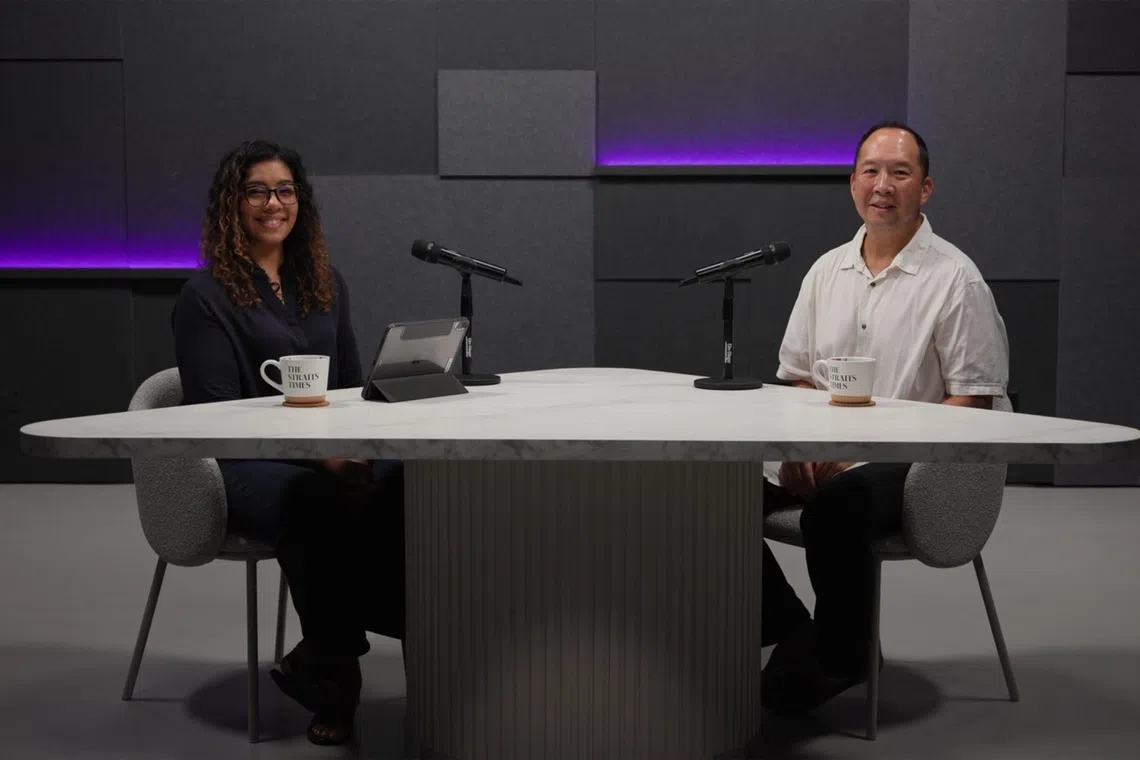
The new ST podcast series, Screens Down Look Up, aims to discuss the challenges of raising children in a world that is always plugged in.
Published Nov 03, 2026, 11:00 AM
Updated Nov 03, 2026, 11:00 AM
SINGAPORE - How much screen time is too much? When should a child get their first phone? And how do we get our children to put down their devices when we struggle to do the same?
These are questions many parents grapple with, often without clear answers.
When The Straits Times spoke to 51 parents in November 2025, ahead of launching our year-long series on children and screens, we realised the issues were far more than setting screen-time limits.
Parents had different views on how best to protect children in a digital world. Some wanted stricter regulations, while others favoured a more flexible, balanced approach.
But many agreed that more honest, nuanced conversations about these challenges were missing.
They suggested a podcast as a way to have them.
That got us thinking. A podcast, not bound by a word count, would allow space for deeper and more empathetic dialogue, capture the complexities of parental guilt and emotions, and the practical wisdom from lived experiences that written stories may miss.
That became the starting point for Screens Down, Look Up, The Straits Times’ new five-episode podcast series.
Not a lecture, but a discussion
What parents need is not another set of dos and don’ts, but a space to explore the grey areas of digital parenting.
We want to unpack and challenge conventional ideas about screens, rather than repeat familiar advice about why devices are ‘bad’.
The intent of the podcast series is not to lecture listeners about the harms of excessive screen use, or to dole out advice on setting more rules.
Our goal was to give room to the conversations and realities of raising children in a world that’s always plugged in, through chats with fellow parents, experts and young people.
We want to listen to what the science says about kids and screens and consider opposing perspectives about managing device usage. We also want to hold honest and relatable conversations about what modern childhood looks like.
In short, we wanted to cater to the parent looking for more meaningful connection, more real-world play, and fewer screen battles at home.
Another thing was clear through brainstorming sessions for the episodes. Screen use is not a standalone parenting problem.
It is intertwined with other aspects of family life - it impacts parenting styles, how children learn and play, their behaviour and how they regulate emotions, and family relationships.
And the questions surrounding screens are rarely just about technology. They are also about trust, independence, boundaries and the kind of childhood we want our children to have.
We hope listeners will come away with a better understanding of screens and children, some practical ideas to try at home, and perhaps a little more confidence in making choices that work for their families.
Parenting in a world of screens can sometimes feel like navigating uncharted territory, but you do not need to figure it out alone.
Screens Down, Look Up, a new five-episode podcast series by The Straits Times, launches on Nov 2.
Follow the Screens Down, Look Up limited series every Monday (Nov 2 - 30):
Channel: https://str.sg/bKan
Apple Podcasts: https://str.sg/57aK
Spotify: https://str.sg/agZP
YouTube: https://str.sg/yxuv
Produced and edited by: Studio+65 and Fa’izah Sani
Executive producers: Ernest Luis, Amelia Teng
Amelia Teng is assistant news editor at The Straits Times. She oversees education and social affairs coverage, and writes about issues relating to community and families.
Elisha Tushara is a correspondent at The Straits Times, specialising in Singapore’s education landscape.
ST 推出的全新播客系列《放下屏幕,抬头仰望》旨在探讨在这样一个时刻离不开电子设备的时代养育孩子的挑战。
发布于2026年11月3日上午11:00
更新于2026年11月3日上午11:00
新加坡——孩子使用电子产品的时间多少才算过多?孩子应该什么时候拥有第一部手机?当我们自己都难以放下电子设备时,又该如何让孩子放下它们呢?
这些都是许多父母都在思考的问题,但往往没有明确的答案。
2025 年 11 月,《海峡时报》在推出为期一年的儿童与屏幕系列报道之前,采访了 51 位家长,我们意识到,这些问题远不止是设定屏幕时间限制那么简单。
家长们对于如何在数字世界中更好地保护儿童持有不同的看法。一些家长希望制定更严格的法规,而另一些家长则倾向于采取更灵活、平衡的方式。
但许多人一致认为,目前缺乏对这些挑战进行更坦诚、更细致的对话。
他们建议用播客的方式来表达这种想法。
这让我们开始思考。播客不受字数限制,可以腾出空间进行更深入、更具同理心的对话,捕捉为人父母的愧疚和情感的复杂性,以及文字故事可能忽略的来自生活经验的实用智慧。
这成为了《海峡时报》全新五集播客系列节目《放下屏幕,抬头仰望》的起点。
不是讲座,而是讨论
父母需要的不是另一套育儿规则,而是一个探索数字育儿灰色地带的空间。
我们希望打破并挑战关于屏幕的传统观念,而不是重复那些关于设备为什么“不好”的熟悉建议。
该播客系列的目的并非向听众讲解过度使用电子屏幕的危害,也不是提供制定更多规则的建议。
我们的目标是通过与家长、专家和年轻人的交流,为探讨在网络时代养育孩子的现实和相关话题提供空间。
我们想听听科学界对儿童与电子屏幕关系的研究成果,并考虑关于如何管理设备使用问题的不同观点。我们也希望就现代儿童的成长现状展开坦诚而易于理解的对话。
简而言之,我们希望迎合那些希望孩子与父母建立更有意义的联系、进行更多现实世界游戏、减少在家中与孩子进行屏幕大战的父母的需求。
在为剧集构思创意的过程中,还有一点变得很明确:屏幕使用本身并不是一个独立的育儿问题。
它与家庭生活的其他方面息息相关——它影响着育儿方式、孩子的学习和玩耍方式、他们的行为以及他们调节情绪的方式,以及家庭关系。
围绕屏幕的问题很少仅仅局限于技术层面,它们还关乎信任、独立、界限,以及我们希望孩子拥有怎样的童年。
我们希望听众能更好地了解屏幕与儿童的关系,获得一些可以在家尝试的实用建议,并更有信心做出适合自己家庭的选择。
在电子屏幕充斥的世界里,育儿有时会感觉像是在探索未知领域,但你并不需要独自摸索。
《放下屏幕,抬头看》(Screens Down, Look Up)是《海峡时报》推出的全新五集播客系列节目,将于 11 月 2 日上线。
每周一(11月2日至30日)播出“向下看屏幕,向上看”限定系列节目:
频道:https://str.sg/bKan
苹果播客:https://str.sg/57aK
Spotify:https://str.sg/agZP
YouTube:https://str.sg/yxuv
制作及剪辑:Studio+65 和 Fa'izah Sani
执行制片人:Ernest Luis、Amelia Teng
邓美玲是《海峡时报》的助理新闻编辑。她负责教育和社会事务方面的报道,并撰写有关社区和家庭问题的新闻。
Elisha Tushara 是《海峡时报》的记者,专门报道新加坡的教育领域。