Proposed law seeks jail or reformative training for young scam offenders after High Court ruling高等法院裁决后,一项拟议法案寻求对年轻的诈骗罪犯处以监禁或改造培训。
The Sentencing (Scams) Bill was introduced in Parliament following a recent High Court ruling that favoured rehabilitative options for young scam offenders. Read more at straitstimes.com.
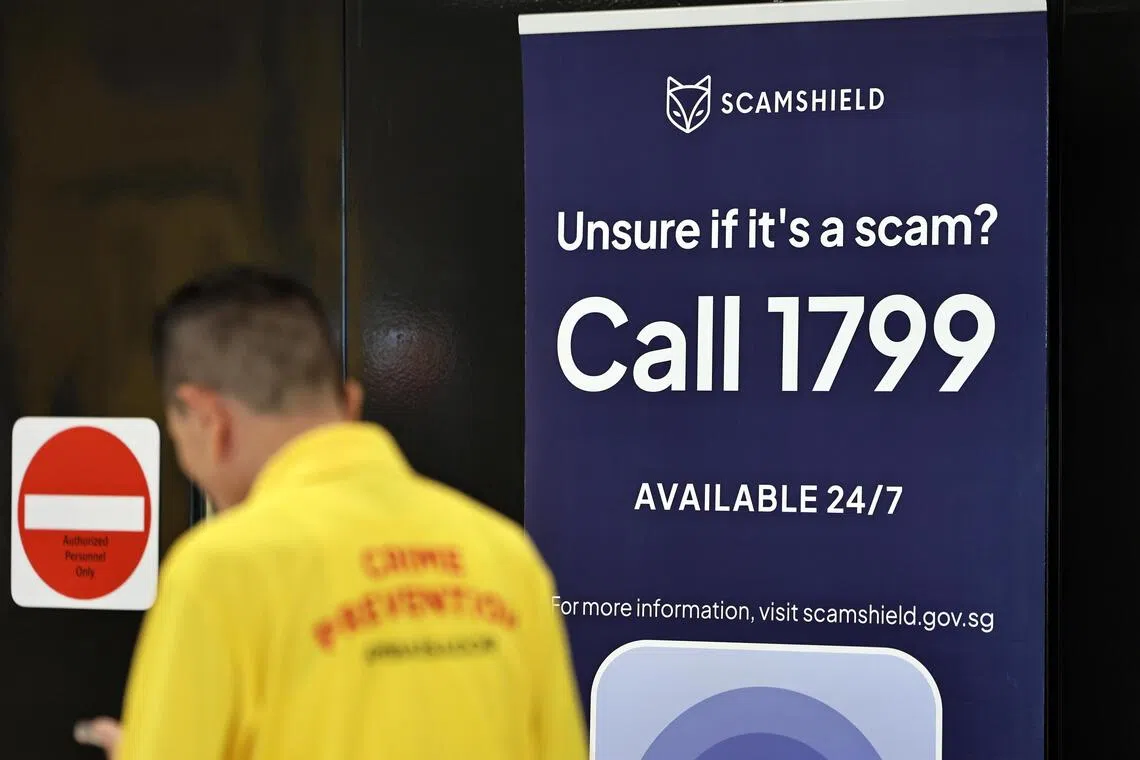
The Sentencing (Scams) Bill was introduced in Parliament on Nov 3, following a recent High Court ruling that favoured rehabilitative options for young scam offenders.
ST PHOTO: KELVIN CHNG
Published Nov 03, 2026, 01:56 PM
Updated Nov 03, 2026, 02:01 PM
The Sentencing (Scams) Bill was introduced in Parliament on Nov 3 after a High Court ruling favoured probation for some young scam offenders.
The Bill makes jail or reformative training the default for offenders aged 21 and below, unless there are exceptional circumstances, to keep a strong deterrent stance.
Scams remain a major threat, with over $4 billion lost since 2019. In 2025, the police investigated more than 1,000 youths in connection with scam reports.
SINGAPORE - Young scam mules could soon face jail or reformative training (RT) as the default punishment rather than probation under a proposed law to reinforce the Government’s deterrent stance against such offences.
On Nov 3, the Sentencing (Scams) Bill was introduced in Parliament following a recent High Court ruling that favoured rehabilitative options for young scam offenders.
The High Court in September allowed the appeals of four young scam offenders who had been given RT , and instead ordered them to be placed on probation ranging from a year to 18 months. These four committed their offences while under the age of 21.
Probation allows an offender to serve their sentence in the community under conditions like curfews and supervision without incurring a criminal record.
Those sentenced to RT are detained in a centre to undergo strict regimen like foot drills and counselling. An RT sentence leaves a criminal record.
The High Court also dismissed an appeal by the prosecution against a 17-year-old mule who was sentenced to a short detention order and community service instead of RT.
The High Court judgment, issued by a three-judge panel comprising Chief Justice Sundaresh Menon, Justice Ang Cheng Hock and Justice Hoo Sheau Peng, ruled that RT or jail time should not be the default sentence for young scam mules.
On Nov 3, the Sentencing (Scams) Bill was introduced as the court’s decision was inconsistent with Parliament’s deterrent stance against scam offences.
The Ministry of Home Affairs (MHA) said the Bill will reiterate Parliament’s intention that young people, aged 21 and below, who commit scam offences should face RT or jail time , rather than probation or other rehabilitative options, as the primary or default options, unless there are exceptional circumstances.
MHA said: “If a deterrent approach is not taken, Singapore’s scam and youth offending situation could deteriorate.”
The appeals of two other offenders, who were treated as adults, were dismissed.
One was between 20 and 22 years old when he surrendered his bank account and committed cheating. His sentence of 14 weeks’ jail was upheld.
The other was 27 years old when she committed three scam-related offences. Her sentence of seven months and two weeks’ jail and a $500 fine was upheld.
The decisions in these seven cases are final and will not be affected by the proposed law.
Scam victims in Singapore have lost over $4 billion since 2019, with $913.1 million lost to scammers in 2025. A record $1.1 billion was lost in 2024.
MHA said scams remain the most prevalent crime type in Singapore, with the police receiving around 90 scam reports amounting to $2 million in losses daily in the first half of 2026.
In 2025, the police investigated more than 1,000 youths in connection with scam reports.
Meanwhile, the number of youths who committed cheating and related offences rose by 37% from 814 in 2024 to 1,114 in 2025. Most were scam mules.
MHA said: “We need to do more to deter young offenders from being enticed by the prospect of quick financial gains to commit such offences.”
Since 2023, Parliament has passed five Bills to deter scams and related offences.
These include the Corruption, Drug Trafficking and Other Serious Crimes (Confiscation of Benefits) (Amendment) Bill that introduced new offences to clamp down on money mules.
To make it easier to prosecute those who sell their Singpass accounts to scammers, the Computer Misuse (Amendment) Bill was passed .
Both bills were passed in May 2023.
Parliament also passed the Law Enforcement and Other Matters Bill in April 2024 to address the misuse of SIM cards for scams.
It also passed the Criminal Law (Miscellaneous Amendments) Bill in November 2025 to introduce caning for scammers, members and recruiters of scam syndicates.
The Scams (Countermeasures) and Other Matters Bill was passed in September 2026 to tackle the misuse of online accounts for scams.
Parliament had previously passed laws to address judgments which were inconsistent with the Government’s policy intent.
One example was in the City Harvest Church case in 2018 where the Court of Appeal decided that aggravated criminal breach of trust only applied to professional agents.
In 2019, Parliament amended the Penal Code to expand the aggravated criminal breach of trust provision so that it would apply not only to those holding specified professional positions, but more broadly to those entrusted with property in circumstances warranting higher punishment.
To reflect Parliament’s intent, MHA said it worked with the Sentencing Advisory Panel, which includes representatives from the Ministry of Law and the Judiciary, to lay down clear sentencing guidelines for scam offences.
According to the guidelines, imprisonment or RT should be considered for all offenders, even if they are below 21, except those dealt with in the Youth Court. This is given the need for deterrence and public interest in suppressing scams.
MHA said the legislation will apply to the sentencing of scam and scam-enabling offences committed before, on, or after the Act’s commencement date.
Scams have inflicted more than monetary losses on victims, with some committing suicide.
The police had previously cited the case of a man who had lost his life savings after falling for a tech support scam.
He took his nine-year-old daughter to stay at his brother’s home for the night, and said he would be back the next day.
He was later found with self-inflicted injuries, and died several days later.
In 2021, a police full-time national serviceman took his life after being scammed of $10,000.
MHA said: “Scams cause serious harm to victims and must be met with a strong deterrent message. The Bill reinforces the message that scammers and those who facilitate scams should generally face deterrent sentences.”
Nadine Chua is a correspondent covering crime and court at The Straits Times.
Singapore Parliament
11 月 3 日,《量刑(诈骗)法案》提交议会审议。此前,高等法院最近裁定,应为年轻的诈骗罪犯提供改造方案。
《海峡时报》摄影:KELVIN CHNG
发布于 2026 年 11 月 3 日下午 1:56
更新于2026年11月3日下午2:01
11月3日,高等法院裁定对一些年轻的诈骗罪犯适用缓刑后,《量刑(诈骗)法案》被提交议会。
该法案规定,除非有特殊情况,否则对 21 岁及以下的罪犯默认处以监禁或改造训练,以保持强有力的威慑作用。
诈骗仍然是一个重大威胁,自 2019 年以来已造成超过 40 亿美元的损失。2025 年,警方调查了 1000 多名与诈骗有关的青少年。
新加坡——根据一项拟议的法律,年轻的诈骗犯可能很快将面临监禁或改造训练(RT)作为默认处罚,而不是缓刑,以加强政府对这类犯罪的威慑立场。
11 月 3 日,《量刑(诈骗)法案》提交议会审议。此前,高等法院的一项裁决支持对年轻的诈骗罪犯采取改造措施。
高等法院于9月批准了四名年轻诈骗犯的上诉,他们此前被判处缓刑,现改为缓刑一年至一年半不等。这四人犯罪时均未满21岁。
缓刑允许罪犯在社区内服刑,但需遵守宵禁和监管等条件,且不会留下犯罪记录。
被判处RT(限制性训练)的人员将被关押在中心,接受严格的训练,例如队列训练和心理咨询。RT判决会在犯罪记录上留下案底。
高等法院还驳回了检方对一名 17 岁骡子的上诉,该骡子被判处短期拘留令及社区服务,而不是 RT(监禁)。
由首席大法官 Sundaresh Menon、法官 Ang Cheng Hock 和法官 Hoo Sheau Peng 组成的三人法官小组作出的高等法院判决裁定,对于年轻的诈骗犯,不应默认判处缓刑或监禁。
11 月 3 日,《量刑(诈骗)法案》被提出,因为法院的判决与议会针对诈骗犯罪的威慑立场不一致。
内政部表示,该法案将重申议会的意图,即对于 21 岁及以下的年轻人,如果犯有诈骗罪,应以监禁或缓刑作为主要或默认选项,而不是缓刑或其他改造选项,除非有特殊情况。
内政部表示:“如果不采取威慑措施,新加坡的诈骗和青少年犯罪情况可能会恶化。”
另外两名被当作成年人对待的罪犯的上诉被驳回。
其中一人在20至22岁之间,交出银行账户并犯有诈骗罪。他被判处14周监禁,原判维持不变。
另一名被告在犯下三项诈骗相关罪行时年仅27岁。她被判处七个月零两周监禁并处罚金500美元,原判维持不变。
这七起案件的判决均为最终判决,不会受到拟议法律的影响。
自 2019 年以来,新加坡的诈骗受害者已损失超过 40 亿美元,预计 2025 年将有 9.131 亿美元被骗。2024 年的损失额将达到创纪录的 11 亿美元。
新加坡内政部表示,诈骗仍然是新加坡最普遍的犯罪类型,警方在 2026 年上半年每天接到约 90 起诈骗报案,损失金额达 200 万美元。
2025年,警方调查了1000多名涉嫌诈骗的青少年。
与此同时,2024 年至 2025 年间,青少年诈骗及相关犯罪人数增加了 37%,从 814 人增至 1114 人。其中大多数是诈骗工具的使用者。
MHA表示:“我们需要采取更多措施来阻止年轻罪犯被快速获得经济利益的前景所诱惑而犯下此类罪行。”
自 2023 年以来,议会已通过五项法案,以遏制诈骗及相关犯罪行为。
其中包括《腐败、毒品贩运和其他严重犯罪(没收利益)(修正)法案》,该法案引入了新的罪行,以打击洗钱者。
为了更容易起诉那些将 Singpass 账户出售给诈骗分子的人,《计算机滥用(修正)法案》获得通过。
这两项法案均于2023年5月获得通过。
议会于 2024 年 4 月通过了《执法及其他事项法案》,以解决 SIM 卡被滥用于诈骗的问题。
2025 年 11 月,该法案还通过了《刑法(杂项修正案)法案》,规定对诈骗犯、诈骗集团成员和招募者处以鞭刑。
《诈骗(对策)及其他事项法案》于 2026 年 9 月获得通过,旨在打击利用网络账户进行诈骗的行为。
议会此前曾通过法律来解决与政府政策意图不符的判决。
一个例子是 2018 年的 City Harvest Church 案,上诉法院裁定,加重刑事背信罪仅适用于专业代理人。
2019 年,议会修改了刑法,扩大了加重刑事失信罪的适用范围,使其不仅适用于担任特定专业职位的人,而且更广泛地适用于在应受更严厉处罚的情况下受托保管财产的人。
为了体现议会的意图,内政部表示,它与量刑咨询小组(成员包括来自法律部和司法部门的代表)合作,制定了针对诈骗罪行的明确量刑指南。
根据相关准则,除青少年法庭审理的案件外,所有违法者,即使未满21岁,都应考虑判处监禁或缓刑。这是出于威慑和维护公众利益,打击诈骗犯罪的需要。
内政部表示,该立法将适用于在该法案生效日期之前、当天或之后犯下的诈骗罪和协助诈骗罪的量刑。
诈骗给受害者造成的伤害不仅限于金钱损失,有些人甚至因此自杀。
警方此前曾提及一名男子因落入技术支持骗局而损失毕生积蓄的案例。
他带着九岁的女儿到哥哥家过夜,并说他第二天就会回来。
后来人们发现他身上有自残伤痕,几天后他便去世了。
2021年,一名全职国民服役警察被骗走1万美元后自杀身亡。
内政部表示:“诈骗行为会对受害者造成严重伤害,必须采取强有力的威慑措施。该法案重申了诈骗者和协助诈骗者通常应受到严厉惩罚的原则。”
Nadine Chua是《海峡时报》负责报道犯罪和法庭新闻的记者。
新加坡国会