From January 2027, data from ERP 2 on-board units can be used to prevent, detect and solve crimes自2027年1月起,ERP 2车载单元的数据可用于预防、侦查和侦破犯罪。
ERP 2 OBU data can be used in criminal investigations from January 2027, with safeguards on access and retention, says Singapore ministers. Read more at straitstimes.com.
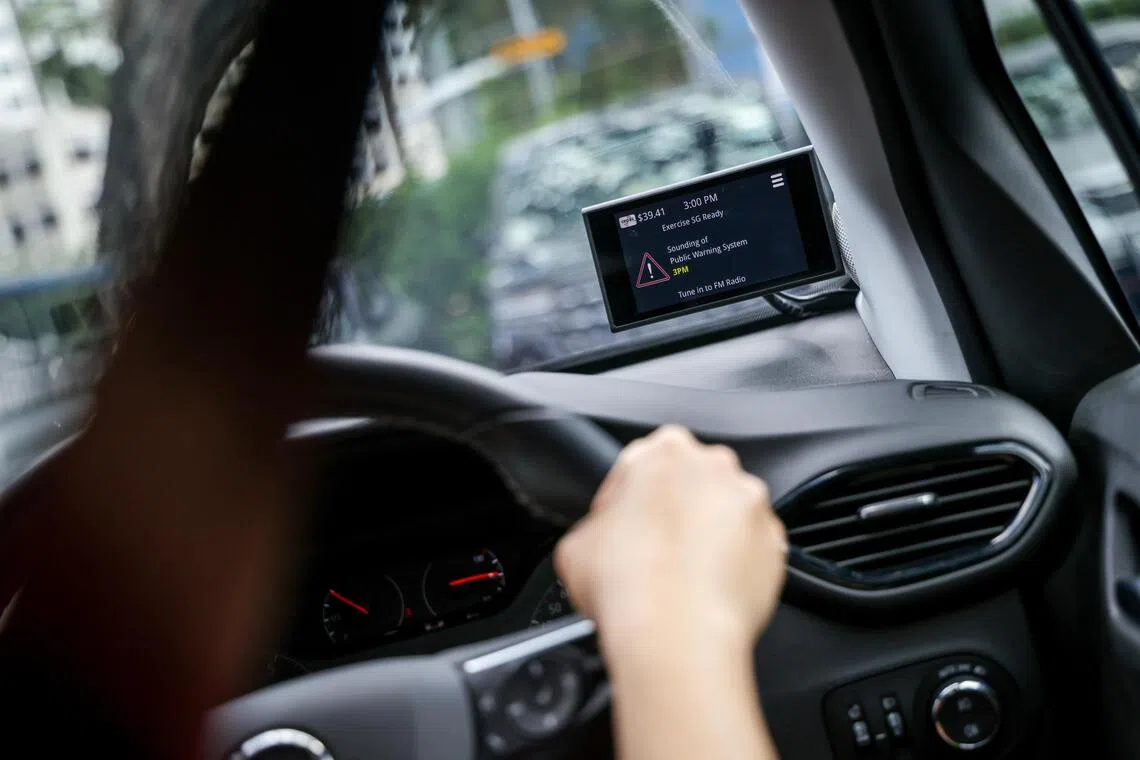
All Singapore-registered vehicles on the roads must be fitted with the next-generation OBU from Jan 1, 2027.
PHOTO: LIANHE ZAOBAO
Published Nov 03, 2026, 02:08 PM
Updated Nov 03, 2026, 02:15 PM
From January 2027, ERP 2 OBU data can be used in criminal investigations. Goh Pei Ming said access will follow the same legal and data safeguards as other Home Team sources.
Police will keep vehicle data only as long as needed for investigations or court cases. Sun Xueling said the OBUs use encryption, and motorists cannot directly access stored data.
LTA will use ERP 2 data to catch illegal cross-border taxis, deregistered vehicles, off-peak cars outside allowed hours, and other restricted vehicles. Distance-based charging may come later in a future phase.
SINGAPORE – From January 2027, information stored on the next-generation Electronic Road Pricing (ERP) on-board units (OBUs) is expected to be used to prevent, detect and solve crimes.
Senior Minister of State for Home Affairs Goh Pei Ming, speaking in Parliament on Nov 3, said ERP 2 OBU data will be among the investigation and intelligence tools made available to the authorities in the effort to fight crime.
Goh was replying to a question from Jackson Lam (Nee Soon GRC), who asked if the ERP 2 system can be used for law enforcement and what safeguards will be put in place to control such access.
ERP 2 uses satellite technology , instead of gantries, to determine a vehicle’s location for toll charging.
Goh said ERP 2 data will be subject to safeguards on its access and use, as with other data used by the Home Team.
Lam also asked how long vehicle-specific data from OBUs can be retained.
Goh said the police will only retain data for as long as necessary to complete criminal investigations or court proceedings.
He added that access and use of ERP 2 data by law enforcement agencies will be bound by the same legal and data governance safeguards that apply to all other sensors or information sources.
The Land Transport Authority (LTA) in September said the new ERP system will be used in enforcement efforts in vehicle-related offences, such as the provision of illegal cross-border taxis services .
While ERP 2 could be used for enforcement against speeding offences , LTA at the time said further enhancements were needed before any such use.
Tin Pei Ling (Marine Parade-Braddell Heights GRC) earlier in th e Nov 3 sitting asked what measures have been put in place to protect the use of ERP 2 data.
In her reply, Senior Minister of State for National Development and Transport Sun Xueling said the OBUs are designed with a high level of security and encryption.
She added that the system conforms to stringent international technical standards and strict regulations by the Infocomm Media Development Authority (IMDA) to ensure safety, reliability and interoperability.
Sun said: “Data stored in the OBUs cannot be directly accessed by motorists. That’s not the intention.
“So, any data transmitted by the OBUs can only be accessed by the Government and is stored in a secure environment.”
She added that data collected on individual vehicles is aggregated and anonymised when transferred to LTA’s backend system for traffic management and planning.
But when specific vehicles have to be identified for enforcement purposes, LTA can retrieve location data from sensors and systems, she said.
Tin also asked for a few examples in which ERP 2 data could be used.
Sun said detecting deregistered vehicles , the use of off-peak cars driven outside their permitted hours and the use of vehicles – such as those on lay-up and keeping schemes – that should not be driven on roads were a few likely instances.
These were already enforced under the previous ERP system, she added.
Unused vehicles on the lay-up scheme need to be kept at a designated garage address, and vehicle owners are temporarily exempted from paying road tax.
Those on the keeping scheme are deregistered or special-category vehicles that have to be kept in a private compound for static display purposes.
On whether distance-based charging might be rolled out in future, Sun said the authorities will consider doing so at a later stage.
LTA in the past said there were “no immediate plans” to introduce distance-based charging when ERP 2 was first announced.
Ministry of Home Affairs
从 2027 年 1 月 1 日起,所有在新加坡注册上路的车辆都必须安装下一代车载单元 (OBU)。
图片来源:联合早报
发布于 2026 年 11 月 3 日下午 2:08
更新于2026年11月3日下午2:15
自2027年1月起,ERP 2 OBU数据可用于刑事调查。吴佩明表示,访问权限将遵循与其他内政团队数据来源相同的法律和数据保护措施。
警方只会将车辆数据保留到调查或案件审理所需的时间。孙雪玲表示,车载单元(OBU)采用加密技术,车主无法直接访问存储的数据。
陆路交通管理局将利用ERP 2数据查处非法跨境出租车、已注销车辆、非高峰时段违规行驶的车辆以及其他受限车辆。按里程收费可能会在未来的阶段推出。
新加坡——从 2027 年 1 月起,存储在下一代电子道路收费 (ERP) 车载单元 (OBU) 上的信息预计将用于预防、侦查和侦破犯罪。
内政部高级政务部长吴佩明于11月3日在国会表示,ERP 2 OBU数据将作为调查和情报工具之一,提供给当局用于打击犯罪。
吴作栋是在回答林志强(义顺集选区)的提问时做出上述表态的。林志强询问ERP 2系统是否可以用于执法部门,以及将采取哪些保障措施来控制此类访问。
ERP 2 使用卫星技术(而不是龙门架)来确定车辆的位置以进行收费。
吴先生表示,ERP 2 数据的访问和使用将受到保护,就像内政团队使用的其他数据一样。
林先生还询问了车载单元(OBU)的车辆特定数据可以保留多长时间。
吴先生表示,警方只会保留完成刑事调查或法庭诉讼程序所需的数据。
他还补充说,执法机构对 ERP 2 数据的访问和使用将受到与其他所有传感器或信息来源相同的法律和数据治理保障措施的约束。
陆路交通管理局 (LTA) 在 9 月份表示,新的 ERP 系统将用于打击与车辆相关的违法行为,例如提供非法跨境出租车服务。
虽然 ERP 2 可以用于打击超速违法行为,但当时的陆路交通管理局表示,在进行任何此类使用之前,还需要进一步改进。
在 11 月 3 日的会议上,陈佩玲(马林百列-布莱德尔高地集选区)早些时候询问,已采取哪些措施来保护 ERP 2 数据的使用。
国家发展和交通部高级政务部长孙雪玲在答复中表示,车载单元(OBU)的设计具有很高的安全性和加密性。
她补充说,该系统符合严格的国际技术标准和新加坡资讯通信媒体发展局 (IMDA) 的严格规定,以确保安全性、可靠性和互操作性。
孙先生表示:“车载单元中存储的数据无法被驾驶员直接访问。这不是我们的本意。”
“因此,OBU 传输的任何数据只能由政府访问,并存储在安全的环境中。”
她补充说,收集到的关于单个车辆的数据在传输到陆路交通管理局的后端系统进行交通管理和规划时,会进行汇总和匿名化处理。
但她表示,当需要出于执法目的识别特定车辆时,陆路交通管理局可以从传感器和系统中检索位置数据。
Tin 还要求举例说明 ERP 2 数据可以在哪些方面使用。
孙表示,查获已注销车辆、在非高峰时段驾驶车辆(超出允许行驶时间)以及使用不应在道路上行驶的车辆(例如处于停放和保管计划中的车辆)都是可能的例子。
她补充说,这些措施在之前的ERP系统中就已经实施了。
根据停用计划,闲置车辆需要停放在指定的车库地址,车主可暂时免缴道路税。
参与保留计划的车辆是已注销登记的车辆或特殊类别的车辆,必须存放在私人场地内进行静态展示。
关于未来是否会推行按里程计费,孙先生表示,有关部门将在稍后阶段考虑此事。
陆路交通管理局过去曾表示,在首次宣布 ERP 2 时,没有立即推出按里程收费的计划。
内政部