Over 9 in 10 pre-schools have air-con, but air purifiers needed during haze: Goh Pei Ming超过九成的幼儿园都配备了空调,但雾霾期间仍需空气净化器:吴佩明
Pre-schools are required by ECDA to have air purifiers covering key teaching and learning spaces during haze periods. Read more at straitstimes.com.
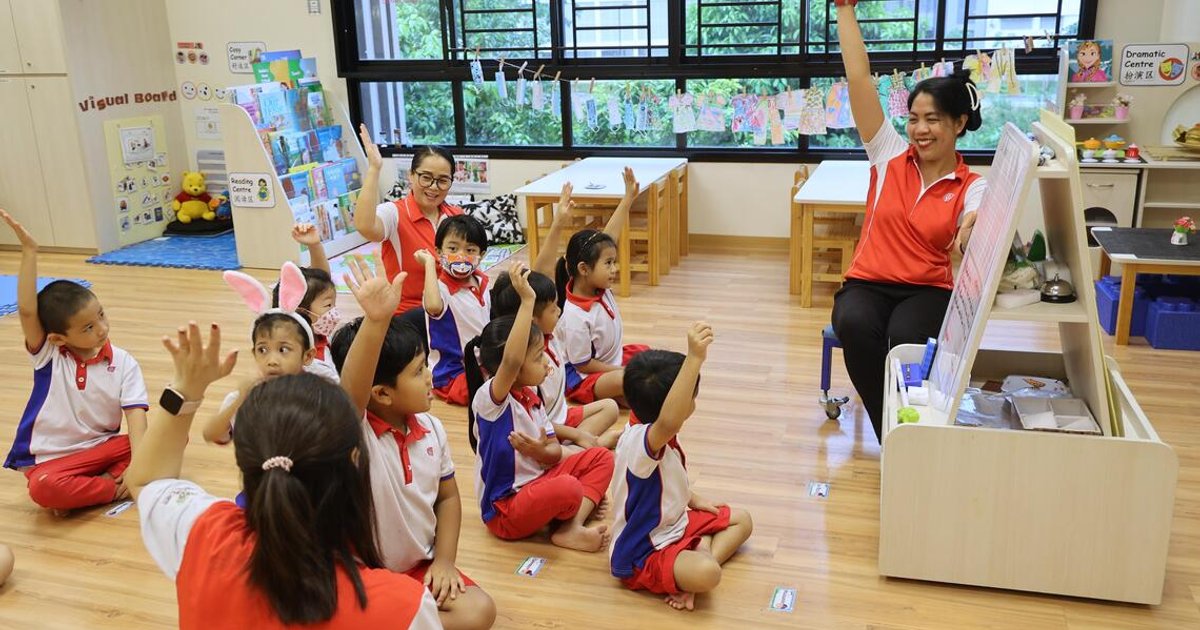
All pre-schools are required by ECDA to have air purifiers covering key teaching and learning spaces used by children during haze periods, Senior Minister of State for Social and Family Development Goh Pei Ming said on Nov 3.
PHOTO: LIANHE ZAOBAO
Published Nov 03, 2026, 03:50 PM
Updated Nov 03, 2026, 03:51 PM
Follow our live coverage here.
SINGAPORE – More than nine in 10 pre-schools have air-conditioning in some or all of their premises. But conventional air-con filters are generally ineffective at removing fine PM2.5 particles during haze, said Senior Minister of State for Social and Family Development Goh Pei Ming.
All pre-schools are required by the Early Childhood Development Agency (ECDA) to have air purifiers covering key teaching and learning spaces used by children during haze periods, he said in Parliament on Nov 3.
“Air-conditioning is not required for haze management, as conventional air-conditioning filters are generally not effective at removing fine PM2.5 particles,” he said.
Goh was responding to questions from MPs Saktiandi Supaat (Bishan-Toa Payoh GRC), Jamus Lim (Sengkang GRC) and Lee Hui Ying (Nee Soon GRC) on safeguards at pre-schools without air-conditioning and how their haze readiness is assessed.
During periods of haze, pre-schools without air-conditioning use fans to support air circulation and indoor comfort. Doors and windows may be opened when the latest 1-hour PM2.5 reading is within the normal band, said Goh.
Pre-schools plan the next day’s activities based on the 24-hour PSI forecast and adjust activities as air quality changes, he added.
All outdoor activities are cancelled when the forecast exceeds 200. All indoor physical activities cease when the latest 1-hour PM2.5 reading reaches the very high band.
Pre-schools must also identify children with chronic lung or heart conditions or respiratory problems early and ensure their medication is readily accessible. “An enclosed, well-ventilated room equipped with a functioning air purifier must be available for children who become unwell,” said Goh.
Centres have also been advised to ensure adequate rest for educators, support staff more affected by haze and review staffing arrangements where feasible, he added.
ECDA also checks pre-schools’ haze preparedness through a survey and unannounced inspections, he said.
Separately, Senior Minister of State for Education Janil Puthucheary said the Education Ministry (MOE) will consider closing schools and switching to home-based learning for pre-school to secondary-level students if the next day’s 24-hour PSI forecast is in the hazardous range of 301 or higher .
Responding to parliamentary questions on haze measures for schools, Janil said schools use the previous evening’s 24-hour PSI forecast to plan the next day’s operations. They also monitor 1-hour PM2.5 readings on the day and adjust measures according to actual conditions.
When 1-hour PM2.5 readings are in the elevated range of 56 to 150, schools switch on classroom air purifiers and close doors and windows.
Doors and windows may be reopened periodically, such as between lessons or during recess, to improve ventilation and comfort while the purifiers continue running .
When 1-hour PM2.5 readings reach the high range of 151 to 250, schools can continue operating safely with appropriate measures, Janil added. Schools will avoid outdoor activities and strenuous indoor physical activities, with students remaining in enclosed indoor spaces equipped with air purifiers.
“This approach is also in line with guidelines in other countries such as the United States, Canada and Australia,” he said.
Kenneth Tiong (Aljunied GRC) asked whether MOE would reconsider its policy of having naturally ventilated classrooms and provide air-conditioning for use when outdoor conditions are not conducive to learning.
Replying , Janil said classrooms are designed for natural cross-ventilation, supported by ceiling fans.
Schools can also move students to other parts of the school and deploy portable cooling measures when needed, he said. These include standing fans and air coolers.
MOE is studying how best to extend mixed-mode cooling, which combines air-conditioning with fans, to classrooms, and will provide an update when ready, he said.
Singapore Parliament
社会及家庭发展部高级政务部长吴佩明于11月3日表示,幼儿培育署要求所有幼儿园在雾霾期间,必须在儿童使用的主要教学和学习空间安装空气净化器。
图片来源:联合早报
发布于2026年11月3日下午3:50
更新于2026年11月3日下午3:51
请点击此处关注我们的实时报道。
新加坡——超过九成的幼儿园在其部分或全部校舍内安装了空调。但社会及家庭发展部高级政务部长吴佩铭表示,传统的空调过滤器在雾霾期间通常无法有效去除细颗粒物PM2.5。
他于 11 月 3 日在国会表示,幼儿培育署 (ECDA) 要求所有幼儿园在雾霾期间,在儿童使用的主要教学和学习空间安装空气净化器。
他说:“雾霾治理不需要空调,因为传统的空调过滤器通常不能有效去除细颗粒物 PM2.5。”
吴作栋是在回应国会议员萨克蒂安迪·苏帕特(碧山-大巴窑集选区)、林志蔚(盛港集选区)和李慧莹(义顺集选区)提出的问题时做出上述表态的,这些问题涉及没有空调的幼儿园的安全保障措施以及如何评估其应对雾霾的准备情况。
雾霾期间,没有空调的幼儿园会使用风扇来促进空气流通,保持室内舒适。吴先生表示,只有当最近一小时的PM2.5读数在正常范围内时,才能打开门窗。
他还补充说,幼儿园会根据 24 小时 PSI 预报来计划第二天的活动,并随着空气质量的变化调整活动。
当预报温度超过 200 时,所有户外活动均取消。当最近 1 小时 PM2.5 读数达到极高水平时,所有室内体育活动均停止。
幼儿园还必须及早识别患有慢性肺部或心脏疾病或呼吸系统疾病的儿童,并确保他们能够随时获得所需的药物。“必须为生病的儿童提供一个封闭、通风良好的房间,并配备一台运转正常的空气净化器,”吴女士说。
他还补充说,已建议各中心确保教育工作者有充足的休息时间,为受雾霾影响较大的工作人员提供支持,并在可行的情况下审查人员配备安排。
他还表示,幼儿培育署还会通过调查和突击检查来检验学前教育机构应对雾霾的准备情况。
另外,教育部高级政务部长贾尼尔·普图切里表示,如果第二天的 24 小时 PSI 预报值达到危险范围 301 或更高,教育部将考虑关闭学校,让学前班到中学阶段的学生转为居家学习。
针对议会关于学校雾霾应对措施的质询,贾尼尔表示,学校会参考前一天晚上的24小时空气污染指数(PSI)预报来规划第二天的防霾措施。他们还会监测当天的PM2.5一小时读数,并根据实际情况调整防霾措施。
当 1 小时 PM2.5 读数处于 56 至 150 的较高范围内时,学校会打开教室空气净化器并关闭门窗。
在净化器继续运行的同时,可以定期打开门窗,例如在课间或课间休息时,以改善通风和舒适度。
贾尼尔补充说,当PM2.5一小时读数达到151至250的高位时,学校可以在采取适当措施的情况下继续安全运行。学校将避免户外活动和剧烈的室内体育活动,学生将留在配备空气净化器的封闭室内空间。
他说:“这种做法也符合美国、加拿大和澳大利亚等其他国家的指导方针。”
阿裕尼集选区议员张建宗询问教育部是否会重新考虑其自然通风教室政策,并在室外条件不利于学习时提供空调。
贾尼尔回应说,教室的设计注重自然交叉通风,并辅以吊扇。
他还表示,学校也可以在必要时将学生转移到学校的其他区域,并部署便携式降温设备,例如立式风扇和空气冷却器。
教育部正在研究如何最好地将空调与风扇相结合的混合模式降温技术推广到教室,并在准备就绪后提供最新消息。
新加坡国会