Zambry: Malay, Bumiputera education must move beyond quotas towards self-reliance, resilience赞布里:马来人和土著教育必须超越配额制,走向自力更生和韧性。
KUALA LUMPUR, Sept 8 — The future of education for the Malay and Bumiputera communities must move beyond quotas towards greater self-reliance and resilience.Higher Education...
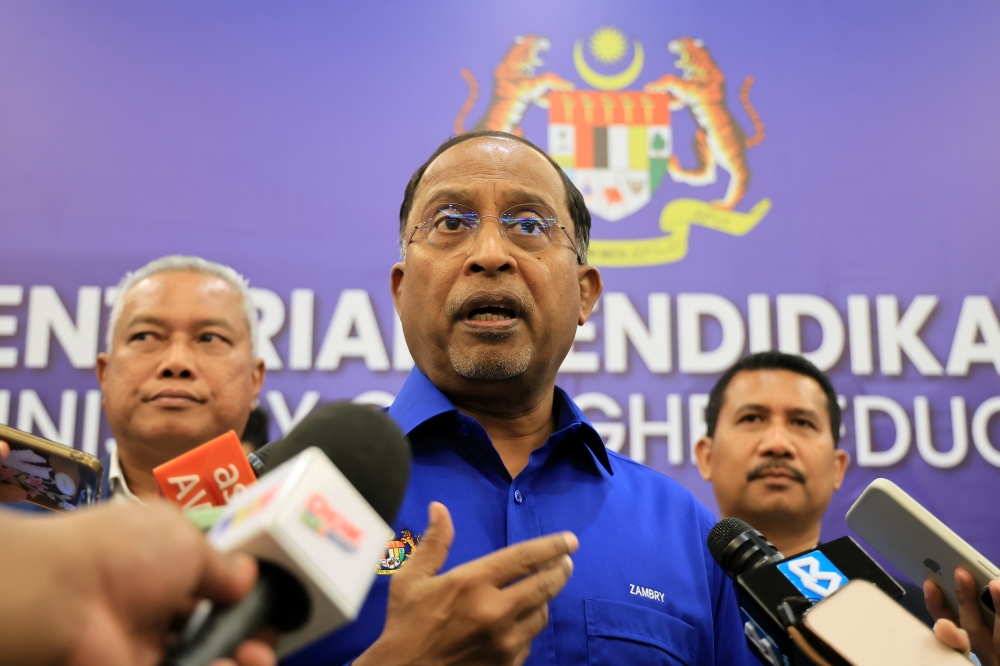
Higher Education Minister Datuk Seri Zambry Abd Kadir emphasized the need for the Malay and Bumiputera communities to transition from reliance on quotas towards self-reliance and innovation, focusing on excelling in STEM, technology development, and intellectual property ownership.
Addressing the Malay Education Convention 2026, he highlighted the importance of a quality-focused education ecosystem, promoting entrepreneurship, and advancing Technical and Vocational Education and Training (TVET) as pivotal to developing national talent.
Zambry advocated for balancing identity and global competitiveness, insisting on the mastery of multiple languages alongside retaining strong cultural values.
The convention aims to produce a comprehensive resolution for further policy development.
KUALA LUMPUR, Sept 8 — The future of education for the Malay and Bumiputera communities must move beyond quotas towards greater self-reliance and resilience.
Higher Education Minister Datuk Seri Zambry Abd Kadir said the success of the communities should instead be measured by their ability to excel in critical fields such as Science, Technology, Engineering and Mathematics (STEM), develop new technologies and own intellectual property.
“The measure is not only the number of students entering university, but how many can think critically, master STEM, build global companies and lead world-class institutions,” he said when officiating the Malay Education Convention 2026 here today.
Zambry said that to achieve this goal, the country’s education ecosystem needed to move beyond simply providing access towards improving quality, building competencies, promoting entrepreneurship and advancing from technology use to technology ownership.
He said Technical and Vocational Education and Training (TVET) should no longer be viewed as a second choice, but as a key pathway for developing national talent and producing highly skilled technicians and problem-solving experts.
Addressing the narrative of Bumiputera dependency, Zambry said affirmative policies remained relevant as long as structural imbalances persisted, but their ultimate objective must be to empower the Bumiputera community to achieve excellence and become independent.
“Malay and Bumiputera education cannot forever be built on the narrative that ‘we need to be helped because we are weak’.
“The narrative of the future must be: ‘We are given the opportunity to become strong, stand on our own, lead and help others’,” he said.
Zambry also stressed that mastery of the Malay language was important as a language of knowledge and identity, while proficiency in English and other languages was essential to competing globally without compromising integrity.
“In the pursuit of global excellence, we must never lose our identity and values. Education must produce not only intelligent people, but individuals of good character, integrity and the moral courage to lead,” he said.
On the convention, which is a continuation of the Bumiputera Education Congress held on May 1, Zambry said it would culminate in the formulation of a comprehensive resolution.
He said the resolution would subsequently be submitted to Deputy Prime Minister Datuk Seri Ahmad Zahid Hamidi for consideration and further policy action by the government. — Bernama
King receives 2026 Auditor-General’s Reports on federal, state finances
Rapid KL says passenger surge behind LRT congestion at Pasar Seni, Kajang
Anwar: Asean haze mechanism needs stronger action, Malaysia won’t shield firms
高等教育部长拿督斯里赞布里·阿卜杜勒·卡迪尔强调,马来人和土著社区需要从依赖配额过渡到自力更生和创新,重点是在 STEM(科学、技术、工程和数学)、技术开发和知识产权所有权方面取得卓越成就。
在2026年马来教育大会上,他强调了以质量为中心的教育生态系统的重要性,促进创业精神,并推进技术和职业教育与培训(TVET),这对于培养国家人才至关重要。
赞布里主张在身份认同和全球竞争力之间取得平衡,坚持在保持强大文化价值观的同时掌握多种语言。
该大会旨在制定一项全面的决议,以促进政策的进一步发展。
吉隆坡,9月8日讯——马来人和土著社区的教育未来必须超越配额制,走向更大的自力更生和韧性。
高等教育部长拿督斯里赞布里·阿卜杜勒·卡迪尔表示,衡量社区成功与否的标准应该是看它们在科学、技术、工程和数学(STEM)等关键领域取得卓越成就、开发新技术和拥有知识产权的能力。
“衡量标准不仅是进入大学的学生人数,而是有多少人能够进行批判性思考、掌握 STEM(科学、技术、工程和数学)知识、创建全球性公司并领导世界一流机构,”他今天在为 2026 年马来教育大会主持开幕式时说道。
Zambry表示,为了实现这一目标,该国的教育生态系统需要超越仅仅提供机会,转向提高质量、培养能力、促进创业精神,并从技术使用过渡到技术拥有。
他表示,技术和职业教育与培训(TVET)不应再被视为次要选择,而应被视为培养国家人才、培养高技能技术人员和问题解决专家的关键途径。
针对土著依赖性的说法,赞布里表示,只要结构性不平衡持续存在,扶持政策就仍然具有现实意义,但其最终目标必须是赋予土著社区权力,使其取得卓越成就并实现独立。
“马来人和土著教育不能永远建立在‘我们需要帮助,因为我们很弱小’这种说法之上。
他说:“未来的叙事必须是:‘我们有机会变得强大,自立自强,领导和帮助他人’。”
赞布里还强调,掌握马来语作为知识和身份的语言非常重要,而精通英语和其他语言对于在不损害自身正直的前提下参与全球竞争至关重要。
“在追求全球卓越的过程中,我们绝不能失去自身的身份和价值观。教育不仅要培养聪明的人才,更要培养品格高尚、正直诚信、具有领导道德勇气的人,”他说道。
赞布里表示,此次大会是5月1日举行的土著教育大会的延续,最终将制定一项全面的决议。
他表示,该决议随后将提交给副首相拿督斯里阿末扎希哈米迪,供政府审议并采取进一步政策行动。——马新社
金收到2026年联邦和州财政审计长报告
Rapid KL称乘客激增是加影Pasar Seni轻轨拥堵的原因
安华:东盟雾霾机制需要更有力的措施,马来西亚不会保护企业