Sungai Perak blue water caused by rain, minerals and changes in water flow, state assembly told霹雳州议会表示,霹雳河水变蓝是由降雨、矿物质和水流变化造成的。
IPOH, Sept 8 — The phenomenon of Sungai Perak turning blue was caused by the interaction of several factors, including increased runoff following heavy rain, the presence of...
The Perak State Legislative Assembly reported that the recent blue discoloration of Sungai Perak was caused by increased runoff from heavy rainfall, mineral particles, and changes in water flow conditions, particularly in areas like Sungai Rui.
This phenomenon resulted from specific mineral concentrations and flow conditions which caused light scattering.
The river, currently classified as Class II under the National Water Quality Index, is continuously monitored by environmental authorities.
The state government is considering comprehensive measures including pollution load studies, enhancing monitoring systems, and establishing guidelines to manage and prevent future occurrences while maintaining suitable water quality for various uses.
IPOH, Sept 8 — The phenomenon of Sungai Perak turning blue was caused by the interaction of several factors, including increased runoff following heavy rain, the presence of mineral particles and changes in water flow conditions, the Perak State Legislative Assembly was told today.
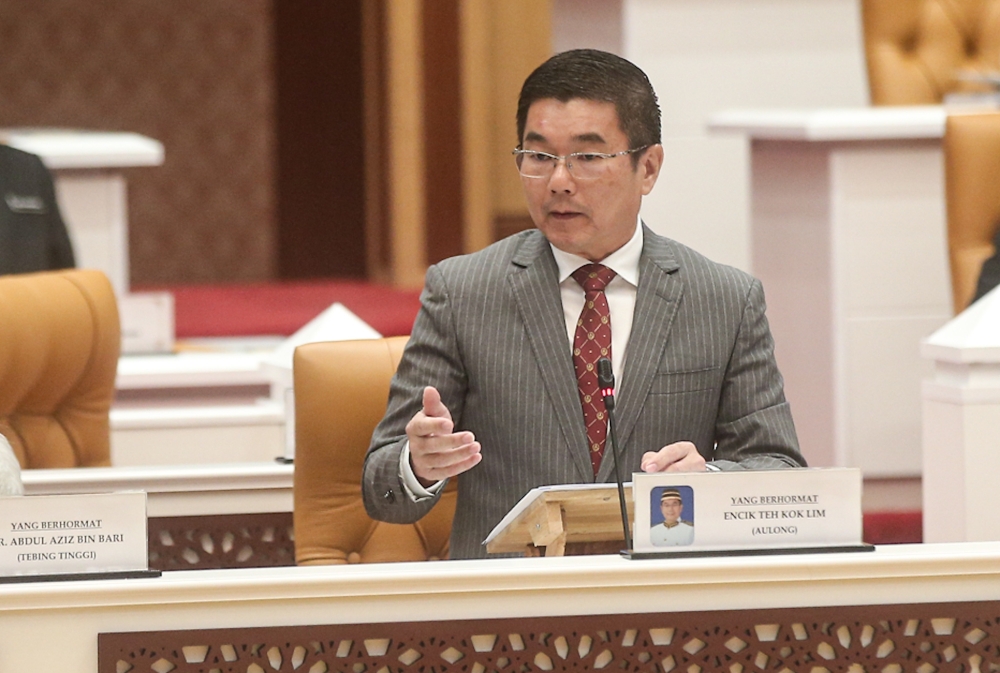
Perak Science, Environment and Green Technology Exco Teh Kok Lim said the finding was based on the Final Report of the Investigative Sampling (IS) Study on Sungai Rui, Gerik, conducted by experts from Scieno TW, a concessionaire appointed by the Department of Environment Malaysia.
He said the report was presented to the Perak State Executive Council on Aug 19.
“Based on the study and analysis, the experts concluded that the phenomenon was caused by the interaction of several factors, particularly increased runoff following heavy rain, the presence of mineral particles and changes in water flow conditions,” he said.
Teh was replying in writing to Kenering assemblyman Mohamad Husairi Arifin, who asked what caused the water in Sungai Perak near the Air Ganda Bridge in Hulu Perak to turn blue in early July, as well as the findings of the investigation and measures taken.
Teh said Hulu Perak was naturally rich in minerals, while heavy rainfall increased runoff, carrying more mineral particles from catchment areas, particularly open areas, into the river system.
He said data obtained by environmental scientist Dr Abd Rani Abdullah showed that rainfall during the phenomenon was almost twice as high as in the preceding period.
“This increased the volume of runoff and carried more mineral particles into the river system. However, rainfall and the presence of minerals alone were not sufficient to produce the colour-changing phenomenon.
“A certain concentration of minerals and suitable water flow conditions had to occur simultaneously,” he said.
Teh said Sungai Rui, being narrower, had a faster current, but the flow slowed when it entered the wider Sungai Perak.
“This allows fine mineral particles to remain suspended and accumulate for a longer period. When these particles interact with light, the scattering and reflection of light causes the water to appear bluish,” he said.
He said the types of minerals present, including copper, iron, aluminium and silica, as well as particle size, also influenced the optical properties and visible colour of the water.
On water quality, Teh said Sungai Perak was currently classified as Class II under the National Water Quality Index (WQI), based on an analysis of more than 30 water quality parameters.
He said the classification meant the river was suitable for uses prescribed under Class II, including recreational activities, fisheries and as a raw water source for conventional treatment before use.
Teh said the state government, through the Department of Environment (DOE), continuously carried out enforcement and inspections on premises subject to the Environmental Quality Act 1974 and its latest amendments.
“This included activities subject to Environmental Impact Assessment (EIA) requirements and industrial premises governed by the Environmental Quality (Industrial Effluent) Regulations 2009,” he said.
He said the DOE had eight manual monitoring stations and one automated monitoring station along the Sungai Perak Basin.
“Monitoring is carried out by the appointed concessionaire, while river water quality data is monitored online through the Environmental Quality Monitoring Programme.
“Manual monitoring is conducted six times a year,” he said.
Teh said any detected changes or deterioration in water quality would be notified to the DOE through the Notification of Pollution Event Level 1 or Level 2 (NPE 1/NPE 2) mechanism.
He said the early notification would allow the department to promptly identify potential pollution sources and take follow-up action.
On the way forward, Teh said the state government was considering legal, scientific and social aspects, as well as proposals from experts and residents in Hulu Perak.
Among the proposals was a Total Maximum Daily Load (TMDL) study to determine the pollution load received by Sungai Rui and Sungai Perak and to map or inventory pollution sources.
The state government also proposed establishing a state-level task force led by the Perak Water Resources Management Board to identify and coordinate action among agencies and strengthen collective enforcement.
Other proposals included studying the use of the Mine Rehabilitation Fund to rehabilitate former mining areas.
Teh said the government also planned to identify locations for installing online monitoring systems to obtain real-time data.
“Parameters including pH, dissolved oxygen, turbidity, total suspended solids and conductivity would be monitored as early indicators of abnormalities linked to mining activities,” he said.
He said the state government also planned to establish a Perak-level guideline for mining activities based on benchmarks and best mining practices adopted by leading mining countries.
“Based on these best practices, the state government can direct mining operations to be upgraded from time to time in line with the latest technology,” he said.
Anwar says Cabinet consensus provides stability for govt to plan, implement policies
Zambry: Malay, Bumiputera education must move beyond quotas towards self-reliance, resilience
King receives 2026 Auditor-General’s Reports on federal, state finances
霹雳州立法议会报告称,霹雳河近期出现蓝色变色是由于暴雨导致径流增加、矿物颗粒以及水流条件变化造成的,尤其是在瑞河等地区。
这种现象是由特定的矿物浓度和流动条件引起的,导致光散射。
该河流目前根据国家水质指数被列为二级河流,并受到环境部门的持续监测。
州政府正在考虑采取综合措施,包括污染负荷研究、加强监测系统以及制定指导方针,以管理和防止未来再次发生污染事件,同时保持适合各种用途的水质。
怡保,9月8日讯——霹雳州立法议会今日获悉,霹雳河变蓝的现象是由多种因素相互作用造成的,包括暴雨后径流增加、矿物颗粒的存在以及水流状况的变化。
霹雳州科学、环境及绿色科技行政议员郑国林表示,这一结论是基于马来西亚环境部委任的特许经营商 Scieno TW 的专家对 Gerik 的 Sungai Rui 进行的调查取样 (IS) 研究的最终报告。
他说,该报告已于8月19日提交霹雳州行政委员会。
他说:“根据研究和分析,专家们得出结论,这种现象是由多种因素相互作用造成的,特别是暴雨后径流增加、矿物颗粒的存在以及水流条件的变化。”
Teh 以书面形式回复了肯宁州议员 Mohamad Husairi Arifin 的询问,后者询问 7 月初霹雳州上霹雳州 Air Ganda 桥附近的霹雳河水变蓝的原因,以及调查结果和采取的措施。
Teh表示,乌鲁霹雳天然富含矿物质,而强降雨增加了径流,将集水区(尤其是开阔地带)的更多矿物质颗粒带入河流系统。
他说,环境科学家阿卜杜勒·拉尼·阿卜杜拉博士获得的数据显示,此次现象期间的降雨量几乎是前一时期的两倍。
“这增加了径流量,并将更多的矿物颗粒带入河流系统。然而,仅靠降雨和矿物质的存在并不足以产生变色现象。”
他说:“必须同时具备一定的矿物质浓度和适宜的水流条件。”
Teh表示,瑞河(Sungai Rui)由于河道较窄,水流速度较快,但当它汇入更宽阔的霹雳河(Sungai Perak)时,水流速度就减慢了。
“这使得细小的矿物颗粒能够悬浮并长时间积累。当这些颗粒与光相互作用时,光的散射和反射会使水呈现蓝色,”他说。
他表示,水中存在的矿物质种类,包括铜、铁、铝和二氧化硅,以及颗粒大小,也会影响水的光学特性和可见颜色。
关于水质,郑先生表示,根据对 30 多个水质参数的分析,霹雳河目前被列为国家水质指数 (WQI) 中的 II 类。
他表示,这一分类意味着该河流适合用于 II 类河流规定的用途,包括休闲活动、渔业以及作为原水来源,在投入使用前进行常规处理。
Teh表示,州政府通过环境部(DOE)持续对受1974年《环境质量法》及其最新修正案约束的场所进行执法和检查。
“这包括受环境影响评估 (EIA) 要求约束的活动以及受 2009 年《环境质量(工业废水)条例》管辖的工业场所,”他说。
他说,环境部在霹雳河盆地设有 8 个人工监测站和 1 个自动监测站。
“监测工作由指定的特许经营者进行,而河流水质数据则通过环境质量监测计划进行在线监测。
他说:“人工监测每年进行六次。”
Teh表示,任何检测到的水质变化或恶化都将通过污染事件通知1级或2级(NPE 1/NPE 2)机制通知环境部。
他表示,提前通知可以让相关部门迅速确定潜在的污染源并采取后续行动。
Teh表示,关于未来的发展方向,州政府正在考虑法律、科学和社会方面的问题,以及来自霹雳州乌鲁霹雳州专家和居民的建议。
其中一项提议是开展一项总最大日负荷 (TMDL) 研究,以确定瑞河和霹雳河所受到的污染负荷,并绘制或清点污染源。
州政府还提议成立一个由霹雳州水资源管理委员会领导的州级工作组,以确定和协调各机构的行动,并加强集体执法。
其他提议包括研究利用矿山复垦基金来复垦以前的矿区。
Teh表示,政府还计划确定安装在线监控系统的地点,以获取实时数据。
他说:“我们将监测 pH 值、溶解氧、浊度、总悬浮固体和电导率等参数,作为与采矿活动相关的异常情况的早期指标。”
他表示,州政府还计划根据领先矿业国家采用的基准和最佳采矿实践,制定霹雳州采矿活动指导方针。
他说:“根据这些最佳实践,州政府可以指导采矿作业根据最新技术不时进行升级改造。”
安华表示,内阁共识为政府制定和实施政策提供了稳定性。
赞布里:马来人和土著教育必须超越配额制,走向自力更生和韧性。
金收到2026年联邦和州财政审计长报告