Putrajaya rejects foreign pressure to hike defence spending, maintains non-aligned stance布城拒绝外国压力增加国防开支,坚持不结盟立场
KUALA LUMPUR, Nov 5 — Malaysia is not obligated to heed the recommendation made by major powers to raise its defence spending to 5 per cent of Gross National Product (GNP),...
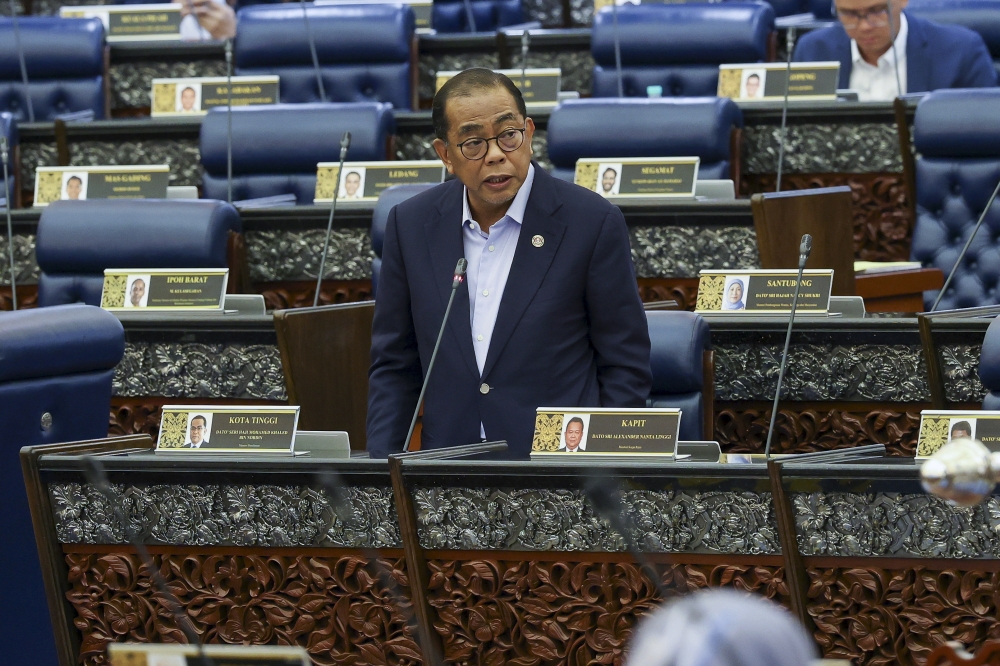
Malaysia has opted not to follow the recommendation by major global powers to raise its defence spending to 5% of its GNP, as stated by Defence Minister Datuk Seri Mohamed Khaled Nordin.
Citing Malaysia's non-aligned foreign policy, Khaled asserted that the suggestion primarily benefits foreign powers seeking to position neutral nations as buffers in conflicts.
Malaysia currently allocates about 1.0 to 1.1% of its GNP to defence, focusing on a purely defensive military doctrine.
The nation's defence budget is managed based on its own national capabilities and priorities.
KUALA LUMPUR, Nov 5 — Malaysia is not obligated to heed the recommendation made by major powers to raise its defence spending to 5 per cent of Gross National Product (GNP), Defence Minister Datuk Seri Mohamed Khaled Nordin told the Dewan Rakyat today.
Khaled suggested the push for more defence spending only serves the interest of foreign powers who want neutral nations on the frontlines during major conflicts, in allusion seemingly made towards countries that are seen as hostile to China.
“There are countries recommending that we raise our defence expenditure to five per cent of GNP. The intention is that these major powers want us out in front whenever there is a clash, conflict, or war,” Khaled said in reply to William Leong (PH-Selayang).
Malaysia and Southeast Asia have long committed to a non-aligned foreign policy that had been formally codified amid geopolitical tension caused by the Cold War.
Khaled said Mindef will manage its defence budget based on its own national capabilities.
Putrajaya allocates roughly 1.0 to 1.1 per cent of national output to defence spending annually, according to Malaysian Defence, an online defence magazine. Under Budget 2026 the Ministry of Defence was allocated RM21.7 billion.
“We want to state clearly that we are not married to any major power. We are free, we are neutral, and we spend and allocate funds according to our own capability,” the minister said, adding that the country’s military doctrine is purely defensive.
“Our defence doctrine is meant to defend the nation, not to attack any country,” he said.
Former Sungai Ujong Undang and five others fail to halt contempt proceedings
Malaysia’s first female education D-G Asiah Abu Samah dies at 89
Penang Hospital to complete new blocks in 2027 and 2029 to tackle overcrowding
马来西亚国防部长拿督斯里穆罕默德·卡立·诺丁表示,马来西亚选择不采纳主要世界大国的建议,将国防开支提高到国民生产总值的5%。
哈立德援引马来西亚的不结盟外交政策,断言这一建议主要有利于那些试图将中立国家定位为冲突缓冲地带的外国势力。
马来西亚目前将国民生产总值的约 1.0% 至 1.1% 用于国防,重点是纯粹的防御性军事理论。
国家的国防预算是根据其自身的国家能力和优先事项进行管理的。
吉隆坡,11月5日讯——马来西亚国防部长拿督斯里穆罕默德·卡立·诺丁今天在国会下议院表示,马来西亚没有义务听从大国提出的将国防开支提高到国民生产总值(GNP)5%的建议。
哈立德暗示,推动增加国防开支只会满足那些希望在重大冲突中让中立国家站在前线的外国势力的利益,这番话似乎暗指那些被视为对中国怀有敌意的国家。
“有些国家建议我们将国防开支提高到国民生产总值的5%。这些大国的目的是希望我们在发生冲突、争端或战争时能够走在前列,”哈立德在回答威廉·梁(希望联盟-士拉央)的提问时说道。
马来西亚和东南亚长期以来奉行不结盟外交政策,这一政策是在冷战造成的地缘政治紧张局势下正式确立的。
哈立德表示,国防部将根据本国国力管理国防预算。
据马来西亚国防在线杂志报道,布城每年将国民生产总值的约1.0%至1.1%用于国防开支。在2026年财政预算案中,国防部获得了217亿令吉的拨款。
“我们要明确声明,我们不依附于任何大国。我们是自由的,我们保持中立,我们根据自身能力支配和分配资金,”这位部长说,并补充说,该国的军事理论纯粹是防御性的。
他说:“我们的国防理论旨在保卫国家,而不是攻击任何国家。”
前双溪乌戎·乌当及其他五人未能阻止藐视法庭程序
马来西亚首位女性教育总监 Asiah Abu Samah 去世,享年 89 岁
槟城医院将于2027年和2029年建成新楼,以缓解医院拥挤问题。