Police investigating case of man who used shell companies to rent landed homes警方正在调查一名男子利用空壳公司租赁房产的案件。
The police are looking into alleged cheating, and possible fraudulent trading and wrongful trading offences. Read more at straitstimes.com.
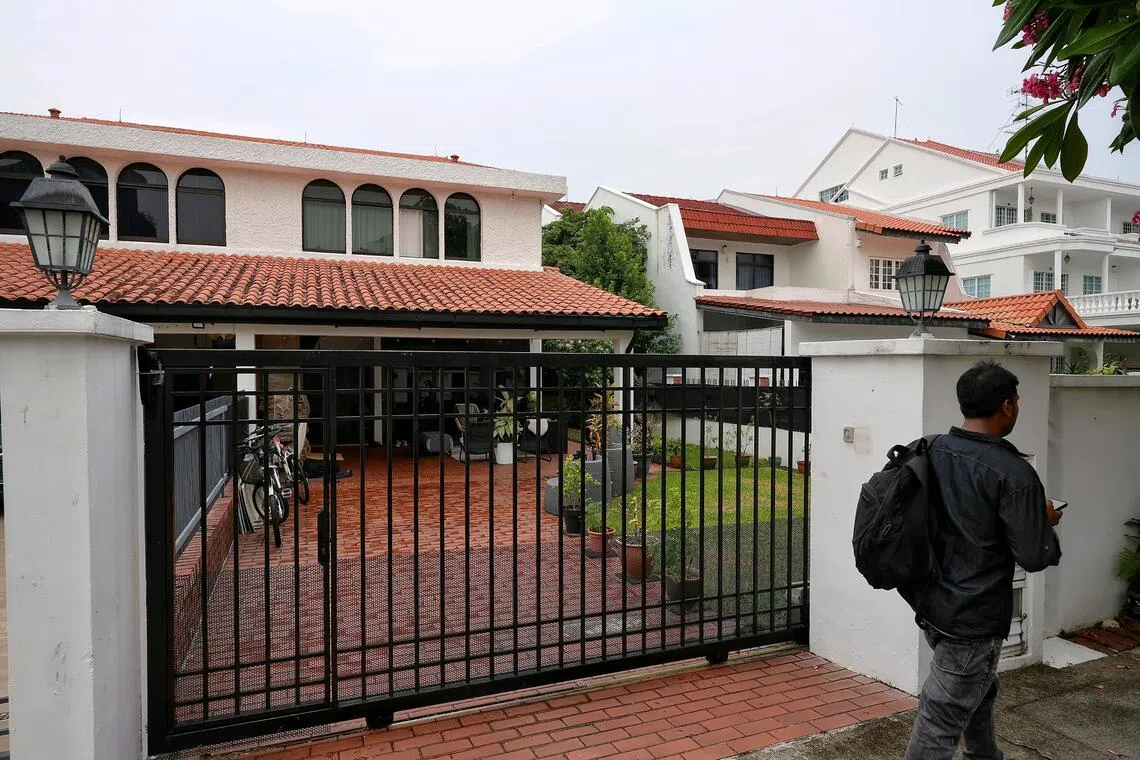
American Anthony Thomas Price had used Noranth Ventures, a shell company, to rent this semi-detached house in Lengkong Dua in Kembangan for $7,500 a month. As at Nov 4, he has not vacated the premise despite a court order.
Published Nov 04, 2026, 02:15 PM
Updated Nov 04, 2026, 02:18 PM
SINGAPORE – The police are investigating the case of a man who used shell companies to rent three landed homes in Singapore at different times for him and his family to live in, Senior Minister of State for Law Murali Pillai said on Nov 4.
Murali told Parliament that the offence of cheating is punishable with a jail term of up to 10 years, and a fine or caning, or both.
“The official receiver is also investigating possible fraudulent trading and wrongful trading offences, and the Accounting and Corporate Regulatory Authority is also looking into potential breaches of the Companies Act by the relevant entities and individuals,” he said, adding he could not say more due to ongoing investigations.
Murali was responding to MPs who asked about stronger protection for landlords from tenants who stop paying rent and refuse to move out.
The Straits Times reported on Oct 12 that American Anthony Thomas Price, a director and shareholder of Noranth Ventures, had used the company and its wholly owned subsidiary Bundleluxe, to enter into separate agreements with different landlords between 2019 and 2026.
Shortly after moving in, Price stopped paying rent and embroiled his landlords in legal processes to avoid moving out.
As at Nov 4, he has still “refused to vacate the premise” of the property he rented most recently, according to the landlord.
In this case, Price had used Noranth Ventures, a company with $200 in paid-up capital, to rent a semi-detached house in Lengkong Dua in Kembangan, from an elderly couple in their 80s.
Price paid half the deposit and only one month’s rent in May 2026. To avoid moving out, Price filed a court application to stop his landlords from repossessing the property.
In a written judgment on Oct 7, District Judge Chiah Kok Khun dismissed the application, calling it a “plain abuse of process of the court” and allowed the landlords counterclaims of recovering the property, unpaid rent with interest and other outstanding sums.
The district judge also identified a similar pattern in two earlier tenancy disputes over landed homes involving Price and his companies .
WP’s Louis Chua (Sengkang GRC) asked whether the Law Ministry would consider introducing expedited procedures for landlords to regain possession of residential properties when tenants fail to pay rent for a prescribed period, particularly when the tenancy agreement is signed by a company.
He also sought figures on the number of residential tenancy claims involving companies that failed to pay rent and how many of these cases involved judgment sum that remained unrecovered.
In response, Murali said it would be unfair if repossession of a property is the default outcome, or even automatic, whenever rent is unpaid for a prescribed period, as some tenants may face genuine hardship or are disputing rental claims in good faith.
“Not every tenant who falls behind is acting in bad faith,” said Murali.
He said the courts do not track data on companies that failed to pay rent, or on whether judgment sums are recovered.
Data from the Small Claims Tribunals’ filing system showed that each year from 2021 to 2025, there were about 1,100 to 1,840 claims relating to residential leases, he said. Of these, about 1% to 2%, or 14 to 40 claims a year, involved cases where the claimant indicated “rental arrears” and the respondent party was a company or other entity.
Yip Hon Weng (Yio Chu Kang) asked about the possibility of holding company directors personally liable for unpaid rent, or mandate personal guarantees when companies enter residential tenancy agreements.
He also asked what legal safeguards are available to prevent individuals from exploiting corporate structures to delay eviction and the recovery of property.
In response, Murali said many companies lease residential properties for legitimate reasons, for example, to house employees posted to Singapore; making personal guarantees mandatory for corporate tenancies would restrict such arrangements.
He added that such a requirement might also fail to deter individuals intent on cheating, as they could appoint directors with no assets to provide the guarantees.
“Landlords are already free to require personal guarantees from directors or other individuals before leasing their properties to companies, if they wish. They can decide whether to do so, based on their assessment of the risks of each tenancy,” said Murali.
Existing laws already provide safeguards against companies being used as a cover for fraud, or to evade liabilities. While the company is liable for the commercial obligations it entered into, the courts can hold individuals personally responsible for company’s debt, in cases such as fraudulent or wrongful trading, he added.
Joyce Lim covers Singapore’s property market and redevelopment trends.
Singapore Parliament
Residential property
美国人安东尼·托马斯·普莱斯通过一家名为Noranth Ventures的空壳公司,以每月7500美元的价格租下了位于肯邦安县Lengkong Dua的这栋半独立式住宅。截至11月4日,尽管法院已下达搬迁令,他仍未搬离该房屋。
发布于 2026 年 11 月 4 日下午 2:15
更新于2026年11月4日下午2:18
新加坡——律政部高级政务部长穆拉里·皮莱于11月4日表示,警方正在调查一名男子利用空壳公司在不同时期在新加坡租下三套有地住宅供自己和家人居住的案件。
穆拉利向议会表示,欺诈罪最高可判处 10 年监禁,并处罚金或鞭刑,或两者并罚。
“官方接管人也在调查可能存在的欺诈交易和不当交易罪行,会计和公司监管局也在调查相关实体和个人可能违反《公司法》的行为,”他说道,并补充说由于调查仍在进行中,他无法透露更多信息。
穆拉利是在回应议员们的询问,议员们要求加强对房东的保护,防止租户停止支付租金并拒绝搬走。
《海峡时报》10 月 12 日报道,美国人安东尼·托马斯·普莱斯是 Noranth Ventures 的董事兼股东,他利用该公司及其全资子公司 Bundleluxe,在 2019 年至 2026 年期间与不同的房东签订了单独的协议。
搬进去不久,普莱斯就停止支付房租,并让房东陷入法律纠纷,以避免搬出去。
截至 11 月 4 日,据房东称,他仍然“拒绝搬离”他最近租住的房屋。
在这种情况下,普莱斯利用诺兰斯风险投资公司(一家注册资本为 200 美元的公司)从肯邦安的伦孔杜阿一对 80 多岁的老夫妇那里租了一栋半独立式住宅。
普莱斯在 2026 年 5 月支付了一半的押金和一个月的房租。为了避免搬走,普莱斯向法院提出申请,阻止房东收回房产。
10 月 7 日,地方法官谢国坤在一份书面判决中驳回了该申请,称其为“明显滥用法庭程序”,并允许房东提出反诉,要求收回房产、未付租金及利息和其他未付款项。
地区法官还发现,在之前两起涉及普莱斯及其公司名下的土地租赁纠纷中,也存在类似的模式。
工人党议员蔡路易(盛港集选区)询问律政部是否会考虑引入快速程序,以便在租户未按规定期限支付租金时,房东能够收回住宅物业,尤其是在租赁协议由公司签署的情况下。
他还要求统计涉及未支付租金的公司提出的住宅租赁索赔案件数量,以及其中有多少案件涉及尚未追回的判决金额。
对此,穆拉利表示,如果租金逾期未付就默认或自动收回房产,那将是不公平的,因为有些租户可能面临真正的困难,或者出于善意对租金索赔提出异议。
穆拉里说:“并非所有拖欠房租的租户都是恶意拖欠的。”
他说,法院不会追踪未支付租金的公司的数据,也不会追踪判决金额是否得到追回。
他表示,小额索偿法庭的档案系统数据显示,2021年至2025年期间,每年约有1100至1840起与住宅租赁相关的索赔案件。其中,约1%至2%(即每年14至40起)的案件涉及“拖欠租金”,而被告方为公司或其他实体。
叶汉荣(义顺)询问是否有可能追究公司董事对未付租金的个人责任,或者在公司签订住宅租赁协议时强制要求个人担保。
他还询问有哪些法律保障措施可以防止个人利用公司结构来拖延驱逐和财产追回。
对此,穆拉里表示,许多公司出于正当理由租赁住宅物业,例如,为派驻新加坡的员工提供住房;强制要求公司租赁提供个人担保将会限制此类安排。
他还补充说,这样的要求也可能无法阻止那些意图作弊的人,因为他们可以任命没有资产的董事来提供担保。
穆拉里表示:“房东完全可以要求公司董事或其他个人在将房产出租给公司之前提供个人担保。他们可以根据对每笔租赁交易风险的评估来决定是否这样做。”
现行法律已提供保障措施,防止公司被用作欺诈或逃避债务的掩护。他补充说,虽然公司对其承担的商业义务负责,但在欺诈或不当交易等情况下,法院可以追究个人对公司债务的个人责任。
Joyce Lim负责报道新加坡房地产市场和重建趋势。
新加坡国会
住宅物业