Singapore proposes raising maximum haze penalty from S$2 million to S$20 million新加坡提议将雾霾最高罚款额从200万新元提高到2000万新元。
Companies linked to haze may also face financial and commercial repercussions separate from criminal liability.
Companies linked to haze may also face financial and commercial repercussions separate from criminal liability.
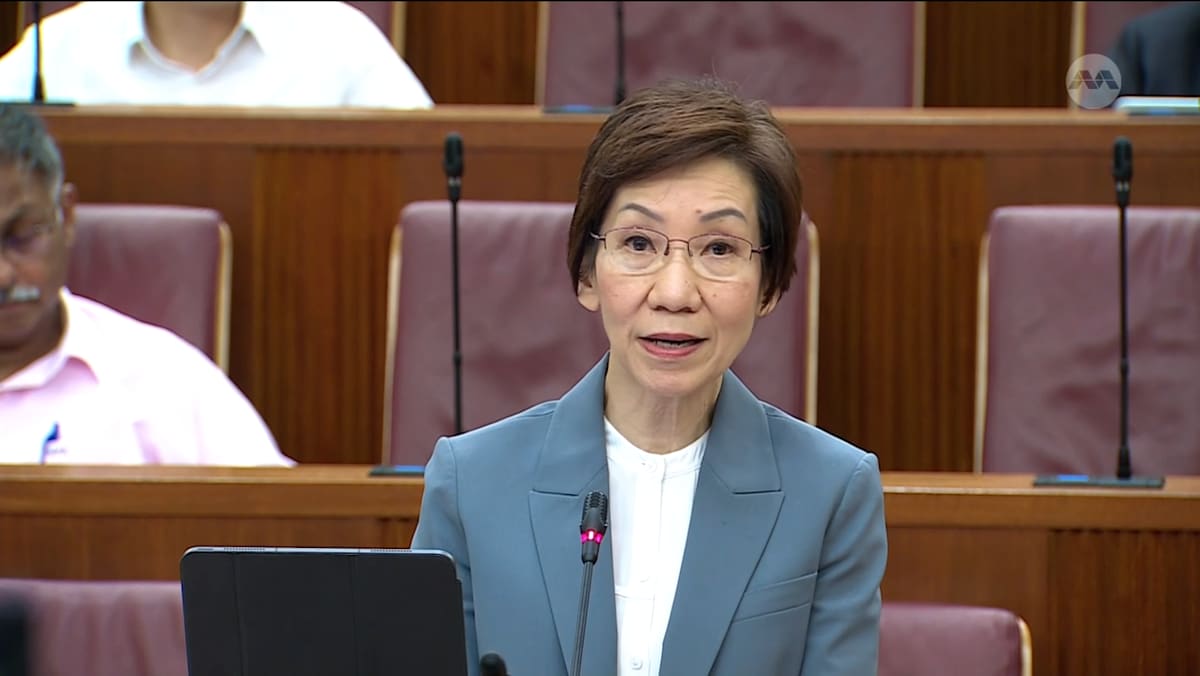
Minister for Sustainability and the Environment Grace Fu speaking in parliament on Nov 4, 2026.
This audio is generated by an AI tool.
SINGAPORE: Companies linked to transboundary haze could face fines of up to S$20 million (US$16 million) and curbs on business dealings under amendments to Singapore’s haze law proposed on Wednesday (Nov 4).
The Transboundary Haze Pollution (Amendment) Bill was introduced and read a second time under a rare Certificate of Urgency signed by the president, following Singapore's worst haze episode in more than a decade.
The certificate allows a Bill to be introduced, debated and passed through all three readings in a single parliamentary sitting.
The last Bill passed this way was the Insurance (Amendment) Bill in 2024, which blocked German insurer Allianz from taking a stake in Singapore’s Income Insurance.
In a press release on Wednesday, the National Environment Agency (NEA) said amendments to the Transboundary Haze Pollution Act (THPA) – which was enacted in 2014 – would give authorities more tools to investigate commercial links and hold entities accountable. They would also allow earlier intervention and make enforcement easier.
Singapore experienced haze from Sep 4 to Oct 25, with air quality reaching the unhealthy range on 33 days and very unhealthy range on five days.
Senior Minister K Shanmugam and Minister for Sustainability and the Environment Grace Fu had said earlier that the government would strengthen legislation where necessary to tackle companies linked to the haze.
Ms Fu told parliament that enforcing laws against overseas activities was complex.
“We need effective powers to protect Singaporeans and hold errant entities accountable, while respecting the sovereignty of other countries, upholding international law, and avoiding extraterritorial overreach,” she said.
The recent haze episode showed the status quo was “ not tenable”, she added.
Singapore needed better ways to obtain and verify information, trace complex corporate relationships and impose meaningful consequences on errant entities, even where criminal prosecution proved difficult. The government also needed to intervene before haze reached Singapore, she added.
Last month, the NEA issued Preventive Measure Notices under Section 9 of the THPA to 10 Indonesian companies, requiring them to extinguish or prevent fires , stop burning and submit action plans.
It also issued Section 10 notices to 10 Singapore-registered companies, the first time it has done so under the Act. The notices sought information on their linked companies, Indonesian land concessions and fire prevention measures.
Some of the companies said earlier this week that they had submitted a first tranche of information.
PRIVATE SECTOR ASSESSORS
To establish who is responsible and how different parties are connected to the burning, the director-general of environmental protection would be able to require entities with suspected links to haze in Singapore to appoint expert private sector assessors.
The director-general would specify the assessors and the terms of assessment in a direction, and the entity must engage the assessors at its own expense. The assessors would submit reports to NEA to help it establish facts and decide on further action, if any.
“To be clear, a direction to appoint an assessor does not necessarily mean that the entity has committed or is suspected of having committed an offence. It is meant to establish the relevant facts,” Ms Fu said.
NEA said decisions on enforcement remain with the relevant authorities, and courts will still determine liability.
CNA Games Guess Word Crack the word, one row at a time Buzzword Create words using the given letters Mini Sudoku Tiny puzzle, mighty brain teaser Mini Crossword Small grid, big challenge Word Search Spot as many words as you can Show More Show Less
Under Section 5 of the current Act, an entity convicted of causing or contributing to haze pollution in Singapore, whether locally or overseas, can be fined up to S$100,000 a day, capped at S$2 million.
The proposed amendments would raise this to up to S$1 million a day with an overall cap of S$20 million.
Ms Fu said the original penalties were comparable to those for domestic pollution offences, but the serious harm of transboundary haze “needs to be deterred by stronger penalties, to underscore the gravity of such offences”.
She said the increase was calibrated with reference to existing legislation and the financial scale of the companies involved.
The amendments would also let the court assess the profit gained or loss avoided because of an offence and impose that amount as an additional penalty on the convicted entity.
A civil penalty route would be introduced as well. With the public prosecutor’s consent, NEA could start civil action in court for a maximum penalty of S$10 million.
“To ensure entities are not penalised twice, an entity cannot be subject to both civil and criminal penalties for the same case,” the agency said.
DESIGNATION OF ENTITIES
The government is also proposing financial and commercial consequences for entities or individuals linked to offences under the Act, whether or not criminal proceedings follow.
The minister for sustainability and the environment would be empowered to designate entities or individuals who have committed or are suspected of committing offences, failed to comply with notices or directions, or received an adverse assessment report. A criminal conviction is not necessary for an entity to be designated.
“Designation will enable the government to impose orders restricting business dealings with the designated entity or individual,” Ms Fu said.
Companies could be restricted from buying, selling or engaging in other dealings with designated entities, such as providing loans or other financial support.
Where restrictions concern services provided by financial institutions, the minister-in-charge of the Monetary Authority of Singapore would determine and administer the orders, she said.
“The power to designate and impose restrictions is meant to impose economic consequences on those responsible for irresponsible burning or with established links to irresponsible burning.
“At the same time, the prohibitions ensure that others do not deal with such designated entities, including through complex business arrangements or corporate structures,” Ms Fu said.
But Ms Fu also noted that designation alone is insufficient as it may not be practical for the government to identify every entity involved in burning or every firm in its supply chains.
“Instead, we may want to take action against the larger corporate entities above these individual entities directly,” she said.
The amendments would therefore also allow authorities to put certain entities, particularly those in the forestry and agricultural sectors, on notice. They would have to ensure their business arrangements and supply chains do not involve those that cause or contribute to fires posing a haze risk to Singapore.
“These obligations are intended to strengthen due diligence and responsible business conduct across the supply chain,” Ms Fu said.
“The objective is not to impose an impossible guarantee that no risk will ever arise, but to ensure that companies do not turn a blind eye to irresponsible forestry and agriculture practices.”
Failure to comply with designation restrictions or such notices can attract a maximum fine of S$1 million for each breach, and up to S$100,000 for each day the breach continues.
NEA would also be empowered to publish lists of entities who have not complied with notices or directions.
“Together with the restriction on business dealings that may be imposed on designated entities, these changes significantly strengthen deterrence under the THPA,” NEA said.
Get our pick of top stories and thought-provoking articles in your inbox
Stay updated with notifications for breaking news and our best stories
Join our channel for the top reads for the day on your preferred chat app
与雾霾有关的公司除了要承担刑事责任外,还可能面临经济和商业上的后果。
永续发展及环境部长傅海燕于2026年11月4日在国会发表讲话。
这段音频由人工智能工具生成。
新加坡:根据周三(11 月 4 日)提出的对新加坡雾霾法的修正案,与跨境雾霾有关的公司可能面临高达 2000 万新元(1600 万美元)的罚款,并受到商业交易限制。
在新加坡遭遇十多年来最严重的雾霾事件后,《跨境烟霾污染(修正)法案》在总统签署的罕见紧急证书下被提出并进行了二读。
该证书允许法案在一次议会会议上提出、辩论并通过所有三读程序。
上一次以这种方式通过的法案是 2024 年的《保险(修正)法案》,该法案阻止了德国安联保险公司入股新加坡的 Income Insurance 公司。
国家环境局(NEA)周三发布新闻稿称,对2014年颁布的《跨境烟霾污染法》(THPA)进行修订,将赋予当局更多工具来调查商业关联并追究相关实体的责任。修订后的法案还将允许更早地进行干预,并使执法更加便捷。
新加坡从 9 月 4 日至 10 月 25 日经历了雾霾天气,空气质量有 33 天达到不健康水平,5 天达到非常不健康水平。
高级部长尚穆根和永续发展及环境部长傅海燕此前曾表示,政府将在必要时加强立法,以打击与雾霾有关的公司。
傅女士在议会表示,执行有关境外活动的法律是一项复杂的工作。
“我们需要有效的权力来保护新加坡人,追究违法实体的责任,同时尊重其他国家的主权,维护国际法,避免域外越权,”她说。
她补充说,最近发生的雾霾事件表明,现状“难以维持”。
她补充说,新加坡需要更好的方法来获取和核实信息,追踪复杂的企业关系,并对违规实体施加切实有效的惩罚,即便刑事诉讼困难重重。政府还需要在雾霾蔓延至新加坡之前进行干预。
上个月,国家环境局根据《热带火灾和火灾保护法》第 9 条向 10 家印尼公司发出预防措施通知,要求它们扑灭或防止火灾,停止燃烧并提交行动计划。
新加坡海关总署还向10家在新加坡注册的公司发出了第10条通知,这是该机构首次依据该法发出此类通知。通知要求这些公司提供关联公司信息、在印尼的土地特许权以及消防措施等信息。
本周早些时候,部分公司表示已提交了第一批信息。
私营部门评估师
为了确定谁应为此负责以及不同各方与焚烧事件有何关联,环境保护总监可以要求与新加坡雾霾有疑似关联的实体委任私营部门专家进行评估。
总干事将在指令中指定评估人员和评估条款,相关实体须自行承担聘请评估人员的费用。评估人员将向国家评估局提交报告,以帮助其查明事实并决定是否采取进一步行动。
傅女士表示:“需要明确的是,委任评估员并不一定意味着该实体已经或涉嫌犯罪。其目的是为了查明相关事实。”
国家环境局表示,执法决定权仍归相关部门所有,法院仍将裁定责任归属。
CNA游戏 猜词游戏 逐行破解单词 流行词游戏 用给定的字母组成单词 迷你数独 小小谜题,挑战你的大脑 迷你填字游戏 小方格,大挑战 单词搜索 尽可能多地找出单词 显示更多 显示更少
根据现行法令第 5 条,任何实体,无论在新加坡境内还是境外,若被判犯有造成或助长雾霾污染的罪行,每天可被处以最高 10 万新元的罚款,最高罚款额为 200 万新元。
拟议的修正案将把这一限额提高到每天 100 万新元,总限额为 2000 万新元。
傅女士表示,最初的处罚与国内污染违法行为的处罚相当,但跨境雾霾的严重危害“需要通过更严厉的处罚来威慑,以凸显此类违法行为的严重性”。
她表示,此次增幅是根据现行法律和相关公司的财务规模进行调整的。
这些修正案还将允许法院评估因犯罪行为而获得的利润或避免的损失,并将该金额作为附加罚款加在被定罪的实体身上。
此外,还将引入民事处罚途径。经公诉人同意,国家环境局可向法院提起民事诉讼,最高罚款可达1000万新元。
该机构表示:“为确保实体不会受到双重处罚,同一案件中,实体不能同时受到民事和刑事处罚。”
实体指定
政府还提议对与该法案规定的犯罪行为有关的实体或个人处以经济和商业处罚,无论是否提起刑事诉讼。
可持续发展和环境部长将有权指定已实施或涉嫌实施犯罪行为、未遵守通知或指示或收到不利评估报告的实体或个人。实体无需被刑事定罪即可被指定。
傅女士表示:“指定将使政府能够颁布命令,限制与被指定实体或个人的商业往来。”
公司可能会被限制与指定实体进行买卖或其他交易,例如提供贷款或其他财务支持。
她表示,如果限制措施涉及金融机构提供的服务,则由新加坡金融管理局主管部长决定并执行相关命令。
“指定和实施限制的权力旨在对那些对不负责任的焚烧行为负有责任或与不负责任的焚烧行为有既定联系的人施加经济后果。
傅女士表示:“与此同时,这些禁令确保其他人不会与此类指定实体进行交易,包括通过复杂的商业安排或公司结构进行交易。”
但傅女士也指出,仅仅做出认定是不够的,因为政府不可能识别出参与焚烧的每一个实体或其供应链中的每一家公司。
“相反,我们可能希望对这些个体实体之上的大型企业实体采取行动,”她说。
因此,这些修正案还将允许当局对某些实体,特别是林业和农业领域的实体发出通知。这些实体必须确保其业务安排和供应链不涉及那些造成或助长火灾、从而对新加坡构成烟霾风险的实体。
傅女士表示:“这些义务旨在加强整个供应链的尽职调查和负责任的商业行为。”
“我们的目标不是强加一个不可能的保证,即永远不会出现任何风险,而是确保公司不会对不负责任的林业和农业行为视而不见。”
不遵守指定限制或此类通知,每次违规最高可处以 100 万新元的罚款,违规行为持续的每一天最高可处以 10 万新元的罚款。
国家环境局还将有权公布未遵守通知或指示的实体名单。
国家环境局表示:“这些变化,加上可能对指定实体施加的商业交易限制,大大加强了《恐怖主义和恐怖主义预防法》的威慑力。”
订阅我们的邮件,即可获取精选热点新闻和引人深思的文章。
订阅通知,第一时间获取突发新闻和精彩报道。
加入我们的频道,即可在您常用的聊天应用上获取当日热门文章。