Faces from the past: Ancient Egyptian portraits offers lifelike glimpse across 2,000 years来自过去的面孔:古埃及肖像画展现了跨越两千年的栩栩如生的面貌
ROME, Nov 4 — An elegant woman gazes out from her portrait with expressive eyes, a gilded wreath worn in her hair and a gentle, questioning look on her face.She is one of the...
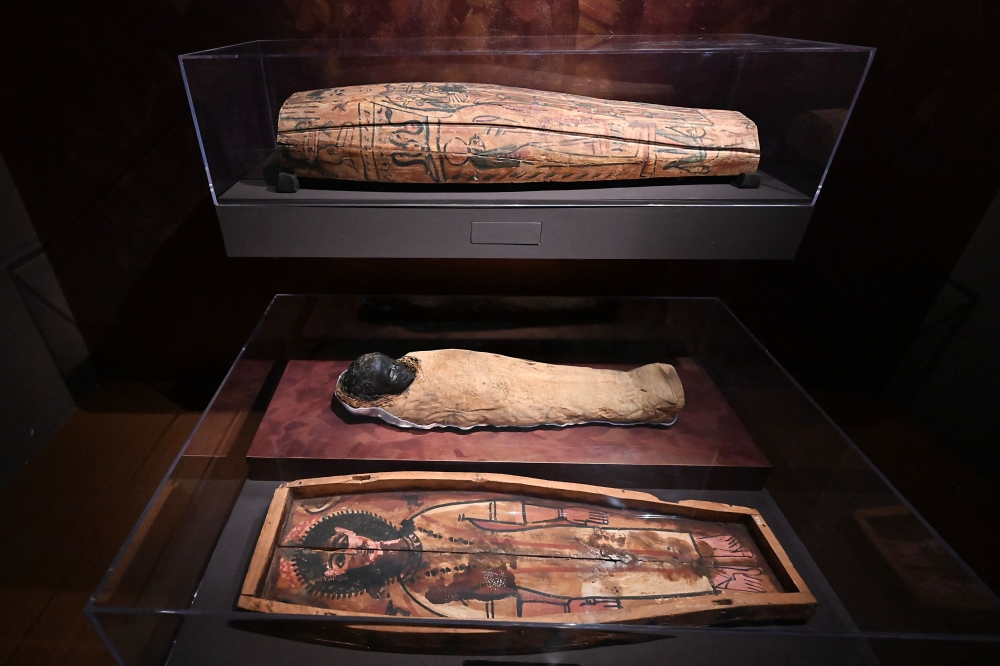
The exhibition "Egypt and Rome, the Faces of Fayum," opening at Rome's Ara Pacis museum, showcases the strikingly realistic funerary portraits from Egypt's Roman era, dating between the first and third centuries AD.
These wooden panel portraits, painted with lifelike detail, were historically used on mummies and display a blend of Egyptian features with Roman dress, highlighting the fusion of two great civilizations.
The exhibition, a significant collaboration between Italy and Egypt, includes artefacts such as mummies, jewellery, and other artworks, some of which have left Egypt for the first time.
The display, running until May 2, brings these ancient faces back to life and continues to raise intriguing questions about their original use and significance.
ROME, Nov 4 — An elegant woman gazes out from her portrait with expressive eyes, a gilded wreath worn in her hair and a gentle, questioning look on her face.
She is one of the 2,000-year-old “Faces of Fayum”, startlingly realistic funerary—or mummy—portraits painted after Egypt became part of the Roman empire.
The fragile portraits dating from the first to third centuries AD—painted on thin wooden panels and designed to be placed over the face of mummies—will go on display in Rome in what organisers hail as a “milestone” collaboration between Italy and Egypt.
“Egypt and Rome, the Faces of Fayum”, opening Wednesday at Rome’s Ara Pacis museum, also includes mummies, masks, shrouds, jewellery, marble busts and statuary.
The majority of the artefacts come from Egypt, with some allowed to leave the country for the first time.
Such is the case of the “Tondo of the Two Brothers” from Cairo’s Egyptian Museum, a freshly restored double portrait from the time of Emperor Hadrian that depicts two curly-haired young men, possibly brothers, with soulful eyes.
Rome’s top official for cultural heritage, Claudio Parisi Presicce, called the work an “absolute masterpiece, perhaps the most important pictorial work to have survived from antiquity”.
“These are simple wooden panels, often just a few millimetres thick, made of wood... and they were used to depict, through extremely naturalistic painting, the faces of the individuals who were being buried,” Parisi Presicce told a press conference Monday.
Rooted in the tradition of Hellenistic painting, the portraits placed over the head of the mummy and secured into its wrappings come from a relatively brief period between the first and third centuries AD, after Egypt became a province of Rome.
In a fusion of two great civilisations—Egyptian and Roman—the men, women and children portrayed often bear Egyptian features, but wear Roman dress.
Their faces are vivid, and haunting, whether bearing signs of greying hair and wrinkles, or the long eyelashes and chubby cheeks of a child.
“These people are not dead,” Italian figurative painter Amedeo Modigliani once said of the Fayum portraits.
“They are more alive than those who gaze upon them.”
Works from the Louvre, the Metropolitan Museum of Art, the J. Paul Getty Museum, the Landesmuseum Württemberg and other international museums round out the exhibit.
A fertile area of Egypt on the edge of the desert, Fayum’s arid climate helped preserve the delicate painted wood, textiles and papyrus on display in the exhibition.
One work, on loan from the Louvre, is a spectacular, near-pristine linen shroud depicting a man standing between the mummy he will become and Anubis, the jackal-headed god who helped usher the dead into the Afterlife.
Some of the female portraits are adorned in sumptuous jewellery, such as that of the woman “Isidora” from the first century AD, whose three-tiered gold necklace adorned with precious stones, pearl earrings and elaborately curled hairdo project her status.
Parisi Presicce said that “countless questions” remain about the compelling portraits.
“Were they made earlier and kept until the moment of death? Were they painted at the time the deceased was buried? Were they panels that were hung in homes, in residences?” he asked.
A nail found at the top of one of the portraits makes this theory plausible, he said.
Hisham El-Leithy, secretary-general of Egypt’s Supreme Council of Antiquities, said the images from so long ago have an uncanny power to move us.
“They are people like us, we look at them, they look back at you across 2,000 years,” he said.
“That is the power of the portrait.”
The exhibition runs until May 2. — AFP
From ashes to taps: Six months on, Kampung Bahagia gets water, toilets and a tank for future fires
‘I'm still in that shocked phase’: British adventurer reflects on emotional homecoming after 28 years on foot
Fans, personal shoppers and parents: Huge crowd forms early for The Weeknd’s After Hours Til Dawn merchandise pre-sale in Bukit Jalil
Tengku Zafrul says Malaysia’s RM431.1b approved investments reflect investor confidence as country courts new partnerships
Commuters, brace for a wet evening: MetMalaysia flags heavy storms nationwide until 7pm
Anwar says govt had previously rescued Utusan Malaysia publisher amid financial difficulties
在罗马和平祭坛博物馆开幕的“埃及与罗马,法尤姆的面孔”展览,展出了公元1至3世纪埃及罗马时期栩栩如生的葬礼肖像。
这些木板肖像画,以栩栩如生的细节绘制而成,历史上曾用于木乃伊身上,展现了埃及人的特征与罗马人的服饰相结合,突显了两个伟大文明的融合。
此次展览是意大利和埃及之间的一次重要合作,展品包括木乃伊、珠宝和其他艺术品,其中一些是首次离开埃及。
展览将持续到 5 月 2 日,使这些古老的面孔重现生机,并继续引发人们对它们最初用途和意义的有趣疑问。
罗马,11 月 4 日 — 一幅肖像画中,一位优雅的女子目光炯炯地凝视着前方,头发上戴着金色的花环,脸上带着温柔而疑惑的神情。
她是拥有 2000 年历史的“法尤姆面孔”之一,这些栩栩如生的葬礼肖像(或木乃伊肖像)是在埃及成为罗马帝国的一部分之后绘制的。
这些脆弱的肖像画可追溯到公元一至三世纪,画在薄木板上,原本是用来覆盖木乃伊面部的。它们将在罗马展出,组织者称之为意大利和埃及之间具有“里程碑意义”的合作。
“埃及与罗马,法尤姆的面孔”展览将于周三在罗马和平祭坛博物馆开幕,展品包括木乃伊、面具、裹尸布、珠宝、大理石半身像和雕像。
大部分文物来自埃及,其中一些是首次获准离开埃及。
开罗埃及博物馆的《两兄弟圆形画》就是如此,这是一幅新近修复的哈德良皇帝时期的双人肖像画,描绘了两个卷发青年,可能是兄弟,眼神深邃。
罗马文化遗产最高官员克劳迪奥·帕里西·普雷西切称这幅作品是“绝对的杰作,或许是古代流传下来的最重要的绘画作品”。
“这些是简单的木板,通常只有几毫米厚,由木头制成……它们通过极其写实的绘画,描绘了被埋葬者的面容,”帕里西·普雷西切周一在新闻发布会上说。
这些放置在木乃伊头部并固定在裹尸布上的肖像画,根植于希腊化绘画传统,其创作时间相对较短,介于公元1世纪至3世纪之间,即埃及成为罗马行省之后。
在埃及和罗马两大文明的融合中,描绘的男人、女人和儿童通常具有埃及人的面部特征,但穿着罗马服装。
他们的面容生动而令人难忘,无论是白发苍苍、皱纹丛生,还是长着孩子般长长的睫毛和肉嘟嘟的脸颊。
“这些人并没有死去,”意大利具象画家阿梅代奥·莫迪利亚尼曾这样评价法尤姆肖像画。
“它们比那些注视它们的人更有活力。”
来自卢浮宫、大都会艺术博物馆、J·保罗·盖蒂博物馆、符腾堡州立博物馆和其他国际博物馆的藏品完善了本次展览。
法尤姆是埃及沙漠边缘的一片肥沃地区,干燥的气候有助于保存展览中展出的精美彩绘木制品、纺织品和纸莎草。
其中一件展品是从卢浮宫借来的,是一件壮观的、近乎完美的亚麻裹尸布,上面描绘着一个男人站在他即将成为的木乃伊和阿努比斯之间,阿努比斯是豺头神,负责引导死者进入来世。
有些女性肖像画中,人物佩戴着华丽的珠宝,例如公元一世纪的女子“伊西多拉”的肖像画,画中人物佩戴着镶嵌宝石的三层金项链、珍珠耳环和精心卷曲的发型,彰显了她的地位。
Parisi Presicce表示,关于这些引人入胜的肖像画,仍然存在“无数疑问”。
他问道:“这些画作是之前制作的,一直保存到死者去世的那一刻吗?是在死者下葬时绘制的吗?是挂在家中或住所里的画板吗?”
他说,在其中一幅画像的顶部发现的一枚钉子使这一理论变得合情合理。
埃及最高文物委员会秘书长希沙姆·埃尔-莱西表示,这些来自很久以前的图像有一种不可思议的力量,能够感动我们。
“他们和我们一样都是人,我们看着他们,他们也跨越两千年回望我们,”他说。
这就是肖像画的力量。
展览将持续至5月2日。——法新社
从灰烬到水龙头:六个月后,Kampung Bahagia 终于有了自来水、厕所和用于未来火灾的蓄水池
“我仍然处于震惊之中”:英国探险家徒步跋涉28年后,感慨万千地回到家乡。
粉丝、私人购物顾问和家长:在武吉加里尔,大批人群早早聚集,参加The Weeknd《After Hours Til Dawn》周边商品的预售。
东姑扎夫鲁表示,马来西亚已批准的4311亿令吉投资反映了投资者信心,该国正在积极寻求新的合作伙伴关系。
通勤族们,做好迎接雨夜的准备:马来西亚气象局预报全国范围内将有强风暴雨持续至晚上7点。
安华表示,政府此前曾在马来西亚前锋报出版商陷入财务困境时出手相救。