Kwai Chai Hong’s Mid-Autumn installation celebrates rice and shared Malaysian traditions桂财鸿的中秋装置作品颂扬了稻米和马来西亚的共同传统。
KUALA LUMPUR, Sept 8 — The Mid-Autumn Festival, which falls on September 25, has long been synonymous with mooncakes, lanterns and family reunions.Less commonly known, however,...
The Mid-Autumn Festival, celebrated on September 25, is rooted in the harvest and symbolises abundance after months of hard work.
Kwai Chai Hong in Kuala Lumpur features a 'Lunar Harvest' art installation, showcasing rice's journey from field to table and promoting gratitude.
The installation highlights cultural unity through rice's significance across communities and includes elements like rice sack lanterns and traditional rooster bowls.
KUALA LUMPUR, Sept 8 — The Mid-Autumn Festival, which falls on September 25, has long been synonymous with mooncakes, lanterns and family reunions.
Less commonly known, however, is that the festival, regarded as the second major celebration for the Chinese community after Chinese New Year, has its roots in something more fundamental: the harvest.
It marked a time when communities paused to celebrate the abundance of the harvest after months of perseverance and hard work, while giving thanks to the people and forces of nature that made it possible.
This year, at “Kwai Chai Hong” — Kuala Lumpur Chinatown’s famed “ghost alley” — the Mid-Autumn Festival has already come alive with an immersive art installation themed “Lunar Harvest”, inviting visitors to rediscover the values associated with the autumn harvest and appreciate the everyday blessings that are often taken for granted.
Open from August 28 until October4, the installation centres on rice, a staple food for Malaysians and Asians alike.
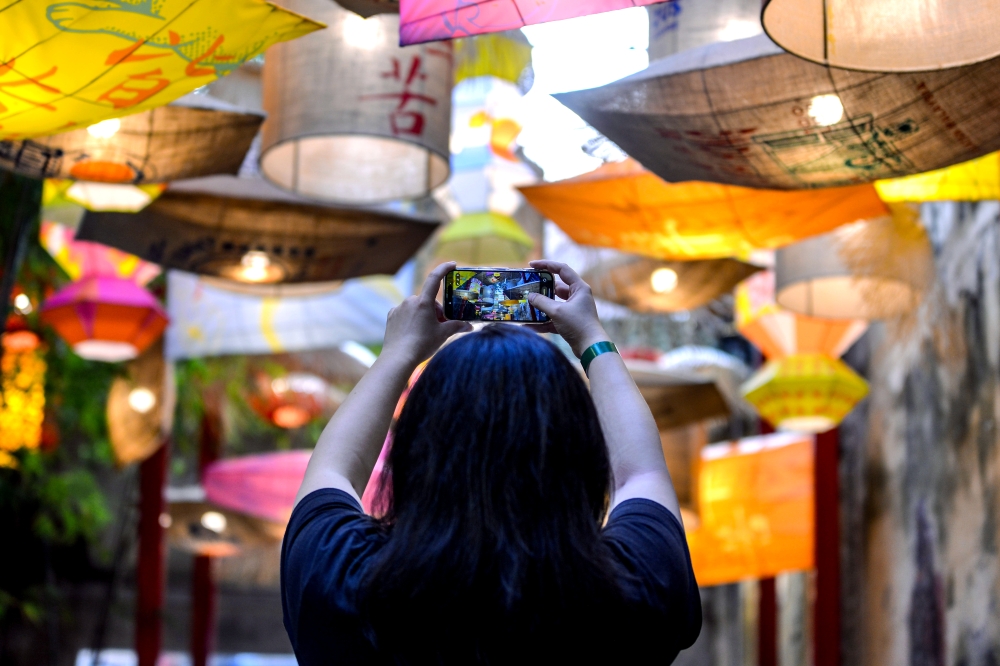
Upon entering the heritage alley, visitors are greeted by clusters of rice sack-themed lanterns and padi stalks suspended overhead, evoking scenes of traditional padi farmers toiling in the fields during the harvest season.
The installation offers a glimpse into the journey of rice from field to table, a process that begins with farmers tending their crops and culminates in the harvesting of mature padi after months of labour.
For Kwai Chai Hong co-founder Zeen Chang, these ideas form the emotional foundation of “Lunar Harvest”, where rice represents something far more fundamental — the values and life lessons imparted to children around the dining table, generation after generation.
“Our parents always reminded us not to waste food and remember the labour behind it. And, above all, to be grateful for what we have. This is a lesson that struck me… how, differently, our Malaysian cultures found remarkably similar ways of teaching it,” she told Bernama.
“(For example) the Chinese proverb ‘li li jie xin ku’ reminds us that every grain represents (the) hard work (of the padi farmers), while the Malay saying ‘kalau tak habis makan, nanti nasi menangis’ teaches children to respect food and, by extension, the labour behind it.
“Every grain of rice begins as a seed which, in turn, depends on fertile soil, favourable weather and countless hands before eventually reaching the table… that relationship between effort and abundance resonates across Malaysia’s cultures.”
Conceptualised by event design studio DONCE Fine Floristry founders Delon Chai and Edmond Chua, the immersive art installation in Kwai Chai Hong takes on the atmosphere of a contemporary harvest festival.
Textured botanicals, rustic materials and illuminated sculptural forms lead visitors along a glowing pathway of rice sack lanterns towards the main Harvest Pavilion.
Inspired by Sekinchan’s padi fields
Inspired by a traditional rice mill in Sekinchan, Selangor, the pavilion layers lanterns, rice sacks and harvest motifs against an illustrated moonlit paddy field. The result is deliberately tactile and theatrical, translating the rhythms of rural life into an urban setting.
Chang said the rice eaten by one community cannot be separated from the hands of another community that cultivated it.
“That interdependence is itself part of the Malaysian story. That’s why the installation and its designs clearly reflect our Malaysian Chinese identity in celebrating the harvest and the Mid-Autumn Festival,” she said.
Chang added that the “Lunar Harvest” theme also seeks to highlight how the Mid-Autumn Festival can bring together people of all races in Malaysia and across Southeast Asia, where rice is a staple food and an integral part of everyday life.
“It crosses ethnic, religious and social boundaries almost invisibly, appearing on the Malay family table, the Chinese family table, the Indian family table, and in food stalls, kopitiams and countless restaurants.
“And perhaps it is precisely because it (rice) is so ordinary that its value can so easily be overlooked,” she said.
Visitors wandering through the installation will also come across a familiar sight: the traditional rooster bowl — the ubiquitous white bowl decorated with a colourful rooster that generations of Malaysian Chinese have encountered at home, coffee shops and eateries.
For many, the sight evokes childhood memories of wooden kitchen shelves lined with these familiar bowls.
Meanwhile, DONCE Fine Floristry’s Chai said the art installation also explores another distinctly Malaysian harvest story: coffee.
“As farmers diversified their crops with cash crops such as coffee alongside staples, it eventually led to the kopitiam culture, where Malaysians gather over a cup of ‘kopi’.
“This year, we collaborated with local brand ZUS COFFEE that extends the narrative with its ‘Zus Ngupi’ product line, which is inspired by ‘jom mengopi’ (‘let’s go have coffee’).
“The journey of coffee, like rice, involves many hands, from growers and harvesters to those who sort and roast each bean,” she added.
The ‘Lunar Harvest’ art installation in Kwai Chai Hong is open to the public from August 28 to October 4, from 9am to midnight. — Bernama
King Charles: Harry and Meghan remain ‘private citizens’, not working members of the royals despite UK return
Lancet: Over 760 million children affected by second-hand smoke worldwide
Eiffel Tower staff walk out after women told to ‘make themselves invisible’ during BAPS Hindu visit
Selangor on track to top RM100b investment mark this year, says Amirudin
Johor ready for cloud seeding as El Nino looms from October
Azalina: Politicians could face corruption charges without political financing law
中秋节于9月25日庆祝,其根源在于丰收,象征着经过数月辛勤劳作后收获满满。
吉隆坡的桂财行设有“农历丰收”艺术装置,展示了稻米从田间到餐桌的旅程,并宣扬感恩之心。
该装置通过稻米在不同社区中的重要性来突出文化统一性,其中包括米袋灯笼和传统公鸡碗等元素。
吉隆坡,9月8日讯——中秋节(9月25日)长期以来一直是月饼、灯笼和家庭团聚的代名词。
然而,鲜为人知的是,这个被认为是继春节之后华人社区第二大节日的节日,其根源却在于更根本的事物:丰收。
这标志着社区停下来庆祝经过数月坚持不懈和辛勤劳动后丰收的时刻,同时感谢促成这一切的人们和自然力量。
今年,在吉隆坡唐人街著名的“鬼巷”——葵财鸿,中秋节已经热闹起来,一个以“农历丰收”为主题的沉浸式艺术装置邀请游客重新发现与秋收相关的价值,并珍惜那些常常被我们视为理所当然的日常祝福。
该装置艺术展从 8 月 28 日至 10 月 4 日展出,以大米为主题,大米是马来西亚人和亚洲人的主食。
进入遗产巷,游客会看到成簇的稻袋造型灯笼和悬挂在头顶的稻秆,让人联想起传统稻农在收获季节于田间辛勤劳作的场景。
该装置展现了水稻从田间到餐桌的旅程,这一过程始于农民照料庄稼,最终在数月的辛勤劳作后收获成熟的稻谷。
对于葵财行联合创始人张志贤来说,这些理念构成了“农历丰收”的情感基础,其中大米代表着更为根本的东西——一代又一代在餐桌旁传授给孩子们的价值观和人生经验。
“我们的父母总是教导我们不要浪费食物,要记住食物背后的劳动成果。最重要的是,要对我们所拥有的一切心存感激。这一点让我印象深刻……尽管马来西亚文化的差异很大,但我们在教导人们感恩方面却有着惊人的相似之处,”她告诉马新社。
“(例如)中国谚语‘一粒米代表着(稻农的)辛勤劳动’提醒我们,每一粒米都代表着(稻农的)辛勤劳动,而马来谚语‘kalau tak habis makan, nanti nasi menangis’教导孩子们尊重食物,并由此延伸到尊重食物背后的劳动。
“每一粒米都始于一粒种子,而这粒种子又需要肥沃的土壤、适宜的天气和无数人的辛勤耕耘才能最终到达餐桌……这种努力与丰收之间的关系在马来西亚的各种文化中都引起了共鸣。”
由活动设计工作室 DONCE Fine Floristry 的创始人 Delon Chai 和 Edmond Chua 构思的葵仔港沉浸式艺术装置,营造出当代丰收节的氛围。
质感丰富的植物、质朴的材料和发光的雕塑造型,引领游客沿着米袋灯笼组成的闪亮小径走向主丰收亭。
灵感源自适耕庄的稻田
这座展馆的设计灵感源自雪兰莪州适耕庄的传统碾米厂,以月光下的稻田为背景,层叠着灯笼、米袋和丰收图案。最终呈现出一种刻意营造的触感和戏剧性效果,将乡村生活的韵律融入都市环境。
张说,一个社区吃的稻米与种植它的另一个社区的手是无法割裂的。
“这种相互依存本身就是马来西亚故事的一部分。正因如此,这个装置及其设计清晰地反映了我们马来西亚华人庆祝丰收和中秋节的身份认同,”她说。
张先生补充说,“农历丰收”主题也旨在强调中秋节如何将马来西亚和整个东南亚各族人民团结在一起,因为大米是那里的主食,也是日常生活不可或缺的一部分。
“它几乎悄无声息地跨越了种族、宗教和社会界限,出现在马来家庭的餐桌上、华人家庭的餐桌上、印度家庭的餐桌上,以及食品摊位、咖啡店和无数餐馆里。
“或许正是因为大米如此普通,它的价值才如此容易被忽视,”她说。
参观者在参观装置艺术时,还会看到一个熟悉的景象:传统的公鸡碗——这种随处可见的白色碗上装饰着一只色彩鲜艳的公鸡,几代马来西亚华人在家里、咖啡店和餐馆都见过它。
对许多人来说,这景象唤起了童年时厨房木制架子上摆满这些熟悉碗碟的回忆。
与此同时,DONCE Fine Floristry 的 Chai 表示,该艺术装置还探索了另一个独特的马来西亚丰收故事:咖啡。
“随着农民们在种植主食的同时,也种植咖啡等经济作物,作物种类日益多样化,最终形成了咖啡店文化,马来西亚人聚集在咖啡店里喝咖啡。
“今年,我们与当地品牌 ZUS COFFEE 合作,该品牌推出了‘Zus Ngupi’产品系列,进一步拓展了这一理念,其灵感来源于‘jom mengopi’(‘我们去喝咖啡吧’)。
她补充说:“咖啡的生产过程和大米一样,需要许多人的参与,从种植者和收割者到分拣和烘焙每一颗咖啡豆的人。”
位于葵寨康的“农历丰收”艺术装置展将于8月28日至10月4日,每天上午9点至午夜向公众开放。——马新社
查尔斯国王:尽管哈里和梅根返回英国,但他们仍然是“普通公民”,而非王室成员。
《柳叶刀》:全球超过7.6亿儿童受二手烟影响
在BAPS印度教徒参观期间,有女性被告知要“让自己隐形”,埃菲尔铁塔工作人员因此集体罢工。
阿米鲁丁表示,雪兰莪州今年的投资额有望突破1000亿令吉大关。
柔佛州已准备好进行人工增雨,因为厄尔尼诺现象将于10月开始逼近。
阿扎利娜:没有政治筹资法,政客可能面临腐败指控