MPs’ monthly allowance to be raised to $18,500 from $13,750议员月津贴将从13750美元提高到18500美元。
Monthly allowances for MPs will be raised to $18,500 from the current $13,750 from Oct 15, to account for inflation. Read more at straitstimes.com.
新闻视频
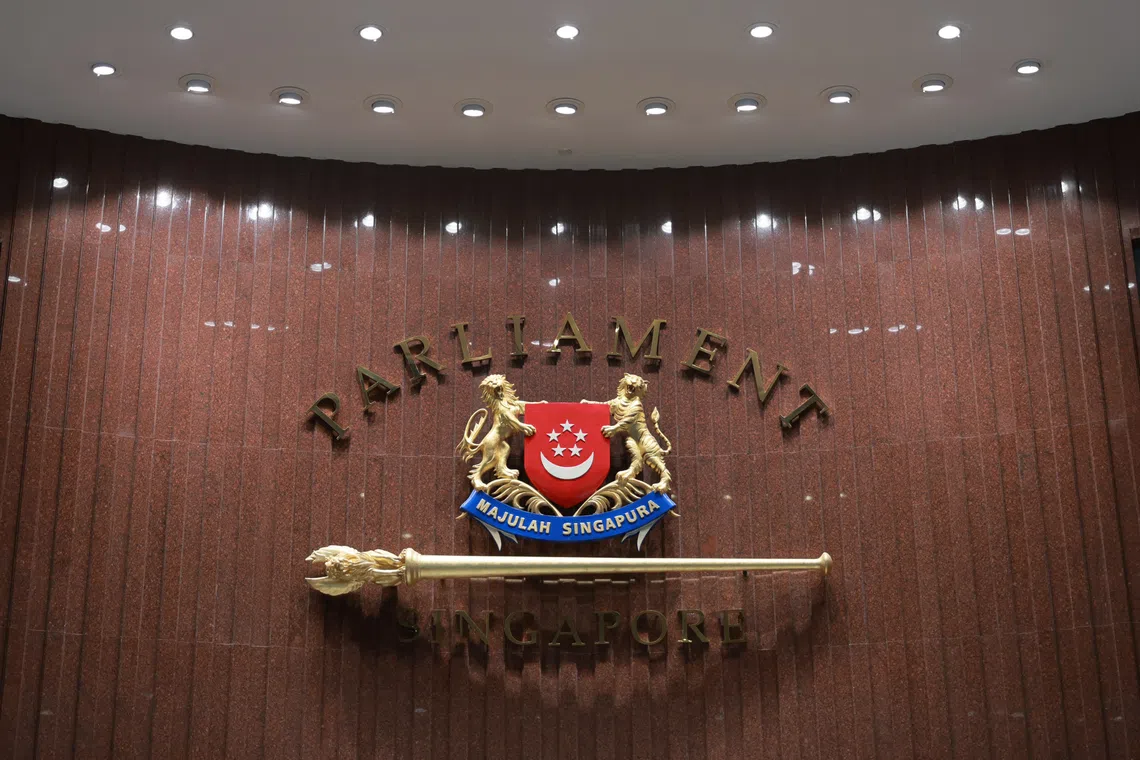
The Government will be studying how to delink MPs’ allowances from being pegged to ministerial salaries to account for the differences between the two types of roles.
Published Sep 08, 2026, 02:10 PM
Updated Sep 08, 2026, 02:10 PM
Follow our live coverage here.
SINGAPORE – Monthly allowances for MPs will be raised to $18,500 from the current $13,750 from Oct 15 , to account for inflation.
The Government will be studying how to delink MPs’ allowances from being pegged to ministerial salaries to account for the differences between the two types of roles, said Coordinating Minister for Public Services Chan Chun Sing. This comes after the 2026 Salary Review Committee reviewing political salaries recommended doing so.
MPs’ allowances are presently pegged to 17.5 per cent of the salary benchmark for junior ministers, and comprise a monthly allowance, a 13th-month bonus, and an annual variable component that is based on Singapore’s economic performance .
The changes mean that an MP’s annual allowance will increase from $192,500 to $259,000, assuming a one-month annual variable component, based on the committee’s report.
Coordinating Minister for Public Services Chan Chun Sing said the increase in MPs’ allowances accounts for inflation and is a “ practical update ” to ensure that MPs are adequately supported in discharging their duties on the ground.
He was speaking on Sept 8 in Parliament, giving the Government’s response to the latest review of salaries for political appointment holders and MPs .
The allowances and salaries of political appointment holders and MPs were last adjusted in 2012, with changes backdated to 2011, when the new term of government started.
Chan said the Government accepts the committee’s view that the latest adjustment references the 2012 salary review, which had assessed “that the level of MP monthly allowance was appropriate at the time”.
Chan also said the committee had observed that the considerations for the remuneration of “community-related roles such as MPs and mayors may differ from those for full-time political appointment holders”.
As such, the committee recommended that the Government study “establishing a basis for sizing the payments in a way that is delinked from the MR4 benchmark, but that remains adequate for these roles to carry out their duties faithfully and effectively”.
The MR4 benchmark, or Ministerial Grade 4, is used for junior ministers.
Prime Minister Lawrence Wong, who also spoke in Parliament on the Government’s response to the committee’s recommendations, said Singapore chooses not to treat the MPs’ allowance as a token allowance.
“It is a substantial allowance, because MPs carry substantial responsibilities in Parliament and in their constituencies,” he said, adding that providing a proper allowance has enabled both PAP and WP to recruit and field strong candidates.
PM Wong said that the result of this can be witnessed in the House, where “we have MPs with a wide range of backgrounds and experience, who bring different perspectives to our debates”.
“We may disagree strongly across the aisle, but the quality of debate is high, and Singapore is better for it,” said PM Wong.
He added: “If we want our political system to remain effective, we cannot allow its basic terms of service to drift further and further away from reality.
“That applies to MPs’ allowances.”
Chan said that the Government also accepts the 2026 committee’s recommendation to increase the allowance of NCMPs, from 15 per cent of an MP’s annual allowance to 30 per cent, which translates to $5,550 monthly.
“ This considers the conferment of full voting rights for NCMPs since 2017, and brings the allowance into better alignment with their Parliamentary responsibilities. ”
As for NMPs, the Government has accepted the committee’s recommendation to retain the current peg at 15 per cent of the MP allowance.
This means that NMPs will receive $38,900 annually, said the committee’s report, which noted that the role of an NMP has remained the same.
Singapore Parliament
Singapore politicians
政府将研究如何使议员津贴与部长级官员的薪水脱钩,以体现这两种角色之间的差异。
发布于 2026 年 9 月 8 日下午 2:10
更新于2026年9月8日下午2:10
请点击此处关注我们的实时报道。
新加坡——为应对通货膨胀,国会议员的月度津贴将从目前的13750新元提高到18500新元,自10月15日起生效。
公共服务统筹部长陈振声表示,政府将研究如何使议员津贴与部长薪酬脱钩,以体现议员和部长这两种角色之间的差异。此前,2026年薪酬检讨委员会在检讨政治薪酬时提出了这项建议。
国会议员的津贴目前与初级部长薪资基准的 17.5% 挂钩,包括每月津贴、第 13 个月奖金和根据新加坡经济表现而定的年度浮动部分。
根据委员会的报告,这些变化意味着,假设每年有一个月的可变部分,议员的年度津贴将从 192,500 美元增加到 259,000 美元。
公共服务统筹部长陈振声表示,增加议员津贴是为了应对通货膨胀,也是一项“务实的更新”,以确保议员在履行基层职责时得到充分支持。
9月8日,他在议会发表讲话,阐述了政府对政治任命官员和议员薪酬最新审查的回应。
政治任命官员和议员的津贴和薪水上次调整是在 2012 年,调整追溯至 2011 年,即新一届政府任期开始之时。
陈表示,政府接受委员会的观点,即最新调整参考了2012年的薪酬审查,该审查评估认为“当时议员的月津贴水平是合适的”。
陈还表示,委员会注意到,“国会议员和市长等社区相关职务的薪酬考虑因素可能与全职政治任命人员的薪酬考虑因素不同”。
因此,委员会建议政府研究“确定支付规模的基础,使其与 MR4 基准脱钩,但仍然足以使这些职位忠实有效地履行其职责”。
MR4 基准,即部长级 4 级,用于初级部长。
新加坡总理黄循财也在国会就政府对委员会建议的回应发表讲话,他表示新加坡选择不把议员津贴视为象征性的津贴。
“这是一笔数额可观的津贴,因为国会议员在国会和选区都肩负着重大的责任,”他说道,并补充说,提供适当的津贴使得人民行动党和工人党都能招募和推出优秀的候选人。
黄总理表示,这种做法的成果可以在国会中看到,“国会议员拥有广泛的背景和经验,为我们的辩论带来了不同的视角”。
黄循财总理表示:“我们两党之间可能存在强烈分歧,但辩论质量很高,这对新加坡大有裨益。”
他补充道:“如果我们希望我们的政治制度保持有效,我们就不能允许它的基本服务条款越来越脱离现实。”
“这同样适用于议员津贴。”
陈先生表示,政府也接受2026年委员会的建议,将非选区议员的津贴从议员年度津贴的15%提高到30%,相当于每月5550美元。
“这考虑到了自2017年以来非选区议员被赋予完全投票权,并使津贴与他们的议会职责更加匹配。”
至于非议员,政府已接受委员会的建议,维持目前议员津贴的15%不变。
委员会的报告指出,这意味着非选区议员每年将获得 38,900 美元,并指出非选区议员的角色保持不变。
新加坡国会
新加坡政治家