Holding off political salary updates will weaken S’pore’s ability to build strong team of leaders: Chan陈先生:推迟公布政治人物薪酬将削弱新加坡组建强大领导团队的能力。
Read more at straitstimes.com.
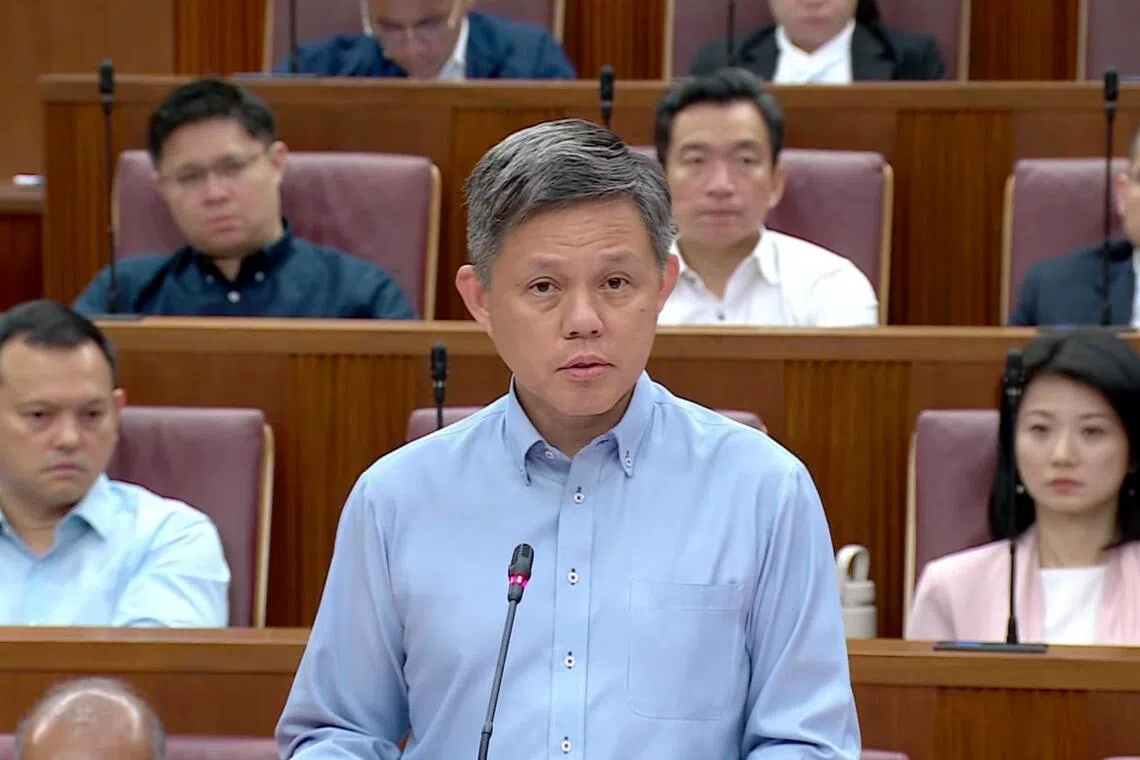
Coordinating Minister for Public Services Chan Chun Sing said continuing to hold off updates could cause the political salaries framework to lose relevance.
Published Sep 08, 2026, 06:22 PM
Updated Sep 08, 2026, 06:22 PM
SINGAPORE — The updated political salary framework is calibrated to widen the pool of Singaporeans who can realistically consider serving, while preserving the ethos of political service, said Coordinating Minister for Public Services Chan Chun Sing.
In implementing it, the Government wants to be able to send a message to capable Singaporeans considering joining political office that “while political service involves sacrifice, it will not come at an unreasonable cost to you and your family”, he added.
Ministerial salaries have not been adjusted since 2012, when the changes were backdated to the start of the new term in 2011. In 2017, the Government decided not to proceed with adjustments following an independent review because of the prevailing economic circumstances, and held back a further review in 2023.
In laying out the slew of changes to come with the latest review, Chan, who is also Defence Minister, said continuing to hold off updates could cause the framework to lose relevance.
“More importantly, we continue to weaken our ability to build a strong, diverse team of leaders that Singapore needs,” he added in a ministerial statement on Sept 8.
The salary framework needs to stay updated so that capable and committed people can step forward to serve, “not just the financially independent ones or those who have made exceptional lifestyle choices”, he stressed.
That includes younger Singaporeans in their 30s and 40s, who may be building their careers, raising families and taking on major financial commitments, said Chan.
“We want such people to be able to enter public office in their prime – with the energy and runway to build up the experience, judgment to make tough decisions, and to bond and build up the trust with Singaporeans to take Singapore forward, especially in difficult times,” he said.
This also includes those who are more established in their careers, especially in the private sector, he said, noting that some CEOs of major Singapore companies earn $6 or $7 million a year and sometimes more.
“We are not trying to match that. Nor should we,” Chan said. “But we cannot pretend that such opportunity costs do not exist.”
Money, however, must never be the primary motivation for anyone who enters political service, said Chan.
“If money is your main reason for wanting to be a minister, frankly, you are not the person we are looking for,” he added.
Chan said the Government will not be able to match the pay of all the people it hopes to get, and that some will never join no matter how much the pay.
The eight-member independent committee to review political salaries was convened in December 2025.
As part of its work, the committee led by Singapore LNG Corporation chairman Gan Seow Kee had engaged Mercer, a global HR consultant, for technical expertise and to provide additional information on pay practices and levels.
Chan said the committee’s work was not easy, and its members approached the task with seriousness, care and rigour.
He added that he agrees with the committee’s assessment that the three core principles that underpinned the political salary framework remain sound and necessary to build a strong, sustained political core.
The three Cs – calibre, commitment and clean – were established by the 2012 committee led by social service veteran Gerard Ee.
In adhering to calibre, the framework should take reference from market benchmarks to ensure individuals of the right calibre are not deterred from stepping forward to lead the country, Chan said.
On that note, Chan said the phrase “not deterred” was carefully chosen. “It is not ‘encouraged’ or ‘attracted’,” he stressed.
This is to ensure that Singapore can continue to draw from a broad and deep pool of talent to serve in political office, he said.
Commitment ensures that the framework includes a meaningful discount relative to market benchmarks to reflect the ethos of political service, he said. The discount was set at 40 per cent off the market benchmark, and the latest review kept it at the same level.
On keeping the framework “clean”, Chan said the framework should ensure a “clean wage” with no hidden perks, as he said transparency and integrity in remuneration remain fundamental to maintaining public trust.
The salary review is fundamentally about “giving ourselves a better chance to build a first-rate team to serve Singapore and Singaporeans”, Chan said.
Singapore Parliament
公共服务统筹部长陈振声表示,继续推迟更新可能会导致政治薪酬框架失去意义。
发布于 2026 年 9 月 8 日下午 6:22
更新于2026年9月8日下午6:22
新加坡——公共服务统筹部长陈振声表示,更新后的政治薪酬框架旨在扩大能够切实考虑担任政治职务的新加坡人的范围,同时保留政治服务的精神。
他补充说,政府在实施这项政策时,希望能够向有能力的、考虑加入政界的的新加坡人传递一个信息,那就是“虽然政治服务需要做出牺牲,但这不会给您和您的家人带来不合理的代价”。
自 2012 年以来,部长级薪酬一直没有调整,当时的调整追溯至 2011 年新任期开始之时。2017 年,由于当时的经济形势,政府在独立审查后决定不再进行调整,并将进一步审查推迟到 2023 年。
在阐述最新审查将带来的一系列变化时,身兼国防部长的陈先生表示,继续推迟更新可能会导致该框架失去相关性。
“更重要的是,我们不断削弱自己建立新加坡所需的强大、多元化的领导团队的能力,”他在9月8日的一份部长声明中补充道。
他强调,薪酬体系需要不断更新,以便有能力、有奉献精神的人能够挺身而出服务社会,“而不仅仅是那些经济独立或生活方式与众不同的人”。
陈先生表示,这其中也包括30多岁和40多岁的新加坡年轻人,他们可能正在建立自己的事业、养家糊口并承担重大的经济责任。
他说:“我们希望这样的人能够在正值壮年时进入公职——拥有充沛的精力和时间积累经验,具备做出艰难决定的判断力,并与新加坡人民建立联系和信任,带领新加坡前进,尤其是在困难时期。”
他还表示,这其中也包括那些在职业生涯中较为成熟的人,尤其是在私营部门的人。他指出,新加坡一些大型公司的首席执行官年收入高达 600 万或 700 万美元,有时甚至更多。
“我们并非试图与之匹敌,也不应该这样做,”陈说。“但我们不能假装这种机会成本不存在。”
陈说,但金钱绝不能成为任何人投身政治服务的主要动机。
“如果你想当部长的主要原因是为了赚钱,坦白说,你不是我们要找的人,”他补充道。
陈先生表示,政府无法为所有希望招募的人提供同等的薪酬,而且无论薪酬多高,有些人永远不会加入。
2025年12月,由八名成员组成的独立委员会成立,负责审查政治薪酬。
作为其工作的一部分,由新加坡液化天然气公司主席颜绍基领导的委员会聘请了全球人力资源咨询公司美世,以获得技术专长并提供有关薪酬制度和水平的更多信息。
陈表示,委员会的工作并不轻松,其成员以认真、谨慎和严谨的态度对待这项工作。
他还补充说,他同意委员会的评估,即支撑政治薪酬框架的三项核心原则仍然合理,并且对于建立一个强大、可持续的政治核心是必要的。
三个 C——能力、承诺和清洁——是由社会服务资深人士 Gerard Ee 领导的 2012 年委员会制定的。
陈先生表示,为了确保人才素质,该框架应参考市场基准,以确保有足够素质的人不会因为缺乏素质而不敢挺身而出领导国家。
对此,陈先生表示,“不予阻止”一词是经过深思熟虑的。“它不是‘鼓励’或‘吸引’,”他强调说。
他表示,这样做是为了确保新加坡能够继续从广泛而深厚的人才库中选拔人才担任政治职务。
他表示,承诺确保该框架包含相对于市场基准的合理折扣,以体现政治服务的精神。折扣幅度设定为市场基准的40%,最近一次审查维持了这一水平。
关于保持薪酬框架的“清廉”,陈表示,该框架应确保“干净的工资”,没有任何隐藏的福利,因为他认为薪酬的透明度和诚信对于维护公众信任仍然至关重要。
陈先生表示,此次薪酬审查的根本目的是为了“让我们有更好的机会打造一支一流的团队,为新加坡和新加坡人民服务”。
新加坡国会