Snap Insight: Political salaries review timely, but will it be enough to attract next generation of leaders?简讯:政治人物薪酬审查正当其时,但这足以吸引下一代领导人吗?
There is also a cost to not attracting the talent needed to steer Singapore in more complicated times, says former Nominated Member of Parliament Nicholas Fang.
新闻视频
There is also a cost to not attracting the talent needed to steer Singapore in more complicated times, says former Nominated Member of Parliament Nicholas Fang.
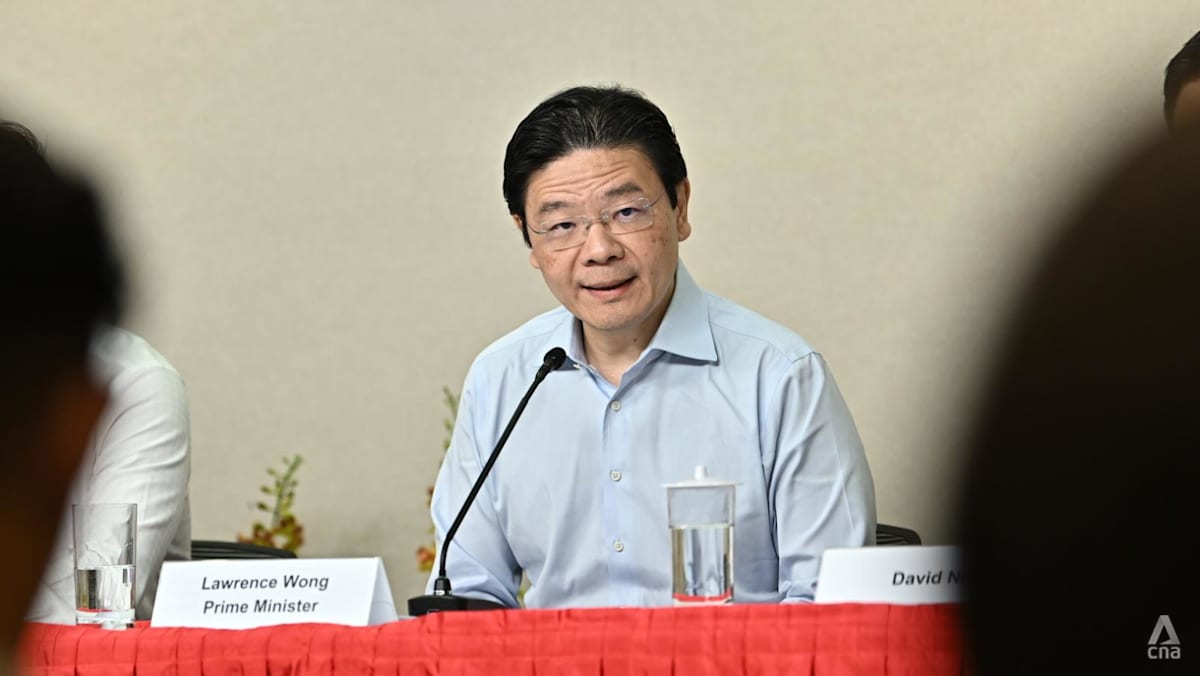
Prime Minister Lawrence Wong speaks to the media during a press conference at the National Press Centre, MDDI on Jul 22, 2026. (Photo: CNA/Raydza Rahman)
This audio is generated by an AI tool.
SINGAPORE: Prime Minister Lawrence Wong released an independent review committee’s report on political salaries and explained how the government was implementing those recommendations on Tuesday (Sep 8). This comes at a timely juncture.
Such salaries have not been adjusted for 15 years, which many of us would find untenable if applied to our own financial situation. In that time, inflation has progressed apace, and the world we live in has become more complex and complicated.
As such, this move was necessary, as Mr Wong and Coordinating Minister for Public Services Chan Chun Sing described, for a “better chance to build a first-rate team to serve Singapore and Singaporeans ”.
Still, the reaction to the announcement, which includes a salary bump of up to 9 per cent to about S$1.2 million annually for a minister at the lowest MR4 grade, was unsurprisingly sharp.
CNA Games Guess Word Crack the word, one row at a time Buzzword Create words using the given letters Mini Sudoku Tiny puzzle, mighty brain teaser Mini Crossword Small grid, big challenge Word Search Spot as many words as you can Show More Show Less
The news drew negative responses online with netizens decrying what they see as eye-wateringly high salaries growing even higher, at a time when cost-of-living concerns and an uncertain geopolitical outlook weigh heavy on the minds of many.
This would not have been unexpected. Mr Wong himself said that political salaries are “a difficult and emotive issue”, largely because the sums involved are more than what most citizens earn.
It would be useful to contextualise the moves in the broader economic and social realities.
The gap between what competent leaders in the private sector and public service could earn compared to political office holders has widened significantly.
Mr Wong and Mr Chan took pains to explain how salaries in the private and public sector had moved upwards in the 15 years since the last adjustment in 2011 - and it is worth remembering actually resulted in ministerial salaries being cut by 37 per cent rather than raised.
At the same time, the baseline sacrifices required of those who choose to enter politics and their families have remained unchanged. Concurrently, the political environment in Singapore has become more contested while the world has become increasingly complex.
The scrutiny that politicians are placed under has also intensified as a result of digital and social media, and a more mature electorate and political landscape mean more demands.
If we faced similar demands in our own jobs, we would expect to be compensated commensurately. But political service, as the name suggests, is not like any ordinary job.
There is an expectation that those who enter politics do so out of a deeper sense of mission and a desire to serve the country, and not just out of a desire for a better pay cheque. Indeed, Mr Chan was explicit: “If money is your main reason for wanting to be a Minister, frankly, you are not the person we are looking for.”
It is why the latest review committee affirmed several key principles of the political salary framework: the use of a market benchmark of the median annual income of the top 1,000 Singaporean earners to ensure calibre and a meaningful discount of 40 per cent relative to market benchmarks to reflect the ethos of political service .
These reflect cold hard realities. Mr Wong detailed in his speech the challenges he has faced in attracting top talent from the private sector and public service ahead of the 2025 General Election: “We cannot pretend that the opportunity cost does not exist.”
A DIFFICULT POLITICAL BALANCING ACT
With this as a backdrop, one might even ask if the adjustments recommended by the review committee go far enough.
Taking the new benchmark salary for MR4 grade ministers of S$1.8 million, this represents a 3.6 per cent compound annual income growth rate from 2011 to 2025, lower than that for Singaporean earners at the 20th percentile and median.
However, the prime minister has chosen to not even fully implement that for existing political officeholders. They will receive a one-off adjustment of up to 9 per cent depending on individual circumstances, including performance.
At the top end of this adjustment, an MR4 grade minister might receive an increment of about S$100,000 compared to his peer 15 years ago.
While no explanation was explicitly given for this moderation, it is not hard to imagine that it could be aimed at keeping the adjustments politically palatable and defensible. This is especially important for Singapore given the emphasis on transparency when it comes to political salaries. Another core principle of the political salaries framework is the need to offer a clean wage, bereft of hidden perks, incentives, bonuses and pensions.
WHITHER SINGAPORE’S GOVERNANCE MODEL
The changes to political salaries will be debated in parliament on Thursday, livestreamed and on display for public consideration. This focus on transparency has been a hallmark of Singapore political system, but it raises the possibility of an unintended and undesirable outcome.
If potential political leaders of the future see the public furore and backlash that even a watered-down adjustment of political salaries incites, would they be disincentivised from stepping forward into such a maelstrom?
While the move runs the risk of being tone-deaf to Singaporeans coping with the fallout from the US-Iran war and economic volatility, some might question whether Mr Wong and the government should have bitten the bullet and fully implemented the recommendations of the review committee.
At least, this might more fully address one side of the equation aimed at lowering potential barriers to entry for aspiring politicians.
This will always be a difficult political decision and ultimately, we must not take our eyes off the big picture. Singapore needs to continue bringing in good leaders to guide the country amid an increasingly complicated global environment, while ensuring that Singaporean interests remain at the forefront of policy and politics.
Nicholas Fang is a former journalist and Nominated Member of Parliament. He is founder and managing director of strategic consultancy Black Dot.
Get our pick of top stories and thought-provoking articles in your inbox
Stay updated with notifications for breaking news and our best stories
Join our channel for the top reads for the day on your preferred chat app
前官委议员方志强表示,未能吸引到在更加复杂的时期引领新加坡所需的人才,也会付出代价。
2026年7月22日,总理黄循财在国家新闻中心(MDDI)举行新闻发布会,向媒体发表讲话。(图片:CNA/Raydza Rahman)
这段音频由人工智能工具生成。
新加坡:总理黄循财周二(9月8日)公布了独立审查委员会关于政治薪酬的报告,并解释了政府如何落实报告中的建议。此举正值关键时刻。
这样的薪资水平已经15年没有调整了,如果放到我们自己的财务状况来看,很多人都会觉得难以承受。在此期间,通货膨胀迅速加剧,我们所生活的世界也变得更加复杂。
因此,正如黄永昌先生和公共服务统筹部长陈振声所描述的那样,这一举措是必要的,以便“更好地组建一支一流的团队来服务新加坡和新加坡人民”。
尽管如此,对于这项宣布(其中包括最低级别 MR4 部长年薪最高上涨 9%,达到约 120 万新元)的反应不出所料地十分强烈。
CNA游戏 猜词游戏 逐行破解单词 流行词游戏 用给定的字母组成单词 迷你数独 小小谜题,挑战你的大脑 迷你填字游戏 小方格,大挑战 单词搜索 尽可能多地找出单词 显示更多 显示更少
这条新闻在网上引发了负面反应,网民们纷纷谴责他们眼中高得离谱的薪水还在不断上涨,而此时生活成本问题和不确定的地缘政治前景却让许多人忧心忡忡。
这并非出乎意料。黄之锋本人也曾表示,政治人物的薪酬是一个“棘手且容易引发争议的问题”,主要是因为涉及的金额远高于大多数普通民众的收入。
将这些举措置于更广泛的经济和社会现实背景下进行分析是有益的。
私营部门和公共服务部门的优秀领导者与政治官员的收入差距已经显著扩大。
黄先生和陈先生不厌其烦地解释说,自 2011 年上次调整以来的 15 年里,私营和公共部门的薪资是如何上涨的——值得记住的是,上次调整实际上导致部长级官员的薪资削减了 37%,而不是提高了。
与此同时,那些选择从政的人及其家庭所需付出的基本牺牲依然如故。与此同时,新加坡的政治环境竞争日益激烈,而世界局势也变得日益复杂。
由于数字媒体和社交媒体的发展,政治人物所受到的审查也日益严格,而更加成熟的选民群体和政治格局意味着更高的要求。
如果我们自己的工作也面临类似的要求,我们会期望获得相应的报酬。但政治服务,顾名思义,并非普通的职业。
人们期望那些投身政界的人是出于更深厚的使命感和为国服务的愿望,而不仅仅是为了更高的薪水。事实上,陈先生明确表示:“如果你想当部长的主要原因是金钱,坦白说,你不是我们要找的人。”
正因如此,最新审查委员会确认了政治薪酬框架的几项关键原则:采用新加坡收入最高的 1000 名人士的年收入中位数作为市场基准,以确保能力;并相对于市场基准给予 40% 的实质性折扣,以体现政治服务的精神。
这些都反映了残酷的现实。黄先生在演讲中详细阐述了他在2025年大选前吸引私营部门和公共部门顶尖人才所面临的挑战:“我们不能假装机会成本不存在。”
艰难的政治平衡之举
在此背景下,人们甚至可能会质疑审查委员会建议的调整是否足够彻底。
以 MR4 级部长 180 万新元的新基准薪资计算,从 2011 年到 2025 年,年复合收入增长率为 3.6%,低于新加坡收入处于第 20 个百分位和中位数的人群的增长率。
然而,首相选择不对现任政治官员全面实施这项政策。他们将根据个人情况(包括绩效)获得最高达9%的一次性调整。
根据这项调整的最高标准,MR4 级部长与 15 年前的同级部长相比,可能会获得约 10 万新元的增幅。
虽然并未明确解释此次调整的原因,但不难想象,其目的可能是为了使调整在政治上更容易被接受和辩护。鉴于新加坡在政治薪酬方面高度重视透明度,这一点尤为重要。政治薪酬框架的另一项核心原则是必须提供“干净工资”,不包含任何隐性福利、激励措施、奖金和养老金。
新加坡的治理模式何去何从?
国会将于周四就政治人物薪酬改革进行辩论,辩论过程将进行直播并向公众公开。新加坡政治体制一向注重透明度,但这同时也存在产生意想不到的不良后果的可能性。
如果未来的潜在政治领导人看到,即使是小幅调整政治薪酬也会引发公众的强烈抗议和反弹,他们是否会因此而不敢踏入这样的漩涡之中?
虽然此举可能会让正在应对美伊战争和经济动荡带来的冲击的新加坡人感到不近人情,但有些人可能会质疑黄循财先生和政府是否应该咬紧牙关,全面落实审查委员会的建议。
至少,这或许能更全面地解决降低有志从政者准入门槛这一问题。
这始终是一个艰难的政治抉择,最终,我们绝不能忽视大局。新加坡需要继续引进优秀的领导人,在日益复杂的全球环境中引领国家前行,同时确保新加坡的利益始终处于政策和政治的首要位置。
方尼古拉斯曾是一名记者,也是一名国会委任议员。他是战略咨询公司黑点(Black Dot)的创始人兼总经理。
订阅我们的邮件,即可获取精选热门新闻和引人深思的文章。
订阅通知,第一时间获取突发新闻和精彩报道。
加入我们的频道,即可在您常用的聊天应用上获取当日热门文章。