Timeline, reclamation profile of western island reclamation not yet determined: Chee Hong Tat西部岛屿填海造地时间表及概况尚未确定:谢鸿达
The Government recognises that the area holds significance for former island communities, he said. Read more at straitstimes.com.
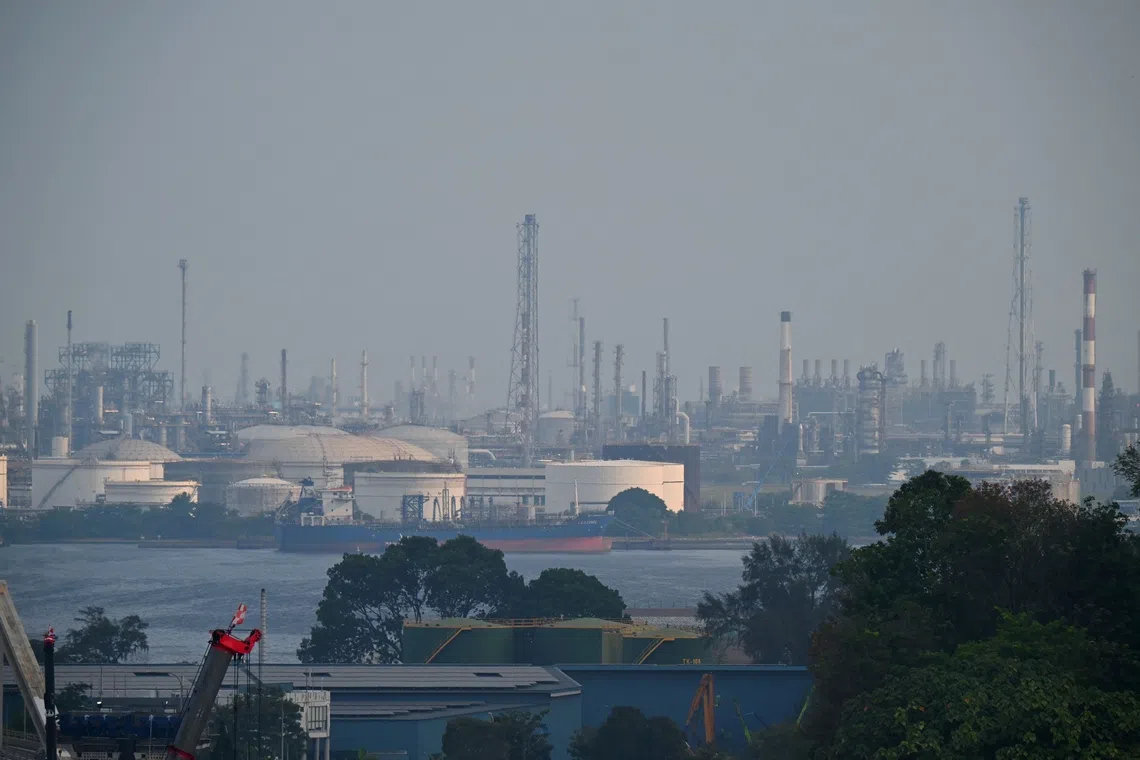
The Government will conduct technical studies to inform development plans, including the reclamation profile.
ST PHOTO: KUA CHEE SIONG
Published Sep 08, 2026, 10:15 PM
Updated Sep 08, 2026, 10:15 PM
The government has not yet finalised the timeline or plans for reclaiming the new western island, emphasising ongoing studies and stakeholder engagement on environmental and heritage impacts.
At least 15 MPs had raised questions related to plans to merge several southern islands for the reclamation project.
Environmental studies will be made public for feedback, and the government will consider ecological, heritage, and future needs before finalising reclamation and development decisions.
Follow our live coverage here.
SINGAPORE - Details of the upcoming western island, such as its reclamation profile, land use plans, construction methods and timeline, have yet to be determined, said Minister for National Development Chee Hong Tat on Sept 8.
In a written response to parliamentary questions raised by 13 MPs on both sides of the House about the planning and impacts of the new development, Chee noted that a project of this scale is complex and technically challenging.
The Government will conduct technical studies to inform development plans, including the reclamation profile, he said. At the same time, it will also continue to engage stakeholders, including nature groups and descendants of former island communities, on the plans for the area.
“These include feasibility studies, site investigations and surveys, as well as engineering and environmental studies, to better understand development possibilities and their preliminary impact on areas like geology, hydrology and biodiversity,” Chee said.
He said the Government recognises that the existing islands and surrounding waters are an important part of natural biodiversity, and hold historical and cultural significance for former island communities, including the Orang Pulau and Orang Laut.
“We have been and will continue to engage stakeholders early, including nature groups, domain experts and descendants of former island communities and community representatives,” he added.
The plan to merge several southern islands to form a new industrial island, dubbed the western island, for future energy, industry and defence needs was first mooted by Prime Minister Lawrence Wong during the National Day Rally on Aug 23.
A preliminary outline of the development area, which is near Jurong Island, showcased during the rally showed that some of the affected islands could include Pulau Semakau, Pulau Bukom and Pulau Sudong.
Following the announcement, scientists, nature and heritage groups, descendants of former islanders, as well as other stakeholders of Singapore’s marine community, called for more details about the developmental plans. They also expressed concern that the works could impact the area’s rich marine biodiversity and result in the loss of heritage.
Ahead of the Septembe r parliamentary sitting, MPs asked about the environmental impact of the plans, how the Government will incorporate heritage and community considerations, as well as its plans to consult different stakeholders.
For instance, Charlene Chen (Tampines GRC) had asked whether the Government will consider conducting cumulative environmental impact assessments where multiple reclamation, dredging or coastal development projects may affect the same marine ecosystems.
Chee said in response tha t government agencies will “coordinate closely to comprehensively manage the cumulative environmental impact of projects in close proximity”.
WP Non-Constituency MP Andre Low had also asked whether the studies will be made public.
Chee said the environmental study report will be made available for public feedback. Inputs from stakeholders will be carefully considered before plans are finalised, he added.
He said: “As with any development decision, the Government will need to consider many factors, such as ecological and heritage impact, as well as the needs of current and future generations, before making a final decision.”
Separately, Valerie Lee (Pasir Ris-Punggol GRC) and Edward Chia (Holland-Bukit Timah GRC ) had asked the Ministry of Trade and Industry why Jurong Island could not accommodate the activities that the upcoming western island is envisioned to host.
Minister for Trade and Industry (Energy and Industry) Tan See Leng said in a written response on Sept 8 that Jurong Island spans about 3,000 ha , of which less than one-third remains available for development.
“The remaining vacant land has been earmarked to support our growth focus on specialty chemicals and sustainable materials, and to cater for new energy development, decarbonisation solutions, and low-carbon data centres,” he added.
Tan said the new western island will give future generations the space to meet new requirements and pursue opportunities “beyond what can be seen and imagined today”.
He said as part of the planning process, the Government’s studies will enable better understanding of the various development possibilities and their implications on biodiversity, hydrodynamics, marine navigation as well as existing business operations.
He noted that the government has begun engaging stakeholders to gather their views and reiterated that their feedback will be carefully considered before any development plans are finalised.
Ang Qing is a journalist covering local and international breaking news at The Straits Times, with a focus on the environment, crime, technology and social issues.
Singapore Parliament
Ministry of National Development
Ministry of Trade and Industry
政府将开展技术研究,为发展计划提供信息,包括填海造地方案。
《海峡时报》摄影:郭志雄
发布于 2026 年 9 月 8 日晚上 10:15
更新于2026年9月8日晚上10:15
政府尚未最终确定填海造陆的时间表或计划,而是强调正在进行环境和遗产影响方面的研究和利益相关者参与。
至少有 15 名国会议员对将南部几个岛屿合并用于填海工程的计划提出了质疑。
环境研究报告将公之于众征求意见,政府将在最终确定填海造地和开发决定之前,考虑生态、遗产和未来需求。
请点击此处关注我们的实时报道。
新加坡——国家发展部长徐芳达9月8日表示,即将建成的西部岛屿的详细情况,例如填海概况、土地利用计划、施工方法和时间表,尚未确定。
针对国会两院 13 名议员就新开发项目的规划和影响提出的质询,Chee 在书面答复中指出,如此规模的项目既复杂又具有技术挑战性。
他表示,政府将开展技术研究,为包括填海造地方案在内的发展规划提供依据。同时,政府也将继续与包括自然保护团体和原岛屿居民后裔在内的利益相关方就该地区的规划进行磋商。
Chee表示:“这些研究包括可行性研究、场地调查和勘测,以及工程和环境研究,以便更好地了解开发的可能性及其对地质、水文和生物多样性等领域的初步影响。”
他表示,政府认识到现有的岛屿和周围水域是自然生物多样性的重要组成部分,对包括 Orang Pulau 和 Orang Laut 在内的以前的岛屿社区具有历史和文化意义。
“我们过去一直并将继续尽早与利益相关者进行沟通,包括自然保护组织、领域专家、前岛屿社区的后裔和社区代表,”他补充道。
将几个南部岛屿合并成一个新的工业岛(称为西部岛屿),以满足未来能源、工业和国防需求的计划,最早由总理黄循财在8月23日的国庆群众大会上提出。
在集会上展示的开发区初步轮廓图显示,该开发区位于裕廊岛附近,受影响的岛屿可能包括实马高岛、布科姆岛和苏东岛。
公告发布后,科学家、自然保护和文物保护团体、岛民后裔以及新加坡海洋界的其他利益相关者纷纷要求提供更多开发计划的细节。他们还表示担忧,认为这些工程可能会影响该地区丰富的海洋生物多样性,并导致文化遗产的丧失。
在 9 月份的议会会议之前,议员们询问了这些计划对环境的影响、政府将如何纳入遗产和社区方面的考虑,以及政府与不同利益相关者进行磋商的计划。
例如,陈嘉琳(淡滨尼集选区)曾询问政府是否会考虑对可能影响同一海洋生态系统的多个填海、疏浚或沿海开发项目进行累积环境影响评估。
Chee回应说,政府机构将“密切协调,全面管理邻近项目累积的环境影响”。
工人党非选区议员刘程强也曾询问这些研究结果是否会公开。
Chee表示,环境评估报告将公开征求公众意见。他还补充说,在最终确定方案之前,会认真考虑各利益相关方的意见。
他说:“与任何发展决策一样,政府在做出最终决定之前,需要考虑许多因素,例如生态和遗产影响,以及当代和后代的需求。”
此外,瓦莱丽·李(巴西立-榜鹅集选区)和爱德华·谢(荷兰-武吉知马集选区)曾向贸工部询问,为什么裕廊岛无法容纳即将建成的西部岛屿计划举办的活动。
贸工部长(能源及工业)陈世龙在9月8日的书面答复中表示,裕廊岛面积约3000公顷,其中可供开发的面积不到三分之一。
他还补充道:“剩余的空地已规划用于支持我们在特种化学品和可持续材料领域的增长,并满足新能源开发、脱碳解决方案和低碳数据中心的需求。”
谭表示,这座新的西部岛屿将为后代提供空间,以满足新的需求并追求“今天无法看到和想象的”机遇。
他表示,作为规划过程的一部分,政府的研究将有助于更好地了解各种发展可能性及其对生物多样性、水动力学、海上航行以及现有商业运营的影响。
他指出,政府已开始与利益相关者进行沟通,收集他们的意见,并重申在最终确定任何发展计划之前,将认真考虑他们的反馈意见。
Ang Qing是《海峡时报》的一名记者,负责报道本地和国际突发新闻,重点关注环境、犯罪、科技和社会问题。
新加坡国会
国家发展部
贸易和工业部