Lower en bloc thresholds address costs of maintaining old properties, facilitate renewal: Edwin Tong降低整体收购门槛可降低老旧物业的维护成本,并促进物业更新:唐振辉
The threshold will be lowered to 70 per cent for projects between 40 years and 59 years old. Read more at straitstimes.com.
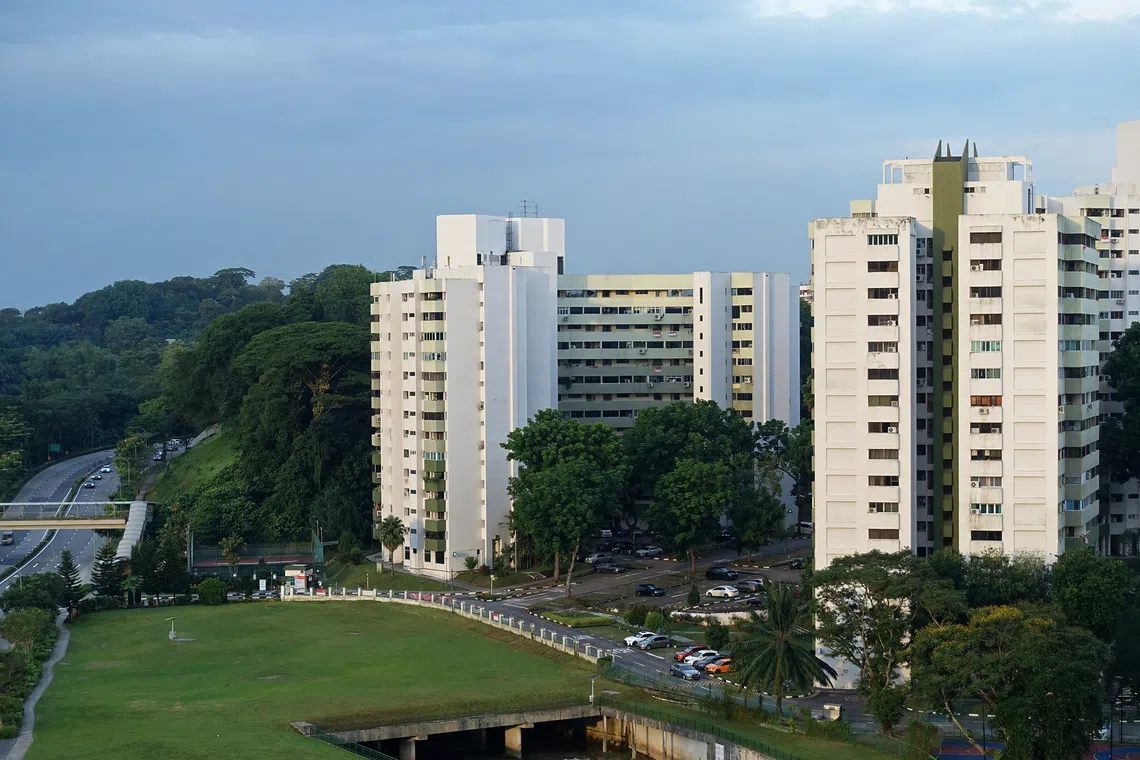
Speaking in Parliament, Tong said as buildings age, the question of maintenance and upkeep becomes increasingly pressing.
ST PHOTO: JOYCE FANG
Published Sep 08, 2026, 10:42 PM
Updated Sep 08, 2026, 10:42 PM
SINGAPORE – It will soon be easier for older private developments to undergo a collective sale , following changes to the Land Titles (Strata) Act that were passed in Parliament on Sept 8.
The current 80 per cent voting threshold, which applies across most projects , will be lowered to 70 per cent for projects between 40 years and 59 years old, and 65 per cent for those 60 years and older.
At the heart of the changes, said Law Minister Edwin Tong, is whether it is feasible or sustainable to continue investing in major renovations and upkeep for older developments, or whether the land can be put to better use through renewal and redevelopment.
Speaking in Parliament, Tong said as buildings age, the question of maintenance and upkeep becomes increasingly pressing .
“Over time, major components reach the end of their service lives; repair bills grow larger and more frequent and the fabric of the building – its structure, its systems, its common areas – will require even greater investment simply to remain functional and liveable,” he said.
Tong said that the quality of life of residents and occupants is impacted when physical environments deteriorate, adding that the vibrancy of the area also declines.
“Owners often find themselves stuck – unable to maintain their properties adequately, but also unable to move forward with renewal. That is not a good outcome for residents, and it is not a good outcome for Singapore,” he said.
He noted that today, about one in 20 non-landed private homes are now aged 40 years or older, totalling about 20,000 units in close to 250 developments.
This number will only grow, he said, due to Singapore’s rapid urbanisation from the 1970s to the 1990s, adding that owners will have to consider whether it remains feasible or sustainable to invest in the maintenance and upkeep of their property.
Tong said buildings do not have expiry dates, but will require more than routine maintenance once they are past a certain point, and issues such as cracking and concrete spalling occur more frequently.
“The building continues to stand but the cost and the complexity of keeping it in genuinely good condition will rise significantly, and the returns on continued investment just to upkeep and maintain it will begin to diminish,” he said, adding that it is this trajectory of rising cost and diminishing returns that frames the challenge the legal amendments aim to address.
The lifecycle costs of major building components compound this challenge, said Tong, who cited the estimated cost of modernising a lift shaft, which starts from $120,000, or a full replacement, which costs $200,000 to $300,000 per lift.
Such costs will weigh on the development’s sinking fund, Tong said, and become a real and growing burden for owners, who at some stage may want to “pursue renewal” but find themselves unable to because of the existing collective sales framework.
The legal amendments passed by Parliament on Sept 8 fall into two broad categories – supporting the redevelopment of ageing developments, and strengthening safeguards for non-consenting owners.
The revised voting thresholds fall under the efforts to support redevelopment of older properties.
Tong said that the rationale behind the age bands is straightforward – “the older a development, the more acute its maintenance challenges are likely to be, and the stronger the case for enabling renewal”.
As for protecting non-consenting owners, Tong said three safeguards will be rolled out.
First, the agreement of 35 per cent of owners by share value or number of units will be required to convene an Extraordinary General Meeting for the formation of a Collective Sale Committee, up from the current 25 per cent.
Tong said this ensures that collective sale exercises are only initiated when there is serious intent and support, which reduces the risk of owners being subjected to a prolonged and disruptive process that is not likely to succeed.
Second, the window for a Collective Sale Committee to obtain signatures for a Collective Sale Agreement will be shortened from 12 months to six months.
Acknowledging that this is a period where owners can be subject to significant pressure – either from fellow owners, or from professionals appointed in a collective sale – to sign the agreement, Tong said the shorter window provides greater certainty to all owners.
Third, the restriction period after a failed collective sale attempt will be extended to three years, up from two years currently.
During the restriction period, the first attempt to form a new Collective Sale Committee will require the approval of at least half the owners by share value or number of units, while second and subsequent attempts will require 70 per cent consent for developments aged 40 to 59 years, and 65 per cent for those aged 60 years and above.
Tong said this gives owners a longer window of certainty, while “preserving a route forward if sufficient support genuinely subsequently emerges”.
Concerns over 6-month signature window
The 10 MPs who rose to speak on the proposed changes were largely concerned with two issues – the adequacy of the six-month window for signature collection, and safeguards for non-consenting owners.
Several, including Fadli Fawzi (Aljunied GRC), Wan Rizal Wan Zakariah (Jalan Besar GRC), Ang Wei Neng (West Coast-Jurong West GRC) and Lee Hong Chuang (Jurong East–Bukit Batok GRC) questioned the adequacy of the six-month period, especially for larger developments with more units.
For instance, Wan Rizal said that a development with several hundred units, owners who are constantly overseas, and elderly owners who might require assistance with what the voting process may find it challenging to meet the timeline.
He said an unrealistically short period could create pressure to obtain signatures quickly, increase tension between neighbours, and reduce time available for owners to understand the valuation, method of apportionment, and replacement housing implications.
Addressing these concerns, Tong said while the merits of a differentiated signature collection period were considered, the six-month period would “drive parties to help to focus their minds on the collective sale decision and avoid the process from being too protracted”.
Others like Alex Yeo (Potong Pasir) and Yip Hon Weng (Yio Chu Kang) proposed introducing more safeguards, such as providing advice and support to homeowners – especially seniors – on matters including their rights and relocation prospects.
In response, Tong said that much of this information and support already exists, adding that the Government will consider if more support may be necessary.
He said legal support resources are available to members of the public generally, including at Pro Bono SG’s community legal clinics, and added that laws governing collective sales requires that individuals standing for election as a member of the collective sale committee must declare their own position and potential conflicts of interest.
Speaking on the amendments, WP Non-Constituency MP Andre Low had also said recent debates over Maju and Gillman Forests have show how much Singaporeans care about natural spaces, and that the country should thus “examine how much more we can accommodate on land that we have already developed before accepting the loss of places that would be difficult to replace”.
Asked by Tong if he would agree that the issues such as Gillman, Maju and the planned western island – which Low had also mentioned – have nothing to do with the use of land arising from en bloc sales, Low said he would not agree with that “definitive statement” and that he believes the two issues are linked, albeit not directly.
Ng Keng Gene is a correspondent at The Straits Times, reporting on issues relating to land use, urban planning and heritage.
En bloc/collective sale
唐在议会发言时表示,随着建筑物老化,维护保养问题变得越来越紧迫。
圣路易斯邮报摄影:JOYCE FANG
发布于 2026 年 9 月 8 日晚上 10:42
更新于2026年9月8日晚上10:42
新加坡——随着9月8日国会通过的《土地所有权(分层地契)法》的修改,较老的私人住宅项目很快将更容易进行集体出售。
目前适用于大多数项目的 80% 投票门槛,对于 40 年至 59 年的项目将降低至 70%,对于 60 年及以上的项目将降低至 65%。
律政部长唐振辉表示,这些变化的核心在于,继续投资对老旧建筑进行大规模翻新和维护是否可行或可持续,还是可以通过更新和重建更好地利用土地。
唐在议会发言时表示,随着建筑物老化,维护保养问题变得越来越紧迫。
“随着时间的推移,主要部件的使用寿命会逐渐结束;维修费用会越来越高,维修频率也会越来越高,建筑物的结构、系统和公共区域等都需要更大的投资才能保持其功能性和宜居性,”他说。
Tong表示,当自然环境恶化时,居民和住户的生活质量会受到影响,该地区的活力也会下降。
“业主们常常发现自己陷入两难境地——既无力妥善维护房产,也无法推进续约事宜。这对居民来说不是好事,对新加坡来说也不是好事,”他说道。
他指出,如今大约每 20 套非有地私人住宅中就有一套房龄在 40 年或以上,总计约 20,000 套,分布在近 250 个开发项目中。
他表示,由于新加坡从 20 世纪 70 年代到 90 年代的快速城市化,这个数字只会继续增长。他还补充说,业主们将不得不考虑投资维护和保养房产是否仍然可行或可持续。
Tong表示,建筑物没有使用寿命,但一旦超过某个阶段,就需要进行比日常维护更多的维护,诸如开裂和混凝土剥落等问题也会更频繁地发生。
“这座建筑依然屹立不倒,但要保持其真正良好的状态,成本和复杂性将大幅上升,而持续投资以维护和保养它的回报将开始减少,”他说道,并补充说,正是这种成本上升和回报递减的趋势构成了法律修正案旨在解决的挑战。
Tong表示,主要建筑部件的生命周期成本加剧了这一挑战。他举例说,现代化改造电梯井的估计成本起价为12万美元,而完全更换则需要花费每部电梯20万至30万美元。
Tong表示,这些费用将加重开发项目的偿债基金负担,并成为业主们日益沉重的负担,他们可能在某个阶段想要“寻求续约”,但由于现有的集体出售框架而发现自己无法做到。
9 月 8 日议会通过的法律修正案分为两大类——支持老旧建筑的重建,以及加强对不同意业主的保护。
修订后的投票门槛属于支持老旧房产重建的举措之一。
Tong表示,划分年龄段的理由很简单——“建筑越老,其维护挑战就越严峻,也就越有必要进行翻新”。
至于如何保护未经同意的业主,Tong表示将推出三项保障措施。
首先,要召开特别股东大会以成立集体出售委员会,需要获得按股份价值或单位数量计算的 35% 的股东同意,而目前的同意比例为 25%。
Tong表示,这确保了只有在有认真意愿和支持的情况下才会启动集体出售程序,从而降低了业主遭受漫长而混乱且不太可能成功的程序的风险。
第二,集体出售委员会获得集体出售协议签名的期限将从 12 个月缩短至 6 个月。
Tong承认,在此期间,业主可能会面临来自其他业主或集体出售中指定的专业人士的巨大压力,要求他们签署协议。他表示,缩短窗口期可以为所有业主提供更大的确定性。
第三,集体出售尝试失败后的限制期将从目前的两年延长至三年。
在限制期内,首次尝试组建新的集体出售委员会需要获得至少一半的业主(按股份价值或单位数量计算)的批准,而第二次及以后的尝试,对于房龄 40 至 59 年的开发项目,需要获得 70% 的同意,对于房龄 60 年及以上的开发项目,需要获得 65% 的同意。
Tong表示,这能让业主拥有更长的确定期,同时“如果之后真的出现足够的支撑,也能保留前进的道路”。
对6个月签字窗口期的担忧
就拟议的变更发言的 10 位议员主要关注两个问题——六个月的签名收集窗口是否足够,以及对不同意的所有者的保障措施。
包括法德利·法兹(阿裕尼集选区)、万·里扎尔·万·扎卡利亚(惹兰勿刹集选区)、洪伟能(西海岸-裕廊西集选区)和李鸿昌(裕廊东-武吉巴督集选区)在内的几位议员质疑六个月的期限是否足够,特别是对于单位数量较多的较大规模开发项目而言。
例如,Wan Rizal 表示,对于一个拥有数百个单元、业主经常在海外、以及可能需要协助参与投票过程的老年业主来说,按时完成投票可能会面临挑战。
他表示,时间过短可能会造成快速获得签名的压力,加剧邻里之间的紧张关系,并减少业主了解估值、分配方法和替代住房影响的时间。
针对这些担忧,Tong表示,虽然考虑过不同的签名收集期,但六个月的期限将“促使各方集中精力做出集体出售决定,避免过程过于拖延”。
其他议员,如波东巴西的 Alex Yeo 和义顺的 Yip Hon Weng,则提议引入更多保障措施,例如向业主(尤其是老年人)提供关于其权利和搬迁前景等方面的建议和支持。
对此,唐表示,这方面的许多信息和支持已经存在,并补充说,政府将考虑是否需要提供更多支持。
他表示,公众普遍可以获得法律援助资源,包括新加坡公益法律服务中心(Pro Bono SG)的社区法律诊所。他还补充说,有关集体出售的法律规定,竞选集体出售委员会成员的个人必须申报自己的立场和潜在的利益冲突。
工人党非选区议员刘安德在谈到这些修正案时也表示,最近关于马朱森林和吉尔曼森林的辩论表明新加坡人有多么关心自然空间,因此国家应该“在接受那些难以替代的地方的丧失之前,仔细考虑在我们已经开发的土地上还能容纳多少东西”。
当唐问他是否同意吉尔曼岛、马朱岛和计划中的西部岛屿等问题(刘特佐也曾提到过)与整体出售产生的土地用途无关时,刘特佐表示他不同意这种“最终说法”,并认为这两个问题是相关的,尽管不是直接的。
吴庆根是《海峡时报》的记者,报道与土地利用、城市规划和遗产相关的问题。
整体出售/集体出售