White House has lofty space launch ambitions, but experts question price tag白宫雄心勃勃地计划进行太空发射,但专家质疑其价格。
The space industry lauded a new Trump administration 1,000-launches-a-year space policy, but experts told Breaking Defense that the current space infrastructure doesn’t have enough capacity and someone’s going to have to pay, potentially a lot, to change that.
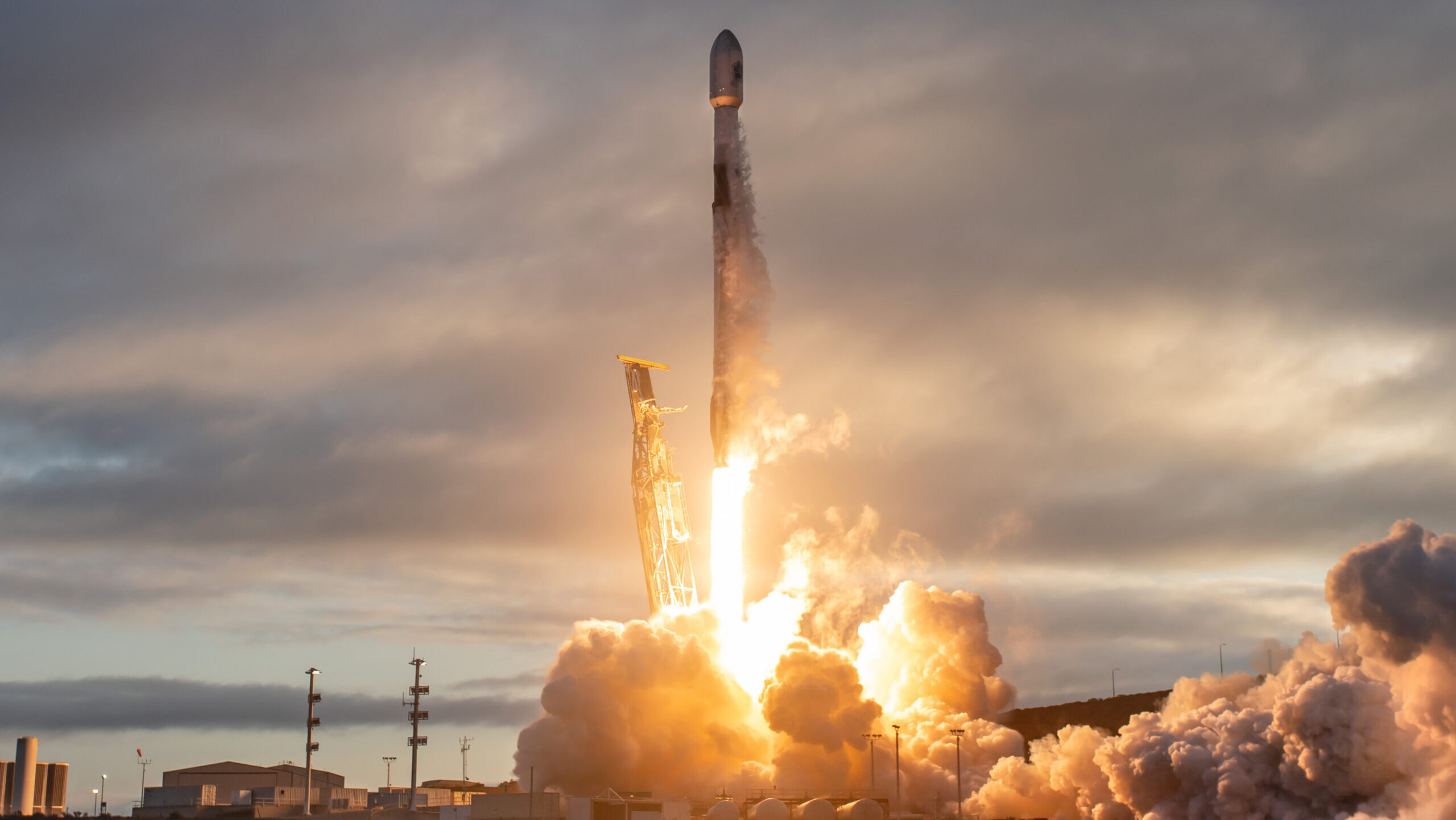
A SpaceX Falcon 9 launches from Vandenberg Space Force Base on Sept. 10, 2025. (Photo credit: SpaceX)
WASHINGTON — While publicly singing the praises of the recent Trump administration policy designed to build up US capacity for transportation “to, from and within space,” government and industry sources privately are asking one big question: How will these ambitious plans be funded?
Specifically for the Space Force, the White House’s push for the Pentagon to “pursue” commercial space mobility and logistics services also puts more fuel on the fire of the long-running debate between the service and US Space Command (SPACECOM) about near-term funding needs to develop such capabilities.
“Show me the money,” quipped Clayton Swope, deputy director of the Center for Strategic and International Studies’ (CSIS) Aerospace Security Project, echoing seven other expert, industry, and government sources who spoke to Breaking Defense. (For our younger readers, Swope was quoting Tom Cruise’s 1996 film Jerry McGuire.)
President Donald Trump on Aug. 20 issued a sweeping new White House National Space Transportation Policy , with a top-line goal of enabling more than 1,000 US space launches per year by 2030.
As the new policy is embodied in a National Security Presidential Memorandum (unlike its 2013 predecessor [ PDF ]), the Defense Department is given a central role in implementing the policy goals in tandem with other agencies, including NASA, and the Departments of Transportation and Commerce, and the Federal Communications Commission (FCC).
It calls on the Pentagon to: invest more in expanding launch capacity at its space ranges, help the Transportation Department locate new facilities for launch and re-entry of rockets and space-borne cargo, and bolster protection of launch infrastructure from adversary attack.
The Defense Department owns the nation’s two largest launch facilities, used both for national security and commercial missions, at Vandenberg Space Force Base, Calif., and Cape Canaveral Space Force Station, Fla. The other two are NASA’s Kennedy Space Center, Fla., and Wallops Flight Facility, Va.
The White House did not return a request for comment about potential costs, and which agencies would be required to chip in.
Warm Words, Rapid Regulatory Moves
Upon its announcement, the policy was widely embraced by the US space ecosystem.
“The U.S. Space Force welcomes the strategic vision outlined in National Security Presidential Memorandum-17, which provides critical direction for securing national interests across all orbital regimes,” a service spokesperson told Breaking Defense in an email.
“We look forward to working alongside the Department of War, NASA, and our commercial partners to support this national policy and ensure continued freedom of action in a contested space domain,” the spokesperson said.
Eric Fanning, president of the Aerospace Industries Association, said in a statement, “As launch demand outpaces capacity, improvements and investment in our space launch infrastructure will determine America’s superiority and global competitiveness in space.”
Likewise, the Satellite Industries Association applauded the new policy, “which recognizes that reliable, affordable, and resilient access to space is fundamental to America’s economic prosperity, technological leadership, and national security.” The Commercial Space Federation too hailed the new document for providing “needed updates” to better support today’s expanded launch industry.
Further, the three key agencies responsible for regulating the commercial space industry jumped to issue implementation proposals.
The Transportation Department’s Federal Aviation Administration (FAA), which regulates commercial launch and reentry, on Aug. 25 issued a new request for information on siting new launch and re-entry facilities. The FAA asks for input on criteria, including investment requirements and safety considerations, for new sites. It also asks for insights on three specific potential locations in Florida, Georgia and Puerto Rico that previously were proposed by outside organizations, as well as the option of using either repurposed oil rigs or new offshore platforms as is being considered by the Interior Department’s Bureau of Oceans Management.
On the same day as Trump’s announcement, the Commerce Department’s National Oceanic and Atmospheric Administration, responsible for regulating remote sensing satellites, asked for comment on a pilot program for a new voluntary certification process to authorize companies developing “ novel in-space activities. ”
Launch Demand Growing
The push for 1,000 launches per year, experts and a former senior SPACOM official said, is driven by a newly insatiable demand, especially for putting satellites into low Earth orbit for military, civil and commercial missions.
While there is no one-stop-shop for a definitive count of US space launches per year, with different databases including different types, there is no doubt from the published statistics that there has been a dramatic uptick over the past five years. According to the annual launch report published by astrophysicist Jonathan McDowell, there were 181 US launches in 2025 versus 37 in 2020.
A vast majority of launches blast off from DoD sites. (NASA’s facilities largely are used to launch its own missions.)
In May , a Department of the Air Force study found there were 175 commercial and military launches in 2025 from Vandenberg and Cape Canaveral alone, and stressed that the Space Force is likely to need another facility capable of heavy lift in the not-too-distant future to support an expanding number of national security missions.
John Shaw, former SPACECOM deputy, told Breaking Defense that there are four major factors driving a likely gap where launch demand outweighs capacity.
First is NASA’s Artemis program to establish a sustained human presence on the moon, which beyond flying astronauts will require “a lot of infrastructure — refueling, potentially for [SpaceX’s] Starship if that’s the vehicle, and lots of other supporting architecture,” he said.
A second, Shaw said, is DoD’s drive to leverage SpaceX’s civilian Starlink and militarized Starshield communications networks, as well as to develop and deploy air and ground “moving target indication constellations” that will require “a lot of launches.”
The Trump administration’s Golden Dome missile defense initiative further “could have its own tailwind depending on how much we scale up” to include not only new sensor satellites but also “the space-based interceptor piece,” he said.
Finally, Shaw cited the commercial space gold rush for new activities, from “ orbital data centers to expanding proliferable constellations for comms and … even other emergent kinds of activities that are that are driving cheaper and cheaper satellites.”
But Who Will Pay and How?
Even with demand sky high, however, getting up to 1,000 launches per year by 2030 is an “extraordinary benchmark,” CSIS’s Swope told Breaking Defense.
“It’s hard to see how the existing infrastructure could support that cadence. So we’re going to need some significant investment and funding asap to start modernizing and expanding U.S. ranges,” he said. “It is also clear from the directive that it is going require tight interagency coordination to get the work done.”
Todd Harrison, a senior fellow at the American Enterprise Institute, pointed out that the new presidential memo is only laying out policy, and a policy “does not need to be funded.”
He told Breaking Defense that instead, the memo “lays out several tasks for different offices and agencies, and presumably if they report back recommending infrastructure improvements then that would be part of a future DoD budget request.”
However, Harrison said, this means that nothing at all can be actually started until fiscal 2028 or later.
A Space Force official acknowledged that funding for new launch capacity is a big question.
In addition, the official told Breaking Defense on the condition of anonymity, new DoD resources will be required to enable and ensure coordination of national security launches between any new facility and the existing ranges at Vandenberg and the Cape.
Both Harrison and Swope said that it is impossible to predict in advance how much a new launch site might cost, given all the factors involved. These include the geographical location — whether the new site is on land within, or adjacent to, a current range that could provide infrastructure — what size rockets the site is designed to accommodate, etc.
Swope said that while he didn’t have a solid grasp of the potential costs, somewhere in the billions of dollars seems likely.
Harrison, however, pointed out that normally, each launch pad at the federal facilities is bespoke to fit a specific rocket, with construction paid for by the company involved. (For example, back in 2011 SpaceX leased the land for its Falcon Heavy pad at Vandenberg, but paid to modernize the old, 1960s-era pad.)
“The launch pads are unique to each vehicle, so it makes sense that the company that owns the vehicle would pay for the pad. What the government typically does is provide the launch range services, roads and access to the pads,” he said.
One answer to the money question, said Shaw, could be to look to public-private development and financing arrangements.
“I think if it’s properly incentivized, that you will get some some some some capital flowing into it from the private sector,” he said.
An Aug. 28 “alert” from law firm Holland and Knight also backs the concept of public/private partnerships to implement the transportation policy goals, noting that the document itself “directs agencies to incentivize co-development of space transportation infrastructure with private sector partners.” Further, the law firm said, last year’s “One Big Beautiful Bill Act added an ‘exempt facility’ designation for spaceport bonds,” which expands corporate “access to tax-exempt bond financing for a broad range of spaceport-related facilities.”
Of course, the concept of public-private partnerships assumes there are firms with spare cash to invest, and raises questions about what they would expect in return.
In-Space Transportation For Satellite Servicing
Beyond the sweeping launch ambitions of the space policy, Swope said its “focus on on-orbit logistics and a 48-hour launch requirement are also notable new points of emphasis that speak to areas of growing importance for national space power, including military space power.”
Specifically, the policy orders DoD and NASA to jointly “evaluate” US government needs for “in-space transportation” to conduct missions like “space weather awareness, debris removal, and on-orbit servicing.” It also calls on DoD to “pursue in-space transportation services for existing and potential … mission applications, such as on-orbit servicing and in-space logistics … to support the development of the in-space transportation industry.”
But once again, according to analysts, industry and Space Force officials, the question is funding.
SPACECOM for the past several years has been loudly broadcasting what is sees as an urgent need for the development of on-orbit mobility and logistics capabilities, such as refueling , satellite repair, and the ability to latch onto and move space objects including space junk (and potentially, adversary spacecraft).
Meanwhile, the Space Force, which is in charge of acquiring kit to fulfill military space requirements, over the past several years has moved from outright skepticism to voicing at least rhetorical support for the concept’s potential future value. For example, the service in 2023 established a new acquisition mission area called “Space Access, Mobility and Logistics.”
But neither that office, or the concept as a whole, has been provided much by way of resources.
In fact, the mission area was funded solely by congressional plus-ups until FY25, when the service first asked for and received $20 million. But in FY26, as first reported by Breaking Defense, the Space Force zeroed out the budget. Likewise, in the FY27 budget request, there is only some $10 million earmarked for point-to-point delivery. No funds are slated for “Orbit Servicing, Mobility, and Logistics,” which was the focus of the earlier congressional adds.
According to a second Space Force official, the near-term value of space mobility and logistics capabilities remains a topic of heated debate between the service and SPACECOM.
“It’s radioactive,” the official told Breaking Defense.
SPACECOM did not respond to a request for comment about the potential effect of the new White House policy on forwarding progress toward fielding such capabilities.
2025年9月10日,SpaceX公司的猎鹰9号火箭从范登堡太空军基地发射升空。(图片来源:SpaceX)
华盛顿——尽管政府和行业人士公开赞扬了特朗普政府最近旨在提升美国“往返太空和在太空内部”运输能力的政策,但私下里,他们却提出了一个重要问题:这些雄心勃勃的计划将如何获得资金?
具体来说,对于太空部队而言,白宫敦促五角大楼“追求”商业太空机动和后勤服务,也加剧了太空部队与美国太空司令部(SPACECOM)之间关于近期发展此类能力所需资金的长期争论。
“把钱给我看看,”战略与国际研究中心(CSIS)航空航天安全项目副主任克莱顿·斯沃普打趣道,这番话也与接受《防务新闻》采访的其他七位专家、行业人士和政府官员的说法不谋而合。(对于我们年轻的读者来说,斯沃普引用的是汤姆·克鲁斯1996年的电影《甜心先生》。)
8 月 20 日,唐纳德·特朗普总统发布了一项影响深远的白宫国家航天运输政策,其首要目标是到 2030 年实现美国每年 1000 次以上的太空发射。
由于新政策体现在国家安全总统备忘录中(与 2013 年的前身 [ PDF ] 不同),国防部在与其他机构(包括美国国家航空航天局、交通部、商务部和联邦通信委员会 (FCC))共同实施政策目标方面发挥了核心作用。
它呼吁五角大楼:加大对太空靶场发射能力的投入,帮助交通部寻找新的火箭和太空货物发射及再入设施,并加强对发射基础设施的保护,使其免受敌方攻击。
美国国防部拥有全国最大的两个发射设施,分别位于加利福尼亚州范登堡太空部队基地和佛罗里达州卡纳维拉尔角太空部队基地,用于国家安全和商业任务。另外两个发射设施分别是位于佛罗里达州的美国宇航局肯尼迪航天中心和位于弗吉尼亚州的沃洛普斯飞行基地。
白宫没有回复有关潜在成本以及哪些机构需要分摊费用的置评请求。
热情洋溢的言辞,迅速的监管举措
该政策一经公布,便得到了美国航天生态系统的广泛支持。
“美国太空军欢迎国家安全总统备忘录-17中概述的战略愿景,该备忘录为确保所有轨道领域的国家利益提供了关键指导,”一位太空军发言人在一封电子邮件中告诉《防务新闻》。
发言人表示:“我们期待与战争部、美国国家航空航天局以及我们的商业伙伴携手合作,支持这项国家政策,并确保在竞争激烈的太空领域继续享有行动自由。”
美国航空航天工业协会主席埃里克·范宁在一份声明中表示:“随着发射需求超过产能,对我们太空发射基础设施的改进和投资将决定美国在太空领域的优势和全球竞争力。”
同样,卫星工业协会也对这项新政策表示赞赏,“该政策认识到,可靠、经济且稳定的太空通道对于美国的经济繁荣、技术领先地位和国家安全至关重要。”商业航天联盟也称赞这份新文件提供了“必要的更新”,以更好地支持当今不断发展的发射行业。
此外,负责监管商业航天业的三大主要机构迅速发布了实施建议。
负责监管商业航天器发射和再入的美国交通部联邦航空管理局(FAA)于8月25日发布了一份关于新建航天器发射和再入设施选址的新信息征询书。FAA希望就新选址的标准征求意见,包括投资要求和安全考量。此外,FAA还希望了解此前由外部机构提出的三个潜在选址方案,分别位于佛罗里达州、佐治亚州和波多黎各,以及内政部海洋管理局正在考虑的利用改造后的石油钻井平台或新建海上平台的方案。
在特朗普宣布这一消息的同一天,负责监管遥感卫星的商务部国家海洋和大气管理局就一项新的自愿认证程序试点计划征求意见,该计划旨在授权公司开发“新型太空活动”。
上市需求不断增长
专家和一位前航天司令部高级官员表示,推动每年发射 1000 次卫星的动力,是源于一种新的、永无止境的需求,特别是将卫星送入近地轨道执行军事、民用和商业任务的需求。
虽然目前尚无统一的美国年度太空发射数量统计,因为不同的数据库涵盖的类型也各不相同,但已公布的统计数据无疑表明,过去五年美国太空发射数量出现了显著增长。根据天体物理学家乔纳森·麦克道尔发布的年度发射报告,2025年美国预计将进行181次太空发射,而2020年仅为37次。
绝大多数火箭发射都从美国国防部基地进行。(美国宇航局的设施主要用于发射其自身的任务。)
今年 5 月,美国空军部的一项研究发现,仅范登堡空军基地和卡纳维拉尔角在 2025 年就将进行 175 次商业和军事发射,并强调太空部队可能在不久的将来需要另一个能够进行重型运载的设施,以支持不断增加的国家安全任务。
美国太空司令部前副部长约翰·肖告诉《防务新闻》,造成发射需求超过发射能力的缺口,主要有四个因素。
首先是美国宇航局的阿尔忒弥斯计划,旨在建立人类在月球上的长期存在。他表示,除了载人飞行之外,该计划还需要“大量的基础设施——燃料补给,如果是SpaceX的星舰(如果是的话),以及许多其他配套设施”。
肖恩表示,第二个原因是国防部正努力利用 SpaceX 的民用星链和军用星盾通信网络,以及开发和部署空中和地面“移动目标指示星座”,这将需要“大量的发射”。
他说,特朗普政府的“金穹顶”导弹防御计划“可能会有自己的发展动力,这取决于我们扩大规模的程度”,不仅包括新的传感器卫星,还包括“天基拦截器”。
最后,肖恩提到了商业太空淘金热,涌现出许多新活动,从“轨道数据中心到不断扩展的可扩散通信星座,以及……其他新兴活动,这些活动正在推动卫星变得越来越便宜”。
但谁来买单?又如何买单?
即便需求非常高,CSIS 的 Swope 告诉 Breaking Defense,到 2030 年每年发射 1000 次也是一个“非凡的里程碑”。
“很难想象现有的基础设施如何能支撑这样的节奏。因此,我们需要尽快投入大量资金,开始对美国靶场进行现代化改造和扩建,”他说道。“指令中也明确指出,这项工作需要各部门之间密切协调才能完成。”
美国企业研究所高级研究员托德·哈里森指出,新的总统备忘录只是阐述了政策,而政策“不需要资金支持”。
他告诉《防务新闻》,这份备忘录“列出了不同办公室和机构的几项任务,如果他们提交的报告建议进行基础设施改进,那么这将成为未来国防部预算申请的一部分。”
然而,哈里森表示,这意味着任何项目都无法真正开始,至少要等到 2028 财年或更晚。
一位太空部队官员承认,为新的发射能力提供资金是一个大问题。
此外,这位不愿透露姓名的官员告诉《防务新闻》,需要新的国防部资源来确保任何新设施与范登堡和卡纳维拉尔角现有靶场之间协调国家安全发射。
哈里森和斯沃普都表示,考虑到所有相关因素,事先预测新建发射场的成本是不可能的。这些因素包括地理位置——新发射场是否位于现有发射场内或附近,以便提供基础设施——发射场的设计可容纳多大尺寸的火箭等等。
斯沃普表示,虽然他对潜在的成本没有确切的把握,但数十亿美元似乎很有可能。
然而,哈里森指出,通常情况下,联邦设施中的每个发射台都是根据特定火箭量身定制的,建设费用由相关公司承担。(例如,早在2011年,SpaceX就租用了范登堡空军基地的土地用于建造猎鹰重型火箭发射台,但支付了费用对这座建于20世纪60年代的老旧发射台进行现代化改造。)
他说:“每个运载火箭的发射台都是独一无二的,所以由运载火箭的拥有者公司来支付发射台的费用是合情合理的。政府通常的做法是提供发射场服务、道路以及通往发射台的通道。”
肖恩表示,解决资金问题的一个办法可能是寻求公私合作的开发和融资安排。
“我认为,如果激励措施得当,就会有一些资金从私营部门流入这个领域,”他说。
8月28日,霍兰德·奈特律师事务所发布的一份“警示”也支持通过公私合作模式来实现交通运输政策目标,并指出该文件本身“指示各机构激励与私营部门合作伙伴共同开发太空运输基础设施”。此外,该律师事务所表示,去年的“一项宏伟法案”为太空港债券增加了“免税设施”认定,从而扩大了企业“获得免税债券融资的渠道,用于建设各种太空港相关设施”。
当然,公私合营的概念假设有企业有闲置资金可以投资,这就引发了人们对它们期望获得什么回报的问题。
用于卫星维修的在轨运输
除了太空政策宏大的发射目标之外,斯沃普表示,其“对在轨后勤保障和 48 小时发射要求的关注也是值得注意的新重点,这表明国家太空力量(包括军事太空力量)的某些领域正变得越来越重要。”
具体而言,该政策指示国防部和美国国家航空航天局(NASA)联合“评估”美国政府在“太空运输”方面的需求,以执行诸如“空间天气感知、碎片清除和在轨服务”等任务。该政策还要求国防部“寻求为现有和潜在的……任务应用提供太空运输服务,例如在轨服务和太空物流……以支持太空运输产业的发展”。
但分析人士、业界人士和太空部队官员再次表示,问题仍然在于资金。
过去几年,美国太空司令部一直在大肆宣传其认为迫切需要发展在轨机动和后勤能力,例如燃料补给、卫星维修以及抓住和移动太空物体(包括太空垃圾,甚至可能是敌方航天器)的能力。
与此同时,负责采购满足军事太空需求装备的太空部队,在过去几年中,态度已从最初的彻底怀疑转变为至少在口头上对这一概念的潜在未来价值表示支持。例如,该部队在2023年设立了一个名为“太空准入、机动性和后勤保障”的新采购任务领域。
但是,无论是这个职位,还是整个理念,都没有得到足够的资源支持。
事实上,在2025财年之前,太空军的任务领域完全依靠国会追加拨款维持运转。2025财年,太空军首次申请并获得了2000万美元的拨款。但据Breaking Defense网站率先报道,在2026财年,太空军将预算削减至零。同样,在2027财年的预算申请中,仅有约1000万美元用于点对点交付。此前国会追加拨款的重点是“轨道服务、机动性和后勤保障”,而此次预算申请中并未拨出任何资金。
据第二位太空军官员称,太空机动性和后勤能力的近期价值仍然是该军种与太空司令部之间激烈争论的话题。
“它有放射性,”这位官员告诉《防务新闻》。
美国太空司令部没有回应关于白宫新政策对推进此类能力部署进程的潜在影响的置评请求。