As Umno general assembly begins today, Malay unity, PAS-PN ties and the battle for Melaka set to dominate discussions巫统大会今日召开,马来团结、伊斯兰党与国民联盟的关系以及马六甲之争预计将成为讨论的焦点。
KUALA LUMPUR, Sept 9 — Umno’s general assembly begins today with the party facing a question that has become increasingly difficult to avoid: what does it want to be when the...
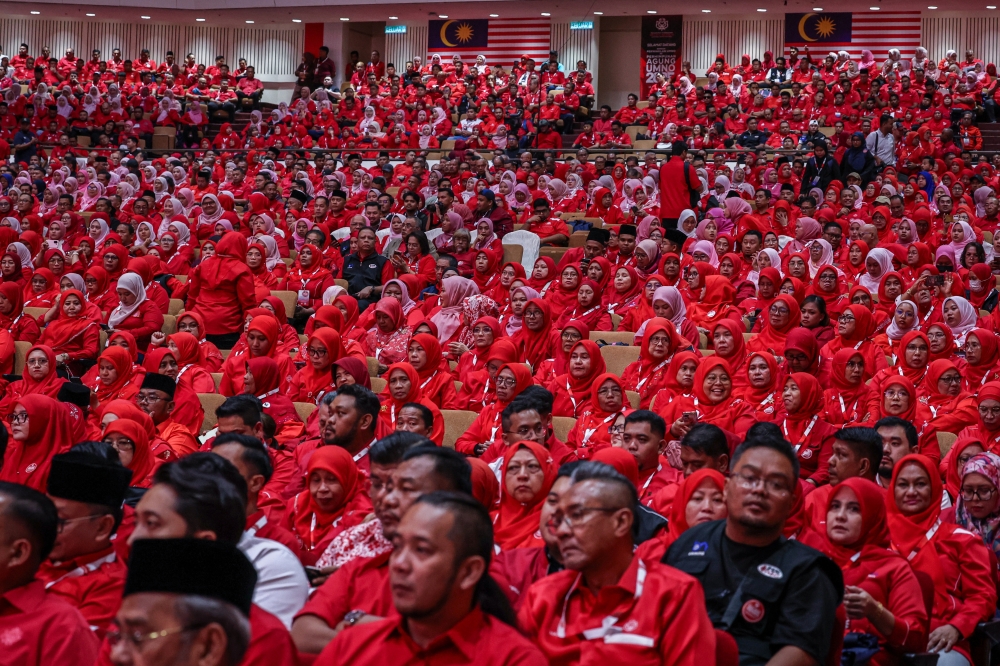
The Umno general assembly in Kuala Lumpur, starting September 9, confronts the party with crucial strategic decisions ahead of the next general election.
With recent electoral successes in states like Johor and Negeri Sembilan, Umno is poised to redefine its political alliances, particularly its complex relationships with Pakatan Harapan and PAS.
The assembly will explore key topics such as the Rumah Bangsa initiative for consolidating Malay unity and the potential electoral coalitions in forthcoming contests, including the strategically significant Melaka state election.
The assembly serves as a pivotal moment for Umno to reassess its position within Malaysia's dynamic political landscape.
KUALA LUMPUR, Sept 9 — Umno’s general assembly begins today with the party facing a question that has become increasingly difficult to avoid: what does it want to be when the next general election arrives?
The four-day gathering at the World Trade Centre Kuala Lumpur comes after Umno’s electoral gains in Johor and Negeri Sembilan, a push to rebuild its ranks through the Rumah Bangsa initiative and growing questions over whether its partnership with Pakatan Harapan (PH) can hold until the next general election.
It is also the party’s second general assembly this year. The gathering held in January was the postponed 2025 assembly, making this the first regular PAU of 2026.
Umno secretary-general Datuk Asyraf Wajdi Dusuki said delegates would be free to table motions on the party’s political direction and its cooperation with the unity government, putting the grassroots debate among the key things to watch at the four-day assembly.
Asyraf has also described the annual gathering as Umno’s “Hari Raya” — a time for its grassroots to come together.
But the assembly comes at a consequential juncture for Umno.
Its recent electoral successes have given the party renewed confidence, while its position in the unity government has become increasingly complicated by competing political interests within the coalition.
Three issues that are likely to loom over PAU 2026.
1. Rumah Bangsa and Malay unity
If there was one defining political message from Umno’s last assembly, it was the call to rebuild the party’s house.
Rumah Bangsa was unveiled as an effort to bring back former members and broaden Umno’s appeal, with party president Datuk Seri Ahmad Zahid Hamidi repeatedly stressing that the party’s doors remained open.
Eight months on, the initiative has become more than a slogan.
Umno said in June that 21,858 new and returning members had joined through the initiative, including former members of other Malay-based parties.
Party leaders have framed Rumah Bangsa as an effort to bring Malays together under one political roof, with Umno supreme council member Datuk Seri Ahmad Maslan describing its approach as “forgive and forget”.
The initiative has also opened the door to former leaders and members, reinforcing the idea that Umno wants to reclaim political ground lost during years of fragmentation within the Malay electorate.
That message is likely to continue at PAU 2026.
The message of Malay-Muslim unity is also likely to feature prominently, particularly as Umno’s ties with PAS have warmed following their cooperation in Negeri Sembilan.
2. PAS, PN and the limits of the unity government
In the 15th general election, PAS and Umno fought over the same Malay-Muslim electorate. Today, their relationship is considerably more complicated.
The two parties remain on opposite sides of federal politics, with Umno part of Prime Minister Datuk Seri Anwar Ibrahim’s unity government while PAS remains the dominant force within Perikatan Nasional (PN).
But Negeri Sembilan has created a new reality.
Barisan Nasional (BN) won 18 of the state’s 36 seats in the August election, while PN secured seven. The two coalitions subsequently agreed to work together to form the state administration.
For Umno delegates, that arrangement offers something more substantial than political speculation: a working example of BN and PN cooperation.
Recent gestures between Umno and PAS have added to the interest.
PAS has accepted Umno’s invitation to attend PAU 2026 after Umno leaders attended PAS’ muktamar, continuing a reciprocal thaw between parties that once regarded each other as direct electoral threats.
PAS president Tan Sri Abdul Hadi Awang has also defended Umno-PAS cooperation as necessary for Malay-Muslim unity, while Zahid has said new Malay-based parties should unite rather than divide the community.
The question now is whether that cooperation remains confined to individual states or becomes part of a wider electoral calculation ahead of GE16.
That question is particularly relevant because Umno’s other political partnership is showing signs of strain.
Zahid has called for GE16 to be held earlier, while Anwar has indicated that he is in no hurry to call the election. Differences between ministries controlled by the two leaders have also increasingly spilled into public view.
For Umno, the contradiction is becoming harder to ignore.
The party is helping govern the country alongside PH while simultaneously championing Malay unity and deepening contacts with PAS and PN.
That does not necessarily mean Umno is preparing to leave the unity government.
But PAU is where its grassroots get to test the limits of that arrangement and signal how they want the party to position itself when the next election comes.
3. Melaka: Defend, but with whom?
Then there is Melaka, where the next electoral test is already on the calendar.
The state government’s mandate expires on December 31.
BN enters the contest as the incumbent after winning 21 of the 28 seats in the 2021 election, with Umno holding the bulk of those seats.
For Umno, the objective is straightforward: defend.
The political formula for doing so is not.
Should BN seek to contest largely on its own strength? Should Umno continue working with PH? Or does the Negeri Sembilan arrangement provide a template for some form of cooperation with PN?
Zahid has already warned that the formula used in Johor and Negeri Sembilan cannot simply be replicated in Melaka, saying the state requires its own strategy.
He has tasked Melaka Chief Minister and state BN chairman Datuk Seri Ab Rauf Yusoh with negotiating with other parties, with the eventual strategy to be brought to the national leadership for consideration.
That leaves delegates with a question that could become one of the most politically sensitive at this year’s assembly: who should Umno want beside it?
PAS has already made clear that it sees an opportunity in Melaka.
The Islamist party has set a minimum target of 15 of the state’s 28 seats, putting it on a potential collision course with Umno unless some form of electoral understanding is reached.
That makes Melaka more than a state-level contest.
It could become the first major test of whether the political accommodation seen in Negeri Sembilan can be reproduced elsewhere, or whether Umno’s relationship with PH remains the more useful electoral arrangement.
Malaysia’s SMART team arrives in Nepal disaster zone, begins drone reconnaissance
Dzulkefly: Status of five aboard Flying Doctor Service helicopter still unknown after Sarawak crash
Turkish Airlines will be new Liverpool shirt sponsor in £300m deal
9月9日在吉隆坡召开的巫统大会将使该党面临下届大选前的关键战略决策。
凭借近期在柔佛州和森美兰州等地的选举胜利,巫统准备重新定义其政治联盟,特别是其与希望联盟和伊斯兰党之间复杂的关系。
大会将探讨一些关键议题,例如旨在巩固马来人团结的“民族之家”倡议,以及即将到来的选举中可能出现的选举联盟,包括具有重要战略意义的马六甲州选举。
这次大会对于巫统来说是一个关键时刻,需要重新评估其在马来西亚瞬息万变的政治格局中的地位。
吉隆坡,9月9日讯——巫统大会今天开幕,该党面临着一个越来越难以回避的问题:在下次大选到来时,它想成为什么样的人?
在吉隆坡世界贸易中心举行的为期四天的会议之前,巫统在柔佛州和森美兰州取得了选举胜利,并通过“民族之家”计划努力重建其队伍,同时,人们越来越质疑其与希望联盟(PH)的伙伴关系能否维持到下届大选。
这也是该党今年的第二次全体大会。1月份举行的大会是推迟的2025年大会,因此本次大会是2026年的第一次例行党代会。
巫统秘书长拿督阿斯拉夫·瓦吉迪·杜苏基表示,代表们可以自由地就该党的政治方向及其与团结政府的合作提出动议,这使得基层辩论成为为期四天的大会上值得关注的关键事项之一。
阿什拉夫还将这一年度集会描述为巫统的“开斋节”——是其基层党员团结起来的时刻。
但这次大会对巫统来说意义重大。
该党近期在选举中取得的成功使其信心大增,但与此同时,由于联盟内部各政治利益的竞争,该党在联合政府中的地位也变得越来越复杂。
2026 年 PAU 可能面临的三大问题。
1. Rumah Bangsa 和马来人团结
如果说巫统上届大会传达了一个明确的政治信息,那就是重建党的“家”。
Rumah Bangsa的推出是为了吸引前党员回归并扩大巫统的吸引力,该党主席拿督斯里阿末扎希哈米迪反复强调,该党的大门始终敞开。
八个月过去了,这项倡议已经不仅仅是一句口号了。
巫统在6月份表示,通过这项计划,已有21858名新成员和回归成员加入,其中包括其他马来族政党的前成员。
各政党领袖将“民族之家”定位为将马来人团结在同一个政治屋檐下的努力,巫统最高理事会成员拿督斯里艾哈迈德·马斯兰将其方法描述为“宽恕和遗忘”。
该举措也为前领导人和成员敞开了大门,强化了巫统希望重新夺回在马来选民多年分裂中失去的政治阵地的想法。
这一信息很可能在 PAU 2026 上继续传达。
马来穆斯林团结的信息也可能成为重点,尤其是在巫统与伊斯兰党在森美兰州合作之后,双方关系有所升温。
2. 伊斯兰党、国民联盟与联合政府的局限性
在第15届全国大选中,伊斯兰党和巫统争夺的是同一批马来穆斯林选民。如今,它们的关系要复杂得多。
这两个政党在联邦政治中仍然处于对立阵营,巫统是首相拿督斯里安华·易卜拉欣的联合政府成员,而伊斯兰党仍然是国民联盟(PN)内的主导力量。
但森美兰州创造了一个新的现实。
在8月份的选举中,国民阵线(BN)赢得了该州36个议席中的18个,而国盟(PN)则获得了7个。随后,这两个联盟同意合作组建州政府。
对于巫统代表来说,这种安排提供的不仅仅是政治投机,而是国阵和国盟合作的一个实际范例。
巫统和伊斯兰党最近的一些举动增加了人们的关注度。
在巫统领导人出席伊斯兰党大会后,伊斯兰党接受了巫统的邀请,将参加2026年伊斯兰党大会。这标志着曾经将对方视为直接选举威胁的两党关系持续缓和。
伊斯兰党主席丹斯里阿卜杜勒·哈迪·阿旺也为巫统与伊斯兰党的合作辩护,认为这是马来穆斯林团结的必要条件;而扎希德则表示,新的马来政党应该团结而不是分裂社群。
现在的问题是,这种合作是仅限于各个国家之间,还是会成为第 16 届全国大选前更广泛的选举考量的一部分。
这个问题尤其值得关注,因为巫统的其他政治伙伴也出现了紧张迹象。
扎希德呼吁提前举行第16届全国大选,而安华则表示他并不急于举行选举。两位领导人所掌控的各部委之间的分歧也日益公开化。
对巫统来说,这种矛盾越来越难以忽视。
该党与希望联盟共同执政,同时倡导马来人团结,并深化与伊斯兰党和国民联盟的联系。
但这并不一定意味着巫统准备退出联合政府。
但 PAU 正是基层民众检验这种安排的极限,并表明他们希望该党在下次选举时如何定位的地方。
3. 马六甲:需要防守,但与谁合作?
然后是马六甲,那里的下一次选举已经提上日程。
州政府的授权将于12月31日到期。
国阵以现任政党的身份参加此次选举,他们在 2021 年大选中赢得了 28 个席位中的 21 个,而巫统则占据了其中的大部分席位。
对巫统来说,目标很明确:防守。
实现这一目标的政治方案并不存在。
国阵是否应该主要依靠自身实力参选?巫统是否应该继续与希望联盟合作?或者森美兰州的合作模式是否为与国盟进行某种形式的合作提供了范例?
扎希德已经警告说,柔佛州和森美兰州使用的方法不能简单地复制到马六甲州,马六甲州需要自己的策略。
他已责成马六甲首席部长兼州国阵主席拿督斯里阿布·拉乌夫·尤索夫与其他各方进行谈判,最终的策略将提交给国家领导层审议。
这给代表们留下了一个问题,这个问题可能会成为今年大会上最具政治敏感性的问题之一:巫统应该选择谁作为自己的盟友?
伊斯兰党已经明确表示,它看到了马六甲的机遇。
该伊斯兰政党设定了至少赢得该州 28 个席位中的 15 个的目标,除非达成某种形式的选举谅解,否则它将与巫统发生潜在的冲突。
这使得马六甲的选举不仅仅是一场州级选举。
这可能成为对森美兰州政治妥协能否在其他地方复制,或者巫统与希望联盟的关系是否仍然是更有用的选举安排的第一个重大考验。
马来西亚SMART小组抵达尼泊尔灾区,开始无人机侦察
祖基菲里:砂拉越坠机事故中,飞行医生服务直升机上五人的状况仍不明
土耳其航空将以3亿英镑的价格成为利物浦队新的球衣赞助商。