Moscow sees opportunity in Greenland crisis, but fears expanded US Arctic presence莫斯科认为格陵兰危机蕴藏着机遇,但同时也担忧美国在北极地区的影响力不断扩大。
Russian officials and policy experts described the major row among Western allies as a double-edged sword.
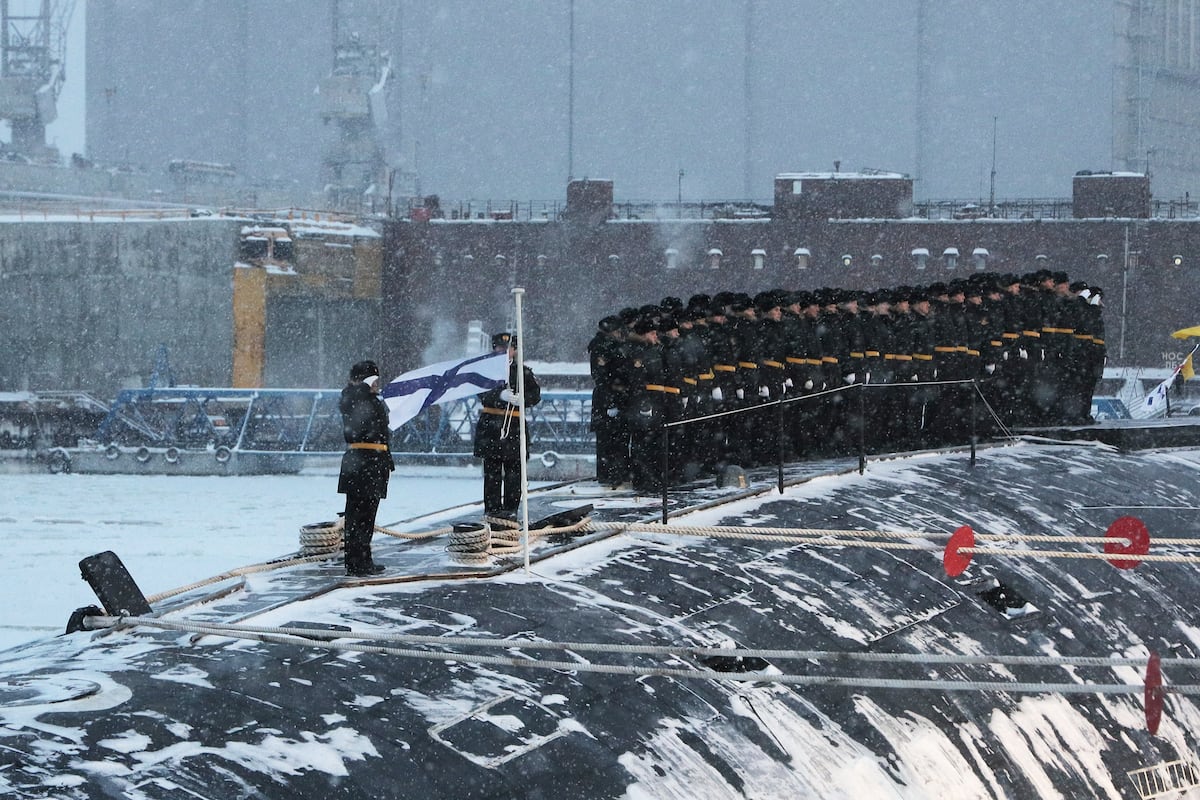
BERLIN — The Trump administration’s push to acquire Greenland has produced a carefully calibrated response from Moscow. An air of restraint in public comments masks more private concern over potential threats to Russian submarine operations, combined with satisfaction at widening cracks in the transatlantic alliance, according to analysts.
Russian officials and policy experts described the crisis as a double-edged sword, validating Moscow’s position on the primacy of power projection over international law, while potentially enabling a major expansion of U.S. military infrastructure in waters critical to Russia’s strategic deterrent.
“One of the most evident conclusions made here in Moscow by many politicians and analysts is that in this emerging world order, which is replacing the old one, might makes right, whether we like it or not,” said Andrey Kortunov, an expert with the Valdai Discussion Club and former director general of the Russian International Affairs Council. “It’s not about norms, but rather about your capabilities to achieve the goals you set for yourself.”
The Greenland episode represents “an entirely different level of realpolitik we haven’t seen arguably since the Suez crisis of 1956,” Kortunov added in an interview, noting that Trump targeted U.S. allies rather than adversaries. In the 50s, the United States intervened against its close allies Britain, France and Israel to stop an invasion of Egypt.
Strategic submarine access at risk
Beyond the geopolitical symbolism, Russian military planners harbor concrete concerns about what an enhanced U.S. presence in Greenland could mean for naval operations in the Atlantic.
“If the U.S. is really serious about upgrading the military infrastructure in Greenland, that might create certain problems for the Russian navy, especially if we are talking about strategic submarines located in the Barents Sea,” Kortunov said. “They might be denied free access to the North Atlantic Ocean.”
Russia’s Northern Fleet operates ballistic missile submarines from bases on the Kola Peninsula, with access to the Atlantic through the Norwegian Sea being a critical element of Moscow’s nuclear deterrent. Expanded U.S. surveillance and anti-submarine warfare capabilities operating from Greenland could complicate those operations.
Vladimir Barbin, Russia’s ambassador to Denmark, warned in January that “attempts to ensure U.S. national security at the expense of the interests of other nations may result in further deterioration of the situation in the Arctic, which Russia will take into account in its military planning.”
Alexander Vorotnikov, an Arctic researcher at Russia’s Presidential Academy, separately warned that U.S. control over Greenland “may negatively affect the development” of Russia’s Northern Sea Route.
Russia has sought to position itself as a key player in Arctic commercial shipping, which is becoming a more viable and cost-effective way to connect Asia to Europe as global warming melts polar ice caps. The Northern Sea Route is one of the primary connections that may become a competitor to traditional routes through the Suez Canal.
Restrained but watchful
Official Russian statements have maintained studied neutrality while emphasizing Moscow’s Arctic interests and criticizing the U.S. for undermining international norms, echoing similar statements by Washington around Russia’s 2022 invasion of Ukraine.
Kremlin spokesperson Dmitry Peskov called Trump’s Greenland push “extraordinary from the perspective of international law” and noted Trump “has indicated international law is not for him.” Russian officials are “monitoring this rather significant development attentively,” Peskov said in early January 2025, a year before the peak of the recent crisis, though he added it was “confined to rhetoric” at the time.
A year later, Foreign Minister Sergey Lavrov changed the Russian government’s tone somewhat, asserting that “Greenland is not inherently a part of Denmark” and that Danish governance represents a “remnant of colonial history.” However, Lavrov also pushed back against the Trump administration’s claims of Russian threats to Greenland, which were used by the White House to justify a move on the island, saying “we have no connection to that.”
President Vladimir Putin has largely stayed above the fray, with Kortunov noting that the official line remains: “This is not our problem, it’s a problem between the U.S. and Europe, and it’s up to them to fix it.”
Russian experts generally dismissed Trump administration assertions about Chinese and Russian naval threats to Greenland as pretexts for expansion.
“I think we should take it with a grain of salt. I don’t see any actual evidence that would support this statement,” Kortunov said of the claim from the White House that the seas around Greenland were “swarming” with Russian and Chinese ships. “Greenland is not a part of Russia’s sphere of interest.”
Konstantin Blokhin, an analyst with the Center for Studies of Security Problems at the Russian Academy of Science, characterized Trump’s rhetoric as “probably less about the purchase [of Greenland] than beginning negotiations with Denmark about hammering out better conditions for deployment of American military infrastructure” — calling it “a classic negotiation technique.”
Transatlantic divisions as a strategic win
Seeing deep rifts among the Kremlin’s key foreign adversaries manifest so quickly is sure to have sparked at least some feelings of glee in Moscow. Analysts and commentators see the crisis as validation of Moscow’s long-term strategic bet on Western disunity.
U.S. Vice President JD Vance tours the U.S. military's Pituffik Space Base in Greenland on March 28, 2025. (Photo by Jim Watson/POOL/AFP via Getty Images)
“At least in the situational sense, this conflict can play into the Kremlin’s hands,” Kortunov said. “Many [in Moscow] believe that Trump is crossing certain red lines, but at the same time, if it is a crisis that can weaken NATO, then why should Russia stand for NATO unity?”
Russia’s foreign minister Lavrov himself framed the dispute as posing a “deep crisis for NATO” that raises questions about “the alliance’s preservation as a single military-political bloc.”
The episode also feeds Russian narratives about spheres of influence, with some Moscow voices noting that if the U.S. can invoke the Monroe Doctrine to justify claims over Greenland, Russia’s assertions about its “near abroad” gain legitimacy. Barbin, the Russian ambassador to Denmark, specifically noted that the updated U.S. National Security Strategy “revives the Monroe Doctrine, providing for U.S. responsibility for the situation in the Western Hemisphere.”
However, Kortunov cautioned that the crisis also reveals the limits of the multipolar world that Russian strategists and policy thinkers have long predicted. Europe’s inability to deter potential U.S. actions demonstrates “the EU is not an independent global center of power; it is still too dependent on the United States,” he said. The multipolar world order oft-professed in Russian academic papers is still in the making, the takeaway is.
Indeed, a common line in many Russian policy papers is that a geopolitically independent Europe may find that many of its interests align more closely with Russia than with the United States. Both sides have things to offer that the other side needs, and the EU was Russia’s largest trading partner before imposition of sanctions in the aftermath of the 2022 invasion of Ukraine.
Arctic militarization likely to intensify
While official responses downplayed the significance of the Greenland spat to Moscow’s interests, the episode may have accelerated Russian military investments in the Arctic.
“I can imagine that this crisis might be yet another motivation to invest heavier in the Arctic region of the Russian Federation just to secure Russia against various uncertainties and potential problems looming on the horizon,” Kortunov said. “There are people who suggested that in a couple of years from now the Arctic strategy of the U.S. might constitute a formidable challenge to the Russian Federation.”
Ilya Kravchenko, director of the Russian Institute of Strategic Studies, said that “it is now a pervasive opinion in Washington that the Arctic region should be developed much more intensively to hinder Russia’s advancements.”
Russia has already invested heavily in Arctic military infrastructure over the past decade, reopening Soviet-era bases and deploying new air-defense and coastal-defense systems across its northern coastline. Russia’s Arctic coastline constitutes more than 40 percent of the global total, and the region hosts more residents than all other Arctic nations combined. Several major Russian cities lie within the Arctic Circle.
Northern Sea Route tensions
Beyond immediate military concerns, Russian strategists worry about future conflicts over Arctic maritime routes as climate change opens new passages.
“There is a controversy about the Northern Sea Route, because Russia claims ownership of large areas of the Arctic Ocean and considers the Northern Sea Route as legally Russia’s domestic [transportation link],” Kortunov said. “With the Arctic ice melting, with the U.S. settled in Greenland, there might be a contradiction between U.S. intentions to find alternative routes and the Russian claims on these parts of the ocean.”
Moscow has long insisted the Northern Sea Route — running along Russia’s Arctic coast from the Barents Sea to the Bering Strait — falls under Russian jurisdiction, requiring foreign vessels to seek permission and pay fees for passage. Western nations contest this interpretation, viewing much of the route as international waters.
Mixed views on cooperation
Despite the tensions, some Russian experts also see potential for cooperation if the U.S. becomes more invested in Arctic governance.
“If the U.S. were to become a true Arctic nation with strategic interests in this part of the world, that might constitute certain opportunities for cooperation between Moscow and Washington,” Kortunov said, citing resource exploration, climate change management and indigenous peoples’ issues.
Work of the Arctic Council – a forum for regional stakeholders established in 1996 – has been “at least partially paralyzed” since 2022, he noted. Moscow may view expanded U.S. Arctic engagement as an opening for alternative dialogue channels.
However, that scenario depends on avoiding what Kortunov described as the “danger that the Arctic region will be sucked into this geopolitical competition ,” which “would clearly be detrimental to the future of the region.”
Russian officials have called for maintaining Arctic cooperation despite broader geopolitical tensions. Moscow’s ambassador in Oslo in 2025 urged policy “on the basis of international law, the principles of mutual consideration of interests, and inclusive dialogue.”
Russian views on Trump remain divided
The Greenland crisis has not produced consensus in Moscow about Trump’s presidency, with commentators split between those who see him as a potential partner and those who view him as an unpredictable threat.
“There are many Trump fans who believe Trump is a great guy who was able to stand up against neoliberalism, and basically he defends traditional values and therefore he is a natural ally,” Kortunov said. “And there is another group of people who are very critical of Trump — who see him as a typical Yankee billionaire who goes after independent nations and constitutes a more serious threat to the Russian Federation than, for example, Biden did before.”
This division extends to debates over spheres of influence, with some arguing that major powers have the right to dominate their neighbors, while others advocate a more restrained approach that balances smaller nations’ sovereignty with great-power security concerns, Kortunov explained.
The ultimate Russian verdict on the U.S. president, Kortunov said, “will depend on whether Trump is instrumental in his attempts to end the Russian-Ukrainian conflict. I think that will be the decisive factor in how Moscow ultimately views the Trump presidency.”
Linus Höller is Defense News' Europe correspondent and OSINT investigator. He reports on the arms deals, sanctions, and geopolitics shaping Europe and the world. He holds master’s degrees in WMD nonproliferation, terrorism studies, and international relations, and works in four languages: English, German, Russian, and Spanish.
柏林——特朗普政府试图收购格陵兰岛的举动,引发了莫斯科精心策划的回应。分析人士指出,公开场合的克制态度掩盖了私下里对俄罗斯潜艇行动可能受到威胁的担忧,以及对跨大西洋联盟裂痕日益加深的欣喜。
俄罗斯官员和政策专家将这场危机描述为一把双刃剑,一方面证实了莫斯科关于权力投射高于国际法的立场,另一方面也可能使美国在对俄罗斯战略威慑至关重要的水域大幅扩张军事基础设施。
“许多政治家和分析人士在莫斯科得出的最明显的结论之一是,在这个正在取代旧秩序的新兴世界秩序中,强权即公理,无论我们是否喜欢,”瓦尔代国际辩论俱乐部专家、俄罗斯国际事务委员会前总干事安德烈·科尔图诺夫说。“这无关乎规范,而是关乎你实现自己设定目标的能力。”
科尔图诺夫在一次采访中补充道,格陵兰岛事件代表了一种“自1956年苏伊士运河危机以来我们从未见过的全新层面的现实政治”,并指出特朗普的目标是美国的盟友而非对手。上世纪50年代,美国曾出手干预其亲密盟友英国、法国和以色列对埃及的入侵。
战略潜艇通道面临风险
除了地缘政治象征意义之外,俄罗斯军事策划者还对美国在格陵兰岛加强存在可能对大西洋海军行动产生的影响抱有切实的担忧。
科尔图诺夫表示:“如果美国真的打算认真升级格陵兰岛的军事基础设施,这可能会给俄罗斯海军带来一些问题,特别是如果我们谈论的是部署在巴伦支海的战略潜艇的话。他们可能会被剥夺自由进入北大西洋的权利。”
俄罗斯北方舰队从科拉半岛的基地部署弹道导弹潜艇,通过挪威海进入大西洋是莫斯科核威慑力量的关键组成部分。美国从格陵兰岛部署的不断增强的监视和反潜作战能力可能会使这些行动变得复杂。
俄罗斯驻丹麦大使弗拉基米尔·巴尔宾在1月份警告说,“以牺牲其他国家的利益为代价来确保美国国家安全的企图,可能会导致北极局势进一步恶化,俄罗斯将在其军事计划中考虑到这一点。”
俄罗斯总统科学院的北极研究员亚历山大·沃罗特尼科夫也发出警告,美国对格陵兰岛的控制“可能会对俄罗斯北方海路的开发产生负面影响”。
随着全球变暖导致极地冰盖融化,北极商业航运正逐渐成为连接亚洲和欧洲的一种更可行、更经济的方式,俄罗斯也力图将自身定位为北极商业航运的关键参与者。北方海路是可能与苏伊士运河传统航线形成竞争的主要通道之一。
克制但警惕
俄罗斯官方声明一直保持着谨慎的中立立场,同时强调莫斯科的北极利益,并批评美国破坏国际准则,这与华盛顿就俄罗斯 2022 年入侵乌克兰发表的类似声明遥相呼应。
克里姆林宫发言人德米特里·佩斯科夫称特朗普推进格陵兰岛事务“从国际法角度来看非同寻常”,并指出特朗普“已经表明国际法对他不利”。佩斯科夫在2025年1月初表示,俄罗斯官员正在“密切关注这一相当重要的事态发展”,当时距离近期危机的高峰期还有一年,但他补充说,当时这“仅限于言辞层面”。
一年后,俄罗斯外长谢尔盖·拉夫罗夫稍微改变了俄罗斯政府的语气,声称“格陵兰并非丹麦的固有领土”,丹麦的治理方式是“殖民历史的遗留产物”。然而,拉夫罗夫也反驳了特朗普政府关于俄罗斯威胁格陵兰的说法,白宫曾以此为由,为在格陵兰采取行动辩护。拉夫罗夫表示,“我们与此没有任何关系”。
俄罗斯总统弗拉基米尔·普京基本上置身事外,科尔图诺夫指出,官方说法仍然是:“这不是我们的问题,这是美国和欧洲之间的问题,应该由他们来解决。”
俄罗斯专家普遍认为,特朗普政府关于中国和俄罗斯对格陵兰岛构成海军威胁的说法是扩张的借口。
“我认为我们应该对此持保留态度。我没有看到任何实际证据支持这种说法,”科尔图诺夫就白宫声称格陵兰岛附近海域充斥着俄罗斯和中国船只的说法表示。“格陵兰岛并不属于俄罗斯的势力范围。”
俄罗斯科学院安全问题研究中心分析师康斯坦丁·布洛欣将特朗普的言论描述为“与其说是关于购买格陵兰岛,不如说是关于开始与丹麦谈判,以敲定更好的条件来部署美国军事基础设施”——称其为“一种经典的谈判技巧”。
跨大西洋划分是一项战略胜利
看到克里姆林宫的主要外国对手之间如此迅速地出现深刻裂痕,莫斯科肯定至少会感到一丝欣喜。分析人士和评论员认为,这场危机验证了莫斯科长期以来押注西方分裂的战略策略是正确的。
2025年3月28日,美国副总统JD Vance参观了位于格陵兰岛的美军皮图菲克太空基地。(图片来源:Jim Watson/POOL/AFP via Getty Images)
科尔图诺夫说:“至少从形势上看,这场冲突可能正中克里姆林宫的下怀。莫斯科很多人认为特朗普正在越过某些红线,但与此同时,如果这场危机可能削弱北约,那么俄罗斯为什么要维护北约的团结呢?”
俄罗斯外交部长拉夫罗夫本人将这场争端定性为“北约面临的深刻危机”,并质疑“北约能否继续作为一个单一的军事政治集团存在”。
这一事件也迎合了俄罗斯关于势力范围的论述,一些莫斯科人士指出,如果美国可以援引门罗主义来为其对格陵兰岛的主权声索辩护,那么俄罗斯关于其“近邻”的主张就获得了合法性。俄罗斯驻丹麦大使巴尔宾特别指出,更新后的美国国家安全战略“重拾门罗主义,赋予美国对西半球局势的责任”。
然而,科尔图诺夫警告说,这场危机也暴露了俄罗斯战略家和政策思想家长期以来预测的多极世界的局限性。他表示,欧洲无力阻止美国可能采取的行动表明,“欧盟并非独立的全球权力中心;它仍然过于依赖美国”。由此可见,俄罗斯学术论文中经常提及的多极世界秩序仍在形成之中。
事实上,许多俄罗斯政策文件中都存在一个共同的观点,即一个地缘政治独立的欧洲可能会发现,其许多利益与俄罗斯的契合度高于与美国的契合度。双方都能为对方提供所需之物,而且在2022年入侵乌克兰后实施制裁之前,欧盟一直是俄罗斯最大的贸易伙伴。
北极军事化进程或将加剧
尽管官方回应淡化了格陵兰岛争端对莫斯科利益的重要性,但这一事件可能加速了俄罗斯在北极地区的军事投资。
科尔图诺夫表示:“我可以想象,这场危机或许会促使俄罗斯加大对北极地区的投资,以确保俄罗斯免受各种不确定因素和潜在问题的威胁。有人认为,几年后,美国的北极战略可能会对俄罗斯构成严峻挑战。”
俄罗斯战略研究所所长伊利亚·克拉夫琴科表示,“现在华盛顿普遍认为,应该更加密集地开发北极地区,以阻碍俄罗斯的发展。”
过去十年,俄罗斯已在北极军事基础设施方面投入巨资,重新启用苏联时期的军事基地,并在其北部海岸线部署了新的防空和海岸防御系统。俄罗斯的北极海岸线占全球总长度的40%以上,该地区的人口数量超过其他所有北极国家人口的总和。俄罗斯的几个主要城市位于北极圈内。
北方海路紧张局势
除了眼前的军事考量之外,俄罗斯战略家还担心,随着气候变化开辟新的航道,未来可能会引发北极海上航线的冲突。
科尔图诺夫表示:“北方海航道存在争议,因为俄罗斯声称对北冰洋大片海域拥有主权,并将北方海航道视为俄罗斯的国内运输通道。随着北极冰盖融化,以及美国在格陵兰岛的定居,美国寻求替代航线的意图与俄罗斯对这些海域的主权声索之间可能存在矛盾。”
莫斯科一直坚称,从巴伦支海到白令海峡、沿俄罗斯北极海岸线延伸的北方海航线属于俄罗斯管辖范围,外国船只必须获得许可并支付通行费才能通过。西方国家对此提出异议,认为该航线的大部分区域属于国际水域。
对合作的看法不一
尽管存在紧张局势,但一些俄罗斯专家也认为,如果美国加大对北极治理的投入,双方仍有合作的可能。
科尔图诺夫表示:“如果美国成为一个真正的北极国家,并在世界这一地区拥有战略利益,那么莫斯科和华盛顿之间可能会出现一些合作机会。”他列举了资源勘探、气候变化管理和土著人民问题等例子。
他指出,北极理事会(一个成立于1996年的区域利益攸关方论坛)的工作自2022年以来“至少部分陷入瘫痪”。莫斯科可能将美国扩大在北极地区的参与视为开辟其他对话渠道的契机。
然而,这一设想取决于能否避免科尔图诺夫所描述的“北极地区被卷入这场地缘政治竞争的危险”,而这“显然会对该地区的未来造成损害”。
尽管地缘政治局势日益紧张,俄罗斯官员仍呼吁维持北极合作。莫斯科驻奥斯陆大使在2025年敦促制定“以国际法、利益互惠原则和包容性对话为基础”的政策。
俄罗斯对特朗普的看法仍然存在分歧。
格陵兰危机并未在莫斯科引发对特朗普总统任期的共识,评论员们意见不一,有人认为他是潜在的合作伙伴,也有人认为他是不可预测的威胁。
科尔图诺夫说:“很多特朗普的支持者认为特朗普是个伟大的人物,他能够挺身对抗新自由主义,捍卫传统价值观,因此是天然的盟友。但也有另一部分人对特朗普持非常批判的态度——他们认为他是一个典型的美国亿万富翁,攻击独立国家,对俄罗斯联邦构成的威胁比拜登之前更大。”
科尔图诺夫解释说,这种分歧也延伸到了关于势力范围的辩论中,一些人认为大国有权支配其邻国,而另一些人则主张采取更为克制的做法,在小国主权和大国安全考虑之间取得平衡。
科尔图诺夫表示,俄罗斯对美国总统的最终评价“将取决于特朗普在结束俄乌冲突的努力中是否发挥了重要作用。我认为这将是莫斯科最终如何看待特朗普总统任期的决定性因素。”
林努斯·霍勒是《防务新闻》的欧洲记者和开源情报调查员。他报道影响欧洲乃至全球的军火交易、制裁和地缘政治。他拥有大规模杀伤性武器不扩散、恐怖主义研究和国际关系三个硕士学位,并精通英语、德语、俄语和西班牙语四种语言。