What’s the spending plan for sixth-gen fighters around the world?全球第六代战斗机的支出计划是什么?
Opinion: Tamarack Defense offers a look at funding and delivery efforts for the future combat aircraft.
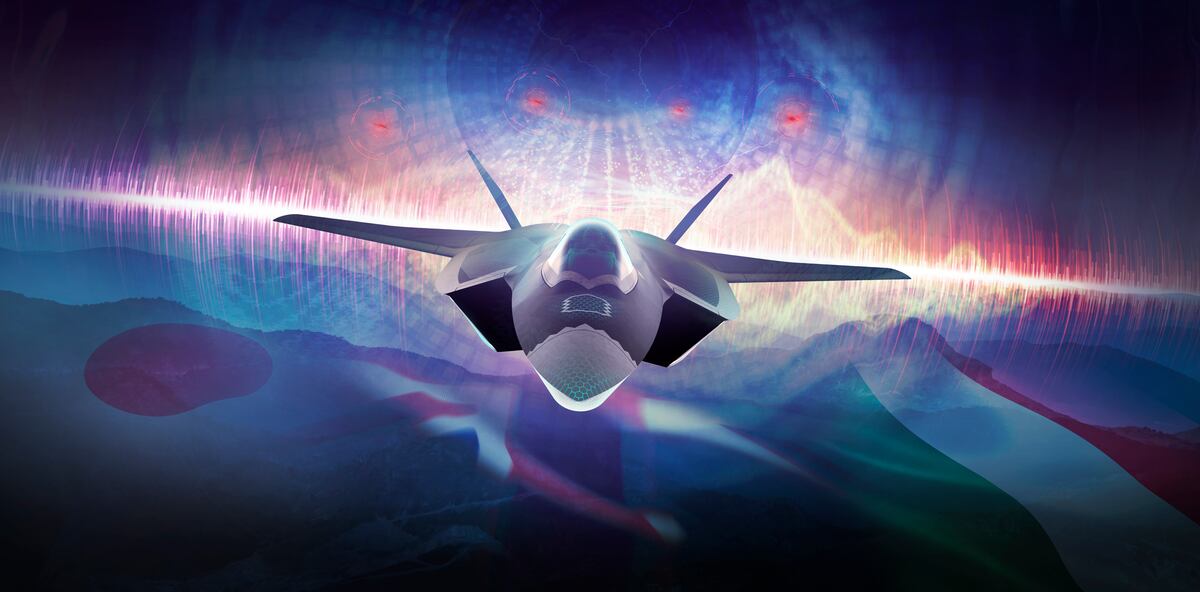
The latest Future Years Defense Program, for fiscal 2025, shows continued support within the Pentagon for dramatic growth in spending on so-called sixth-generation aircraft , most prominently including the Air Force’s Next Generation Air Dominance and the Navy’s F/A-XX programs . At the same time, enthusiasm continues in Europe and Asia for another competing pair of sixth-gen developments, notably the French-German-Spanish Future Combat Air System and the British-Japanese-Italian Global Combat Air Programme .
Taken together, these three major developments — coupled with the collaborative combat aircraft intended to accompany them — are expected to drive $70 billion in probability-weighted spending between 2024 and 2030, according to Tamarack Defense’s military aircraft market forecast.
While production deliveries by 2030 for any of the major platforms are expected to be slim, we can see substantial increases in research and development spending across the board through the period. In the U.S., sixth-gen budgets grow from $4 billion in FY24 to $12.6 billion in FY29, the last year of the Future Years Defense Program — a total of $40.7 billion. Of this amount, roughly 91% is for research, development, test and evaluation. As designs mature, spending is expected to increase commensurately.
Source: Tamarack Defense
Tamarack Defense anticipates collaborative combat aircraft, or CCA, deliveries will take place earlier and in higher volumes than the larger platforms to which they are tied. In total, Tamarack Defense’s current factored production forecast across the U.S. Air Force’s and U.S. Navy’s CCA programs anticipates 255 deliveries by 2030, and 950 by 2033.
Outside the U.S., Tamarack Defense projects minimal production deliveries, but steady growth in development activity, with total contractor-available funding on the order of $2 billion to $3 billion per year for sixth-gen programs. Production deliveries for these programs remain beyond the 2030 horizon, but early prototypes are expected within the medium-term research and development plan.
Logan Slone is a co-founder of Tamarack Defense, a data analytics and advisory firm.
最新的《未来国防计划》(2025财年)显示,五角大楼继续支持大幅增加所谓第六代战机的研发投入,其中最引人注目的是空军的“下一代空中优势”计划和海军的F/A-XX计划。与此同时,欧洲和亚洲对另外两项竞争性的第六代战机研发项目也充满热情,分别是法德西联合研发的“未来作战空中系统”和英日意联合研发的“全球作战空中计划”。
根据塔玛拉克防务公司 (Tamarack Defense) 的军用飞机市场预测,这三项重大发展,加上计划与之配套的协同作战飞机,预计将在 2024 年至 2030 年间推动 700 亿美元的概率加权支出。
尽管预计到2030年,各主要平台的量产交付量都将十分有限,但我们可以预见,在此期间,所有领域的研发支出都将大幅增长。在美国,第六代战机的预算从2024财年的40亿美元增长到2029财年的126亿美元,后者是“未来国防计划”的最后一年,总预算达到407亿美元。其中,约91%用于研发、测试和评估。随着设计日趋成熟,预计相关支出也将相应增加。
来源:塔玛拉克防务公司
塔玛拉克防务公司预计,协同作战飞机(CCA)的交付时间将早于与其配套的大型平台,且交付数量也将更高。塔玛拉克防务公司目前对美国空军和海军CCA项目总产量的预测显示,到2030年将交付255架,到2033年将交付950架。
塔玛拉克防务公司预计,除美国以外,第六代战机项目的产量交付量将非常有限,但研发活动将稳步增长,承包商每年可获得的资金总额约为20亿至30亿美元。这些项目的产量交付仍需等到2030年以后,但预计在中期研发计划中将出现早期原型机。
Logan Slone 是数据分析和咨询公司 Tamarack Defense 的联合创始人。