Norway to spend $6.4 billion on two more submarines, long-range strike挪威将斥资64亿美元增购两艘潜艇,用于远程打击
Norway will help finance a second production line in Germany to ensure the new submarines can be built quickly enough.
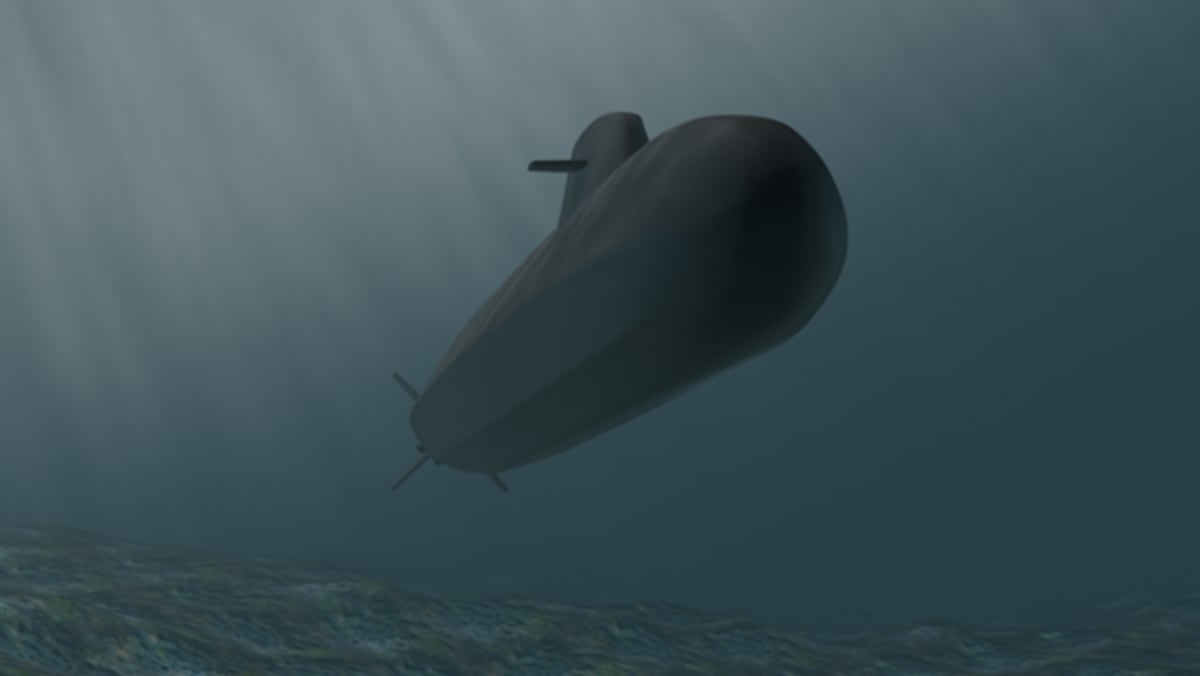
PARIS — Norway plans to spend 65 billion Norwegian kroner, or $6.4 billion, to buy two additional submarines on top of four already ordered from Germany’s TKMS, as well as acquire a long-range precision strike capability for the Army.
The government proposes to parliament to increase the cost framework for Norway’s submarine program by 46 billion kroner to cover the expense of adding two boats, it said in a statement on Friday. Norway will help finance a second production line in Germany to ensure the new submarines can be built quickly enough.
The Norwegian plans come amid ongoing Russian provocations including airspace violations of NATO allies, and worries that Russia will shift attention to the Baltic region after Ukraine. President Vladimir Putin was quoted as saying this week his country was ready for war with Europe should the continent seek a fight.
“Norway is a coastal and maritime nation, and submarines are absolutely central to the defense of our country,” Defense Minister Tore O. Sandvik said in a statement. “With six submarines, the armed forces will be able to operate more vessels in more locations at any given time. This will have a strong deterrent effect on any potential adversary.”
The country is seeing increased activity from Russian forces in the North Atlantic and the Barents, the minister said. Additional submarines will help strengthen NATO’s overall ability to ensure control and defense in the North Atlantic and the northern areas, according to Sandvik.
“As NATO’s eyes and ears in the north, this places greater demands on our ability to show presence, monitor, and deter in our neighboring areas,” Sandvik said. “In this context, submarines are absolutely indispensable.”
In neighboring Denmark, the country’s Arctic commander warned that he expects Russia to turn to arming in the High North if and when the Ukraine war ends, in an interview published this week .
The so-called Bear Gap in the waters north of Norway, between Svalbard and the Norwegian mainland, is considered a key transit area for Russian ballistic-missile submarines moving from the relatively shallow waters of the Barents Sea to the deeper waters of the Norwegian Sea and the Atlantic Ocean.
Norway earlier this year agreed to buy at least five British-made Type-26 frigates , which are optimized for anti-submarine warfare, in a deal worth around $13.5 billion. The United Kingdom and Norway earlier this week announced an agreement to operate a joint fleet of the frigates to hunt Russian submarines and protect the North Atlantic.
Two of the four submarines previously ordered by Norway from TKMS in 2021 are under construction in Germany, with the first expected to be delivered in 2029, the government said.
The unit price of the submarines and associated weapon systems has increased as a result of critical raw materials and equipment becoming more expensive from when the contract for the first four submarines was signed in 2021, Norway said. Weapon systems and upgrades for the six submarines are also adding to the cost, as well as an exchange-rate impact, according to the government.
The government is also proposing to spend 19 billion kroner on long-range precision fires for the Army that are able to hit targets up to a distance of 500 kilometers, without providing details on what equipment Norway plans to buy.
The proposed budget includes launchers and missiles as well as training and support systems, the government said.
“We live in increasingly turbulent times, and it is important that we have defense capabilities that can deter a potential adversary,” Sandvik said. “Long-range precision weapons have a deterrent effect because they can strike targets deep inside an adversary’s territory if necessary.”
Denmark said in September it needed long-range strike weapons to strengthen its defense posture as well as the collective deterrence of NATO, with details on the planned systems still to be decided.
Rudy Ruitenberg is a Europe correspondent for Defense News. He started his career at Bloomberg News and has experience reporting on technology, commodity markets and politics.
巴黎——挪威计划斥资 650 亿挪威克朗(约合 64 亿美元)从德国 TKMS 公司购买两艘潜艇,此前该公司已向德国 TKMS 公司订购了四艘潜艇,此外,挪威还将为陆军购置远程精确打击能力。
挪威政府周五发表声明称,政府已向议会提议将挪威潜艇项目的成本框架增加460亿克朗,以支付新增两艘潜艇的费用。挪威还将资助在德国建设第二条生产线,以确保新潜艇能够尽快建造完成。
挪威的这项计划出台之际,正值俄罗斯持续挑衅,包括侵犯北约盟国领空,以及人们担心俄罗斯在乌克兰事件后会将注意力转向波罗的海地区。据报道,俄罗斯总统弗拉基米尔·普京本周表示,如果欧洲大陆挑起战争,俄罗斯已做好与欧洲开战的准备。
挪威国防部长托雷·桑德维克在一份声明中表示:“挪威是一个沿海和海洋国家,潜艇对我国国防至关重要。有了六艘潜艇,武装部队就能在任何时候在更多地点部署更多舰艇。这将对任何潜在对手产生强大的威慑作用。”
这位部长表示,俄罗斯军队在北大西洋和巴伦支海的活动日益频繁。山特维克公司认为,增派潜艇将有助于加强北约在北大西洋和北部地区的控制和防御能力。
桑德维克表示:“作为北约在北方的耳目,这要求我们在周边地区展现存在、监视和威慑的能力更高。在这种情况下,潜艇绝对不可或缺。”
在邻国丹麦,该国北极地区指挥官在本周发表的一次采访中警告说,如果乌克兰战争结束,他预计俄罗斯将转向在北极地区部署武器。
位于挪威北部海域,介于斯瓦尔巴群岛和挪威大陆之间的所谓“熊峡”被认为是俄罗斯弹道导弹潜艇从相对较浅的巴伦支海前往较深的挪威海和大西洋的重要过境区域。
今年早些时候,挪威同意购买至少五艘英国制造的26型护卫舰,该舰专为反潜作战而优化,交易金额约为135亿美元。本周早些时候,英国和挪威宣布达成协议,将联合组建一支护卫舰舰队,用于猎杀俄罗斯潜艇并保卫北大西洋。
挪威政府表示,挪威此前于 2021 年向 TKMS 订购的四艘潜艇中有两艘正在德国建造,第一艘预计将于 2029 年交付。
挪威方面表示,由于关键原材料和设备价格上涨,潜艇及其相关武器系统的单价有所增加。这些成本的上涨主要源于2021年签署首批四艘潜艇合同时的成本。挪威政府还指出,六艘潜艇的武器系统和升级改造以及汇率波动也推高了成本。
政府还提议斥资 190 亿克朗为陆军购置远程精确火力装备,使其能够打击 500 公里外的目标,但没有提供挪威计划购买哪些装备的细节。
政府表示,拟议预算包括发射器和导弹,以及训练和支持系统。
“我们生活在一个日益动荡的时代,拥有能够威慑潜在对手的防御能力至关重要,”桑德维克说。“远程精确武器具有威慑作用,因为必要时它们可以打击敌方领土深处的目标。”
丹麦在9月份表示,它需要远程打击武器来加强其防御态势以及北约的集体威慑力,但有关计划系统的详情仍有待确定。
鲁迪·鲁伊滕贝格是《防务新闻》的欧洲记者。他的职业生涯始于彭博新闻社,拥有报道科技、大宗商品市场和政治方面的经验。