Five-hour queues, soaring prices: Mongolia’s fuel crisis puts energy security in focus五小时排队、价格飙升:蒙古燃料危机凸显能源安全问题
BAGAKHANGAI, Sept 8 — After a five-hour wait for petrol, Mongolian pensioner Nasanjargal is still 10 places from the pump, with dozens of cars behind him in a queue snaking...
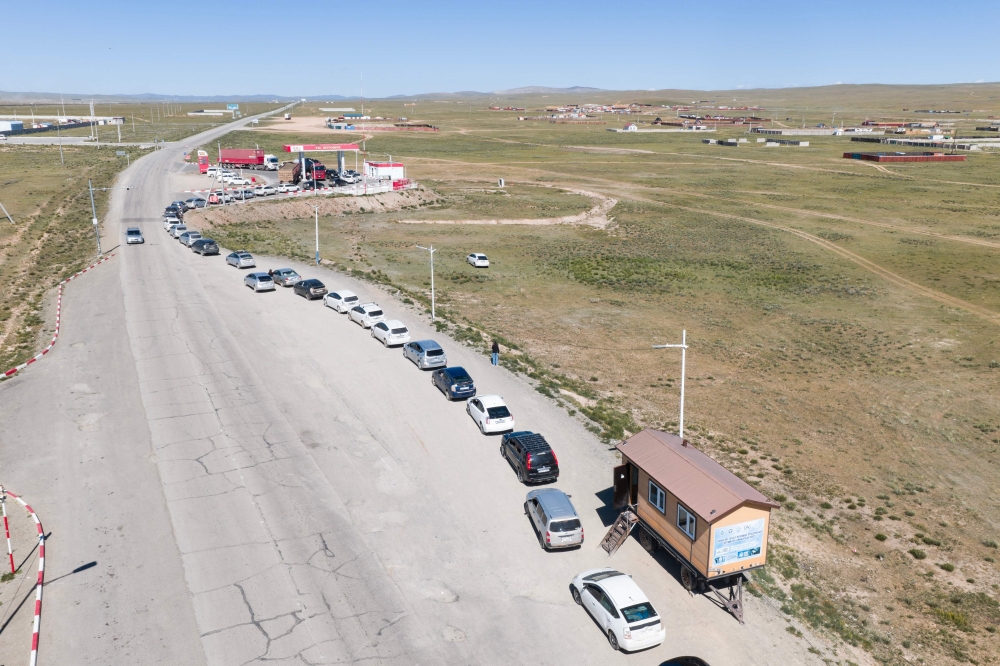
Mongolia is grappling with a severe fuel shortage due to disruptions in Russian oil supplies, compounded by Ukrainian strikes on Russian facilities.
This has highlighted the country's energy dependence on imports and prompted the government to take measures like rationing and exploring alternative suppliers in South Korea and China.
The crisis has significantly affected logistics, with rising petrol prices impacting transportation and everyday life, particularly for rural communities reliant on gasoline for essential activities.
Efforts are underway to diversify fuel sources and develop a domestic oil refinery, while long-term solutions may require a shift towards electrification.
BAGAKHANGAI, Sept 8 — After a five-hour wait for petrol, Mongolian pensioner Nasanjargal is still 10 places from the pump, with dozens of cars behind him in a queue snaking into the arid steppe.
“Fuel is unavailable, there are huge queues everywhere,” he told AFP from his motionless Toyota sedan after a one-and-a-half hour drive from the capital Ulaanbaatar.
Sandwiched between Russia and China, landlocked Mongolia has historically imported more than 95 per cent of its petrol from its vast northern neighbour.
But Ukrainian strikes on Russian oil facilities have disrupted supplies in recent months, triggering a relentless fuel shortage that has depleted Mongolia’s limited stockpiles and raised questions about its energy security.
The shortages have roiled logistics, lifted costs and ruined the plans of many Mongolians accustomed to taking advantage of the short summer season with a road trip in the picturesque countryside.
Nasanjargal, a former police officer who goes by one name, said he was “out of options”.
“I headed out this way hoping things might be better out in the rural areas,” he said, his young granddaughter shifting impatiently in the back seat.
“It’s the same story everywhere.”
The prolonged crisis has increased pressure on Mongolian authorities to ensure unfettered supply of fuel.
Government responses have included daily individual caps on fuel purchases, a ban on stockpiling and an alternating licence-plate scheme intended to reduce the number of cars filling up.
But the rationing has frustrated many ordinary citizens, with Nasanjargal telling AFP that the lines are “very troublesome and extremely difficult overall”.
Beyond crowded Ulaanbaatar—notorious for its daily traffic—fuel shortages present other challenges for rural, tourism-dependent regions.
Munkhchuluun Samdannyam, the governor of central Dundgovi province, told AFP that his local government’s “first priority” was the needs of tourists and herders.
“Under Gobi (Desert) conditions, herders do not draw water from wells by hand. They mostly use motors and pumps.
“And to operate those motors, gasoline is necessary,” Munkhchuluun said on the sidelines of an international summit on desertification hosted by Mongolia last month.
“For everyone else, we are trying to manage and coordinate the situation as best we can,” he said.
Mongolia’s vast size and relatively small population of 3.6 million means that the government has limited resources for building the necessary infrastructure, Telmen Altanshagai, an independent policy analyst specialising in Mongolia’s energy security, told AFP.
“As geopolitics shifted, the country started talks with Kazakhstan on the trade of petroleum products,” Telmen said.
“More recently, the current crisis forced the government to import fuel from South Korea and China,” she added.
But as diversification of imports becomes a political imperative, Telmen said, “it doesn’t address the fundamental question of energy dependency” on foreign providers.
In a potential breakthrough for Mongolia’s energy security, work is under way on the country’s first domestic oil refinery, with operations targeted to begin in 2028.
Prime Minister Nyam-Osor Uchral, in office since March, has staked his reputation on his government’s ability to manage the crisis, saying last month that he was “fully responsible for overseeing the oil industry”.
Telmen told AFP that any long-term solution must involve electrification of transport.
But in bustling Ulaanbaatar, electric-vehicle charging infrastructure remains limited, let alone across the vast, sparsely populated steppe.
The country’s logistics still rely heavily on diesel-powered trucks, leaving freight operators vulnerable to disruptions that have been increasingly acute this summer.
They have also raised costs for operators of logistics networks.
“When I came into the city yesterday, fuel was virtually impossible to find,” said Enkhbayar Myanganbayar, a 25-year-old truck driver.
“Regarding diesel fuel prices, in just the past 15 days, prices jumped,” he said.
“Previously, it cost around 4,000 to 4,200 tugrik (US$1.11-US$1.17, per litre), but now it’s over 4,600 and pushing close to 4,700 tugrik.”
The volatile supply situation has weighed on ordinary drivers, with prices and availability fluctuating at each petrol station across the country.
In one grassroots effort to ease headaches, an online platform has been created to allow users to upload real-time updates on availability, prices and waiting times.
But many pumps have simply closed up.
When AFP returned to the petrol station where Nasanjargal had been waiting two days later, it was only open to emergency vehicles. — AFP
New York hid warnings on ‘toxic air’ after 9/11, Mamdani says as thousands of documents surface
US says malfunctioning underwater drone carried no sensitive data as Iran claims capture in Strait of Hormuz
Tung Chee‑hwa, Beijing‑backed first leader of post‑colonial Hong Kong, dies at 89
Police uncover RM2.4b drug operation in Puncak Alam, seize 13.17 tonnes in biggest haul this year
Perak rejects claim Taiping Hospital has no house officers, says 93 currently undergoing training
Report: Najib’s clemency bid expected to be discussed by Pardons Board this week
由于俄罗斯石油供应中断,加上乌克兰对俄罗斯设施的袭击,蒙古正面临严重的燃料短缺。
这凸显了该国对进口能源的依赖,并促使政府采取配给制等措施,以及在韩国和中国寻找替代供应商。
这场危机对物流产生了重大影响,汽油价格上涨影响了交通运输和日常生活,尤其是对依赖汽油进行基本活动的农村社区而言。
目前正在努力实现燃料来源多元化并发展国内炼油厂,而长期解决方案可能需要转向电气化。
巴加杭爱,9 月 8 日——蒙古退休老人纳桑扎尔加尔等了五个小时的汽油,离加油泵还有 10 个位置,在他身后还有几十辆车排成长龙,蜿蜒进入干旱的草原。
“没有燃料供应,到处都是长长的队伍,”他从停在路边的丰田轿车里告诉法新社记者。此前,他从首都乌兰巴托驱车一个半小时来到这里。
蒙古国地处俄罗斯和中国之间,是一个内陆国家,历史上超过 95% 的石油都从其幅员辽阔的北方邻国进口。
但近几个月来,乌克兰对俄罗斯石油设施的袭击扰乱了供应,引发了持续的燃料短缺,耗尽了蒙古有限的库存,并引发了人们对其能源安全的担忧。
物资短缺扰乱了物流,推高了成本,并破坏了许多蒙古人利用短暂的夏季在风景如画的乡村进行公路旅行的计划。
前警官纳桑贾尔加尔(Nasanjargal,只有一个名字)表示,他“别无选择”。
“我来到这里,是希望农村地区的情况会好一些,”他说,他的小孙女在后座上不耐烦地挪动着身子。
“到处都是一样的情况。”
这场旷日持久的危机加大了蒙古当局确保燃料供应不受限制的压力。
政府采取的应对措施包括限制个人每日燃油购买量、禁止囤积燃油以及实行交替车牌制度,以减少加油车辆的数量。
但配给制度让许多普通民众感到沮丧,纳桑贾尔加尔告诉法新社,排队“非常麻烦,总体来说极其困难”。
除了以交通拥堵闻名的拥挤的乌兰巴托之外,燃料短缺还给依赖旅游业的农村地区带来了其他挑战。
东戈壁省省长蒙赫楚伦·桑丹尼亚姆告诉法新社,他所在地方政府的“首要任务”是满足游客和牧民的需求。
在戈壁沙漠的环境下,牧民们不会用手从井里打水。他们大多使用马达和水泵。
“而要运转这些发动机,就需要汽油,”蒙赫楚伦上个月在蒙古主办的国际荒漠化峰会间隙说道。
他说:“对于其他所有人,我们正在尽最大努力管理和协调情况。”
蒙古国土面积辽阔,人口相对较少(360万),这意味着政府用于建设必要基础设施的资源有限。专门研究蒙古能源安全的独立政策分析师特尔门·阿尔坦沙盖告诉法新社。
“随着地缘政治格局的变化,该国开始与哈萨克斯坦就石油产品贸易进行谈判,”特尔门说。
她补充说:“最近,当前的危机迫使政府从韩国和中国进口燃料。”
但特尔门表示,随着进口多元化成为一项政治要务,“它并没有解决能源依赖外国供应商这一根本问题”。
对于蒙古的能源安全而言,一个潜在的突破是,该国第一座国产炼油厂正在建设中,预计将于 2028 年开始运营。
自三月份上任以来,总理尼亚姆-奥索尔·乌赫拉尔一直将自己的声誉押在政府应对危机的能力上。他上个月表示,他“全权负责监督石油行业”。
特尔门告诉法新社,任何长期的解决方案都必须包括交通运输的电气化。
但在繁华的乌兰巴托,电动汽车充电基础设施仍然有限,更不用说在广袤无垠、人口稀少的草原地区了。
该国的物流仍然严重依赖柴油动力卡车,这使得货运运营商很容易受到干扰,而今年夏天这种干扰变得越来越严重。
它们也提高了物流网络运营商的成本。
“我昨天进城的时候,几乎找不到燃料,”25岁的卡车司机恩赫巴亚尔·米扬甘巴亚尔说。
“就柴油价格而言,仅在过去15天里,价格就大幅上涨,”他说。
“以前,每升汽油的价格在 4000 到 4200 图格里克(1.11 到 1.17 美元)之间,但现在已经超过 4600 图格里克,并且接近 4700 图格里克。”
不稳定的供应情况给普通司机带来了压力,全国各地加油站的价格和供应量都在波动。
为了缓解用户面临的难题,一项草根举措创建了一个在线平台,允许用户上传有关可用性、价格和等待时间的实时更新信息。
但许多加油站已经关闭。
两天后,当法新社记者再次来到纳桑贾尔加尔等待的加油站时,发现加油站只对紧急车辆开放。——法新社
马姆达尼称,9·11事件后,纽约隐瞒了有关“有毒空气”的警告,与此同时,数千份文件浮出水面。
美国称故障水下无人机未携带敏感数据,而伊朗则声称在霍尔木兹海峡捕获了该无人机。
香港首任特首董建华逝世,享年89岁。董建华是北京支持的香港后殖民时代领导人。
警方在Puncak Alam破获一起价值24亿令吉的毒品走私案,缴获13.17吨毒品,为今年最大宗毒品查获案。
霹雳州否认太平医院没有住院医师的说法,称目前有93名住院医师正在接受培训。
报道:纳吉布的赦免申请预计将于本周由赦免委员会讨论