OpenAI offers AI for chip design, touts cost advantage over open-source, CFO saysOpenAI提供用于芯片设计的AI,并宣称其成本优势优于开源软件,首席财务官表示
It is also experimenting with pricing based on business outcomes rather than use. Read more at straitstimes.com.
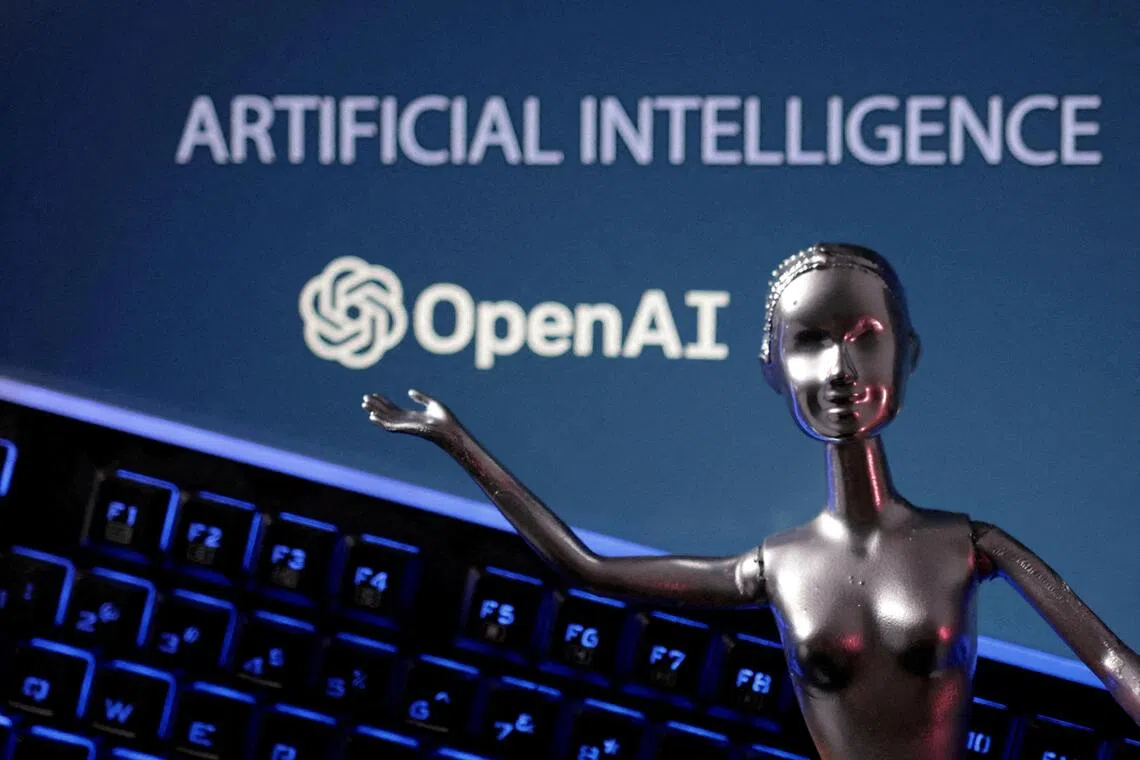
OpenAI is pushing its AI into specialised industries and undercutting open-source rivals on cost, said chief financial officer Sarah Friar.
Published Sep 09, 2026, 09:28 AM
Updated Sep 09, 2026, 09:28 AM
OpenAI is targeting specialised industries like chip design and life sciences with AI solutions and experimenting with pricing based on business outcomes to meet enterprise demands.
OpenAI cut the price of its Luna model by 80%, resulting in a tenfold usage increase, and its enterprise revenue grew 32% from June to July.
OpenAI claims its lower-cost models are cheaper than Chinese open-source alternatives on cloud platforms, highlighting competitive pricing and accelerating enterprise growth.
SAN FRANCISCO - OpenAI is pushing its AI into specialised industries and undercutting open-source rivals on cost, chief financial officer Sarah Friar said on Sept 7, as the ChatGPT maker sees accelerating enterprise growth.
Speaking at Goldman Sachs’ Communacopia + Technology Conference in San Francisco, Friar said OpenAI is focusing on sectors including chip design, life sciences and financial services, as businesses increasingly seek AI systems tailored to specific tasks.
It is also experimenting with pricing based on business outcomes rather than use, as more enterprises demand return on investment in AI.
The push into industry-specific AI and aggressive pricing reflects the growing competition OpenAI faces from Chinese open-weight models and rivals such as Anthropic , as enterprise customers demand more measurable returns from AI spending.
Friar said OpenAI had a positive experience of its own, using its own models in developing its Jalapeno chip, which was “taped out”, a stage when a chip design is finalised and sent to a factory for production, within nine months.
Open-source and open-weight models are widely seen as a cheaper alternative to frontier models from OpenAI and Anthropic.
Friar said OpenAI recently cut the price of its lower-cost Luna model by 80 per cent, helping drive a roughly 10-fold increase in usage.
OpenAI’s Codex, its coding tool, is attracting customers and has 25 million users, she said.
Friar said enterprise revenue increased 32 per cent from June to July, compared with 20 per cent growth in overall annualised revenue during the period.
Enterprise and consumer businesses had reached roughly an even split by the middle of the year, ahead of OpenAI’s target of reaching that balance by year-end, she said.
Deploying OpenAI’s lower-cost model could be cheaper than running Chinese open-source alternatives through cloud providers, she added.
“If you’re deploying Luna and compare that to (Z.ai’s) GLM 5.3, for example, on a cloud layer, we are cheaper,” Friar said. REUTERS
Artificial Intelligence
AI/artificial intelligence
OpenAI首席财务官Sarah Friar表示,OpenAI正在将其人工智能推向专业行业,并在成本上削弱开源竞争对手。
发布于 2026 年 9 月 9 日上午 9:28
更新于2026年9月9日上午9:28
OpenAI 正瞄准芯片设计和生命科学等专业行业,提供人工智能解决方案,并尝试根据业务成果进行定价,以满足企业需求。
OpenAI 将其 Luna 模型的价格降低了 80%,导致使用量增加了十倍,其企业收入从 6 月到 7 月增长了 32%。
OpenAI 声称其低成本模型比云平台上的中国开源替代方案更便宜,凸显了其具有竞争力的定价和加速企业增长的优势。
旧金山——ChatGPT 的制造商 OpenAI 首席财务官 Sarah Friar 于 9 月 7 日表示,随着企业增长加速,OpenAI 正在将其人工智能推向专业行业,并在成本上削弱开源竞争对手。
在旧金山举行的高盛 Communacopia + 技术大会上,Friar 表示,OpenAI 正专注于芯片设计、生命科学和金融服务等领域,因为企业越来越需要针对特定任务量身定制的 AI 系统。
该公司也在尝试根据业务成果而不是使用量来定价,因为越来越多的企业要求在人工智能方面获得投资回报。
OpenAI 进军行业特定人工智能领域并采取激进的定价策略,反映出其面临着来自中国开源模型和 Anthropic 等竞争对手日益激烈的竞争,因为企业客户要求从人工智能支出中获得更可衡量的回报。
Friar 表示,OpenAI 自身也取得了积极的经验,他们使用自己的模型开发了 Jalapeno 芯片,该芯片在九个月内就完成了“流片”(芯片设计最终确定并送往工厂生产)。
开源和开放权重模型被广泛认为是 OpenAI 和 Anthropic 的前沿模型的更便宜的替代方案。
Friar 表示,OpenAI 最近将其低成本 Luna 型号的价格降低了 80%,这有助于推动其使用量增长约 10 倍。
她表示,OpenAI 的编码工具 Codex 正在吸引客户,目前拥有 2500 万用户。
Friar表示,6月至7月企业收入增长了32%,而同期整体年度收入增长了20%。
她表示,到年中,企业和消费者业务的份额已经大致持平,比 OpenAI 设定的年底达到平衡的目标提前了一步。
她补充说,部署 OpenAI 的低成本模型可能比通过云提供商运行中国开源替代方案更便宜。
“如果你部署 Luna,并将其与(Z.ai 的)GLM 5.3 等云平台上的版本进行比较,我们会发现我们的价格更低,”弗莱尔说。路透社
人工智能
人工智能