Europe must reinvent warfare for ‘era of shocks,’ NATO’s Vandier says北约秘书长范迪尔表示,欧洲必须重塑战争模式以适应“冲击时代”。
“We need to make Russia wake up each morning, thinking to themselves: 'Not today,'" the alliance's top officer for force transformation said.
PARIS — The war in Ukraine is driving a shift toward fast-changing, mass warfare that Western militaries are unprepared for, while Russia is adapting rapidly, according to Adm. Pierre Vandier , NATO’s Supreme Allied Commander Transformation.
The gap between what Europe should be doing for defense and its actual capabilities undermines deterrence, risking Russian aggression if Moscow concludes Europe or NATO are too weak to resist attack, Vandier said at the Paris Defense & Strategy Forum on March 25.
Ensuring Europe’s safety in the next decade requires “a dramatic increase of credibility of our deterrence,” he said.
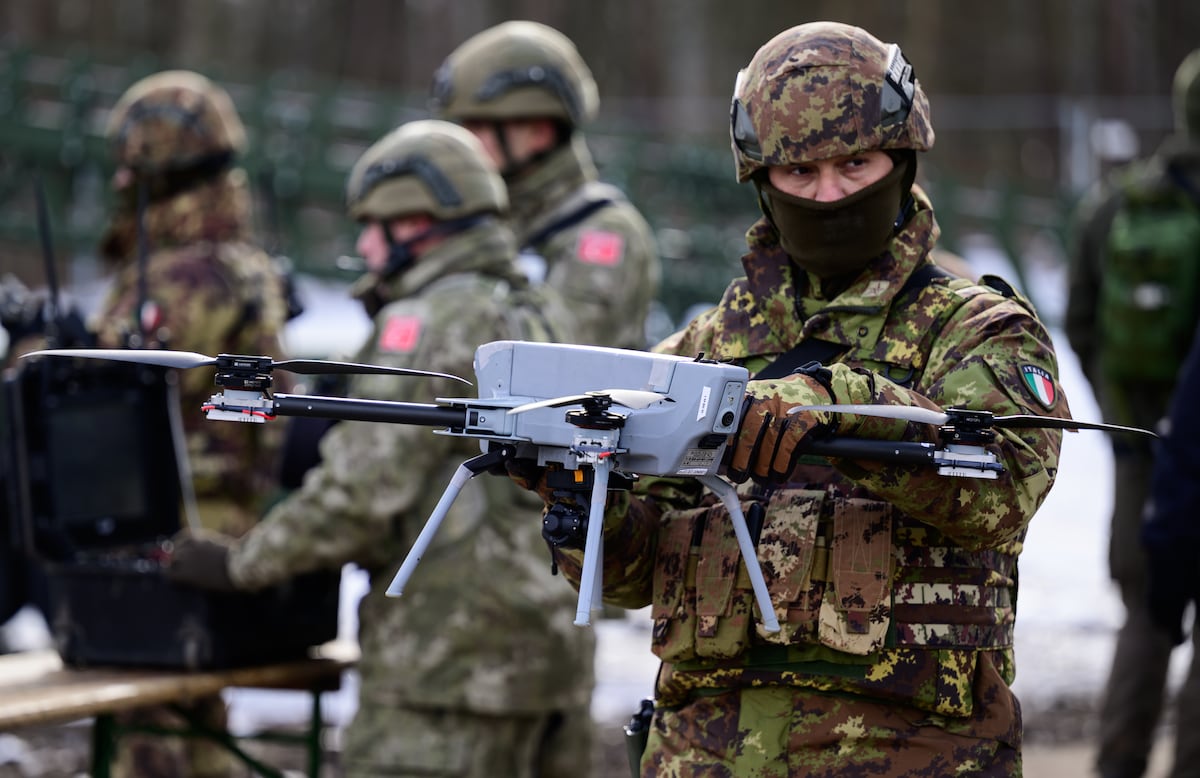
Russia’s invasion of Ukraine sparked a technology race, with Ukraine innovating to make up for its smaller force and Russia adapting in response. The result is a war unlike any NATO has faced, with thousands of drones used each day on a battlefield saturated by electronic warfare, where constant surveillance makes movement deadly and unmanned systems destroy tanks and warships.
“A shock is a period where you need to invent a new world, a new way of doing things,” Vandier said. “It’s what you see in Ukraine. Short of everything but the enemy, they have to invent a new war. And this is coming. And our enemies are doing the same, they are inventing the next war.”
While the evolution of warfare in Ukraine and now the Middle East signals an “era of shocks,” Europe remains in crisis-management mode, according to Vandier. He said countries need to start delivering, because “we are weak, the stockpile is not very big, the enemy knows that.”
The challenge is not to simply continue along the same lines, but to evaluate what is needed to maintain security in a “totally different world,” Vandier said. The return of mass is one of the key challenges for allies not organized for that kind of warfare, with many Western systems that can’t be mass produced.
“How do we deal with mass?” Vandier asked. “And as far as I can see, it’s the same problem on the other side of the Atlantic. If we do more of the same, we will not answer the question.”
Vandier said Russia and Iran produce hundreds of Shahed drones for every single AIM-120 or AIM-9 interceptor, and doubling or tripling output won’t close that gap. Protecting Europe with Patriot air-defense batteries would require ten times as many, but with a seven-year lead time, “you will not be protected by Patriots in the next five years.”
“You have far more targets than weapons to kill it,” Vandier said. “You need to invent something different. It’s what is going on in Ukraine.”
NATO Supreme Allied Commander Transformation (SACT) French admiral Pierre Vandier (C) presents Task Force X - Baltic, a multi-domain maritime operations military project, to Norway's Prime Minister Jonas Gahr Store (2ndL) and France's President Emmanuel Macron (3rdL) during a NATO leaders summit in The Hague, Netherlands, on June 25, 2025. (Ludovic Marin/POOL/AFP via Getty Images)
Vandier warned that simply spending more won’t be enough, noting how Gulf states have struggled to defend critical infrastructure against waves of relatively cheap Iranian drones and missiles despite vast resources. Western failure to prepare risks similar vulnerabilities, he said.
“It’s not a question of money, it’s a question of speed, it’s a question of making the right choices,” Vandier said. “More of the same will not save us.”
Speed of adaptation remains a core issue, with common-funded NATO projects taking years just to define requirements as countries seek to include their specifications, Vandier said. Meanwhile, Shahed drones have received five updates since a drone incursion in Poland in September, according to the NATO commander.
The Western defense industry needs “newcomers that will do the things at the speed of relevance,” Vandier said, even as NATO still relies on traditional manufacturers of major platforms such as fighter jets, aircraft carriers, submarines and battle tanks. But those systems must adapt quickly to new threats.
“Today, if you do not adapt your jammers, your tank will be destroyed in 10 minutes,” Vandier said. “If you don’t protect your frigate against drones, it will be sunk in 10 minutes.”
Vandier cited countries saying they’ll buy frigates first and address drones in 10 years, warning they may lose their frigates on the first night of a war. He said Russia has learned the lesson from Ukraine and knows the cost of not being protected against unmanned surface vehicles, and is reverse engineering Ukraine’s sea-going drones.
“I’m not saying you get rid of frigates, because to go in the middle of the Atlantic, to chase a Yasen-class submarine, we’ll not do that with drones today,” Vandier said. “But in the Baltic, your harbor may be overwhelmed by drones, as Ukraine did with the Russians.”
NATO needs to invent the next war rather than prepare for the last one, “because the last one, the Russians think they can win,” Vandier said. “But the next one, they don’t know.”
Vandier dismissed ideas that Ukraine is fighting a specific war because the country lacks modern air power, and that NATO would fight differently. “The enemy has changed,” he said. “Russia is no longer what it looked like four years ago. So we need to be prepared for a new enemy.”
Europe needs to deliver on deterrence to force the enemy to recalculate, and given sanctions on Russia and Europe’s pool of hundreds of thousands of engineers, “we need to demonstrate we can win it,” Vandier said.
The NATO commander said he’s confident Europe can deliver, but “there is an urgency. We need to do it now, tomorrow, and not in 10 years.”
NATO will organize a large-scale counter-drone exercise in Romania in April, and while all countries are invited, for now only 20 of the 32 member states are signed up, with 24 companies participating, according to Vandier.
The admiral says he’s bought €10 million ($11.5 million) worth of targets, and for more than a week, “six hours a day, we shoot and shoot and shoot. We’ll see who are the liars, who are the champions amongst the twenty.”
The exercise will give decision makers insight into who is delivering results rather than glossy presentations, Vandier said.
The defense industry also needs different key performance indicators, or KPIs, that reflect the new way of war, such as price per shot, scalability, interoperability and adaptability. He said vendor-lock-in systems where “you pay a million euros for a new line of code, this is finished. That will never work again.”
Vandier described visiting a concealed drone factory in a Kyiv neighborhood, where 1,000 workers led by a 30-year-old former childcare worker produce 3,000 drones a day while operating off-grid to evade detection.
“We need to avoid that,” Vandier said. “We need to be smarter. We need to invent the war that Russia will lose.”
“We need to make Russia wake up each morning, thinking to themselves: ‘Not today.’”
Rudy Ruitenberg is a Europe correspondent for Defense News. He started his career at Bloomberg News and has experience reporting on technology, commodity markets and politics.
巴黎——北约转型盟军最高司令皮埃尔·范迪耶海军上将表示,乌克兰战争正在推动战争向快速变化的大规模战争转变,西方军队对此毫无准备,而俄罗斯正在迅速适应。
范迪耶在3月25日巴黎防务与战略论坛上表示,欧洲在国防方面应采取的措施与其实际能力之间的差距削弱了威慑力,如果莫斯科认为欧洲或北约太弱,无法抵抗攻击,则可能导致俄罗斯的侵略。
他表示,要确保欧洲在未来十年内的安全,就需要“大幅提高我们威慑力量的可信度”。
俄罗斯入侵乌克兰引发了一场技术竞赛,乌克兰通过创新来弥补兵力上的劣势,而俄罗斯则迅速做出应对。最终,这场战争与北约以往经历的任何战争都截然不同:每天都有数千架无人机在电子战高度密集的战场上作业,持续不断的监视使得任何行动都可能致命,无人系统甚至可以摧毁坦克和军舰。
“冲击时期是指需要创造一个新世界、一种新做事方式的时期,”范迪尔说。“乌克兰的情况正是如此。除了敌人之外,他们什么都没有,所以他们不得不制造一场新的战争。而这场战争即将到来。我们的敌人也在做同样的事情,他们正在制造下一场战争。”
范迪尔认为,尽管乌克兰乃至中东战争的演变预示着“冲击时代”的到来,但欧洲仍处于危机管理模式。他表示,各国需要开始采取行动,因为“我们很弱,储备不足,敌人也清楚这一点。”
范迪尔表示,挑战并非简单地沿用旧模式,而是要评估在“截然不同的世界”中维护安全所需的措施。大规模作战的回归是那些未曾为此类战争做好准备的盟国面临的关键挑战之一,因为许多西方武器系统无法大规模生产。
“我们该如何应对人口规模问题?”范迪尔问道。“据我观察,大西洋彼岸也面临着同样的问题。如果我们继续沿用老方法,这个问题就永远无法得到解答。”
范迪尔表示,俄罗斯和伊朗每生产一枚AIM-120或AIM-9拦截弹,就需要数百架“沙赫德”无人机,即使产量翻倍或三倍也无法弥补这一差距。用“爱国者”防空系统保护欧洲需要十倍于此的数量,但考虑到七年的准备时间,“未来五年内,你们将无法得到‘爱国者’系统的保护。”
“你们的目标远多于能消灭它的武器,”范迪尔说。“你们需要另辟蹊径。乌克兰正在做的就是这件事。”
2025年6月25日,在荷兰海牙举行的北约领导人峰会上,北约最高盟军转型司令部(SACT)法国海军上将皮埃尔·旺迪耶(中)向挪威首相乔纳斯·加尔·斯托尔(左二)和法国总统埃马纽埃尔·马克龙(左三)介绍了“X特遣部队——波罗的海”这一多域海上作战军事项目。(Ludovic Marin/POOL/AFP via Getty Images)
范迪尔警告说,仅仅增加支出是不够的。他指出,尽管海湾国家拥有雄厚的资源,但它们在抵御伊朗相对廉价的无人机和导弹攻击方面仍然举步维艰。他表示,西方国家如果准备不足,将面临类似的风险。
“这不是钱的问题,而是速度的问题,是做出正确选择的问题,”范迪尔说。“墨守成规救不了我们。”
范迪尔表示,适应速度仍然是一个核心问题,北约共同出资的项目仅确定需求就需要数年时间,因为各国都希望将自己的具体要求纳入其中。与此同时,据北约指挥官称,自9月份波兰发生无人机入侵事件以来,“沙赫德”无人机已经进行了五次升级。
范迪尔表示,西方国防工业需要“能够以与时俱进的速度完成任务的新兴力量”,尽管北约仍然依赖战斗机、航空母舰、潜艇和坦克等主要平台的传统制造商。但这些系统必须迅速适应新的威胁。
“如今,如果你不改进干扰器,你的坦克十分钟内就会被摧毁,”范迪尔说。“如果你不保护你的护卫舰免受无人机攻击,它也会在十分钟内沉没。”
范迪尔援引一些国家的说法称,他们将首先购买护卫舰,十年后再考虑无人机问题,并警告说,这些国家可能在战争的第一夜就损失护卫舰。他表示,俄罗斯已经从乌克兰的战争中吸取了教训,深知缺乏无人水面舰艇防御的代价,目前正在对乌克兰的海上无人机进行逆向工程。
“我不是说要放弃护卫舰,因为要去大西洋中央追击亚森级潜艇,我们现在用无人机是做不到的,”范迪尔说。“但在波罗的海,你们的港口可能会被无人机淹没,就像乌克兰被俄罗斯无人机淹没那样。”
范迪尔说:“北约需要着眼于下一场战争,而不是为上一场战争做准备,因为俄罗斯人认为他们能赢下上一场战争,但他们不知道下一场会怎样。”
范迪尔驳斥了乌克兰因为缺乏现代化空军力量而陷入特殊战争,以及北约会采取不同作战方式的说法。他说:“敌人已经改变了。俄罗斯不再是四年前的样子了。所以我们需要为新的敌人做好准备。”
范迪尔说,欧洲需要发挥威慑作用,迫使敌人重新评估形势,鉴于对俄罗斯的制裁以及欧洲数十万名工程师的储备,“我们需要证明我们能够赢得这场战争”。
北约指挥官表示,他相信欧洲能够做到,但“事态紧急。我们必须现在就做,明天就做,而不是10年后。”
据范迪尔称,北约将于 4 月在罗马尼亚组织一次大规模的反无人机演习,虽然所有国家都受邀参加,但目前 32 个成员国中只有 20 个报名,共有 24 家公司参与。
这位海军上将说,他购买了价值 1000 万欧元(1150 万美元)的靶子,并且连续一个多星期,“每天射击六个小时,不停地射击。我们要看看谁是骗子,谁才是这二十个人中的佼佼者。”
范迪尔表示,这项举措将让决策者深入了解谁在真正取得成果,而不是那些华丽的演示文稿。
国防工业也需要反映新型战争方式的不同关键绩效指标(KPI),例如单发价格、可扩展性、互操作性和适应性。他指出,供应商锁定系统存在一个问题:“你为一行新代码支付了一百万欧元,然后就结束了。这套系统以后再也行不通了。”
范迪尔描述了他参观基辅一个街区内一家隐蔽的无人机工厂的经历,在那里,1000名工人在一名30岁的前幼教工作者的带领下,每天生产3000架无人机,并且这些无人机都是离网运行以躲避侦测。
“我们必须避免这种情况,”范迪尔说。“我们需要更聪明一些。我们需要策划一场俄罗斯必败的战争。”
“我们要让俄罗斯每天早上醒来都想:‘今天不行。’”
鲁迪·鲁伊滕贝格是《防务新闻》的欧洲记者。他的职业生涯始于彭博新闻社,拥有报道科技、大宗商品市场和政治方面的经验。