Thailand gets ready to enter the age of nuclear power with plans for two small modular reactors by 2037泰国准备进入核电时代,计划到2037年建成两座小型模块化反应堆。
The kingdom lays the groundwork for nuclear power, targeting two 300MW small modular reactors around 2037, while the US, China and South Korea compete for… Read More ›
新闻视频
September 9, 2026 at 7:02 pm
by James Morris and Son Nguyen
in Economy , Living , Media , Politics , Thailand
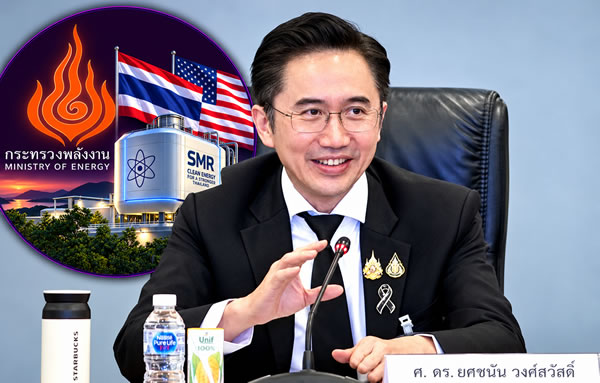
Thailand is moving decisively towards nuclear power, preparing two small modular reactors (SMRs) with a combined capacity of 600 megawatts for possible operation around 2037. Deputy Prime Minister Yotsanan Wongsawat says the government is now building the laws, safety systems, specialist workforce, financing structure and waste-management framework needed before construction can begin. The International Atomic Energy Agency has already identified three urgent gaps in Thailand’s nuclear readiness. Meanwhile, Bangkok wants Thai industry positioned to supply components and advanced technology for the emerging SMR sector. Yet no reactor design, site or supplier has been selected, leaving American, Chinese and South Korean nuclear technology providers positioned for a major future contest.
Thailand prepares two 600MW small modular reactors for around 2037 as Deputy Prime Minister Yotsanan Wongsawat builds the nuclear framework, with the US, China and South Korea in contention. ( Source: Matichon )
Thailand is accelerating preparations for nuclear power, with small modular reactors now central to long-term electricity planning. The government is developing regulations, safety systems, specialist personnel and an industrial supply chain. At the same time, officials are preparing Thailand for two prospective SMR plants with a combined capacity of 600 megawatts. EGAT planning documents have placed possible commercial operation around 2037.
However, Thailand has not selected a reactor, foreign supplier or construction site. Nor has the government approved construction of a nuclear power plant.
Instead, Bangkok is building the legal and technical machinery needed before those decisions are made. The process could eventually open competition among American, Chinese and South Korean nuclear technology providers.
Committee approves IAEA-based SMR framework as it builds rules for nuclear power and energy security
Deputy Prime Minister Yotsanan Wongsawat set out the programme after a major nuclear policy meeting on Tuesday. Mr Yotsanan also serves as Minister of Higher Education, Science, Research and Innovation. He chaired the second 2026 meeting of the Committee on Nuclear Energy for Peace at Government House. The meeting began at 3.30 pm and brought together senior officials from several state agencies.
Among those attending was Permanent Secretary Supachai Pathumnakul. Office of Atoms for Peace Secretary-General Rungruang Kitphati also attended with representatives from relevant agencies. Notably, the committee approved a policy framework for regulating small modular reactors, commonly known as SMRs. The framework will follow standards established by the International Atomic Energy Agency.
That decision moves Thailand’s nuclear programme beyond broad inclusion inside a future electricity plan. Officials are now preparing the rules needed to regulate an entirely new source of generation. In parallel, ministries must develop specialist manpower, financing structures and systems for nuclear waste. The government must also determine responsibility for nuclear damage before any reactor begins operating.
Energy security sits at the centre of the programme. Thailand has faced repeated energy volatility because of heavy dependence on imported fuels. As a result, shifts in international fuel markets can feed directly into domestic energy costs. Mr Yotsanan said that dependence had prevented the country from achieving genuine energy sovereignty.
Against this backdrop, nuclear generation is being prepared as another component of Thailand’s future electricity mix. Specifically, the government is concentrating on smaller reactors rather than immediately pursuing traditional large nuclear stations. SMRs are considerably smaller than conventional nuclear reactors. Many designs also use manufactured modules which can later be installed at generating sites.
Thailand targets two 600MW SMR plants around 2037 as IAEA flags three urgent gaps in nuclear readiness
Their smaller scale also allows nuclear generating capacity to be introduced in more limited increments. Thailand’s draft Power Development Plan 2024 envisages two SMR plants with combined capacity of 600 megawatts. Meanwhile, EGAT documents have pointed towards possible commercial operation around 2037. Yet significant institutional work must be completed before construction can begin.
An IAEA assessment has already examined Thailand’s nuclear energy infrastructure across 19 separate areas. The assessment found Thailand prepared in ten areas. Six other areas require further development. More critically, three areas require urgent action before the programme can advance.
First, Thailand needs a clearly defined national nuclear energy policy. Second, it must establish a Nuclear Energy Programme Implementing Organisation, known internationally as a NEPIO. Third, the country needs detailed investment and financial planning. In response, the National Nuclear Energy Policy Committee approved work across four major areas.
The first area involves nuclear law and financial liability. Officials must establish who carries financial responsibility following nuclear damage. Accordingly, the Office of the Permanent Secretary has been instructed to accelerate preparation of new legislation. The proposed Nuclear Liability for Damage Act must then be submitted to the Cabinet.
Nuclear liability law, insurance and state fund planned as Thailand starts specialist workforce training
The legislation would establish arrangements for insurance and financial guarantees. Separately, it would create a transparent and fair state fund based on international standards. Those arrangements would form part of the legal foundation for a future nuclear electricity programme. They would also define financial safeguards before Thailand commits to reactor construction.
The second major area concerns people. Nuclear plants cannot be operated or regulated without highly trained specialists. Consequently, Thailand is starting long-term workforce preparation before any reactor has been ordered. That work will span education, scientific research, energy policy and nuclear regulation.
The Ministry of Higher Education, Science, Research and Innovation will work with the Ministry of Education. The National Science and Technology Development Agency will also take part. In addition, the Ministry of Energy will participate in developing the required programmes. Together, the agencies must prepare educational curricula covering SMR technology and safety regulation.
They must also develop a long-term national plan for specialist nuclear personnel. Importantly, that training will extend beyond future reactor operators. Thailand will require independent regulators capable of inspecting and licensing nuclear installations. Engineers, scientists and technicians will also be needed across the emerging sector.
Thailand prepares nuclear waste policy while pushing Thai firms into the global SMR supply chain
On another front, radioactive waste requires a national system before nuclear generation can begin. Thailand must determine how radioactive material will be handled throughout its entire lifecycle. That includes spent nuclear fuel produced by future reactors. Accordingly, nuclear officials have been tasked with preparing a comprehensive national policy framework.
The framework must cover nuclear waste and spent fuel from generation through final management. Significantly, this work is being undertaken before Thailand selects a reactor technology. The government therefore wants waste arrangements embedded within the programme from its earliest stage. Mr Yotsanan stressed maximum responsibility so future generations do not inherit the burden.
Industrial development forms the fourth part of the programme. Here, the government wants Thai businesses connected to the global SMR supply chain. The Board of Investment will work with nuclear agencies and relevant research institutions. As part of this, they must develop strategies to promote Thai companies within the emerging international industry.
Mr Yotsanan said Thailand should move beyond being simply a buyer of imported nuclear technology. Instead, the country should seek to create value from technologies surrounding the SMR sector. The potential supply chain stretches far beyond companies manufacturing reactor vessels. It includes sophisticated engineering, construction materials, grid technology and advanced digital systems.
Thai firms could supply reactor parts, advanced materials and grid systems under strict nuclear standards
For example, nuclear installations require specialised high-performance pumps and valves. They also require construction materials capable of meeting demanding technical standards. These include radiation-resistant cement and specialised steel. Likewise, nuclear generating facilities depend on advanced power-grid management and control technologies.
Intelligent simulation technology is another part of the potential industrial ecosystem. In turn, Thai companies could enter areas surrounding reactor construction, operation and grid integration. However, those companies would first need to reach international technical standards. Nuclear safety requirements would apply throughout that development.
“Within the SMR ecosystem lies a diverse range of supply chains and advanced technologies, presenting a significant opportunity to enhance the capabilities of Thai industries. This includes industries producing reactor components such as high-performance pumps and valves, advanced construction materials like radiation-resistant cement and steel, and technologies for managing power grid systems and intelligent simulations. Integrating these technologies into Thai industries to achieve international standards requires serious, meticulous, and precise preparation at every step, especially regarding the highest safety standards. We cannot wait for the technology to arrive before preparing; we must start building the foundation today.”
Thailand keeps reactor site and technology open as US nuclear cooperation expands under Section 123
Despite the accelerating preparations, Tuesday’s meeting did not choose where Thailand’s first SMR would be built. It also did not select which reactor technology would be used. Rather, Mr Yotsanan described the work as preparation covering legislation, personnel and regulatory systems. Thailand wants sufficient information and capability before taking those policy decisions.
That leaves the choice of international supplier wide open. The United States has already established itself as one potential technology partner. A US-Thailand civil nuclear cooperation agreement entered into force on July 9, 2025. The pact is commonly called a Section 123 Agreement under United States atomic energy law.
Crucially, the agreement establishes a legal framework for peaceful nuclear cooperation between Washington and Bangkok. Such cooperation can include nuclear materials, equipment, components and technical information. Subsequently, Washington eased the pathway for specified nuclear technology transfers to Thailand. That change strengthened the potential position of American nuclear companies.
In April 2026, US Energy Secretary Chris Wright added Thailand to a group of generally authorised countries. The decision covered specified American nuclear technology and assistance. Consequently, many eligible transfers no longer require individual advance US Department of Energy approval. The legal route for deeper US nuclear cooperation with Thailand therefore became substantially clearer.
Thailand keeps US, Chinese and South Korean nuclear options open as EGAT builds cooperation links
Even so, Thailand has not selected an American reactor. The government has not stated that its future SMRs will come from the United States. Instead, Thailand is simultaneously developing nuclear relationships with other major technology countries. China and South Korea are already involved through separate cooperation arrangements.
EGAT signed an SMR cooperation agreement with China National Nuclear Corporation Overseas in 2024. That agreement covered exchanges concerning SMR technology and its potential application in Thailand. The following year, EGAT signed another cooperation agreement with Korea Hydro & Nuclear Power. Thus, several major nuclear technology providers already have formal links with Thailand.
Regulatory cooperation with China has also developed separately. The Office of Atoms for Peace has held discussions with China’s National Nuclear Safety Administration. Those talks covered nuclear regulation, licensing, inspections and workforce development. Taken together, the contacts leave Thailand with several possible international routes.
American, Chinese and South Korean technology could therefore enter future consideration. Yet no formal procurement competition has been announced. No preferred reactor manufacturer has been named either. For now, officials are concentrating on Thailand’s ability to assess competing technologies before making a commitment.
Nuclear safety committee expanded as Thailand builds regulatory capacity before reactor procurement
Meanwhile, nuclear safety oversight is also being strengthened. Tuesday’s meeting approved six qualified members for the National Nuclear Safety Committee. Dr Soranit Silatham and Somyot Srisathit were selected in the science field. Pasit Lortheerapong was appointed for engineering expertise.
Elsewhere, Suwit Chaiyakietyos was selected in the agriculture field. Surasak Boonruang was chosen for legal expertise. Finally, Dr Pathomporn Siraprapasiri was appointed in the field of medicine. The appointments bring several specialist disciplines into Thailand’s developing nuclear safety structure.
The government views that expertise as part of the broader nuclear ecosystem now being assembled. Officials are trying to establish readiness, safety and greater domestic capability before reactor procurement begins. At present, however, Thailand’s nuclear programme remains firmly at the preparatory stage.
Notably, no reactor is presently under construction. Neither has a construction site been selected. No manufacturer has secured an order. Likewise, no foreign country has been chosen to supply the technology.
The draft electricity plan nevertheless gives the programme a defined long-term objective. It envisages two SMR plants supplying 600MW to Thailand’s electricity system. EGAT planning documents have also pointed towards prospective commercial operation around 2037. Before then, several critical gaps identified by the IAEA must be closed.
Thailand must close policy, workforce, financing and waste gaps before moving towards reactor selection
Thailand first needs its national nuclear policy. It must also create a dedicated programme implementation organisation. Beyond that, investment and financing arrangements require detailed preparation. The nuclear liability legislation must move through government and reach the Cabinet.
At the same time, the country needs a trained nuclear workforce. Regulators must gain the expertise required to assess and inspect future reactors. Educational institutions must establish specialist courses. Scientific agencies must also support long-term skills development.
Radioactive waste presents another substantial requirement. A national framework must cover radioactive waste and spent nuclear fuel throughout their lifecycle. In addition, financial arrangements must support the programme before final investment decisions are taken. Each element must be in place alongside the reactor selection process.
Domestic industry is also being brought into the preparations earlier than reactor procurement. Thai companies could eventually manufacture specialised pumps, valves, cement and steel for the sector. They could also participate in grid-management and simulation technologies. However, those products would have to meet international nuclear standards.
Thailand moves from nuclear planning to institutional preparation while keeping supplier options open
Tuesday’s CNEP meeting therefore represents a further move from planning towards institutional preparation. The prospective 600MW programme already appears in Thailand’s long-term power strategy. Now, officials are building the rules and capabilities needed to support that ambition.
At the international level, the field remains open. Washington has established a legal framework allowing deeper civil nuclear cooperation with Bangkok. Moreover, US rules governing specified technology transfers were eased in April 2026. American companies therefore have a clearer path towards possible future participation.
China, however, already has an SMR cooperation agreement with EGAT. South Korea has also secured a formal cooperation relationship with the state electricity generator. In addition, Thai and Chinese nuclear regulators have been developing direct links. Thailand has therefore avoided committing its future programme to one foreign supplier.
Mr Yotsanan made that position explicit after Tuesday’s meeting. Thailand has not decided where an SMR plant will be constructed. Nor has it selected which technology it will use. Instead, officials are preparing the legal framework, workforce and regulatory system before those decisions arrive.
The government is also trying to build domestic industrial capabilities around the programme. That means preparing Thai businesses before major reactor contracts are eventually awarded. Similarly, universities and government agencies must create the specialists needed for a nuclear electricity sector.
Thailand focuses on preparation as reactor sites, technology and foreign suppliers remain undecided
The immediate timetable is therefore dominated by preparation rather than construction. Legislation must be drafted. Nuclear liability arrangements must be established. Regulators must be strengthened, while specialist workers must be trained.
Alongside that work, Thailand must settle nuclear waste policy and long-term financing. Industrial suppliers must also prepare for international nuclear standards. Only then can the government move towards final decisions on technology, location and procurement.
For now, the planned destination is clear. Thailand is preparing for two small modular reactor plants with a combined capacity of 600 megawatts. Possible commercial operation has been placed around 2037 in EGAT planning documents.
The remaining choices are equally clear. Thailand has not selected the reactors. It has not chosen their sites. It has not selected the country which may ultimately provide them.
Nevertheless, the machinery required to make those decisions is now being assembled. Tuesday’s meeting pushed forward regulations, personnel, liability, waste management and industrial preparation. It also placed nuclear safety at the centre of the programme.
The United States has opened a wider legal route for nuclear cooperation with Thailand. China and South Korea have established their own formal links. Meanwhile, Bangkok is preparing to enter those future decisions with stronger domestic regulatory and technical capabilities.
That process is now under way well before any reactor reaches Thai soil. As Mr Yotsanan put it: “We cannot wait for the technology to arrive before preparing; we must start building the foundation today.”
Finance Minister Ekniti outlines the government’s economic plan but behind the buzzwords are risks
Paying AI users in Thailand had a nightmare week online just as the government waded into the market
People’s Party firebrand attacks flagship TH AI project launched this week with corruption agency filing of claims
Thais take to government TH AI project on the first day with ChatGPT reporting outages later on Monday
TH AI Passport artificial intelligence to go live on August 28th with strong public demand says Minister
Democrat Party deputy leader renews attacks on the TH-AI passport project as the minister pushes ahead
Thai workers are now World leaders for AI use. More than double the global average. Firms must wise up
Democrat Party Deputy Leader reveals flaws in the TH-AI Passport plan and calls on Minister to abort it
Abhisit Vejjajiva calls for scrutiny of flagship AI project being pursued by Digital Economy ministry
Opposition and Prime Minister highlight corruption which is damaging the kingdom’s credibility abroad
Transport Minister orders report on bribery allegations in the US relating to junkets and Massage Parlours
Supreme Court Chief sets up panel to investigate bribery claims linked to ฿11 billion tax appeal by Toyota
Ministry fails to halt ฿25.4 billion payment order to Hong Kong based firm linked to 1990 contract
James Morris is a pename for an international writer based in Bangkok who works on various international news media. He is a sub editor with the Thai Examiner news website since it began in 2015. Son Nguyen is an international writer and news commentator specialising in Thai news and current affairs. He commenced working with the Thai Examiner News Desk in May 2018.
All posts by James Morris and Son Nguyen
Motorist’s shocked horror after 6 million baht luxury car rolls across a motorway and into a deep irrigation canal September 5, 2026 Owner watches in horror as ฿6m luxury EV rolls
17 year old legal fight for schoolboy who is now a grown man against the Police finally ends in victory and pay day September 5, 2026 Wrongly arrested at 18, assaulted and pushed to
Turn Grey capital into White capital. Senator calls for 100% foreign owned firms to eliminate corruption September 5, 2026 Let foreigners own what they pay for, Senator Prathum
Ring of steel protects USS Abraham Lincoln as huge security operation polices US sailors on shore leave September 4, 2026 Security locks down coastal Chonburi as 5,000 USS
Widening Chinese trade gap cannot be ignored as it distorts economic data of an underlying GDP struggle September 4, 2026 Thai-Chinese businesses raise the alarm as
Fears grow for 33 year old single mother who is missing from her Kanchanaburi home since Friday August 28 September 4, 2026 Missing mother Ms Wichuda, 33, disappears after CCTV
Boss heir free to return to Thailand next year unless he gives himself up or is arrested by Interpol abroad September 4, 2026 The clock is running out on Red Bull heir Vorayuth
Defence Minister halts his cavalcade to assist injured after spotting a road traffic accident in Bangkok September 3, 2026 A Bangkok road crash stops Defence Minister Adul
64 year old German on the run in Thailand since 2024 hunted down and arrested by police in Mae Hong Son September 3, 2026 A three-year hunt ends at a Mae Hong Son guesthouse as
Cash is the name of game as the US Navy returns to its old Pattaya stomping ground in a 4 day city boost September 3, 2026 Mobile ATMs roll into Pattaya as 5,000 US sailors hit
Thai wife’s nose smelt out her husband’s infidelity and proved it in court to finalise ‘smelly underwear’ case September 2, 2026 Wife sniffs out her husband’s adultery after perfume
Stock market 2026 recovery not built on a sound footing. Depends on foreign capital and one company September 2, 2026 Bangkok’s stock market roared back 26% after three
New visa regime hits Western visitors and expats in Thailand hard with shorter stays and long haul trips September 1, 2026 Thailand’s new visa squeeze halves tourist stays to
Thais take to government TH AI project on the first day with ChatGPT reporting outages later on Monday September 1, 2026 More than 1.36 million Thais register for the TH-AI
Devastating tragedy in Bangkok as pregnant teacher takes her life after paternity fight with boyfriend September 1, 2026 A customer finds a pregnant Bangkok teacher dead
Thailand’s stiff restrictions on small foreign investors a significant problem for its daring OECD aspirations August 31, 2026 Thailand chases OECD membership by 2028 while
Travel Blogger claims he was accosted by cocaine hucksters in broad daylight on Bangkok’s Sukhumvit August 31, 2026 Sukhumvit’s cocaine hucksters approach a travel
Missing Kanchanaburi mother found on southbound bus after 7 day northern stay shrouded in mystery September 6, 2026
Koh Samui Israeli expat the first to be deported under Prime Minister Anutin’s new deportation regime September 5, 2026
US Navy’s Pattaya visit is plain sailing with strong spending breeze. Chonburi governor hails it a success September 5, 2026
Paying AI users in Thailand had a nightmare week online just as the government waded into the market September 5, 2026
Malaysian online gambling boss arrested in Bangkok raid. 48 year old was a UFA network Master agent September 4, 2026
Crazed ex lover rams former girlfriend and her new boyfriend on a motorbike to their death with pickup September 4, 2026
Blunder over Indian visa policy saw Thailand lose tourists in August. Quick volte face to a 30 day visa September 4, 2026
Data centre projects on hold in Bangkok as officials scramble to examine the impact of the industry on resources September 3, 2026
HIV and AIDS still lurk behind the neon signs of Thailand’s sex industry especially as it moves online September 3, 2026
Younger brother kills sibling after finding him drinking as their mother fought for life in hospital September 3, 2026
Former PM Paetongtarn files police complaint over false social media post linking her with Israeli land September 2, 2026
People’s Party firebrand attacks flagship TH AI project launched this week with corruption agency filing of claims September 2, 2026
The boys are back in town. US servicemen return to Pattaya, a town they helped create, for wartime R&R September 2, 2026
Pot shop worker attacks UK man on his motorbike over 29,200 baht fraud on Monday in broad daylight September 1, 2026
Woman in northern Thailand builds thriving concern farming and selling live cockroaches for fishing in nearby rivers September 1, 2026
Pattaya police probe a nightclub shooting on the city’s Southside in the early hours of Monday morning August 31, 2026
Anutin begins week with twin economic headaches as car makers and rail consortium threaten to walk August 31, 2026
American man arrested in Phuket on US state and federal warrants relating to sexual abuse of minors at home August 31, 2026
Bangkok storm’s nightlife charts to be crowned the World’s number one and the most visited city on earth August 30, 2026
Pattaya police operation targets street sex workers ahead of expected arrival of US sailors on Wednesday August 30, 2026
Thailand approaches a seminal moment in politics as Senate collusion case decision set for September 14 August 30, 2026
Thailand’s America’s Got Talent star returned home on Friday ahead of her September date with destiny August 30, 2026
© 2026 Thai Examiner. All rights reserved.
2026年9月9日晚上7:02
作者:詹姆斯·莫里斯和孙阮
经济、生活、媒体、政治、泰国
泰国正果断推进核电发展,计划建设两座总装机容量为600兆瓦的小型模块化反应堆(SMR),预计将于2037年左右投入运营。副总理尤萨南·翁沙瓦表示,政府目前正在制定建设所需的法律、安全体系、专业人才队伍、融资结构和废物管理框架。国际原子能机构已指出泰国核能准备工作中存在三个亟待解决的缺口。与此同时,曼谷方面希望泰国工业能够为新兴的SMR行业提供零部件和先进技术。然而,目前尚未确定反应堆设计、选址或供应商,这意味着美国、中国和韩国的核技术供应商将在未来展开激烈的竞争。
泰国副总理尤萨南·翁沙瓦正在构建核能框架,计划于2037年左右建成两座600兆瓦的小型模块化反应堆。美国、中国和韩国都在竞标该项目。(来源:Matichon)
泰国正加快核电发展准备工作,小型模块化反应堆(SMR)已成为长期电力规划的核心。政府正在制定相关法规、安全体系,培养专业人才,并建立产业供应链。与此同时,泰国官员正为两座总装机容量为600兆瓦的拟建SMR电站做准备。泰国国家电力局(EGAT)的规划文件显示,这两座电站可能在2037年左右投入商业运营。
然而,泰国尚未选定反应堆、外国供应商或建设地点。政府也尚未批准建设核电站。
相反,曼谷正在构建必要的法律和技术机制,为后续决策做好准备。这一过程最终可能会促成美国、中国和韩国核技术供应商之间的竞争。
委员会批准了基于国际原子能机构的小型模块化反应堆框架,并据此制定核电和能源安全规则。
副总理约萨南·翁沙瓦在周二召开的一次重要核能政策会议后公布了该计划。约萨南先生同时兼任高等教育、科学、研究与创新部长。他在总理府主持召开了2026年第二次和平利用核能委员会会议。会议于下午3点30分开始,多个政府机构的高级官员出席了会议。
出席会议的有常务秘书素帕猜·巴吞那库尔。原子能和平利用办公室秘书长荣鲁昂·吉帕提及相关机构代表也出席了会议。值得注意的是,委员会批准了一项小型模块化反应堆(简称SMR)监管政策框架。该框架将遵循国际原子能机构制定的标准。
这一决定标志着泰国的核能计划不再局限于将其纳入未来的电力规划。官员们目前正在制定相关规则,以规范这一全新的发电方式。与此同时,各部委必须培养核能专业人员,并建立相应的融资机制和核废料处理系统。此外,在任何反应堆投入运行之前,政府还必须明确核损害的责任归属。
能源安全是该计划的核心。由于严重依赖进口燃料,泰国一直面临能源价格波动的问题。因此,国际燃料市场的波动会直接影响国内能源成本。约萨南先生表示,这种依赖性阻碍了泰国实现真正的能源主权。
在此背景下,核能发电正被打造为泰国未来电力结构的重要组成部分。具体而言,政府正着力发展小型反应堆,而非立即建设传统的大型核电站。小型模块化反应堆(SMR)的体积远小于传统核反应堆。许多设计还采用预制模块,可随后安装到发电站现场。
泰国计划在2037年前后建成两座600兆瓦小型模块化反应堆,与此同时,国际原子能机构指出泰国核能准备方面存在三个亟待解决的差距。
小型模块化反应堆(SMR)规模较小,因此可以分阶段逐步引入核电产能。泰国2024年电力发展规划草案设想建设两座SMR电站,总装机容量为600兆瓦。同时,泰国国家电力局(EGAT)的文件显示,这些电站可能在2037年左右投入商业运营。然而,在动工建设之前,还需要完成大量的制度性工作。
国际原子能机构已对泰国的核能基础设施进行了19个不同领域的评估。评估发现,泰国在10个领域已做好准备。另有6个领域需要进一步发展。更重要的是,在推进该项目之前,还有3个领域需要采取紧急行动。
首先,泰国需要制定明确的国家核能政策。其次,必须建立核能计划实施组织(NEPIO)。第三,需要制定详细的投资和财务规划。为此,国家核能政策委员会批准了四个主要领域的工作。
第一个领域涉及核法律和财务责任。官员们必须明确核损害发生后谁应承担财务责任。因此,常务秘书办公室已被指示加快新立法的起草工作。拟议的《核损害责任法》随后必须提交内阁审议。
泰国启动核能专业人员培训计划,并已着手制定核责任法、保险和国家基金。
该法案将建立保险和财务担保机制。此外,还将设立一个基于国际标准的透明、公平的国家基金。这些安排将构成未来核电计划的法律基础。它们还将明确泰国在承诺建造反应堆之前必须采取的财务保障措施。
第二个主要领域涉及人员。没有训练有素的专业人员,核电站就无法运行或监管。因此,泰国在任何反应堆订购之前就开始了长期的人才培养工作。这项工作将涵盖教育、科学研究、能源政策和核监管等领域。
高等教育、科学、研究与创新部将与教育部合作。国家科学技术发展署也将参与其中。此外,能源部也将参与制定相关课程。各部门需共同制定涵盖小型模块化反应堆(SMR)技术和安全法规的教育课程。
他们还必须制定一项针对核能专业人才的长期国家计划。重要的是,培训范围将不仅限于未来的反应堆操作员。泰国需要能够对核设施进行检查和颁发许可证的独立监管机构。此外,新兴的核能领域也需要工程师、科学家和技术人员。
泰国制定核废料政策,同时推动泰国企业融入全球小型模块化反应堆供应链。
另一方面,放射性废物的处理需要建立一套国家体系,核能发电才能启动。泰国必须确定如何处理放射性物质在其整个生命周期中的各种问题,包括未来反应堆产生的乏核燃料。因此,核能部门官员已被责成制定一套全面的国家政策框架。
该框架必须涵盖从核废料产生到最终处理的整个过程,包括核废料和乏燃料的处理。值得注意的是,这项工作是在泰国选择反应堆技术之前开展的。因此,政府希望从项目初期就将废物处理安排纳入其中。约萨南先生强调要尽最大努力,避免给子孙后代留下沉重的负担。
工业发展是该计划的第四部分。在此方面,政府希望泰国企业能够融入全球小型模块化反应堆(SMR)供应链。投资促进委员会将与核能机构和相关研究机构合作,制定战略,以促进泰国企业在这个新兴的国际产业中发展。
约萨南先生表示,泰国不应仅仅作为进口核技术的买家,而应寻求从小型模块化反应堆(SMR)相关技术中创造价值。潜在的供应链远不止反应堆压力容器制造商,它还包括精密的工程技术、建筑材料、电网技术和先进的数字系统。
泰国企业可在严格的核能标准下供应反应堆部件、先进材料和电网系统。
例如,核设施需要专用的高性能泵和阀门,还需要能够满足严格技术标准的建筑材料,包括耐辐射水泥和特种钢材。同样,核电站也依赖于先进的电网管理和控制技术。
智能仿真技术是潜在产业生态系统的另一组成部分。反过来,泰国企业可以进入反应堆建设、运行和电网整合等领域。然而,这些企业首先需要达到国际技术标准。核安全要求将贯穿整个发展过程。
“小型模块化反应堆(SMR)生态系统蕴藏着多元化的供应链和先进技术,为提升泰国工业能力提供了巨大机遇。这包括生产反应堆部件(例如高性能泵和阀门)、先进建筑材料(例如耐辐射水泥和钢材)以及电网系统管理和智能模拟技术等产业。将这些技术融入泰国工业,以达到国际标准,需要在每个环节都进行认真、细致和精准的准备,尤其是在最高安全标准方面。我们不能坐等技术到来才开始准备;我们必须从今天开始着手准备,夯实基础。”
根据《123条款》,随着美国扩大核能合作,泰国保持反应堆厂址和技术的开放。
尽管筹备工作正在加速进行,但周二的会议并未决定泰国首座小型模块化反应堆(SMR)的选址,也未确定采用何种反应堆技术。相反,约萨南先生表示,目前的准备工作涵盖立法、人员配备和监管体系等方面。泰国希望在做出这些政策决定之前,掌握足够的信息并具备相应的能力。
这使得国际供应商的选择范围非常广泛。美国已经确立了自身作为潜在技术合作伙伴的地位。美泰民用核能合作协议于2025年7月9日生效。该协议通常被称为美国原子能法第123条协议。
至关重要的是,该协议为华盛顿和曼谷之间的和平核能合作建立了法律框架。此类合作可以包括核材料、设备、部件和技术信息。随后,华盛顿简化了向泰国转让特定核技术的途径。这一变化增强了美国核能公司的潜在地位。
2026年4月,美国能源部长克里斯·赖特将泰国列入一般授权国家名单。该决定涵盖了特定的美国核技术和援助。因此,许多符合条件的转让不再需要事先获得美国能源部的单独批准。由此,美国与泰国深化核能合作的法律途径变得更加清晰。
泰国在与美国、中国和韩国的核问题上保持开放态度,同时泰国国家电力局也在加强合作联系。
即便如此,泰国尚未选择美国的反应堆。泰国政府也未声明其未来的小型模块化反应堆(SMR)将来自美国。相反,泰国正在同时与其他主要核技术国家发展核能合作关系。中国和韩国已通过各自的合作安排参与其中。
泰国国家电力局(EGAT)于2024年与中国核工业集团海外有限公司签署了小型模块化反应堆(SMR)合作协议。该协议涵盖了SMR技术及其在泰国潜在应用方面的交流。次年,EGAT又与韩国水力核电公司签署了另一项合作协议。由此可见,多家主要的核技术供应商已与泰国建立了正式的合作关系。
与中国的监管合作也在独立发展。和平利用原子能办公室已与中国国家核安全局举行了会谈,内容涵盖核监管、许可证发放、核查和人才培养等议题。这些接触为泰国开辟了多条可能的国际合作途径。
因此,美国、中国和韩国的技术未来都可能纳入考虑范围。然而,目前尚未正式宣布任何采购竞争,也没有指定首选反应堆制造商。目前,泰国官员正集中精力评估泰国在做出承诺前评估各种竞争技术的能力。
泰国在采购反应堆前加强监管能力建设,扩大了核安全委员会规模。
与此同时,核安全监管也在加强。周二的会议批准了国家核安全委员会的六名合格成员。索拉尼特·西拉塔姆博士和颂育·斯里萨提特入选科学领域,帕西特·洛提拉蓬则被任命为工程领域的专家。
此外,苏维特·柴亚基约斯(Suwit Chaiyakietyos)被选入农业领域,苏拉萨克·汶鲁昂(Surasak Boonruang)被选入法律领域,帕托姆蓬·西拉帕西里博士(Dr Pathomporn Siraprapasiri)被任命为医学领域专家。这些任命将多个专业学科引入泰国正在发展的核安全体系。
政府将这些专业知识视为正在构建的更广泛的核能生态系统的一部分。官员们正努力在反应堆采购开始前,确保各项准备工作就绪、安全可靠,并提升国内核能能力。然而,目前泰国的核能计划仍处于筹备阶段。
值得注意的是,目前尚无任何反应堆在建,也未选定建设地点,没有制造商获得订单,同样,也未选定任何外国提供相关技术。
尽管如此,电力规划草案仍为该项目设定了明确的长期目标。草案设想建设两座小型模块化反应堆(SMR)电站,向泰国电力系统供应600兆瓦电力。泰国国家电力局(EGAT)的规划文件也指出,预计将于2037年左右实现商业运营。在此之前,必须弥补国际原子能机构(IAEA)指出的几个关键缺口。
泰国必须先弥合政策、劳动力、资金和废物处理方面的差距,才能着手进行反应堆选型。
泰国首先需要制定国家核能政策。此外,还必须设立专门的项目执行机构。除此之外,投资和融资安排也需要详细筹备。核责任立法必须经过政府审批,最终提交内阁审议。
与此同时,国家需要一支训练有素的核能专业队伍。监管机构必须掌握评估和检查未来反应堆所需的专业知识。教育机构必须开设专业课程。科研机构也必须支持长期技能发展。
放射性废物处理是另一项重大要求。国家框架必须涵盖放射性废物和乏核燃料在其整个生命周期中的处理。此外,在做出最终投资决策之前,必须有相应的财务安排来支持该计划。所有这些要素都必须与反应堆选型过程同步进行。
国内产业也比反应堆采购更早地参与到准备工作中。泰国企业最终可能为该行业生产专用泵、阀门、水泥和钢材。它们还可以参与电网管理和模拟技术。然而,这些产品必须符合国际核能标准。
泰国在保持供应商选择余地的同时,正从核能规划转向体制准备。
因此,周二的CNEP会议标志着泰国在规划阶段的基础上,进一步向制度准备阶段迈进。这项计划中的600兆瓦项目已纳入泰国长期电力战略。目前,相关官员正在制定必要的规则并建立相应的能力,以支持这一宏伟目标。
在国际层面,这一领域仍充满机遇。华盛顿已建立起一套法律框架,允许与曼谷在民用核能领域开展更深入的合作。此外,美国于2026年4月放宽了对特定技术转让的规定。因此,美国公司未来参与该领域的途径更加清晰。
然而,中国已与泰国国家电力公司(EGAT)签署了小型模块化反应堆(SMR)合作协议。韩国也与泰国国家电力公司建立了正式的合作关系。此外,泰国和中国的核能监管机构也在积极发展直接联系。因此,泰国避免了将其未来的核能项目完全依赖于单一的外国供应商。
约萨南先生在周二的会议后明确表达了这一立场。泰国尚未决定小型模块化反应堆(SMR)的选址,也未选定采用何种技术。相反,官员们正在为最终决定做准备,包括完善法律框架、人员配备和监管体系。
政府也在努力围绕该项目构建国内产业能力。这意味着在最终授予大型反应堆合同之前,要让泰国企业做好准备。同样,大学和政府机构也必须培养核电行业所需的专业人才。
泰国目前正集中精力进行准备工作,反应堆选址、技术和外国供应商等问题仍未确定。
因此,眼下最重要的工作是准备工作而非建设。必须起草相关法律法规,建立核责任机制,加强监管机构,并培训专业人员。
与此同时,泰国还必须制定核废料政策和长期融资方案。工业供应商也必须做好准备,以符合国际核标准。只有这样,政府才能就技术、选址和采购等问题做出最终决定。
目前,规划目标已经明确。泰国正在筹建两座小型模块化反应堆电站,总装机容量为600兆瓦。泰国国家电力局(EGAT)的规划文件显示,预计商业运营时间约为2037年。
其余的选择同样清晰。泰国尚未选定反应堆,也尚未选定堆址,更未选定最终可能提供反应堆的国家。
然而,制定这些决策所需的机制正在逐步建立。周二的会议推进了法规、人员配备、责任认定、废物管理和工业准备等方面的进展,并将核安全置于该计划的核心位置。
美国已为与泰国的核能合作开辟了更广泛的法律途径。中国和韩国也已建立了各自的正式联系。与此同时,曼谷正准备凭借更强大的国内监管和技术能力,参与未来的相关决策。
在任何反应堆抵达泰国之前,这项工作就已经在进行中。正如约萨南先生所说:“我们不能等到技术到来才开始准备;我们必须从今天开始打好基础。”
财政部长埃克尼蒂概述了政府的经济计划,但这些华丽的辞藻背后却隐藏着风险。
就在泰国政府介入人工智能市场之际,该国的付费人工智能用户经历了噩梦般的一周。
人民党激进派人士抨击本周启动的旗舰人工智能项目TH AI,并向反腐机构提出指控。
泰国民众在首日积极参与政府的TH AI项目,但ChatGPT在周一晚些时候报告出现故障。
泰国人工智能护照将于8月28日正式上线,部长表示,此举是应公众强烈要求。
民主党副党魁再次抨击泰国-人工智能护照项目,与此同时,部长正力推该项目。
泰国工人如今在人工智能应用方面处于世界领先地位,是全球平均水平的两倍多。企业必须提高警惕。
民主党副党魁揭露泰国-印度护照计划的缺陷,并呼吁部长终止该计划。
阿披实·维乍集瓦呼吁对数字经济部正在推进的旗舰人工智能项目进行审查
反对党和首相都强调了腐败问题,认为这正在损害王国在海外的信誉。
交通部长下令就美国有关旅游公款旅行和按摩院的贿赂指控提交报告
最高法院首席大法官成立专案组,调查丰田公司110亿泰铢税务上诉案中的贿赂指控。
财政部未能阻止向一家与1990年合同有关的香港公司支付254亿泰铢的款项
詹姆斯·莫里斯(James Morris)是一位常驻曼谷的国际作家,笔名,他为多家国际新闻媒体撰稿。自2015年泰国新闻网站Thai Examiner成立以来,他一直是该网站的副编辑。孙阮(Son Nguyen)是一位国际作家和新闻评论员,专长于泰国新闻和时事。他于2018年5月加入Thai Examiner新闻编辑部。
James Morris 和 Son Nguyen 的所有帖子
2026年9月5日,一辆价值600万泰铢的豪华轿车在高速公路上翻滚坠入深水渠,车主惊恐万分。车主眼睁睁地看着这辆价值600万泰铢的豪华电动车翻滚。
一名17岁少年(现已成年)与警方进行了一场旷日持久的法律诉讼,最终以胜诉和赔偿告终。2026年9月5日,这名少年18岁时被错误逮捕,遭到殴打和推搡。
将灰色资本转化为白色资本。参议员呼吁允许外资100%控股企业以消除腐败。2026年9月5日,参议员普拉图姆表示:“让外国人拥有他们出资购买的东西。”
2026年9月4日,美国海军“亚伯拉罕·林肯”号航空母舰在严密安保下安全航行,5000名美国海军水兵在岸上休假。与此同时,春武里府沿海地区也实施了封锁。
不断扩大的中国贸易逆差不容忽视,因为它扭曲了经济数据,掩盖了泰国GDP面临的潜在困境。2026年9月4日,泰中企业发出警告。
一名33岁的单身母亲自2026年8月28日星期五起在北碧府失踪,人们越来越担心她的安危。9月4日,失踪母亲维楚达女士(33岁)的监控录像显示她失踪。
红牛继承人沃拉育明年即可自由返回泰国,除非他主动投案或被国际刑警组织在海外逮捕。2026年9月4日,沃拉育的命运岌岌可危。
2026年9月3日,国防部长阿杜尔在曼谷目睹一起交通事故后,暂停车队行程,救助伤者。曼谷的一起交通事故使国防部长阿杜尔的行程戛然而止。
一名64岁的德国男子自2024年起在泰国潜逃,最终于2026年9月3日在湄宏顺府被警方抓获。长达三年的追捕行动在湄宏顺府一家旅馆落下帷幕。
2026年9月3日,美国海军重返其位于芭堤雅的老地盘,展开为期四天的城市振兴行动,现金交易成为关键。随着5000名美国海军官兵抵达芭堤雅,移动ATM机也随之投入使用。
泰国妻子凭借嗅觉嗅出丈夫不忠,并在法庭上证明其行为,最终结案“内裤异味案”(2026年9月2日)。妻子通过香水嗅出丈夫的婚外情。
2026年股市复苏并非建立在稳固的基础之上,而是依赖于外资和一家公司。2026年9月2日,曼谷股市在经历了三个月的低迷后强劲反弹,涨幅达26%。
新签证政策对在泰西方游客和外籍人士造成沉重打击,缩短停留时间和增加旅行次数 2026年9月1日 泰国新的签证紧缩政策将游客停留时间减半
泰国民众踊跃参与政府的TH人工智能项目,但ChatGPT在9月1日星期一晚些时候报告出现故障。超过136万泰国人注册了TH-AI项目。
曼谷发生令人痛心的悲剧:一名怀孕女教师因与男友争夺孩子抚养权而自杀身亡(2026年9月1日) 一名顾客发现这名怀孕的曼谷女教师已死亡
泰国对小型外国投资者的严格限制对其雄心勃勃的经合组织入盟目标构成重大障碍 2026年8月31日 泰国力争在2028年加入经合组织
一位旅游博主声称,2026年8月31日,他在曼谷素坤逸路光天化日之下遭到可卡因兜售者的骚扰。
2026年9月6日,一名失踪的北碧府母亲在北部逗留7天后,在一辆南行巴士上被发现,失踪原因至今成谜。
2026年9月5日,苏梅岛一名以色列侨民成为总理阿努廷新驱逐制度下首位被驱逐出境者。
美国海军芭堤雅之行进展顺利,消费强劲。春武里府府尹称此行圆满成功。2026年9月5日
就在泰国政府于2026年9月5日正式介入人工智能市场之际,泰国的付费人工智能用户经历了噩梦般的一周。
马来西亚网络赌博头目在曼谷突袭行动中被捕。这名48岁的男子是UFA网络的高级代理人。2026年9月4日
2026年9月4日,一名疯狂的前男友驾驶皮卡撞向骑摩托车的前女友及其新男友,致其死亡。
由于印度签证政策失误,泰国8月份流失了大量游客。2026年9月4日,泰国迅速调整政策,改为30天签证。
曼谷数据中心项目暂停,官员们正紧急评估该行业对资源的影响 2026年9月3日
艾滋病毒和艾滋病仍然潜伏在泰国色情行业的霓虹灯招牌背后,尤其是在其转向网络之后。(2026年9月3日)
2026年9月3日,弟弟发现哥哥酗酒后将其杀害,当时他们的母亲正在医院与死神搏斗。
前总理佩通坦就社交媒体上有关她与以色列土地有关联的虚假帖子向警方报案 2026年9月2日
人民党激进派人士抨击本周启动的旗舰人工智能项目TH AI,并向反腐机构提交索赔申请(2026年9月2日)
士兵们回来了。2026年9月2日,美国军人返回他们曾参与创建的芭堤雅城,进行战时休假。
2026年9月1日星期一,光天化日之下,一名大麻店店员因29200泰铢的诈骗案袭击了一名骑摩托车的英国男子。
2026年9月1日,泰国北部一名女子通过养殖和出售活蟑螂供附近河流的渔民捕鱼,建立了一项蓬勃发展的生意。
芭堤雅警方正在调查2026年8月31日星期一凌晨发生在芭堤雅南区一家夜总会的枪击案。
阿努廷本周伊始就面临双重经济难题:汽车制造商和铁路财团威胁要退出合作。2026年8月31日
2026年8月31日,一名美国男子在普吉岛被捕,他因涉嫌在家中性侵未成年人而被美国州和联邦政府通缉。
曼谷夜生活风靡全球,有望在2026年8月30日荣膺世界第一和全球游客最多的城市。
芭堤雅警方在美军预计于2026年8月30日星期三抵达前夕,针对街头性工作者展开行动。
泰国政治即将迎来一个关键时刻,参议院串谋案的判决将于9月14日公布(2026年8月30日)。
这位来自泰国的《美国达人秀》明星于周五返回家乡,准备迎接她9月份的命运之约(2026年8月30日)。
© 2026 Thai Examiner。版权所有。