Air Force Wants Family Of Expendable Target Drones That Can Mimic Everything From Stealth Fighters To UAV Swarms美国空军希望研发一系列可消耗的靶机,能够模拟从隐形战斗机到无人机群等各种作战模式。
With rapidly evolving threats around the globe, the USAF's target drones need to start making leaps to catch up and a new family of systems is wanted for this.
新闻视频
Published Aug 18, 2026 8:26 AM EDT
Sierra Technical Services
The U.S. Air Force is looking for a new family of aerial targets that can replicate an extremely broad range of airborne threats, from small drones operating in swarms to stealth fighters , large uncrewed aircraft , strategic bombers, and airborne early warning aircraft .
The service wants these targets to be realistic enough to challenge modern sensors and weapons, but inexpensive and simple enough that they can be routinely risked, and even destroyed, during testing.
The requirements are laid out in a new Air Force Request for Information (RFI), which calls for a family of systems capable of representing the “full range of airborne threats, spanning from inexpensive ‘hobby drones’ to the most advanced adversary fighter and large-scale aircraft.” Responses are due September 28.
The service says the next-generation systems should be sufficiently inexpensive and straightforward to manufacture that they can be “treated as attritable or expendable when required.”
That represents a significant departure from the economics of certain existing aerial targets. The Air Force’s QF-16 full-scale aerial target , for example, is based on a converted fighter aircraft, and can be crewed when required. It solves the problem of putting a full-sized, high-performance target in the air, but consuming an F-16 for a test is fundamentally different from losing a purpose-built target designed to be produced and expended in quantity. The service also uses purpose-designed drones of many kinds as targets, as we will come back to later.
The new effort is also deliberately open to approaches outside the traditional defense-industrial base.
The RFI calls for industry proposals “including commercial, modified commercial, dual-use, and non-developmental solutions.” The government is “particularly interested in non-traditional, commercially derived, or dual-use solutions” that can offer advantages in “cost, scalability, and simplicity over legacy systems.”
That language suggests the Air Force is not necessarily looking for another clean-sheet aircraft program. Instead, it appears interested in exploiting existing commercial technologies, manufacturing methods, propulsion systems, electronics and other readily available components to produce targets in significantly larger numbers and at lower cost.
The proposed systems would cover several distinct threat categories, with requirements changing substantially depending on what the target is intended to represent.
For advanced fighter aircraft, the Air Force wants targets capable of “supersonic capabilities (up to and exceeding Mach 1.6 at 40,000 feet)” along with high-agility and high-G combat maneuvers.
A U.S. Air Force QF-16 full-scale aerial target, assigned to the 82nd Aerial Targets Squadron at Tyndall Air Force Base, Florida, performs a high-speed flyby. U.S. Air Force photo by Capt. Justin Davidson-Beebe Capt. Justin Davidson-Beebe
Reflecting the need to mimic more advanced threats, including stealthy ones, the Air Force says the new targets should also provide precise low-observable radar cross-section profiles, multispectral infrared signatures, active radio-frequency emissions, and integrated electronic-attack capabilities.
That could be particularly important for testing weapons and sensors against fifth-generation-type threats — and what might come after . A conventional subscale target can reproduce aspects of an aircraft’s flight behavior, but it does not necessarily reproduce the radar, infrared, electromagnetic or electronic-warfare environment presented by a sophisticated combat aircraft.
The Air Force has been trying for years now to acquire new full-size target drones , or ones that can at least mimic real fast-moving tactical jets. As in the new RFI, the goal has also been for those drones to have stealth and other more modern features, or the ability to simulate those capabilities with a high degree of fidelity. So far, however, despite the launch of programs such as the 5th Generation Aerial Target (5GAT), progress in this regard has been extremely limited.
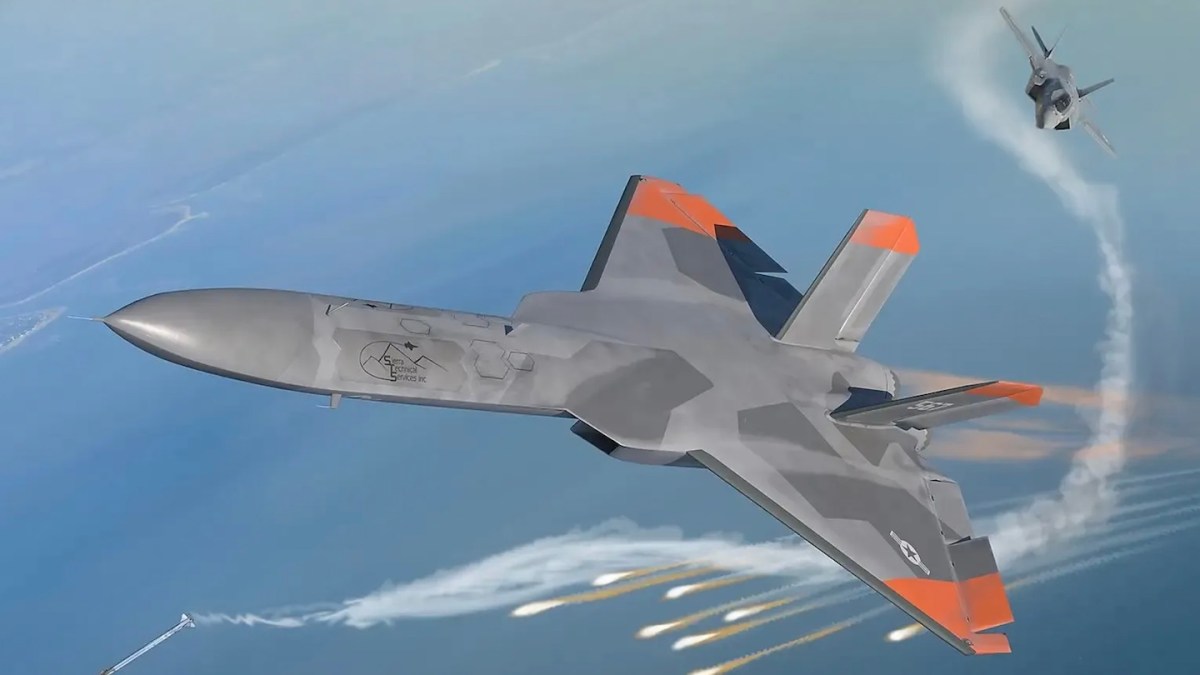
Sierra Technical Services’ 5GAT stealthy target drone seen here is a design the U.S. military has been at least testing for some time now. Sierra Technical Services
A different set of requirements are outlined for targets representing C-130 -sized multi-engine aircraft.
Here, the RFI calls for “matching the physical scale, slow subsonic flight envelopes, and propeller or turbofan propulsion characteristics of larger multi-engine aircraft.”
The Y-9 transport aircraft is broadly the Chinese equivalent of the C-130. Photo by VCG/VCG via Getty Images VCG
Those targets would need representative physical volume as well as basic RF and IR emissions and realistic radar returns. The Air Force specifically says these characteristics are intended to help verify missile-seeker guidance and assess warhead lethality against large-airframe targets.
For still larger aircraft, such as strategic bombers and AEW&C platforms, the emphasis shifts toward physical scale and signatures. The service wants targets capable of reproducing the “massive physical dimensions, multi-spectral thermal signatures, and heavy-aircraft radar strategic threats” associated with these aircraft.
China’s new heavyweight AEW&C platform, the KJ-3000, which is based on the four-jet Y-20 cargo plane. via Chinese internet
That requirement highlights one of the limitations of today’s subscale aerial targets. A small drone can be made to generate a particular radar return, but there are important differences between artificially reproducing a signature and putting a target into the test environment that physically occupies something approaching the volume and presentation of the aircraft being simulated.
The proposed family would also encompass multiple classes of uncrewed aircraft.
For Group 5 UAVs, the targets should be capable of operating at altitudes up to 50,000 feet.
A stock picture of a U.S. Navy MQ-4C Triton surveillance drone. This represent Group 5 UAVs, which are the largest and most advanced uncrewed aircraft systems. U.S. Navy USN
Group 3 and Group 4 targets would need to fly at approximately Mach 0.5 to 0.8 and maneuver at between 3 and 6 Gs.
At the other end of the spectrum, Group 1 and Group 2 targets should fly below 150 knots and be capable of operating in swarms.
The inclusion of swarm operations reflects the fact that the Air Force wants at least part of the new target family to be able to reproduce the massed airborne threat that small uncrewed systems can present.
Unmanned Aerial Systems conduct a swarm demonstration in preparation for the Joint Pacific Readiness Center Exportable Exercise in Laoag City, Philippines, May 10, 2026. U.S. Army photo by Spc. Hunter Carpenter Spc. Hunter Carpenter
That could allow weapons and sensors to be evaluated against scenarios involving numerous inexpensive targets rather than a single isolated aircraft.
The Air Force has operated remote-controlled aerial targets for decades, but many of its existing systems represent very different approaches.
The BQM-167A , which entered service in 2007, is a subsonic subscale target roughly 20 feet long with an 11-foot wingspan. It is inexpensive relative to a fighter-sized aircraft, but its physical dimensions are nowhere near those of many of the aircraft the Air Force may need to replicate.
A BQM-167A Subscale Aerial Target launches from Tyndall Air Force Base, Florida, December 8, 2023. U.S. Air Force photo by Venessa Armenta Venessa Armenta
At the other end of the scale, converted QF-16s provide a full-scale target with genuine fighter performance, making them useful for testing against fourth-generation fighter-type threats.
But a converted F-16 is expensive to operate, cannot be expended in large numbers, and increasingly falls short when it comes to replicating a fifth-generation stealth aircraft, let alone a strategic bomber, an airborne early warning and control (AEW&C) aircraft, or a mass of inexpensive drones.
The new RFI appears designed to bridge that gap, and potentially eliminate it altogether by creating multiple classes of targets optimized for different threats.
Significantly, the effort put the requirement for targets to reproduce the characteristics that modern weapons and sensors use to find and defeat aircraft in the foreground.
That suggests the targets are intended to support testing across the entire kill chain, from initial detection and tracking through seeker acquisition, guidance, and terminal engagement.
An F-35A assigned to the 31st Test Evaluation Squadron from Edwards Air Force Base, California, releases AIM-120 AMRAAM and AIM-9X missiles at QF-16 targets during a live-fire test over the Gulf of Mexico on June 12, 2018. U.S. Air Force Senior Master Sgt. Michael Jackson
There is also a strong emphasis on simplicity and scalability.
A target that costs almost as much as the system being tested is of limited value if the objective is to conduct repeated, realistic engagements. A target that can be manufactured cheaply enough to be routinely expended, meanwhile, would enable much more aggressive testing and larger numbers of test scenarios.
While it is relatively straightforward to produce a low-cost drone, the challenge will be producing one that can fly above 40,000 feet at supersonic speed, perform high-G maneuvers, generate controlled low-observable radar signatures, reproduce multispectral IR characteristics and conduct electronic attack.
The Air Force is therefore effectively asking industry to find the sweet spot where high-fidelity threat representation and mass-produced affordability intersect.
Chinese J-20 stealth fighters, one of the higher-end threats that the Air Force wants new target drones to help replicate. PLAAF
If it succeeds, the resulting target fleet could look very different from today, with the Air Force employing a family of relatively inexpensive systems that can be configured to represent almost any fixed-wing aircraft that might be encountered.
As well as training, the same family of drones could support development and evaluation of radars, infrared sensors, electronic warfare systems, air defense networks, and other technologies against a much broader range of realistic airborne threats.
The breadth of the requirement is noteworthy. If it achieves its goals, it could allow the Air Force to replicate large numbers of future Collaborative Combat Aircraft (CCAs) as well as simulating swarms of small drones and barrages of one-way attack drones , reflecting the expected scale and diversity of future air warfare.
The new requirement ultimately calls for targets that can reproduce the speed, maneuverability, size, radar signature, infrared signature, electromagnetic emissions and electronic warfare capabilities of an increasingly diverse range of aircraft, while being cheap enough that losing them is an acceptable cost of testing and training.
Contact the author: thomas@thewarzone.com
Comments couldn’t be loaded. Please refresh the page.
发布于美国东部时间2026年8月18日上午8:26
Sierra 技术服务
美国空军正在寻找一种新型空中目标,能够模拟极其广泛的空中威胁,从集群作战的小型无人机到隐形战斗机、大型无人飞机、战略轰炸机和空中预警机。
该部门希望这些目标足够逼真,能够挑战现代传感器和武器,但又足够便宜和简单,以便在测试过程中可以经常冒险使用,甚至摧毁。
这些要求已在一份新的空军信息征询书(RFI)中列出,该征询书要求开发一系列系统,能够代表“从廉价的‘业余无人机’到最先进的假想敌战斗机和大型飞机等各种空中威胁”。回复截止日期为9月28日。
该部门表示,下一代系统应该足够便宜且易于制造,以便在需要时可以“作为消耗品或一次性用品处理”。
这与某些现有空中靶标的经济性截然不同。例如,空军的QF-16全尺寸空中靶标基于改装的战斗机,必要时可配备人员。它解决了将全尺寸高性能靶标送上空中的问题,但用一架F-16进行测试与损失一个专门设计用于批量生产和使用的靶标有着本质区别。空军还使用各种专用无人机作为靶标,我们稍后会详细介绍。
这项新举措也特意对传统国防工业基础之外的方法持开放态度。
该信息征询书呼吁业界提交方案,“包括商用、改进型商用、两用和非研发解决方案”。政府“尤其关注非传统、商用衍生或两用解决方案”,这些方案在“成本、可扩展性和简易性方面优于传统系统”。
这种措辞表明,空军未必是想启动另一个全新的飞机项目。相反,它似乎更倾向于利用现有的商业技术、制造方法、推进系统、电子设备和其他现成的零部件,以更低的成本、更大的数量生产目标机型。
所提出的系统将涵盖几个不同的威胁类别,其要求会根据目标所代表的含义而发生显著变化。
对于先进的战斗机,空军希望目标能够具备“超音速能力(在 40,000 英尺高度达到并超过 1.6 马赫)”,以及高机动性和高 G 机动能力。
一架隶属于佛罗里达州廷德尔空军基地第82空中靶机中队的美国空军QF-16全尺寸空中靶机正在进行高速飞行表演。美国空军上尉贾斯汀·戴维森-比比拍摄。
为了应对包括隐形威胁在内的更先进的威胁,空军表示,新的目标还应提供精确的低可观测雷达横截面剖面、多光谱红外特征、主动射频发射和综合电子攻击能力。
这对于测试针对第五代威胁(以及未来可能出现的威胁)的武器和传感器尤为重要。传统的缩比目标可以重现飞机飞行行为的某些方面,但它未必能重现先进作战飞机所面临的雷达、红外、电磁或电子战环境。
多年来,美国空军一直试图采购新型全尺寸靶机,或者至少能够模拟高速战术喷气式飞机的靶机。正如最新发布的征求意见稿(RFI)所示,这些无人机的目标还包括具备隐身能力和其他更先进的功能,或者能够高度逼真地模拟这些功能。然而,尽管已经启动了诸如第五代空中靶机(5GAT)等项目,但迄今为止,这方面的进展仍然极其有限。
图中所示的Sierra Technical Services公司的5GAT隐形靶机,是美国军方至少已经测试了一段时间的设计。
针对 C-130 大小的多引擎飞机,制定了一套不同的要求。
此处的 RFI 要求“匹配大型多引擎飞机的物理尺寸、慢速亚音速飞行包线以及螺旋桨或涡扇推进特性”。
运-9运输机大致相当于美国的C-130。图片来源:VCG/VCG via Getty Images VCG
这些目标需要具备代表性的物理体积、基本的射频和红外辐射以及真实的雷达回波。空军明确指出,这些特性旨在帮助验证导弹导引头的制导能力,并评估弹头对大型机身目标的杀伤力。
对于战略轰炸机和预警机等更大的飞机,重点则转向物理尺寸和特征。军方需要能够重现这些飞机“庞大的物理尺寸、多光谱热特征以及重型飞机雷达战略威胁”的目标。
中国新型重型预警机平台KJ-3000,以四引擎运-20货机为基础研发。(图片来自中国互联网)
这一要求凸显了当今亚比例尺空中目标的一个局限性。虽然可以制造小型无人机来产生特定的雷达回波,但人工模拟雷达信号与将目标放置在实际测试环境中,使其体积和外观接近被模拟飞机的目标之间存在着重要的区别。
拟议中的系列飞机还将包括多个类别的无人驾驶飞机。
对于第 5 组无人机,目标应能够在高达 50,000 英尺的高度上运行。
一张美国海军MQ-4C“海神”侦察无人机的库存照片。该无人机属于第五组无人机,是目前最大、最先进的无人飞行器系统。美国海军
第 3 组和第 4 组目标需要以大约 0.5 至 0.8 马赫的速度飞行,并以 3 至 6 G 的过载进行机动。
另一方面,第 1 组和第 2 组目标的飞行速度应低于 150 节,并且能够成群作战。
集群作战的加入反映了空军希望至少一部分新型目标系列能够重现小型无人系统所能构成的大规模空中威胁。
2026年5月10日,在菲律宾老沃市,无人机系统进行集群演示,为联合太平洋战备中心出口演习做准备。美国陆军下士亨特·卡彭特摄。
这样就可以在涉及众多廉价目标的场景下评估武器和传感器,而不是在单个孤立的飞机上进行评估。
空军使用遥控空中靶标已有数十年历史,但其现有的许多系统代表了截然不同的方法。
BQM-167A于2007年服役,是一款亚音速缩小比例靶机,长约20英尺,翼展约11英尺。与战斗机相比,它的价格相对低廉,但其物理尺寸与空军可能需要仿制的许多飞机相差甚远。
2023 年 12 月 8 日,一枚 BQM-167A 小型空中目标从佛罗里达州廷德尔空军基地发射。美国空军摄影:Venessa Armenta Venessa Armenta
另一方面,改装后的 QF-16 提供了一个具有真正战斗机性能的全尺寸目标,使其可用于测试对抗第四代战斗机类型的威胁。
但是,改装后的 F-16 运营成本很高,不能大量使用,而且在复制第五代隐形飞机方面越来越落后,更不用说战略轰炸机、空中预警和控制 (AEW&C) 飞机或大量廉价无人机了。
新的 RFI 似乎旨在弥合这一差距,并通过创建针对不同威胁优化的多个目标类别,有可能完全消除这一差距。
值得注意的是,这项工作将目标再现现代武器和传感器用来发现和击落飞机的特征的要求放在了首要位置。
这表明这些目标旨在支持对整个杀伤链的测试,从最初的探测和跟踪到寻的器获取、制导和最终交战。
2018年6月12日,一架隶属于加利福尼亚州爱德华兹空军基地第31测试评估中队的F-35A战斗机在墨西哥湾上空进行实弹射击测试,向QF-16目标发射了AIM-120 AMRAAM和AIM-9X导弹。美国空军高级军士长迈克尔·杰克逊
此外,设计还非常注重简洁性和可扩展性。
如果目标是进行反复、贴近实战的对抗演练,那么成本几乎与被测系统相当的目标物价值有限。相反,如果目标物制造成本足够低,可以定期消耗,则可以进行更积极的测试,并模拟更多种类的测试场景。
虽然制造低成本无人机相对容易,但挑战在于制造出能够在 40,000 英尺以上以超音速飞行、执行高 G 机动、产生可控的低可观测雷达特征、再现多光谱红外特征并进行电子攻击的无人机。
因此,美国空军实际上是在要求业界找到高保真威胁模拟和大规模生产的经济性之间的最佳平衡点。
中国歼-20隐形战斗机是空军希望新型靶机能够模拟的高端威胁之一。
如果成功,最终的目标机队可能会与今天大不相同,空军将采用一系列相对便宜的系统,这些系统可以配置成代表可能遇到的几乎任何固定翼飞机。
除了用于训练外,同一系列无人机还可以支持雷达、红外传感器、电子战系统、防空网络和其他技术的发展和评估,以应对更广泛的现实空中威胁。
这项需求的范围之广值得关注。如果它能实现其目标,它将使空军能够复制大量的未来协同作战飞机(CCA),并模拟小型无人机群和单向攻击无人机群,从而反映未来空战的预期规模和多样性。
新要求最终要求目标能够重现日益多样化的飞机的速度、机动性、尺寸、雷达特征、红外特征、电磁辐射和电子战能力,同时价格足够低廉,以至于损失目标可以作为测试和训练的可接受成本。
联系作者:thomas@thewarzone.com
评论加载失败,请刷新页面。