CNA Explains: What goes into an MP’s allowance and what is it used for?CNA 解读:国会议员的津贴包括哪些内容,以及这些津贴用于哪些用途?
The monthly allowance for MPs will rise to S$18,500 from Oct 15. Here's a breakdown of who gets what and why.
The monthly allowance for MPs will rise to S$18,500 from Oct 15. Here's a breakdown of who gets what and why.
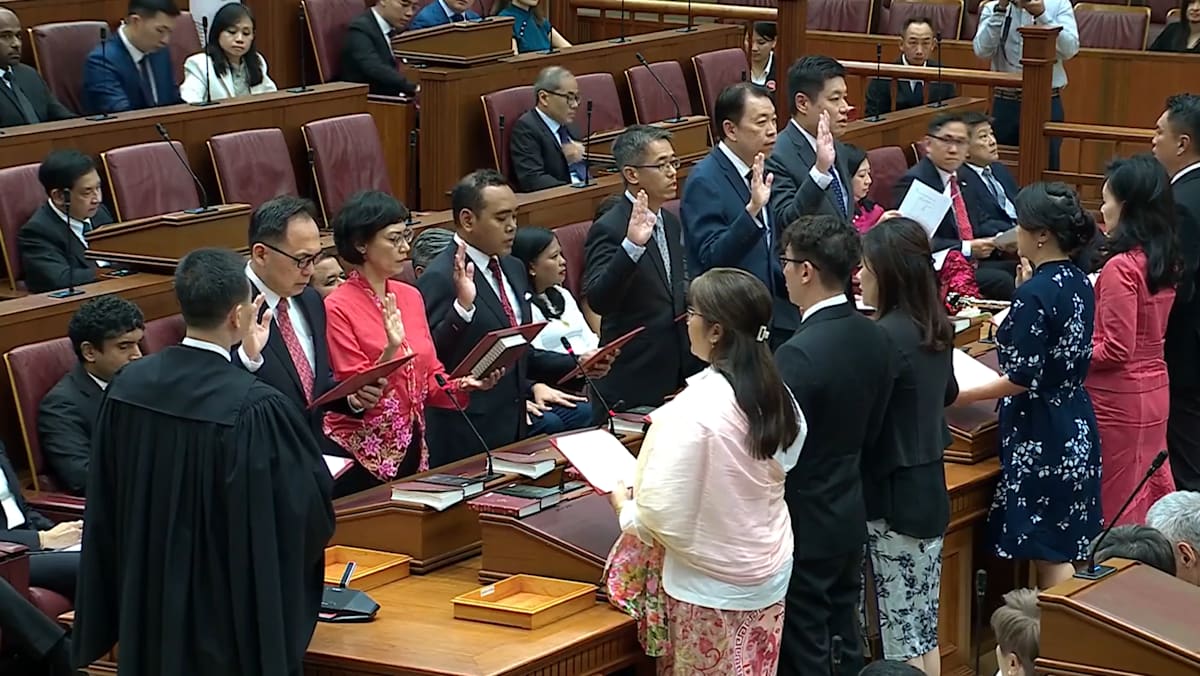
MPs being sworn in at the opening of Singapore's 15th Parliament.
This audio is generated by an AI tool.
SINGAPORE: Changes to the allowances of all Members of Parliament (MPs) accompanied revisions to political office holders' salaries announced on Tuesday (Sep 8).
Like ministerial salaries, this is the first change in MP allowance since 2011. The changes follow recommendations from an independent committee reviewing political salaries and MP allowances.
Prime Minister Lawrence Wong told parliament that the allowance is not a token sum, but a substantial amount that lets them carry out their responsibilities in parliament and in their constituencies.
Coordinating Minister for Public Services Chan Chun Sing said the increase to MP allowances will cost the government about S$6.6 million (US$5.2 million) more a year.
The independent review committee also noted that considerations for community-related roles, including MPs, may differ from those for full-time political appointment holders. It recommended that the government study delinking MP allowances from political salary benchmarks.
What goes into an MP's allowance?
An MP’s monthly allowance is currently S$13,750, and will increase to S$18,500 on Oct 15.
The allowance is subject to Central Provident Fund contributions and tax deductions. MPs also contribute a portion of their allowance to their political party.
MPs do not receive pensions. Their medical benefits fall under the Medisave-cum-Subsidised Outpatient scheme, aligned with the public service.
Who receives the allowance?
Elected MPs who entered parliament by winning a General Election receive the full allowance.
MPs who hold ministerial or other political office receive the allowance too, on top of their full-time roles running the day-to-day affairs of the state.
CNA Games Guess Word Crack the word, one row at a time Buzzword Create words using the given letters Mini Sudoku Tiny puzzle, mighty brain teaser Mini Crossword Small grid, big challenge Word Search Spot as many words as you can Show More Show Less
What about NCMPs and NMPs?
Allowances for Non-Constituency MPs (NCMPs) will rise from 15 per cent of an MP’s annual allowance to 30 per cent, or S$5,550 a month.
Mr Chan said this reflects the conferment of full voting rights to NCMPs since 2017, and brings their allowance into better alignment with their parliamentary responsibilities.
Nominated MPs will keep their existing peg of 15 per cent of an MP's allowance.
The Leader of the Opposition, currently a vacant position, will continue to receive double an MP's allowance, raising the role's annual allowance from S$385,000 to S$518,000.
What is the allowance used for?
The allowance helps MPs perform community-based and legislative functions, including looking after the needs of their constituents and raising their concerns in parliament.
“Fulfilling these duties well requires strong commitment and hard work from an MP,” the independent review committee said in its report.
The allowance typically goes towards expenses incurred in discharging MP duties. This includes transport costs for grassroots events, attending parliamentary committee sessions and official briefings.
It also covers less visible costs such as buying food and refreshments for volunteers or giving “bai jin” – condolence money – at wakes within the constituency. MPs with smaller networks of grassroots supporters may rely on the allowance more heavily to fund such activities.
MPs are paid an allowance for the time and expenses incurred in carrying out these roles. Most serve on a part-time basis, letting them bring experience from other fields into parliamentary debate.
Why is an allowance increase necessary?
Mr Chan, who delivered a ministerial statement in parliament after Mr Wong on Tuesday, said the increase was to account for inflation.
Mr Wong said providing a proper allowance has enabled both the People’s Action Party and the Workers’ Party to recruit and field strong candidates.
“We can see the result in this House. We have MPs with a wide range of backgrounds and experience, who bring different perspectives to our debates,” he said.
“We may disagree strongly across the aisle, but the quality of debate is high, and Singapore is better for it.”
Want an issue or topic explained? Email us at digitalnews [at] mediacorp.com.sg . Your question might become a story on our site.
Get our pick of top stories and thought-provoking articles in your inbox
Stay updated with notifications for breaking news and our best stories
Join our channel for the top reads for the day on your preferred chat app
从10月15日起,国会议员的月津贴将增至18500新元。以下是津贴分配明细及原因。
新加坡第十五届国会开幕式上,议员们宣誓就职。
这段音频由人工智能工具生成。
新加坡:周二(9月8日)宣布调整政治官员薪资的同时,也调整了所有国会议员的津贴。
与部长级薪酬一样,这是自 2011 年以来议员津贴的首次调整。此次调整是根据一个独立委员会对政治薪酬和议员津贴进行审查后提出的建议而进行的。
黄循财总理向国会表示,这笔津贴并非象征性的金额,而是一笔可观的款项,使他们能够履行在国会和选区的职责。
公共服务统筹部长陈振声表示,提高议员津贴将使政府每年多支出约 660 万新元(520 万美元)。
独立审查委员会还指出,与社区相关职务(包括议员)的考量因素可能与全职政治任命人员有所不同。委员会建议政府研究将议员津贴与政治薪酬基准脱钩的方案。
议员津贴包括哪些项目?
国会议员目前的月津贴为13750新元,将于10月15日增加到18500新元。
该津贴需缴纳中央公积金并扣除税款。议员们还会将部分津贴上缴给其所属政党。
国会议员不领取退休金。他们的医疗福利属于保健储蓄兼门诊补贴计划,与公务员的福利一致。
谁领取津贴?
通过赢得大选进入议会的当选议员可获得全额津贴。
除了全职负责国家日常事务外,担任部长或其他政治职务的议员也可以领取津贴。
CNA游戏 猜词游戏 逐行破解单词 流行词游戏 用给定的字母组成单词 迷你数独 小小谜题,挑战你的大脑 迷你填字游戏 小方格,大挑战 单词搜索 尽可能多地找出单词 显示更多 显示更少
NCMP 和 NMP 呢?
非选区议员(NCMP)的津贴将从议员年度津贴的 15% 提高到 30%,即每月 5,550 新元。
陈先生表示,这反映了自 2017 年以来非选区议员被赋予完全投票权,并使他们的津贴与他们的议会职责更加相符。
委任议员将继续沿用议员津贴15%的现有标准。
反对党领袖一职目前空缺,将继续领取议员津贴的两倍,使该职位的年度津贴从 385,000 新元提高到 518,000 新元。
这笔津贴是用于什么用途的?
该津贴有助于议员履行社区和立法职能,包括照顾选民的需求并在议会中提出他们的关切。
独立审查委员会在其报告中指出:“要做好这些职责,需要议员付出极大的努力和坚定的决心。”
这笔津贴通常用于支付议员履行职责所产生的费用,包括参加基层活动、出席议会委员会会议和官方简报会的交通费。
它还涵盖一些不太显眼的费用,例如为志愿者购买食物和茶点,或在选区内的丧葬仪式上发放“白金”(丧费)。基层支持者网络较小的议员可能更依赖这笔津贴来资助此类活动。
议员们会获得津贴,用于支付履行职责所需的时间和费用。大多数议员都是兼职的,这使他们能够将其他领域的经验带入议会辩论中。
为什么有必要增加津贴?
周二,陈先生在黄先生之后在国会发表部长声明,称此次加薪是为了应对通货膨胀。
黄先生表示,提供适当的津贴使得人民行动党和工人党都能招募和推出优秀的候选人。
他说:“我们可以在本议院看到成果。我们的议员拥有广泛的背景和经验,他们为我们的辩论带来了不同的视角。”
“我们两党之间可能存在强烈分歧,但辩论质量很高,这对新加坡大有裨益。”
想了解某个问题或话题?请发送邮件至 digitalnews [at] mediacorp.com.sg。您的提问可能会成为我们网站上的报道内容。
订阅我们的邮件,即可获取精选热点新闻和引人深思的文章。
订阅通知,第一时间获取突发新闻和精彩报道。
加入我们的频道,即可在您常用的聊天应用上获取当日热门文章。