How can the Pentagon arm Ukraine amid stalled aid package?在援助计划停滞不前的情况下,五角大楼如何才能武装乌克兰?
The department is weighing options to keep arms flowing to ammunition-starved Ukraine, but there's no replacement for the aid package stalled in Congress.
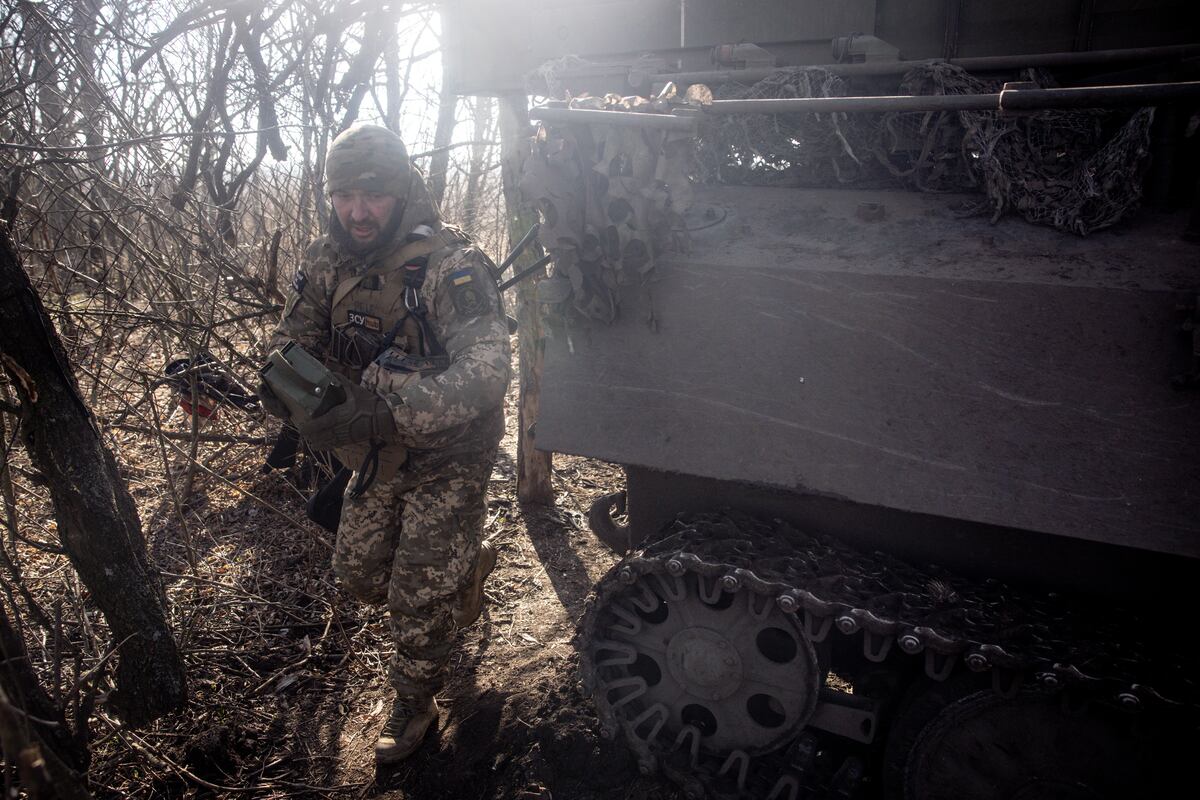
The Pentagon is mulling workarounds to arm Ukraine as the country faces severe ammunition and artillery shortages amid recent Russian advances. But the department is limited in its ability to fill the gap given President Joe Biden’s funding request for additional Ukraine military aid remains stalled in Congress.
One stopgap option would transfer additional weapons from U.S. stocks without funding to replenish that equipment. Another option uses the Excess Defense Articles program to send U.S. equipment to third-party countries that then send older weapons to Kyiv.
The European Union is also stepping up its assistance. It passed $54 billion in economic support for Ukraine after Hungary dropped its opposition.
But none of these stopgap measures to staunch the bleeding come close to the influx of arms for Kyiv that Congress could unlock if it passes the $95 billion foreign aid bill for Ukraine, Israel and Taiwan .
“The consequence of not doing so is likely Ukraine’s defeat,” Sen. Chris Murphy, D-Conn., told Defense News last week after returning from a congressional delegation to Europe. “There is not a plan B there. There’s certainly more that Europe could do , but there are certain weapons systems that only the United States can provide and maintain. And there is a hard limit to the amount of resources Europe can put in if the United States chooses to leave the coalition.”
Ukrainian officials also attributed Russia’s recent conquest of Avdiivka to the lack of available weaponry when Senate Majority Leader Chuck Schumer, D-N.Y., led a congressional delegation to the war-torn country last week.
House Speaker Mike Johnson, R-La., has refused to hold a vote on the foreign aid bill, which includes $48.3 billion in additional military assistance for Ukraine. The Senate passed the bill 70-29 earlier this month over objections from former President Donald Trump, the likely Republican presidential nominee.
Congress passed a cumulative $113 billion in military and economic aid for Ukraine after Russia’s full-scale invasion in February 2022, but has not provided additional funding since December 2022.
Biden hosted congressional leaders at the White House on Tuesday, where he joined Democrats and outgoing Senate Minority Leader Mitch McConnell, R-Ky., in pushing Johnson to pass the bill.
In the meantime, the Pentagon is weighing whether it should use roughly $4 billion left of drawdown authority to continue arming Ukraine from U.S. weapons stockpiles, even though it does not have the money to replenish those inventories without the foreign aid bill, CNN reported Wednesday .
The Pentagon did not directly address deliberations about transferring additional weapons without replenishment funding.
“The [Defense Department] continues to urge Congress to pass a supplemental to support Ukraine in its time of need and to replenish our stocks,” Pentagon spokesman Lt. Col. Garron Garn told Defense News in a statement.
The Pentagon used its last $1 billion in Ukraine replenishment funding to backfill U.S. stockpiles in December, with the White House noting that would be the last remaining assistance, absent congressional action.
“At issue here again is the question of impacting our own readiness, as a nation, and the responsibilities that we have,” Pentagon press secretary Gen. Patrick Ryder said last month. “While we do have that $4.2 billion in authority, we don’t have the funds available to replenish those stocks, should we expend that. And with no timeline in sight, we have to make those hard decisions.”
The remaining $4.2 billion in Ukraine transfer authority stems from an accounting error the Pentagon made last year . The error prompted Pentagon Inspector General Robert Storch to announce an audit of the valuation of weapons sent to Ukraine.
Excess Defense Articles
Another, more limited option involves third-party countries transferring Soviet-era equipment to Ukraine in exchange for more U.S. weapons through the Pentagon’s Excess Defense Articles program. The program also allows the U.S. to send equipment that helps countries transition away from Russian arms.
“The United States is providing security assistance to partners such as Ecuador and Zambia to help them transition off Russian equipment, but there’s more we can and must do,” the assistant secretary of state for political-military affairs, Jessica Lewis, said in December.
Ecuadorian President Daniel Noboa said in January that the U.S. would send $200 million in refurbished weapons to help fight cartels in exchange for “scrap” equipment. But Noboa backtracked last week after Russia imposed a ban on Ecuadorian banana and clove imports.
“To our surprise, the United States has publicly stated that this equipment will be used in the armed conflict in Ukraine, and we do not want to be part of it,” Noboa said.
The Greek newspaper Kathimerini reported in January that the U.S. is providing Greece with equipment through the Excess Defense Articles program, including two C-130H aircraft, three Protector-class ships and 60 Bradley armored fighting vehicles.
“Greece has provided substantial military assistance to Ukraine, including Soviet-era BMP infantry fighting vehicles, artillery and small arms,” the U.S. State Department told Defense News. “We thank the government of Greece for its generosity and encourage additional donations, in the future.”
The Defense Security Cooperation Agency, which oversees the Excess Defense Articles program, has not updated the public list of transfers since 2020, despite a congressional requirement that it do so. As such, it’s unclear what other countries are receiving U.S. weapons through the program.
The agency told Defense News it expects to update the list within “several weeks” but did not explain why updates stopped in 2020.
Noah Robertson contributed to this report.
Bryant Harris is the Congress reporter for Defense News. He has covered U.S. foreign policy, national security, international affairs and politics in Washington since 2014. He has also written for Foreign Policy, Al-Monitor, Al Jazeera English and IPS News.
由于俄罗斯近期在乌克兰的军事行动中取得进展,该国面临严重的弹药和火炮短缺,五角大楼正在考虑变通办法向乌克兰提供武器。但由于拜登总统提出的增加对乌克兰军事援助的拨款请求在国会仍未获得通过,国防部填补这一缺口的能力有限。
一种权宜之计是从美国库存中转移更多武器,但缺乏补充这些装备的资金。另一种方案是利用剩余国防物资计划,将美国装备运送给第三方国家,再由这些国家将旧武器转运至基辅。
欧盟也在加大援助力度。在匈牙利放弃反对后,欧盟向乌克兰提供了540亿美元的经济援助。
但是,如果国会通过向乌克兰、以色列和台湾提供 950 亿美元援助的对外法案,这些止损措施中的任何一项都无法与向基辅输送武器所带来的巨大利益相提并论。
“如果不这样做,后果很可能是乌克兰战败,”康涅狄格州民主党参议员克里斯·墨菲上周随国会代表团访问欧洲后告诉《防务新闻》。“没有备选方案。欧洲当然可以做得更多,但有些武器系统只有美国才能提供和维护。如果美国选择退出联盟,欧洲能够投入的资源也是有限的。”
乌克兰官员也将俄罗斯最近占领阿夫迪伊夫卡归咎于缺乏可用的武器。上周,参议院多数党领袖查克·舒默率领国会代表团访问了饱受战争蹂躏的乌克兰。
众议院议长、路易斯安那州共和党籍众议员迈克·约翰逊拒绝就对外援助法案进行投票,该法案包括向乌克兰提供483亿美元的额外军事援助。本月初,参议院以70票赞成、29票反对的投票结果通过了该法案,但遭到了前总统、共和党总统候选人唐纳德·特朗普的反对。
在俄罗斯于 2022 年 2 月全面入侵乌克兰之后,美国国会通过了累计 1130 亿美元的军事和经济援助,但自 2022 年 12 月以来,国会没有提供额外的资金。
周二,拜登在白宫接待了国会领导人,与民主党人和即将卸任的参议院少数党领袖、肯塔基州共和党参议员米奇·麦康奈尔一起敦促约翰逊通过该法案。
与此同时,据美国有线电视新闻网(CNN)周三报道,五角大楼正在权衡是否应该动用剩余的约 40 亿美元撤军授权,继续从美国武器库存中向乌克兰提供武器,尽管如果没有对外援助法案,美国没有足够的资金来补充这些库存。
五角大楼没有直接回应关于在没有补充资金的情况下转移更多武器的讨论。
五角大楼发言人加伦·加恩中校在一份声明中告诉《防务新闻》:“国防部继续敦促国会通过一项补充拨款,以支持乌克兰渡过难关,并补充我们的库存。”
五角大楼在 12 月份动用了最后 10 亿美元的乌克兰补给资金来补充美国的库存,白宫指出,如果没有国会采取行动,这将是最后一笔援助。
五角大楼新闻秘书帕特里克·莱德将军上个月表示:“这里的问题再次回到了影响我们国家战备状态以及我们所承担的责任上。虽然我们有42亿美元的授权,但如果动用这笔资金,我们就没有足够的资金来补充库存。而且由于没有时间表,我们必须做出这些艰难的决定。”
剩余的42亿美元乌克兰转移授权源于五角大楼去年犯下的一个会计错误。这一错误促使五角大楼监察长罗伯特·斯托奇宣布对运往乌克兰的武器估值进行审计。
剩余国防用品
另一种选择是,第三方国家通过五角大楼的剩余国防物资计划,向乌克兰转移苏联时代的装备,以换取更多美国武器。该计划还允许美国向一些国家提供装备,帮助它们逐步摆脱对俄罗斯武器的依赖。
“美国正在向厄瓜多尔和赞比亚等伙伴国提供安全援助,帮助它们摆脱对俄罗斯装备的依赖,但我们还能做更多,而且必须做更多,”美国负责政治军事事务的助理国务卿杰西卡·刘易斯在12月表示。
厄瓜多尔总统丹尼尔·诺沃亚今年1月表示,美国将提供价值2亿美元的翻新武器,以帮助厄瓜多尔打击贩毒集团,以换取厄瓜多尔的“废旧”装备。但上周,在俄罗斯禁止进口厄瓜多尔香蕉和丁香后,诺沃亚收回了这一承诺。
“令我们惊讶的是,美国公开表示,这批装备将被用于乌克兰的武装冲突,而我们不想卷入其中,”诺博亚说。
希腊报纸《每日新闻报》1月份报道称,美国正通过剩余国防物资计划向希腊提供装备,包括两架C-130H飞机、三艘“保护者”级舰艇和60辆布雷德利装甲战车。
美国国务院告诉《防务新闻》:“希腊向乌克兰提供了大量军事援助,包括苏联时代的BMP步兵战车、火炮和小型武器。我们感谢希腊政府的慷慨解囊,并鼓励未来提供更多援助。”
负责监管剩余国防物资项目的国防安全合作局自2020年以来一直未更新公开的转让清单,尽管国会要求其这样做。因此,目前尚不清楚还有哪些国家通过该项目获得了美国武器。
该机构告诉《防务新闻》,预计将在“几周内”更新该名单,但没有解释为什么在 2020 年停止更新。
诺亚·罗伯逊对本报道亦有贡献。
布莱恩特·哈里斯是《防务新闻》的国会记者。自2014年以来,他一直在华盛顿报道美国外交政策、国家安全、国际事务和政治。他还曾为《外交政策》、《Al-Monitor》、《半岛电视台英语频道》和IPS新闻撰稿。