Novel interceptor drones bend air-defense economics in Ukraine’s favor新型拦截无人机使乌克兰的防空经济形势向有利于乌克兰的方向转变。
Artificial intelligence plays no role yet in interception missions — today it is still manual ramming or close-in detonation.
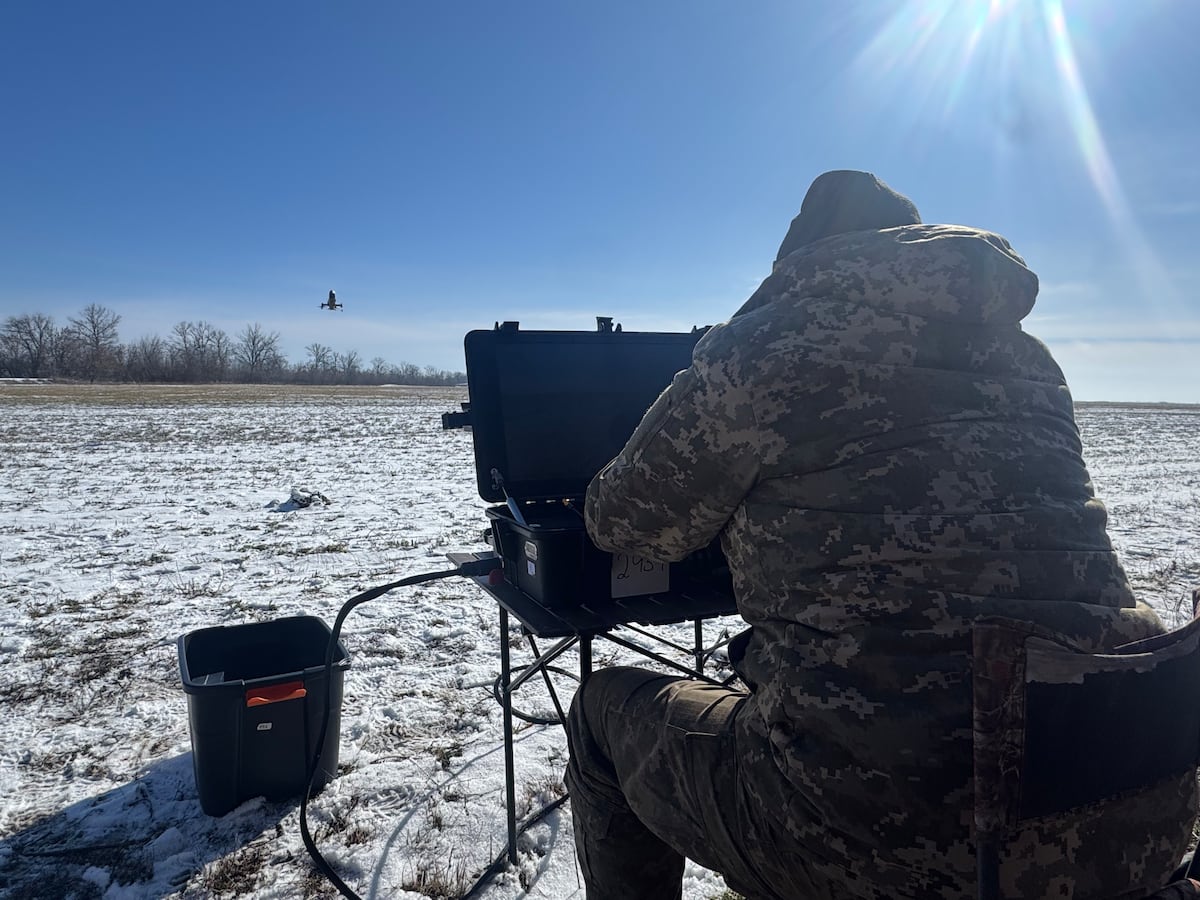
KYIV, Ukraine – One in every three Russian aerial targets destroyed over Ukraine is now brought down not by a missile or a gun — but by interceptor drones that each cost less than a used car, Ukraine’s air force says.
Over the capital, the new class of interceptors is even more effective. Drones were credited with more than 70% of Shahed downings in February, Ukraine’s Commander-in-Chief Oleksandr Syrskyi announced on Tuesday.
The math tells the story: A single Patriot interceptor costs over $3 million, a NASAMS round slightly over $1 million — and each Shahed costs Russia as little as $35,000 to manufacture, according to the Center for Strategic and International Studies .
That puts Ukraine on the wrong side of an approximately 85-to-1 cost exchange every time it uses a Patriot to defend against a drone.
But at $3,000 to $5,000 apiece and an average success rate over 60%, interceptors are now changing the calculus of war, Zelenskyy told Fox News late last year.
These drones, a weapons category that barely existed a few years ago, have become the fastest-growing layer of Ukraine’s air defense.
“We are the first in the world to have a system of destroying drones with drones in the air,” Col. Yuriy Cherevashenko, deputy commander of UAVs for air defense of the Ukrainian Air Force, said in a video marking the fourth anniversary of Russia’s full-scale invasion.
Facing an unrelenting adversary whose economy dwarfs its own by nearly tenfold, Ukraine had no choice but to outthink rather than outspend, and interceptor drones — mobile, cheap and scalable enough to answer Russian mass production with Ukrainian ingenuity — have emerged as their biggest bet.
Now, what began as battlefield improvisation has become a deliberate war strategy.
“Drones now occupy a wide segment of the air defense system,” Cherevashenko said. “In the future, they will be perhaps the most numerous means of destroying aerial targets.”
Their rapid development over the last year tracked Russia’s escalating use of Iranian-designed Shahed attack drones, which by mid-2025 were arriving in record-breaking waves that overwhelmed Ukraine’s missile-based air defenses faster than Western allies could resupply them.
“We needed to supply a lot of interceptors this year, because without them, the winter would have been even harder for Ukraine,” Alona Zhuzha, director of digitalization at Ukraine’s newly established Defense Procurement Agency, told Military Times.
The National Security and Defense Council (NSDC) said the country produced 100,000 interceptor drones in 2025 and reported that production capacity has grown eightfold compared to the prior period.
Frontline units received an average of over 1,500 interceptor drones per day in December and January — up from about 1,000 per day during the previous period, the MOD said at the beginning of the year.
That supply is translating into operational tempo: Last month, interceptor drones flew approximately 6,300 sorties and destroyed more than 1,500 Russian UAVs of various types, Syrskyi said.
Interceptors are now a top priority on the DOT-Chain Defence marketplace, the digital platform through which units order directly from manufacturers.
“They are very critical for our defense,” Zhuzha said.
Russian tech continues to evolve, too.
Moscow’s drones have been equipped with rear-facing infrared spotlights designed to blind interceptor pilots, and some have been armed with air-to-air missiles to shoot back, Serhii “Flash” Beskrestnov, a radio expert and early advocate of interceptor tech who was recently appointed as an adviser to the Ministry of Defence, wrote on Telegram in January.
Russia has also expanded its use of decoy drones — foam-and-plywood models including the Gerbera and Parody — which now constitute roughly one-third of all Russian mass attacks, specifically designed to exhaust interceptors and overload the detection layer, according to Defence-UA .
Ukraine now flies several distinct classes of interceptors: cheap FPV airframes built for last-kilometer kills — the kind that catch a Shahed before it reaches a substation or apartment block — and faster pursuit systems tied to forward drone lines, designed to launch immediately upon detection, climb fast, and intercept before the threat crosses into civilian airspace, according to the NSDC.
Higher-speed interceptors designed for targets like the jet-powered Geran-3 variants, where the old FPV chase math breaks, are emerging now too, according to Ukrainska Pravda .
And networked defense systems are beginning to link interceptor nodes across sectors, sharing tracks so a single incoming target can be handed off from one crew to the next as it crosses boundaries.
One unit trying to push forward the development and use of interceptors is Lazar’s Group — a drone formation within the National Guard’s 27th Pechersk Brigade known as one of the most effective interceptor units in the country.
Phoenix, who commands the group’s drone operations, told Military Times that the group has destroyed more than $15 billion in Russian military equipment since the full-scale invasion — part of Ukraine’s broader shift away from infantry warfare . Military Times agreed to refer to all active duty soldiers by their nom de guerre for operational security.
Strike drones, not interceptors — still account for “60 to 70% of confirmed hits” on Russian equipment and personnel across the battle zone. “Interceptors take out most of the rest.”
Lazar’s Group utilizes both. Fixed-wing strike models can engage deep targets and conduct reconnaissance well beyond the battle’s edge, while interceptors are optimized for counter-UAV work at shorter ranges and higher closing speeds.
For example: Ukraine’s Wild Hornets “Sting” interceptor — a quad-rotor designed to chase and collide with enemy drones — is reported to reach speeds over 300 km/h and operate out to roughly 25 kilometers in interception missions, with altitude service up to several thousand feet, while fixed-wing interceptor variants such as the VB140 Flamingo are designed with extended pursuit profiles that can engage reconnaissance drones at ranges up to 50 km.
The real challenge slowing interceptor innovation now? Sensors.
“We just need better radar,” Phoenix said. “It allows you to see your enemy and your plane. You understand where you are and where your enemy is, and you can fly to that position.”
Ukraine’s most common intercepts still start with cueing: radar tracks, acoustic spotters and stitched feeds from Ukraine’s master “Mission Control” battlefield management system that put a pilot in the right place at the right time.
“Without good radar — durable sensors, strong [electronic warfare] defense, etc. — it’s very difficult,” he told Military Times.
To counter Russian electronic warfare, another persistent problem, the unit builds its own interceptor drones with proprietary remote control and video transmitter systems designed to resist jamming.
“We create our own models because we understand the technical specifications that we need,” Phoenix said. “So they’re not immediately jammed or located.”
Illustrating the problem, SpaceX cut off Russian forces’ contraband Starlink terminals at Ukraine’s request last month — but the disruption also knocked out feeds for Ukrainian units sharing the same network, leaving parts of the front without connectivity or intercept capability, according to CNN .
Artificial intelligence has not yet come to dominate interception missions — today it is still manual ramming or close-in detonation.
“Our pilots mostly operate manually,” Phoenix told Military Times. “Because AI features are nice, but sometimes they just aren’t working.”
Finding solutions to the other common hurdles beyond radar — like battery endurance in freezing conditions or operator fatigue on overnight shifts — tends to be simpler, Phoenix said.
“After that, they just keep flying.”
Lazar’s Group’s strategy has become a national model for how to institutionalize a new layer of air defense into the existing military structure, both in Ukraine and abroad.
The 1,700-strong group is helping construct the country’s Drone Line — an unmanned kill zone stretching 15-kilometers deep across the front, announced by Ukraine’s Ministry of Defense a year ago.
In Brussels, officials have been pushing their own version of a drone wall to bolster defenses along Europe’s eastern flank, but the effort has run into political and technical hurdles, according to Reuters .
Kyiv has taken note, and begun leveraging its country’s battlefield tech, skills and data as a major benefit of remaining its staunch ally as peace trilateral negotiations to end the war continue between Ukraine, Russia and the United States.
“As we work together to protect lives in Ukraine, we are building a new system – a new security and response architecture, new approaches – to protect lives in any European country when needed,” Zelenskyy told his counterparts at the Munich Security Conference in February.
“Our wall of drones is your wall of drones.”
乌克兰基辅——乌克兰空军表示,现在每三个在乌克兰上空被摧毁的俄罗斯空中目标中,就有一个不是被导弹或大炮击落的,而是被拦截无人机击落的,而每架拦截无人机的成本都低于一辆二手车。
在首都上空,新型拦截器的效果更加显著。乌克兰最高统帅奥列克桑德·瑟尔斯基周二宣布,2月份击落的“沙赫德”战斗机中,超过70%是由无人机完成的。
数学数据说明了一切:据战略与国际研究中心称,一枚爱国者拦截导弹的成本超过 300 万美元,一枚 NASAMS 导弹的成本略高于 100 万美元,而俄罗斯制造一枚沙赫德导弹的成本仅为 3.5 万美元。
这使得乌克兰每次使用爱国者导弹防御无人机时,都要付出大约 85 比 1 的成本代价。
但泽连斯基去年底告诉福克斯新闻,拦截器每枚售价 3000 至 5000 美元,平均成功率超过 60%,现在正在改变战争的格局。
这些无人机,这种几年前几乎不存在的武器类别,已经成为乌克兰防空系统中增长最快的一环。
“我们是世界上第一个拥有用空中无人机摧毁无人机系统的国家,”乌克兰空军防空无人机副司令尤里·切列瓦申科上校在一段纪念俄罗斯全面入侵乌克兰四周年的视频中说道。
面对一个经济规模比自己大近十倍的顽强对手,乌克兰别无选择,只能依靠智慧而不是金钱取胜。拦截无人机——机动性强、价格低廉且可扩展,足以用乌克兰的创造力来应对俄罗斯的大规模生产——已成为他们最大的赌注。
如今,战场上的即兴发挥已经演变成一种精心设计的战争战略。
切列瓦申科说:“无人机现在在防空系统中占据了很大一部分。未来,它们或许将成为摧毁空中目标最主要的手段。”
过去一年,它们的快速发展与俄罗斯不断增加使用伊朗设计的“沙赫德”攻击无人机的情况相吻合。到 2025 年中期,这些无人机以破纪录的浪潮涌入,以西方盟友无法及时补充的速度压垮了乌克兰的导弹防空系统。
“今年我们需要提供大量的拦截器,因为如果没有它们,乌克兰的冬天将会更加艰难,”乌克兰新成立的国防采购局数字化主管阿洛娜·朱扎告诉《军事时报》。
国家安全与国防委员会 (NSDC) 表示,该国计划在 2025 年生产 10 万架拦截无人机,并报告称,产能比上一时期增长了八倍。
英国国防部年初表示,12月和1月,一线部队平均每天收到超过1500架拦截无人机,高于前一时期每天约1000架。
瑟尔斯基表示,这种供应正在转化为作战节奏:上个月,拦截无人机执行了约 6300 架次任务,摧毁了 1500 多架各种类型的俄罗斯无人机。
拦截器现在是 DOT-Chain Defence 市场上的首要任务,该数字平台允许各单位直接向制造商订购产品。
“他们对我们的国防至关重要,”朱扎说。
俄罗斯科技也在不断发展。
莫斯科的无人机配备了旨在使拦截机飞行员失明的后向红外探照灯,有些无人机还配备了空对空导弹进行反击。谢尔盖·“闪电”·别斯克列斯特诺夫是一位无线电专家,也是拦截机技术的早期倡导者,他最近被任命为国防部顾问。今年1月,他在Telegram上写道。
据 Defence-UA 报道,俄罗斯还扩大了诱饵无人机的使用范围——泡沫和胶合板模型,包括 Gerbera 和 Parody——这些无人机现在约占俄罗斯所有大规模攻击的三分之一,其专门设计目的是耗尽拦截器并使探测层过载。
据美国国家安全防御中心 (NSDC) 称,乌克兰目前使用几种不同类型的拦截机:一种是廉价的 FPV 机身,用于在最后一公里内击落敌机——这种拦截机可以在敌机到达变电站或公寓楼之前将其拦截——另一种是速度更快的追击系统,与前沿无人机线路相连,旨在探测到敌机后立即起飞,快速爬升,并在威胁进入民用空域之前进行拦截。
据《乌克兰真理报》报道,针对喷气式动力 Geran-3 型等目标设计的高速拦截器也正在出现,因为旧的 FPV 追逐算法无法应对这些目标。
网络化防御系统开始将不同区域的拦截节点连接起来,共享跟踪信息,以便将单个来袭目标在跨越边界时从一个机组移交给下一个机组。
拉扎尔集团是推动拦截器研发和使用的单位之一,它是国民警卫队第27佩切尔斯克旅的一个无人机部队,被誉为该国最有效的拦截器部队之一。
负责指挥该组织无人机行动的“凤凰”告诉《军事时报》,自全面入侵以来,该组织已摧毁价值超过150亿美元的俄罗斯军事装备——这是乌克兰从步兵作战转向军事战略的一部分。《军事时报》同意出于行动安全考虑,使用所有现役军人的化名。
攻击型无人机,而非拦截机,仍然占战区内对俄军装备和人员造成“60%至70%确认命中”的份额。“其余大部分则由拦截机摧毁。”
拉扎尔的部队同时运用这两种战术。固定翼攻击机可以打击纵深目标,并在战场边缘之外执行侦察任务,而拦截机则针对近距离、高速拦截无人机进行了优化。
例如:据报道,乌克兰的“野黄蜂”“毒刺”拦截机(一种旨在追击和撞击敌方无人机的四旋翼飞行器)速度可达 300 公里/小时以上,拦截任务的有效射程约为 25 公里,飞行高度可达数千英尺;而像 VB140“火烈鸟”这样的固定翼拦截机则设计有扩展的追击范围,可以在 50 公里范围内与侦察无人机交战。
现在阻碍拦截器创新发展的真正挑战是什么?传感器。
“我们只需要更好的雷达,”菲尼克斯说。“它能让你同时看到敌人和自己的飞机。你能知道自己在哪里,敌人在哪里,然后就能飞到那个位置。”
乌克兰最常见的拦截行动仍然始于引导:雷达跟踪、声学侦察员和来自乌克兰主“任务控制”战场管理系统的拼接信息,使飞行员能够在正确的时间出现在正确的位置。
“如果没有好的雷达——耐用的传感器、强大的[电子战]防御等等——那就很难了,”他告诉《军事时报》。
为了应对俄罗斯电子战这一长期存在的问题,该部队自行研制拦截无人机,配备专有的遥控和视频发射系统,旨在抵抗干扰。
“我们自行创建模型,因为我们了解所需的技术规格,”菲尼克斯说。“这样它们就不会立即出现堵塞或定位问题。”
为了说明这个问题,SpaceX 上个月应乌克兰的要求切断了俄罗斯军队的走私星链终端——但据 CNN 报道,此次中断也导致共享同一网络的乌克兰部队的通信中断,使前线部分地区失去了网络连接或拦截能力。
人工智能尚未主导拦截任务——目前仍采用人工撞击或近距离引爆的方式。
“我们的飞行员大多采用手动操作,”菲尼克斯告诉《军事时报》,“因为人工智能功能固然好,但有时却无法正常工作。”
Phoenix表示,解决雷达之外的其他常见障碍(例如冰冻条件下的电池续航能力或操作员在夜班中的疲劳)往往比较简单。
“之后,他们就一直飞下去。”
拉扎尔集团的战略已成为乌克兰国内外将新的防空层级制度化融入现有军事结构的国家典范。
这支由 1700 人组成的队伍正在帮助建设该国的无人机防线——这是一条横跨前线、纵深 15 公里的无人杀伤区,由乌克兰国防部于一年前宣布。
据路透社报道,布鲁塞尔的官员们一直在推动他们自己版本的无人机墙,以加强欧洲东翼的防御,但这项努力遇到了政治和技术上的障碍。
基辅方面已经注意到这一点,并开始利用本国的战场技术、技能和数据,将其作为乌克兰、俄罗斯和美国之间结束战争的三方和平谈判中,作为其坚定盟友的一项主要优势。
“在我们共同努力保护乌克兰人民生命的同时,我们也在构建一个新的系统——一个新的安全和应对架构、新的方法——以便在任何欧洲国家需要时保护人民生命,”泽连斯基在2月份的慕尼黑安全会议上对他的同行们说。
“我们的无人机墙就是你们的无人机墙。”