Malaysia’s data centre boom: How it affects jobs, electricity and water马来西亚数据中心蓬勃发展:对就业、电力和水资源的影响
KUALA LUMPUR, Sept 10 — Streaming a video, making an online payment, shopping online or using an AI-powered service involves data being stored and processed somewhere.Much of...
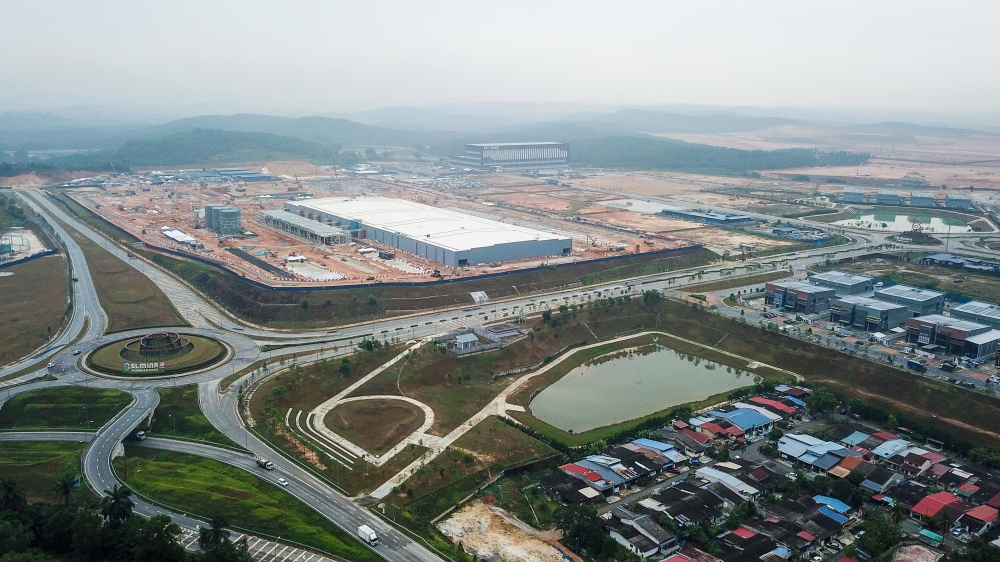
Malaysia is witnessing a surge in investments in data centres and cloud computing fueled by rising demand for digital services and AI technologies.
This growth is projected to generate significant employment opportunities across various sectors, including data science, cybersecurity, and engineering, while also fostering local business participation in the supply chain.
However, the expansion necessitates careful management of electricity and water resources, with the government implementing measures to ensure sustainable resource usage and prioritize local supply chain involvement.
The initiatives around reclaimed water supply and efficiency metrics further emphasize Malaysia's commitment to sustainable development in this burgeoning industry.
KUALA LUMPUR, Sept 10 — Streaming a video, making an online payment, shopping online or using an AI-powered service involves data being stored and processed somewhere.
Much of that happens in data centres — facilities that house computer servers and other equipment used to store, process and transmit data.
Malaysia is seeing growing investment in data centres and cloud computing as demand for digital services and artificial intelligence increases.
So, what does this boom actually mean for Malaysians?
For households, the effects are likely to be less obvious than the headline investment figures, but they can be seen in terms of jobs and business opportunities, as well as the demand data centres place on electricity, water and other infrastructure.
Here is what the boom is all about and why it matters to you.
What exactly is a data centre?
A data centre is a facility that houses computer servers and other equipment used to store, process and transmit data.
These facilities provide the physical infrastructure behind many digital services, including cloud computing and applications that rely on large amounts of computing power.
Malaysian Investment Development Authority (Mida) describes modern data centres as infrastructure that supports cloud computing and artificial intelligence services and enables businesses to access digital capabilities.
What is the big deal?
Demand for cloud computing, artificial intelligence and other digital services requires more computing capacity.
Malaysia has attracted increased interest from data-centre investors, particularly in Johor and the Klang Valley.
According to Mida, Malaysia had, in the first half of 2026, approved investments in data-centre and cloud-computing projects worth RM95.8 billion.
That was close to 44 per cent of Malaysia’s total approved investments during the period.
It also said Malaysia was ranked by the United Nations Conference on Trade and Development (UNCTAD) among the world’s 10 largest destinations for data-centre projects.
Between 2021 and 2023, Malaysia approved RM114.7 billion in investments in data centres and cloud services.
Through these investments, 2,325 high-value new jobs were created in specialised areas including data science, data engineering, cybersecurity and network engineering.
What does it mean for jobs and businesses?
Data centre projects require workers and companies involved in areas such as construction, engineering, electrical work, telecommunications and facilities maintenance.
For example, Amazon Web Services (AWS) has said its Malaysia region is expected to support an average of more than 3,500 full-time-equivalent jobs at external businesses annually through 2038.
These include jobs in construction, facility maintenance, engineering and telecommunications.
As for students, the industry’s expansion is also creating training opportunities, including graduate engineering programmes and specialised data-centre technician programmes.
The industry is also creating opportunities ranging from engineers and cybersecurity specialists to data-centre technicians, electricians, construction workers and facility-management staff.
Data centres can also create opportunities for Malaysian companies to become suppliers.
These projects, according to Mida, also create opportunities for local manufacturers and service providers, including architectural, construction, engineering and electrical contractors.
The government has also been matching data-centre operators with Malaysian suppliers to strengthen local participation in the supply chain.
There could also be an indirect benefit for businesses using cloud services.
At the same time, data-centre and cloud services are able to help small and medium-sized enterprises with digitalisation by giving them access to cloud computing, data analytics and other digital capabilities.
For example, for a small business, cloud computing can provide storage and computing power without requiring it to build and maintain its own servers.
An online retailer could use cloud services to run its website and process orders.
What are some impacts on Malaysians?
The impact is not necessarily something that appears directly on a household bill.
It can be felt through jobs and business opportunities, the digital infrastructure used by companies and consumers, and the electricity and water needed to operate the facilities.
Why does electricity matter?
Data centres require electricity to operate servers and cooling systems, often continuously.
As more facilities come online, their electricity demand becomes part of the country’s overall power-planning requirements.
Parliament was told that the actual peak electricity demand from all data centres in Peninsular Malaysia was 849MW as of December 2025, and this was projected to rise to 4,811MW by 2030.
To meet overall electricity demand in Peninsular Malaysia, including demand from data centres, the government has planned new generation capacity of up to 9,600MW, expected to come online between 2028 and 2031.
The additional capacity will also replace existing power plants expected to retire by 2030.
This does not mean data centres automatically cause household electricity bills to rise.
It is how additional demand is incorporated into electricity planning and how the cost of infrastructure needed to serve that demand is managed.
The government is also examining whether the electricity demand declared by proposed data centres accurately reflects their eventual usage.
As of June 2025, actual electricity consumption by data centres nationwide was 603MW, compared with declared maximum demand of 1,276MW — about 47 per cent of the declared maximum.
The government said it was reviewing these projections partly to reduce the risk of underused electricity infrastructure and costs being shifted to other consumers.
Data centres also use water, particularly for cooling.
The latest figures — 0.47 million litres a day — given in Parliament show that data-centre water use accounted for a relatively small share of total domestic and non-domestic water consumption in the areas cited.
In Selangor, Kuala Lumpur and Putrajaya, data centres used an average of 0.12 per cent of total domestic and non-domestic water consumption in those areas.
In Johor, data centres used 9.07 million litres a day, equivalent to 0.6 per cent of the state’s total domestic and non-domestic water consumption.
To cope, one approach is to use alternative water sources rather than relying entirely on treated potable water.
The Johor government announced in August 2025 that treated wastewater of up to 12 million litres a day would be supplied to a water-reclamation plant supporting data-centre cooling.
By June 2026, the government said the 12-million-litre-a-day reclaimed-water supply for data-centre cooling was the first such initiative implemented in Malaysia.
The Ministry of Energy Transition and Water Transformation (Petra) has also announced an integrated reclaimed-water supply chain for data-centre operations in the Klang Valley, involving AWS, Air Selangor and Indah Water Konsortium.
What are some safeguards in place?
The rapid expansion of data centres has also prompted the government to impose conditions on new projects, particularly because of their demands for electricity and water.
As of August 2026, the Data Centre Task Force cleared projects only where power and water supplies are secured and green-compliance requirements can be demonstrated. Priority is also given to operators that support the local supply chain.
Projects must also meet Power Usage Effectiveness (PUE) requirements, a measure of how efficiently a data centre uses energy.
Parliament was told that applications must meet a PUE of no more than 1.6 for colocation data centres and 1.4 for hyperscalers, while sufficient Tenaga Nasional Berhad (TNB) infrastructure must be available in the area.
In other words, the government is not simply looking at how much investment a proposed data centre can bring, but also whether there is enough power and water, how efficiently the facility uses electricity, and how much value it can create locally.
Umno president urges party to strengthen solidarity, machinery
Zahid denies N. Sembilan MB resigned amid royal dispute
Zara Qairina inquest: Mother’s assessment unnecessary for psychological autopsy, psychiatrist tells court
受数字服务和人工智能技术需求不断增长的推动,马来西亚正在经历数据中心和云计算领域投资激增的局面。
预计这一增长将在数据科学、网络安全和工程等各个领域创造大量就业机会,同时也将促进当地企业参与供应链。
然而,扩张需要对电力和水资源进行谨慎管理,政府正在实施相关措施,以确保资源的可持续利用,并优先考虑本地供应链的参与。
围绕再生水供应和效率指标的各项举措进一步凸显了马来西亚致力于在这个蓬勃发展的行业中实现可持续发展的承诺。
吉隆坡,9月10日讯——观看视频、在线支付、网上购物或使用人工智能服务都涉及数据的存储和处理。
其中大部分操作都发生在数据中心——数据中心是存放计算机服务器和其他用于存储、处理和传输数据的设备的场所。
随着对数字服务和人工智能的需求不断增长,马来西亚在数据中心和云计算领域的投资也在不断增加。
那么,这场繁荣对马来西亚人来说究竟意味着什么?
对于家庭而言,其影响可能不如投资总额那样明显,但可以从就业和商业机会,以及数据中心对电力、水和其他基础设施的需求等方面看出。
这就是此次繁荣的全部内容以及它为何与你息息相关。
数据中心究竟是什么?
数据中心是存放计算机服务器和其他用于存储、处理和传输数据的设备的场所。
这些设施为许多数字服务提供了物理基础设施,包括云计算和依赖大量计算能力的应用程序。
马来西亚投资发展局(MIDA)将现代数据中心描述为支持云计算和人工智能服务的基础设施,使企业能够获得数字化能力。
有什么大不了的?
对云计算、人工智能和其他数字服务的需求需要更多的计算能力。
马来西亚吸引了越来越多的数据中心投资者的兴趣,尤其是在柔佛州和巴生谷地区。
据马来西亚投资发展局 (MIDA) 称,马来西亚在 2026 年上半年批准了价值 958 亿令吉的数据中心和云计算项目投资。
这相当于马来西亚同期获批投资总额的近 44%。
报告还指出,联合国贸易和发展会议(贸发会议)将马来西亚列为全球十大数据中心项目目的地之一。
2021年至2023年间,马来西亚批准了1147亿令吉的数据中心和云服务投资。
通过这些投资,在数据科学、数据工程、网络安全和网络工程等专业领域创造了 2325 个高价值的新工作岗位。
这对就业和企业意味着什么?
数据中心项目需要建筑、工程、电气工程、电信和设施维护等领域的工人和公司参与。
例如,亚马逊网络服务 (AWS) 表示,预计到 2038 年,其马来西亚区域每年将为外部企业提供平均超过 3,500 个全职工作岗位。
这些工作包括建筑、设施维护、工程和电信等行业。
对于学生而言,该行业的扩张也创造了培训机会,包括工程研究生课程和专门的数据中心技术人员课程。
该行业也创造了从工程师和网络安全专家到数据中心技术人员、电工、建筑工人和设施管理人员等各种就业机会。
数据中心还可以为马来西亚公司创造成为供应商的机会。
据 Mida 称,这些项目也为当地制造商和服务提供商创造了机会,包括建筑、施工、工程和电气承包商。
政府还一直在撮合数据中心运营商与马来西亚供应商,以加强本地企业在供应链中的参与度。
使用云服务的企业也可能获得间接好处。
同时,数据中心和云服务能够通过提供云计算、数据分析和其他数字功能,帮助中小企业实现数字化转型。
例如,对于小型企业而言,云计算可以提供存储和计算能力,而无需其构建和维护自己的服务器。
在线零售商可以使用云服务来运行其网站和处理订单。
对马来西亚人有哪些影响?
这种影响不一定会直接体现在家庭账单上。
可以通过就业和商业机会、公司和消费者使用的数字基础设施以及运营这些设施所需的电力和水来感受到这一点。
为什么电力如此重要?
数据中心需要电力来运行服务器和冷却系统,而且通常是持续不断地运行。
随着更多设施投入使用,它们的电力需求成为国家整体电力规划需求的一部分。
国会获悉,截至 2025 年 12 月,马来西亚半岛所有数据中心的实际峰值电力需求为 849 兆瓦,预计到 2030 年将上升至 4,811 兆瓦。
为了满足马来西亚半岛的整体电力需求,包括数据中心的需求,政府计划新增高达 9,600 兆瓦的发电容量,预计将于 2028 年至 2031 年间投入使用。
新增产能还将取代预计到 2030 年退役的现有发电厂。
但这并不意味着数据中心必然会导致家庭电费上涨。
它指的是如何将新增需求纳入电力规划,以及如何管理满足该需求所需的基础设施成本。
政府还在审查拟建数据中心申报的用电量是否准确反映了其最终用电量。
截至 2025 年 6 月,全国数据中心的实际用电量为 603 兆瓦,而申报的最大需求量为 1,276 兆瓦——约为申报最大需求量的 47%。
政府表示,正在审查这些预测,部分原因是降低电力基础设施利用不足以及成本转嫁给其他消费者的风险。
数据中心也使用水,特别是用于冷却。
议会公布的最新数据显示,数据中心每天用水量为 47 万升,这表明在上述地区,数据中心用水量占家庭和非家庭用水总量的比例相对较小。
在雪兰莪、吉隆坡和布城,数据中心平均消耗了这些地区家庭和非家庭用水总量的 0.12%。
在柔佛州,数据中心每天用水量为 907 万升,相当于该州家庭和非家庭用水总量的 0.6%。
为了应对这种情况,一种方法是使用替代水源,而不是完全依赖处理过的饮用水。
柔佛州政府于 2025 年 8 月宣布,每天将向一座水回收厂供应多达 1200 万升的处理后废水,该水回收厂将为数据中心冷却提供支持。
政府表示,到 2026 年 6 月,每天 1200 万升的再生水供应将用于数据中心冷却,这是马来西亚实施的首个此类举措。
能源转型和水务转型部(Petra)也宣布了一项针对巴生谷数据中心运营的综合再生水供应链计划,该计划涉及AWS、雪兰莪水务公司和Indah Water Konsortium。
有哪些保障措施?
数据中心的快速扩张也促使政府对新项目施加条件,特别是由于它们对电力和水的需求。
截至2026年8月,数据中心工作组仅批准电力和水源供应有保障且能证明符合绿色环保合规要求的项目。此外,支持本地供应链的运营商也将获得优先考虑。
项目还必须满足电源使用效率 (PUE) 要求,这是衡量数据中心能源使用效率的指标。
国会获悉,申请必须满足以下条件:托管数据中心的 PUE 不超过 1.6,超大规模数据中心的 PUE 不超过 1.4,同时该地区必须有足够的国家能源有限公司 (TNB) 基础设施。
换句话说,政府不仅要考虑拟建数据中心能带来多少投资,还要考虑电力和水是否充足,该设施的用电效率如何,以及它能在当地创造多少价值。
巫统主席敦促党内加强团结和机制建设
阿末扎希否认森美兰MB因王室纠纷而辞职
扎拉·凯里娜死因调查:精神科医生告诉法庭,母亲的评估对于心理尸检而言并非必要。