Remembering Hugh Hefner And His Iconic Jet Black DC-9 “Big Bunny”缅怀休·海夫纳和他标志性的黑色DC-9“大兔子”飞机
In aviation circles, the Playboy DC-9 is almost as famous as the man who commissioned it.
新闻视频
Updated Jul 16, 2019 2:25 AM EDT
Long before the aerospace industry had a whole subset marketplace dedicated to providing custom lavish flying palaces for the super rich, wealthy and extravagant businessmen and entertainers would have to find companies willing to adapt airliners for their personal use—and the results were far from consistent. Elvis Presley’s Convair 880 “Lisa Marie,” Bobby Sherman’s Boeing 707 “The Starship,” and later Donald Trump’s 727 are among the most well known of these pre-Boeing Business Jet airliner adaptations. But in the aviation community, one of these aircraft in particular may be the most beloved—the late Hugh Hefner’s jet black DC-9 with the Playboy bunny emblazoned on its tail famously named “Big Bunny.” The plane was nearly as unique and compelling as the man who commissioned it, and like Hefner, it has stood the test of time when it comes to capturing the public’s imagination.
At the pinnacle of Playboy Magazine’s popularity, in 1969, Hugh Hefner had pretty much every material possession a man could ask for—aside from his own flying Playboy Club. So after researching what airframe would be best suited for the culture icon’s partying and logistical needs, Playboy Enterprises chose the still relatively new DC-9 as Hefner’s flying chariot and brand ambassador.
For the era, the DC-9 was economical, reliable, offered a lot of square footage, had two of its own air-stairs, and most importantly, it was sleek and sexy, a trait the competing Boeing 737 didn’t really offer. On January 27th, 1969 Playboy took possession of a DC-9-32 straight from the McDonnell Douglas factory at the cost of $5.5M—not a small check to write in 1969! The jet’s registration number was N950PB.
Big Bunny airlifted Hugh for the first time on February 2nd, 1970 after finishing up a year long outfitting process. , AP
Hef and crew head off the tarmac in a Mercedes limo., AP
N950PB went through an interior outfitting process unlike any jet before it. Instead of the bolted down velvet couches and audio consoles flown on other large private jets of the era, the Playboy jet got a futuristic Scandinavian design influenced interior that looked like something out of Space Odyssey 2001 with a little Barbarella thrown in.
Inside it featured a theater, multiple lounges, full bathrooms with showers, and of course a big rounded water bed for the top playboy himself. Throughout his life, Hefner did much of his business atop his bed sheets , and to him the bed wasn’t just a place to sleep and to, well, party, it was also an office. The bed had silk sheets with a Tasmanian opossum beadspread and all the comfort and connectivity controls the airplane had to offer were build into a sweeping console that curved along the side of the eight foot bed, below the windows. It looked like Captain Kirk’s quarters aboard the Starship Enterprise.
The jet also featured an integrated entertainment system which was way ahead of its time, including an 8-track surround sound system and multiple televisions, two film projectors, and a video system which was cutting edge tech in 1969. It was a disco in the sky replete with a dance lighting system. Amazingly, the jet also had “dimming” windows that would go black at the touch of a button—something that wasn’t introduced to fleet airliners until the 787 well over 40 years later. The DC-9 also received an executive communications suite that allowed Hef and his guests to make phone calls while cruising through the stratosphere.
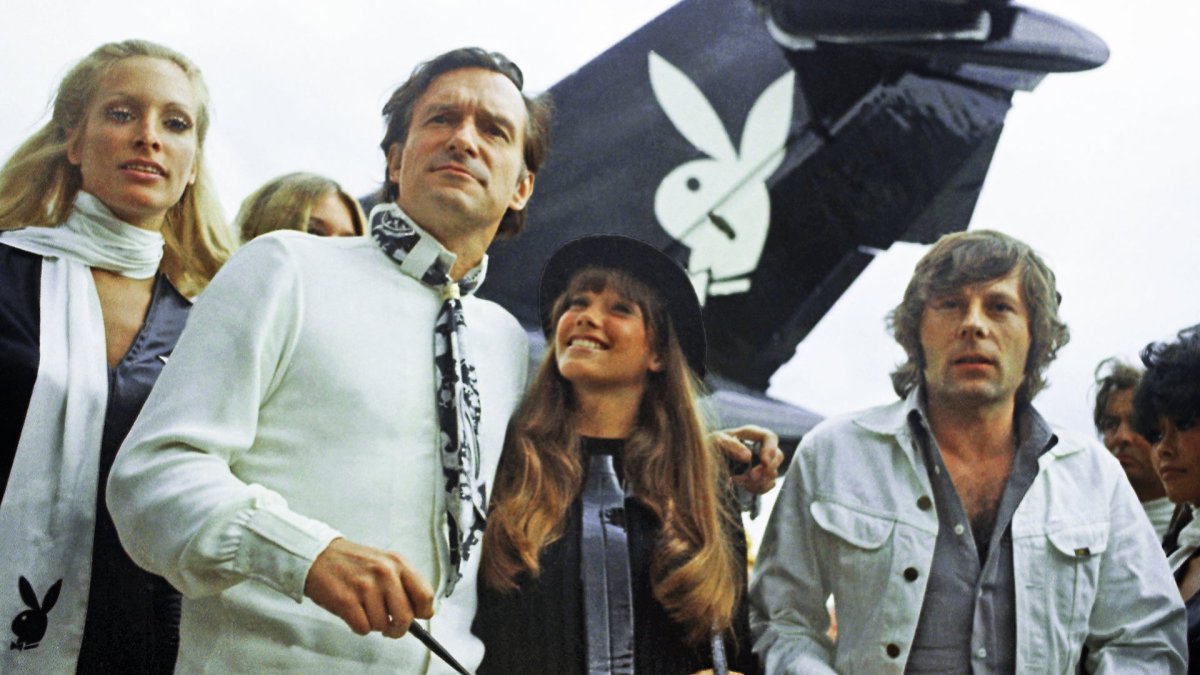
Big Bunny sported a special crew of flight attendants dubbed aptly “Jet Bunnies” who weren’t casted just for their looks, but also for their abilities to actually provide flight attendant service while underway. The women were pulled from Hefner’s clubs in Los Angeles and Chicago and sent for training with Continental Airlines. Passing the famous airline’s intense flight attendant school was a prerequisite for the job.
Their outfits were one of a kind, designed by fashion designer Walter Holmes with Hefner’s input. Generally they featured leather mini dresses, black go-go boots, white aviator scarves, and even bunny ears and tails on some occasions. Hefner wrote in 2010 that “they look as though they had just stepped out of a Bond movie.”
The N950PB’s iconic paint job was unlike any other at the time. No other private jet had been painted black before so Playboy had to seek special approval from the FAA before applying the unique scheme. Hefner wanted the plane to stand out, and the glossy black livery sure did the trick. Extra bright spotlights were also installed on the jet’s exterior to light up the Playboy bunny on its tail for all to see as Hefner made his grand arrivals to various locales.
The jet hauled Hugh and his entourage of beautiful women, celebrities, and Playboy staff all over the world, including some extremely exotic and austere locales. Hefner also used the jet to commute from his properties in Los Angeles and Chicago where he taped episodes of Playboy After Dark . “I loved the convenience of the jet… It was literally a floating apartment with a bedroom, a living room, a dining room and a disco area in the back” Hefner told the Wall Street Journal while describing his memories of the plane. “I lent it to Elvis Presley to fly to concerts and I lent it to Yul Brynner… When anyone asks me if I ever miss the plane, I reply, ‘only when I fly.'”
The Playboy jet was constantly visited by some of the most famous people of the era. Poet Shel Silverstein, artist Leroy Neiman, director Roman Polanski and many others were regulars aboard. Sonny and Cher and Elvis leased the jet for international tours. Big Bunny was such a big deal that lavish reception parties would be organized for its arrival in foreign countries, often including international celebrities and local elite.
Hefner talks to reporters aboard Big Bunny while seated in his special chair. , AP
In 1975, Hugh even lent Big Bunny to “Operation Babylift” which saw the jet fly babies orphaned by the Vietnam War to New York City where they were received by their adoptive families. The jet was also used to ferry a gorilla named Baltimore Jack across the U.S. to meet a potential mate.
The massive cost of maintaining and operating a non-revenue airliner, with its own handpicked crew no less, was too great for Playboy to justify as the magazine’s circulation began to decline in the mid 1970s. Hefner had also fallen in love with a new toy, an estate that would become widely known as the Playboy Mansion which he acquired in 1971. By 1974 he was no longer splitting his time between Los Angeles and Chicago, which meant the need for the plane was largely reduced.
The famous jet was sold to Venezuelan Airlines in 1975. It went on to spend decades in and out of storage before ending up with Aeromexico where it served running normal airline service, its incredible interior long gone, until 2004 when it was finally retired. The parted-out jet’s fuselage is now an educational tool having been donated to the city of Cadereyta in Mexico.
Oddly enough, Hefner’s DC-9 wasn’t the last aircraft to sport the jet black paint scheme with a big white Playboy bunny on its tail. Navy fast jet test squadron VX-4 “Evaluators” adopted the Playboy bunny insignia in the 1960s and flew it on their aircraft. Following the arrival of Big Bunny on the world stage, one of VX-4’s F-4 Phantoms always wore the same gloss black paint scheme. This aircraft was famously nicknamed “Vandy 1” after the unit’s “Vandy” callsign.
The F-4 that was painted in the livery ended its service life in 1987 upon which time the motif was transferred to one of the unit’s F-14 Tomcats. Multiple Tomcats wore it over the years, even after VX-4 was shuttered in 1994 and VX-9 “Vampires” took over its duties. The Vampires carried on the Vandy 1 tradition with F-14D serial number 164604 being the last jet to wear the motif. It did so until it was pulled from service and retired around 2005.
The jet lived its entire life at NAWS Point Mugu and was the last F-14 ever built. It had never been deployed aboard an aircraft carrier and was just 12 years old when it was pulled from service. It sits today as a gate guard at NAS Oceana, its Vandy 1 scheme long gone. Instead it wears the markings of VF-103.
VX-9 has not applied a Vandy 1 paint scheme to another jet since 164604’s retirement and it is debatable if the Playboy insignia would even be allowed to fly on a Navy fighter’s tail again considering the politically correct social climate within the military today. But all is not lost, the paint job has been applied on a handful of private jet warbirds, so it still graces the skies to this very day, albeit in a non-governmental or corporate capacity.
Hugh Hefner is such an interesting character who lived an absolutely fascinating life. He was both revered and despised, but he truly embodied the lifestyle that his brand promoted. Part of that was having the best and most outlandish of toys. A big black jet that was as much a flying nightclub as it was a business tool certainly fits that bill.
In many ways the whole concept behind Big Bunny was far ahead of its time. Today billionaires can spend hundreds of millions of dollars on their flying palaces, with Middle Eastern royalty and Russian oligarchs being prime supporters of a growing ultra lavish private air travel marketplace. Some of these aircraft make the Playboy DC-9 look minuscule in scale as even Boeing’s largest aircraft, the 747-8i has been sold as a private Boeing Business Jet. But none of these dream machines will have the historic significance of Big Bunny, nor will their owners be remembered quite like Hugh Hefner.
Hef poses on Big Bunny’s rear air-stair which led right into his private suite. , AP
Contact the author: Tyler@thedrive.com
Comments couldn’t be loaded. Please refresh the page.
更新于美国东部时间2019年7月16日凌晨2:25
早在航空航天业出现专门为超级富豪打造定制豪华飞行宫殿的细分市场之前,富有的商界人士和演艺人员就不得不寻找愿意将客机改装成私人用途的公司——而改装后的效果也参差不齐。猫王埃尔维斯·普雷斯利的康维尔880“丽莎·玛丽”号、鲍比·舍曼的波音707“星舰”号,以及后来唐纳德·特朗普的727,都是波音公务机出现之前最著名的改装案例。但在航空界,其中一架飞机或许是最受人喜爱的——已故休·海夫纳的黑色DC-9,机尾印有花花公子兔女郎的图案,被誉为“大兔子”。这架飞机几乎和委托它的人一样独特而引人注目,而且就像海夫纳本人一样,它在吸引公众想象力方面经受住了时间的考验。
1969年,正值《花花公子》杂志鼎盛时期,休·海夫纳几乎拥有一个男人所能奢求的一切——除了他自己的空中花花公子俱乐部。因此,在研究了哪种机型最适合这位文化偶像的派对和后勤需求后,花花公子企业选择了当时还相对较新的DC-9作为海夫纳的空中座驾和品牌大使。
在那个年代,DC-9经济实惠、性能可靠、空间宽敞,配备两部舷梯,最重要的是,它外形流畅优美,而竞争对手波音737却不具备这一特点。1969年1月27日,《花花公子》杂志以550万美元的价格从麦克唐纳·道格拉斯工厂直接购入了一架DC-9-32——这在1969年可不是一笔小数目!这架飞机的注册号是N950PB。
1970年2月2日,经过长达一年的装备改装后,“大兔子”直升机首次将休·杰克曼空运上岸。(美联社)
赫夫和他的团队乘坐一辆奔驰豪华轿车离开停机坪。(美联社)
N950PB 的内饰改装过程与以往任何一架喷气式飞机都截然不同。与当时其他大型私人飞机上常见的固定式天鹅绒沙发和音响控制台不同,这架花花公子私人飞机拥有未来主义的斯堪的纳维亚风格内饰,看起来就像是《2001太空漫游》和《芭芭丽娜》的结合体。
机舱内部设有剧院、多个休息室、带淋浴的完整浴室,当然还有一张专为这位顶级花花公子准备的大型圆形水床。赫夫纳一生中大部分“生意”都是在床上完成的,对他来说,床不仅仅是睡觉和聚会的地方,更是他的办公室。床上铺着丝绸床单,上面盖着塔斯马尼亚负鼠珠子床罩,飞机上所有舒适性和连接性的控制装置都集成在一个弧形控制台上,沿着八英尺长的床边延伸,位于窗户下方。这看起来就像是星际迷航企业号上柯克船长的房间。
这架喷气式飞机还配备了一套当时远超时代的集成娱乐系统,包括一套8声道环绕立体声系统、多台电视、两台电影放映机以及一套在1969年堪称尖端科技的视频系统。它就像一座空中迪斯科舞厅,配备了炫目的灯光系统。更令人惊叹的是,这架飞机还拥有“调光”舷窗,只需轻触按钮即可变黑——这项技术直到40多年后的波音787才被引入到大型客机上。此外,DC-9还配备了一套行政通讯套件,让休·海夫纳和他的宾客们在平流层巡航时也能拨打电话。
大兔子(Big Bunny)拥有一支特别的空乘团队,她们被恰如其分地称为“喷气机兔女郎”(Jet Bunnies)。这些女性的选拔并非仅仅看重外貌,更看重她们在飞行途中提供专业空乘服务的能力。她们从休·海夫纳(Hefner)在洛杉矶和芝加哥的俱乐部中挑选出来,并被送往美国大陆航空公司接受培训。通过这家著名航空公司严格的空乘培训学校是获得这份工作的先决条件。
她们的服装独一无二,由时装设计师沃尔特·霍姆斯设计,并得到了赫夫纳的参与。通常包括皮质迷你裙、黑色高筒靴、白色飞行员围巾,有时甚至还会戴上兔耳朵和兔尾巴。赫夫纳在2010年写道:“她们看起来就像刚从邦德电影里走出来一样。”
N950PB 的标志性涂装在当时可谓独一无二。此前从未有私人飞机采用过黑色涂装,因此《花花公子》杂志在采用这种独特的涂装方案前,必须获得美国联邦航空管理局 (FAA) 的特别批准。赫夫纳希望这架飞机能够脱颖而出,而亮黑色的涂装无疑达到了目的。此外,飞机外部还安装了超亮的聚光灯,以便在赫夫纳抵达各地时,照亮机尾的《花花公子》兔女郎图案,让所有人都能看到。
这架私人飞机载着休·海夫纳和他的美女随行人员、名人以及《花花公子》杂志的员工飞遍世界各地,包括一些极其异域风情和偏僻僻静的地方。海夫纳还用这架飞机往返于他在洛杉矶和芝加哥的住所,在那里他录制了《花花公子之夜》节目。“我喜欢这架飞机的便利……它简直就是一个漂浮的公寓,里面有卧室、客厅、餐厅,后面还有一个迪斯科舞厅。”海夫纳在接受《华尔街日报》采访时回忆起这架飞机时说道。“我把它借给猫王埃尔维斯·普雷斯利去参加演唱会,也借给尤尔·布林纳……每当有人问我是否会想念飞机时,我的回答都是:‘只有在我自己坐飞机的时候才会想念。’”
花花公子私人飞机经常接待当时一些最著名的人物。诗人谢尔·希尔弗斯坦、艺术家勒罗伊·尼曼、导演罗曼·波兰斯基等等都是常客。桑尼和雪儿以及猫王都曾租用这架飞机进行国际巡演。“大兔子”号如此引人注目,以至于每次它抵达国外都会举办盛大的欢迎派对,国际名人和当地精英人士都会出席。
赫夫纳坐在他的特制座椅上,在“大兔子”号游轮上接受记者采访。(美联社)
1975年,休·杰克曼甚至将他的“大兔子”号飞机借给了“婴儿空运行动”(Operation Babylift),这项行动用这架飞机将越战中失去父母的婴儿送往纽约市,在那里他们被各自的收养家庭接走。这架飞机还曾被用来运送一只名叫巴尔的摩·杰克的大猩猩横跨美国,去寻找它的配偶。
维护和运营一架不以盈利为目的的私人飞机,还要配备精挑细选的机组人员,这笔巨额开支对于《花花公子》杂志来说实在难以承受,尤其是在20世纪70年代中期,杂志发行量开始下滑的情况下。与此同时,赫夫纳还迷上了另一件“玩具”——一处后来广为人知的庄园,即著名的“花花公子豪宅”,他于1971年购入。到了1974年,他不再需要在洛杉矶和芝加哥两地奔波,这意味着对这架飞机的需求也大大减少了。
这架著名的喷气式飞机于1975年出售给了委内瑞拉航空公司。此后数十年间,它几经辗转,最终被墨西哥航空公司收购。在墨西哥航空公司,它曾以普通航班的形式运营,但其令人惊叹的内饰早已不复存在,直到2004年最终退役。如今,这架飞机的机身被拆解,捐赠给了墨西哥卡德雷塔市,成为一项教育资源。
说来也怪,赫夫纳的DC-9并非最后一架采用黑色涂装并饰以白色花花公子兔图案的飞机。海军快速喷气式飞机测试中队VX-4“评估者”早在20世纪60年代就采用了花花公子兔的标志,并将其涂装在他们的飞机上。随着“大兔子”(花花公子兔的绰号)的出现,VX-4的一架F-4“鬼怪”战斗机也一直保持着同样的亮黑色涂装。这架飞机因其与该中队呼号“Vandy”(范迪)的相似而得名“Vandy 1”。
那架涂装成范迪1号的F-4战斗机于1987年退役,之后该涂装被转移到该部队的一架F-14“雄猫”战斗机上。多年来,多架“雄猫”战斗机都曾使用过这种涂装,即使在1994年VX-4中队解散、VX-9“吸血鬼”中队接替其任务之后也是如此。“吸血鬼”中队延续了范迪1号的传统,F-14D战斗机(序列号164604)是最后一架使用这种涂装的战机。它一直使用到2005年左右退役为止。
这架战机一生都驻扎在穆古角海军航空武器站(NAWS Point Mugu),是最后一架建造的F-14战机。它从未部署到航空母舰上,退役时机龄仅12年。如今,它作为一架守卫舰停放在奥希阿纳海军航空站(NAS Oceana)的门卫,原有的范迪1号涂装早已褪去,取而代之的是VF-103中队的标志。
自164604号飞机退役以来,VX-9中队再也没有在其他飞机上使用过Vandy 1涂装。考虑到如今军方内部的政治正确氛围,花花公子标志是否还能再次出现在海军战斗机的尾翼上,也值得商榷。不过,也并非完全没有希望,这种涂装曾被应用在少数私人飞机上,所以时至今日,它仍然在天空中闪耀,尽管是以非政府或企业的身份。
休·海夫纳是个非常有趣的人物,他的一生精彩纷呈。他既受人敬仰,又遭人憎恨,但他完美地诠释了他所创立的品牌所倡导的生活方式。而这其中就包括拥有最顶级、最奇特的“玩具”。一架既是飞行夜总会又是商业工具的黑色大型喷气式飞机,无疑完美地诠释了这一点。
从很多方面来看,“大兔子”背后的理念都远远超前于时代。如今,亿万富翁们可以花费数亿美元打造他们的空中宫殿,中东皇室和俄罗斯寡头更是日益壮大的超豪华私人航空旅行市场的主要支持者。有些飞机甚至让“花花公子”DC-9相形见绌,因为就连波音公司最大的飞机747-8i也曾作为私人波音公务机出售。但这些梦幻般的飞机都无法与“大兔子”的历史意义相提并论,它们的拥有者也不会像休·海夫纳那样被人铭记。
赫夫在“大兔子”号游艇后部的舷梯上摆姿势拍照,舷梯直接通往他的私人套房。(美联社)
联系作者:Tyler@thedrive.com
评论加载失败,请刷新页面。