British-US team reports first drone flight on synthetic fuel英美联合团队报告首次合成燃料无人机飞行
Chief of U.S. Naval Research Rear Adm. Lorin C. Selby termed the initiative “exciting and game-changing.”
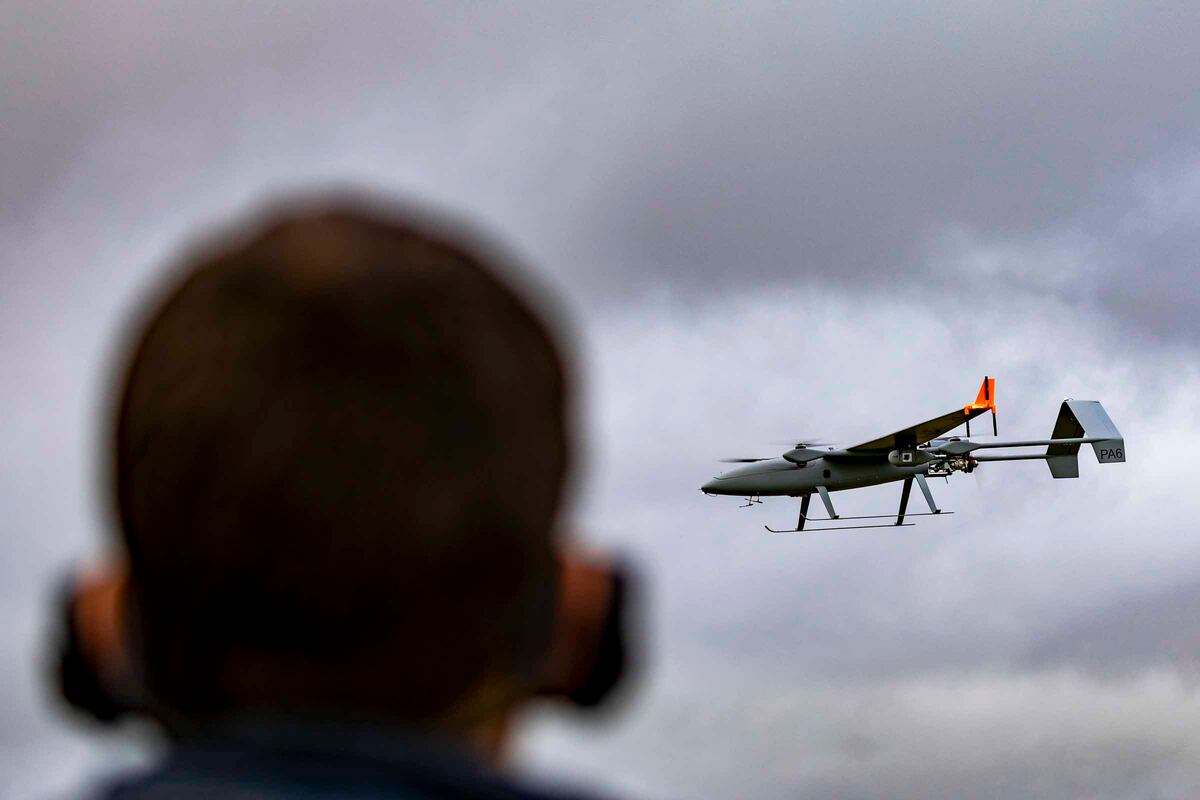
LONDON – A joint British-U.S. effort to power drones using synthetic kerosene have taken a step forward with a 20 minute flight of a test vehicle, the Ministry of Defence here said March 16.
British company C3 Biotechnologies, supported by the Royal Air Force and the U.S. Navy, produced 15 liters of fuel in a laboratory to test the engine and undertake a successful flight from an airfield in southwest England.
The next phase of the program, known as Project Vermeer in the U.K., will see C3 Biotechnologies, a spin-out company from the University of Manchester, refine the production process and develop deployable manufacturing facilities capable of producing fuel without major supporting infrastructure.
The December 2021 test used a Callen-Lenz-designed Fregata remotely piloted vehicle, according to the MOD.
Chief of U.S. Naval Research Rear Adm. Lorin C. Selby termed the initiative “exciting and game-changing.”
“The U.S. Navy is committed to finding innovative solutions to operational challenges, and the ability to manufacture this fuel without large infrastructure requirements would be ground-breaking for deployed forces,” said Selby.
The C3 Biotechnologies synthetic kerosene is produced mixing agricultural and industrial waste with bacteria to create a fossil-free aviation fuel using chemical and heat.
The RAF said in a statement the sustainable fuel process makes it an attractive option for deployments around the world.
Air Vice Marshal Lincoln Taylor, whose title is the RAF chief of staff capability, reckons the work could ameliorate logistics bottlenecks and address environmental issues.
“The RAF needs to ensure that we are at the forefront of technology to safeguard our own resilience and operational capability, whilst minimizing our damage to the environment,” he said. “Fuel scarcity and cost will only ever increase in its impact on our operations, and synthetic fuels for our aircraft are one potential solution to this situation.”
The drone flight is the second synthetic fuel test success for the RAF in a matter of months, although the two production processes used are radically different.
Last November the MoD announced an Ikarus C42 microlight aircraft had completed a short flight powered by synthetic gasoline.
That time, though, the RAF used a synthetic fuel developed by British company Zero Petroleum, manufactured by extracting hydrogen from water and carbon from atmospheric carbon dioxide. Using energy generated from renewable sources like wind or solar, these are combined to create the synthetic fuel.
Andrew Chuter is the United Kingdom correspondent for Defense News.
伦敦——英国国防部3月16日表示,英美两国联合研发的利用合成煤油为无人机提供动力的无人机项目取得了进展,测试飞行器成功进行了20分钟的飞行。
英国公司 C3 Biotechnologies 在英国皇家空军和美国海军的支持下,在实验室中生产了 15 升燃料,用于测试发动机,并成功地从英格兰西南部的一个机场进行了飞行。
该计划的下一阶段,在英国被称为“维米尔计划”,将由曼彻斯特大学的衍生公司 C3 Biotechnologies 改进生产工艺,并开发可部署的制造设施,能够在没有大型配套基础设施的情况下生产燃料。
据国防部称,2021 年 12 月的测试使用了由 Callen-Lenz 设计的 Fregata 遥控飞行器。
美国海军研究局局长洛林·C·塞尔比海军少将称这项计划“令人兴奋,具有变革意义”。
塞尔比说:“美国海军致力于寻找创新的方法来应对作战挑战,而无需大型基础设施即可制造这种燃料的能力,对于部署部队来说将是具有突破性的。”
C3 生物技术公司生产的合成煤油是将农业和工业废料与细菌混合,利用化学和热能制造出不含化石的航空燃料。
英国皇家空军在一份声明中表示,这种可持续燃料工艺使其成为全球部署的理想选择。
英国皇家空军参谋长能力建设副元帅林肯·泰勒认为,这项工作可以缓解后勤瓶颈并解决环境问题。
“英国皇家空军需要确保我们在技术上处于领先地位,以保障自身的韧性和作战能力,同时最大限度地减少对环境的破坏,”他说道。“燃料短缺和成本上涨对我们行动的影响只会越来越大,而为我们的飞机使用合成燃料是解决这一问题的潜在方案之一。”
这次无人机飞行是英国皇家空军在短短几个月内第二次合成燃料测试成功,尽管这两种生产工艺截然不同。
去年11月,英国国防部宣布一架伊卡鲁斯C42超轻型飞机完成了由合成汽油驱动的短途飞行。
不过,当时英国皇家空军使用的是英国公司Zero Petroleum研发的合成燃料。这种燃料是通过从水中提取氢、从大气中的二氧化碳中提取碳制成的。利用风能或太阳能等可再生能源产生的能量,将氢和碳结合起来,即可制成这种合成燃料。
Andrew Chuter 是《防务新闻》的英国记者。