Why China axed the Strategic Support Force and reshuffled the military中国为何裁撤战略支援部队并重组军队
Its successor, the Information Support Force, will now handle network information systems and communications support, and possibly network defense.
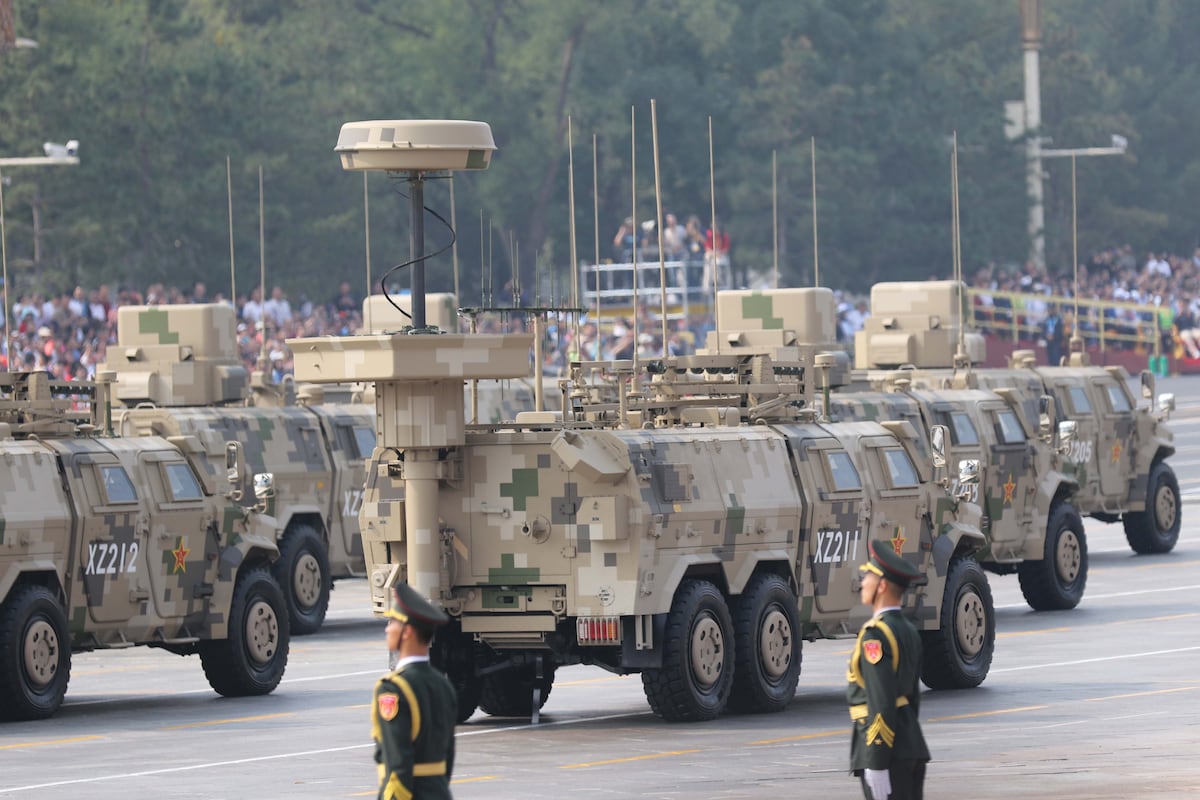
CHRISTCHURCH, New Zealand — Chinese President Xi Jinping instigated a significant restructuring of the People’s Liberation Army on April 19 by axing the Strategic Support Force and replacing it with a new Information Support Force.
While it’s unclear exactly why Xi enacted this major reshuffle, analysts suspect both military capability and political control contributed to his decision.
Joel Wuthnow, a Chinese military expert with the Washington-based National Defense University, believes Xi wanted greater oversight of support forces with the People’s Liberation Army.
“PLA observations of the war in Ukraine have made very clear that an effective structure for support forces, including in the logistics and information domains, is essential for modern warfighting. My sense is that the SSF [Strategic Support Force] proved to be an unnecessary management layer that obscured Xi’s visibility into what the PLA was doing in space, cyberspace and other information disciplines,” Wuthnow told Defense News.
China created the SSF on Dec. 31, 2015. Its successor, the Information Support Force, will now handle network information systems and communications support, and possibly network defense.
The new organization operates alongside two other newly announced military arms — the Cyberspace Force and the Aerospace Force — plus the preexisting Joint Logistics Support Force. This leaves the PLA with a structure of four arms and four services, the latter comprising the Army, Navy, Air Force and Rocket Force.
The four arms are directly subordinate to the Central Military Commission, which is the top political party organ that oversees China’s armed forces. This means the commission’s leaders can directly deal with individual support forces rather than having to go through the SSF headquarters.
The latest move came as a surprise to observers, said Brendan Mulvaney, the director of the U.S. Air Force’s China Aerospace Studies Institute.
“Obviously it takes quite a bit of planning and groundwork to create a new force, much less disband another, but it appears the PLA kept these plans pretty well hidden from public view,” Mulvaney told Defense News.
Chinese President Xi Jinping, center, attends a ceremony for the People's Liberation Army’s newly established Information Support Force on April 19, 2024. (Chinese Defense Ministry)
Indeed, China is known for its lack of transparency. Gen. Ju Qiansheng, a former SSF commander, disappeared last year before reappearing briefly in February. Ju’s current status is unclear.
Mulvaney said corruption might have played a part in Xi’s decision. However, the SSF has not experienced corruption scandals at the level of the Rocket Force , whose leadership was detained by the authorities last year.
From an operational standpoint, the new structure is advantageous to China’s military, Wuthnow said, noting the SSF was as powerful as the PLA’s five theater commands, whereas the current four support forces are now one level lower. This means theater commanders can now more easily tap the support forces’ assets without the complication of dealing with higher headquarters.
“This should help break down silos in the PLA and improve the functioning of the joint operations systems,” Wuthnow said. The four support forces “are all functionally specialized and can focus on improving their trade without an unnecessary management layer.”
Overall, disruption to the PLA would “not be massive,” Mulvaney said.
“The new headquarters will take time to get up and running; stake out positions and roles; establish command and control as well as organizational relationships with the other services, forces and theater commands,” he explained. “But it won’t be as big of a shift as the 2015/2016 reforms, and really only affects a pretty small portion of the PLA as a whole.”
The Cyberspace and Aerospace forces will presumably continue as normal from their same locations. The Cyberspace Force succeeds the SSF’s former Network Systems Department, while the Aerospace Force supplants the Space Systems Department. In essence, these departments have been elevated, with their overarching SSF structure removed.
Senior Col. Wu Qian, a Defense Ministry spokesperson, described the Cyberspace Force’s mission as “reinforcing national cyber border defense, promptly detecting and countering network intrusions and maintaining national cyber sovereignty and information security.”
The force is also charged with carrying out offensive cyber operations. The U.S., the U.K. and New Zealand accused China last month of sponsoring malicious cyber activity.
Wu also said the Aerospace Force will “strengthen the capacity to safely enter, exit and openly use space.” Although China emphasizes the peaceful use of space, the Pentagon said in its latest annual report on China’s military that the PLA “views space superiority, the ability to control the space-enabled information sphere and to deny adversaries their own space-based information gathering and communication capabilities, as critical components to conduct modern ‘informatized warfare.’ ”
Xi has said the Information Support Force plays “a crucial role in advancing the Chinese military’s high-quality development and competitiveness in modern warfare.”
While the new structure means the four forces plug into the PLA’s joint operations system more easily because there are now fewer management layers, Mulvaney noted it’s likely a result of Xi wanting “more direct control of the information domain forces — and felt like the SSF wasn’t getting the job done.”
Gordon Arthur is an Asia correspondent for Defense News. After a 20-year stint working in Hong Kong, he now resides in New Zealand. He has attended military exercises and defense exhibitions in about 20 countries around the Asia-Pacific region.
新西兰基督城——4月19日,中国国家主席习近平启动了对中国人民解放军的重大改革,裁撤了战略支援部队,并以新的信息支援部队取而代之。
虽然尚不清楚习近平进行此次重大改组的确切原因,但分析人士怀疑,军事能力和政治控制都是促成他做出这一决定的因素。
华盛顿国防大学的中国军事专家乔尔·伍斯诺认为,习近平希望对解放军的支援部队进行更严格的监督。
伍斯诺告诉《防务新闻》:“解放军对乌克兰战争的观察非常清楚地表明,包括后勤和信息领域在内的有效支援力量结构对于现代战争至关重要。我的感觉是,战略支援部队被证明是一个不必要的管理层级,它模糊了习近平对解放军在太空、网络空间和其他信息领域行动的了解。”
中国于 2015 年 12 月 31 日创建了特种部队。其继任者信息支援部队现在将负责网络信息系统和通信支援,并可能负责网络防御。
新成立的联合后勤支援部队与新近成立的网络空间部队和太空部队,以及原有的联合后勤支援部队协同运作。这使得解放军的军事结构由四个军种和四个军种组成,其中军种包括陆军、海军、空军和火箭军。
这四大兵种直接隶属于中央军委,中央军委是领导中国军队的最高政治机关。这意味着中央军委领导人可以直接与各支援部队沟通,而无需通过特勤部队司令部。
美国空军中国航天研究所所长布伦丹·穆尔瓦尼表示,这一最新举措令观察人士感到意外。
“显然,组建一支新部队需要大量的计划和前期准备工作,更不用说解散另一支部队了,但解放军似乎将这些计划很好地隐藏了起来,没有让公众看到,”穆尔瓦尼告诉《防务新闻》。
2024年4月19日,中国国家主席习近平(中)出席中国人民解放军新成立的信息支援部队成立仪式。(中国国防部)
事实上,中国素来以缺乏透明度而闻名。前特警部队司令鞠千生大将去年失踪,今年2月短暂露面后,目前行踪不明。
穆尔瓦尼表示,腐败可能在习近平的决定中起到了一定作用。然而,特警部队并未像火箭军那样出现腐败丑闻,火箭军领导层去年曾被当局拘留。
伍斯诺表示,从作战角度来看,新的组织架构对中国军队有利。他指出,特种部队的实力与解放军的五个战区司令部相当,而现有的四个支援部队则低一个级别。这意味着战区司令员现在可以更便捷地利用支援部队的资源,而无需再像以前那样与上级司令部打交道。
伍斯诺表示:“这应该有助于打破解放军内部的部门壁垒,提高联合作战系统的运作效率。”这四个支援部队“各自职能专精,可以专注于提升自身专业能力,而无需不必要的管理层级。”
穆尔瓦尼表示,总体而言,对解放军的干扰“不会很大”。
他解释说:“新总部需要时间来运转起来;需要明确各部门的职责和角色;需要建立指挥控制体系,并与其他军种、部队和战区司令部建立组织关系。但这不会像2015/2016年的改革那样带来巨大的变革,实际上只会影响到解放军整体中很小的一部分。”
网络空间部队和航空航天部队预计将继续在原址正常运作。网络空间部队将取代原战略安全部队(SSF)的网络系统部,而航空航天部队则取代了原空间系统部。本质上,这些部门的级别已得到提升,其原有的战略安全部队(SSF)架构已被撤销。
国防部发言人吴谦大校将网络空间部队的任务描述为“加强国家网络边界防御,及时发现和反制网络入侵,维护国家网络主权和信息安全”。
该部队还负责执行网络攻击行动。上个月,美国、英国和新西兰指责中国资助恶意网络活动。
吴钊燮还表示,空天军将“加强安全进出太空和公开使用太空的能力”。尽管中国强调和平利用太空,但五角大楼在其最新的中国军力年度报告中指出,解放军“将太空优势,即控制太空信息领域并阻止对手获得其天基信息收集和通信能力的能力,视为开展现代‘信息化战争’的关键组成部分”。
习近平曾表示,信息支援部队在“推进中国军队高质量发展和现代战争竞争力方面发挥着至关重要的作用”。
虽然新的组织架构意味着四支部队更容易融入解放军的联合作战系统,因为管理层级减少了,但穆尔瓦尼指出,这很可能是因为习近平想要“更直接地控制信息领域部队——并且觉得特种部队没有完成任务”。
戈登·阿瑟是《防务新闻》的亚洲特派记者。在香港工作20年后,他现居新西兰。他曾到访亚太地区约20个国家,参加过军事演习和防务展览。