Tech transfer pledge steers Thailand to pick Sweden’s Gripen warplane技术转让承诺促使泰国选择瑞典的鹰狮战斗机
Bangkok now gains intellectual property rights for Link-T’s unrestricted use and expansion.
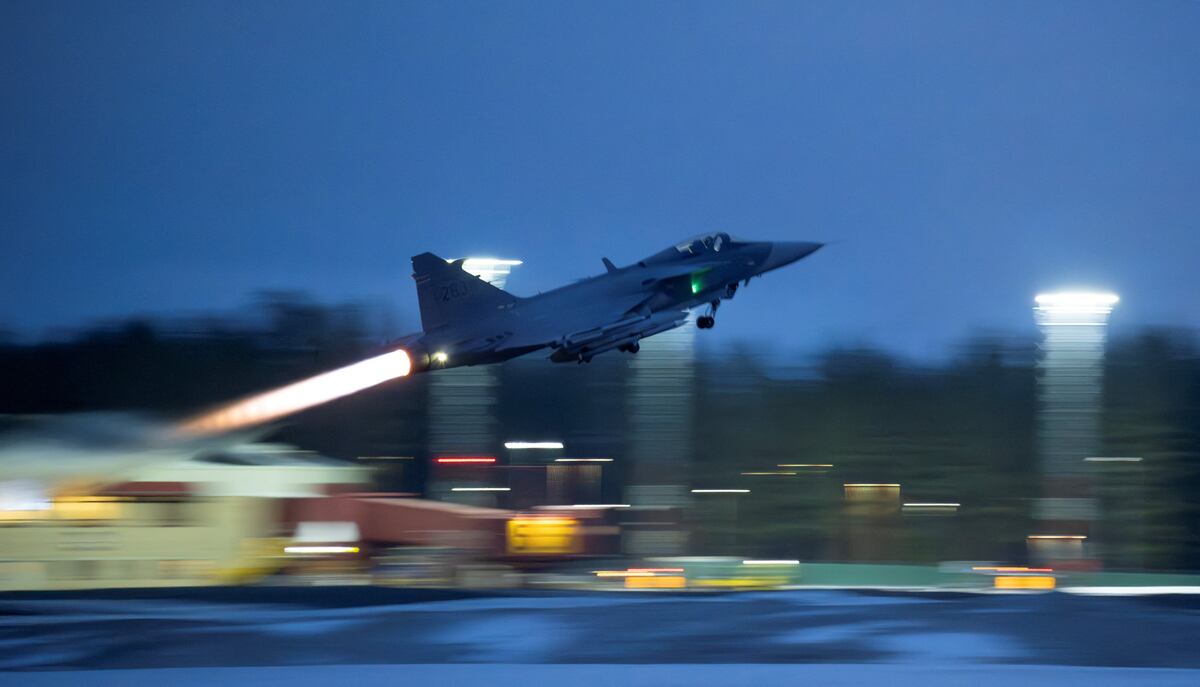
CHRISTCHURCH, New Zealand — The Swedish government’s offset package has proved decisive in Thailand’s decision to purchase 12 Gripen E/F fighters in three phases.
The economic and technology garnishes helped Saab’s Gripen offer defeat its American F-16 Block 70/72 competitor.
On June 4, the Royal Thai Air Force – or RTAF – held a press conference to announce it was buying more Gripens, with the deal accompanied by a generous package of technical support and offsets.
When final offers were submitted last August, Saab had vowed, “The Swedish proposal will ensure the best return on investment for Thailand that will exceed the contract value through a well-structured, long-term plan that covers key areas of critical technologies and national capabilities for Thailand.”
Saab’s offset package – equating to around 155% of the project’s value – has proved especially appealing to a nation keen to boost its aerospace industry and self-sufficiency.
“The offset committee conducted negotiations with Saab concerning the defense offset proposal with the aims of maximizing benefits and complying with the policies of the government and the minister of defense,” the Thai air service said in a statement:
A key element in Sweden’s proposal is Thailand’s unique, Saab-developed Link-T data link. Currently, only a handful of Thai aircraft and several warships are equipped with it.
Bangkok now gains intellectual property rights for Link-T’s unrestricted use and expansion. “Saab will transfer Link-T development capabilities to the RTAF and local defense industry,” reads the service’s statement.
Link-T will enhance Thailand’s ability to perform multi-domain operations. With the U.S. keeping tight control over its data links, Lockheed Martin’s F-16 offer could not compete in this regard.
Thailand’s two Saab 340 airborne early warning aircraft will be upgraded, too, with Thai participation. Additionally, a local Gripen maintenance, repair and overhaul hub will be established.
Furthermore, Thai companies will join the Gripen supply chain with opportunities to make components like tires, bearings, clamps and airframe parts.
Training support covers 26 personnel, made up of six pilots, 18 maintainers and two support staff. From 2025-29, Saab will provide a mission support system for network-centric flight planning and training, plus a maintenance ground support system for logistics management and maintenance.
Saab welcomed its selection, stating: “In addition to Gripen E/F fighter aircraft and associated equipment, Saab’s offer includes a long-term offset package. This will benefit the national security and strategic independence of Thailand, while also bringing new jobs and investments to a range of Thai society sectors.”
Thai Gripen E/Fs will come with a Raven ES-05 radar, SkyWard infrared search and track, Arexis electronic warfare suite, a targeting pod and standoff weapon capability, Link-T, Meteor and IRIS-T missiles, and Targo helmet-mounted display.
The initial batch comprises three single-seat Gripen Es and a twin-seat F, to be procured for 19.5 billion baht (nearly US$600 million) from FY2025-2029.
Eight more Gripen E/Fs will be delivered through FY2034, replacing aging F-16A/B fighters in 102 Squadron.
Thailand’s aircraft choice followed a decision publicized on Aug. 27, 2024 that the Gripen had been nominated. Now with the selection approved, the air force said the procurement contract would be signed in August.
Gordon Arthur is an Asia correspondent for Defense News. After a 20-year stint working in Hong Kong, he now resides in New Zealand. He has attended military exercises and defense exhibitions in about 20 countries around the Asia-Pacific region.
新西兰基督城——瑞典政府的补偿方案对泰国决定分三期购买 12 架鹰狮 E/F 战斗机起到了决定性作用。
经济和技术方面的加持帮助萨博的鹰狮战斗机击败了其美国竞争对手F-16 Block 70/72。
6月4日,泰国皇家空军(RTAF)召开新闻发布会,宣布将购买更多鹰狮战斗机,并附带一揽子慷慨的技术支持和补偿措施。
去年八月提交最终报价时,萨博曾承诺:“瑞典的方案将确保泰国获得最佳投资回报,并通过一个结构完善的长期计划,涵盖泰国关键技术和国家能力的关键领域,从而超过合同价值。”
萨博的补偿方案——相当于该项目价值的约 155%——对渴望提升其航空航天工业和自给自足能力的国家来说,尤其具有吸引力。
泰国航空公司在一份声明中表示:“补偿委员会与萨博公司就国防补偿方案进行了谈判,目的是最大限度地提高效益,并遵守政府和国防部长的政策。”
瑞典方案的关键要素之一是泰国独有的、由萨博公司研发的Link-T数据链。目前,只有少数泰国飞机和几艘军舰配备了该数据链。
曼谷方面现在获得了Link-T系统不受限制使用和扩展的知识产权。“萨博公司将把Link-T的研发能力转让给泰国皇家空军和当地国防工业,”该部门的声明中写道。
Link-T将提升泰国的多域作战能力。由于美国对其数据链实行严格控制,洛克希德·马丁公司的F-16方案在这方面无法与之竞争。
泰国的两架萨博340空中预警机也将进行升级,泰国方面也将参与其中。此外,还将建立一个本地的鹰狮战斗机维护、修理和大修中心。
此外,泰国公司将加入鹰狮战斗机的供应链,有机会生产轮胎、轴承、夹具和机身部件等零部件。
培训支持团队由26名人员组成,包括6名飞行员、18名维护人员和2名后勤人员。2025年至2029年,萨博公司将提供一套用于网络中心飞行计划和训练的任务支持系统,以及一套用于后勤管理和维护的地面维护支持系统。
萨博公司对中标表示欢迎,并声明:“除了鹰狮E/F战斗机及相关设备外,萨博的方案还包括一项长期补偿计划。这将有利于泰国的国家安全和战略独立,同时也将为泰国社会各界带来新的就业机会和投资。”
泰国的鹰狮E/F战斗机将配备Raven ES-05雷达、SkyWard红外搜索和跟踪系统、Arexis电子战套件、目标指示吊舱和防区外武器能力、Link-T、Meteor和IRIS-T导弹以及Targo头盔显示器。
首批包括三架单座鹰狮E型战斗机和一架双座鹰狮F型战斗机,采购价格为195亿泰铢(约合6亿美元),采购期为2025-2029财年。
到 2034 财年,还将交付 8 架鹰狮 E/F 战斗机,以取代第 102 中队老旧的 F-16A/B 战斗机。
泰国最终选定鹰狮战斗机,此前空军于2024年8月27日公布了这一决定。如今,随着选择获得批准,空军表示采购合同将于8月签署。
戈登·阿瑟是《防务新闻》的亚洲特派记者。在香港工作20年后,他现居新西兰。他曾到访亚太地区约20个国家,参加过军事演习和防务展览。