WP supports broad changes to political salaries, but calls for more transparency over ministers’ pay工人党支持对政治人物薪酬进行全面改革,但呼吁提高部长薪酬的透明度。
Workers’ Party supports political salary increases with calls for more transparency on ministers’ pay and a review of allowances for MPs’ assistants. Read more at straitstimes.com.
新闻视频
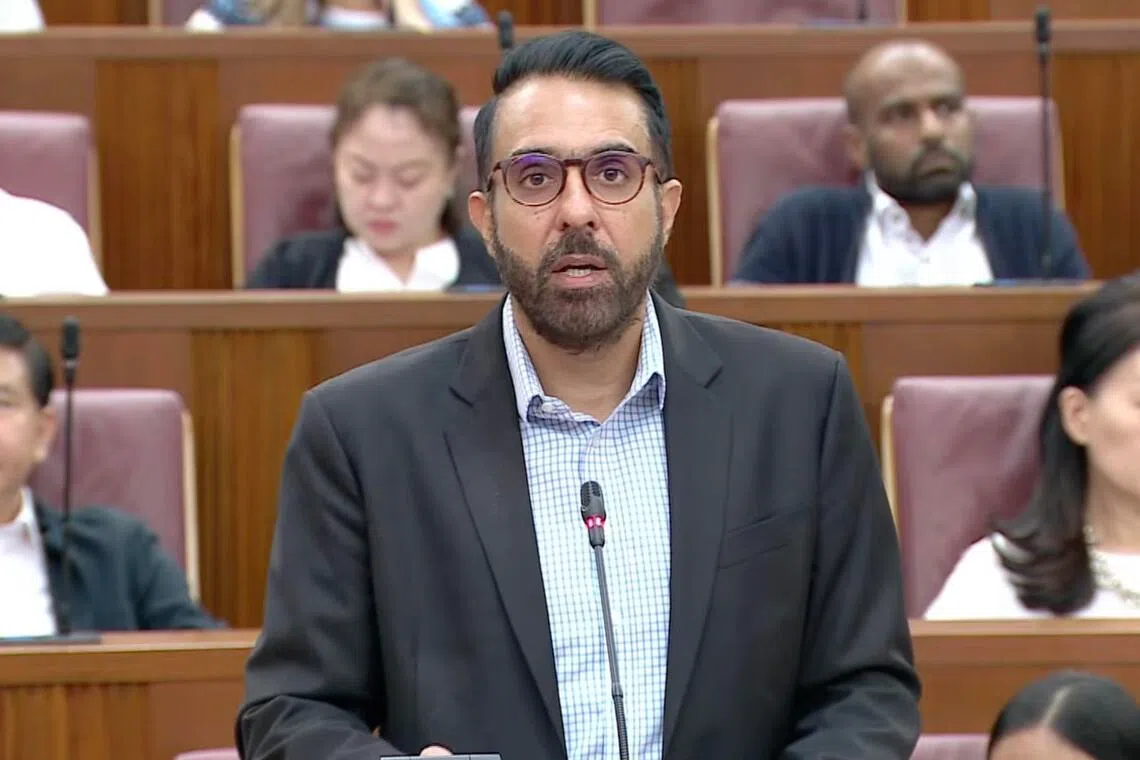
Workers’ Party chief Pritam Singh speaking in Parliament on Sept 10.
Published Sep 10, 2026, 05:38 PM
Updated Sep 10, 2026, 05:38 PM
The Workers' Party supports MP salary increases due to inflation but calls for more transparency on ministers' actual remuneration and prefers a ministerial salary formula linked to public sector pay.
Pritam Singh highlighted challenges in attracting private sector leaders to politics, emphasising political service is a calling beyond salary and that opposition candidates face significant personal and professional hurdles.
Singh urged clarity on mayors' roles, recommended reviewing MPs' assistants' allowances, and stressed the need for adequate resources to help MPs serve effectively.
Follow our live coverage here.
SINGAPORE - The Workers’ Party agrees with the broad principles underpinning the political salary framework, but continues to diverge with the Government on the formula by which these salaries should be calculated, party chief Pritam Singh said on Sept 10.
He also called for more transparency over the total remuneration of ministers at the entry-level MR4 grade, saying this would provide a more accurate picture of what they earn, compared with the annual salary benchmark.
Speaking during the parliamentary debate on changes to political salaries, Singh said his party supports increasing MPs’ salaries in view of inflation. He was the only WP MP to speak out of the 12 MPs who weighed in on the debate.
It also agrees with Prime Minister Lawrence Wong’s decision that the one-off increase to ministers’ salaries should not exceed 9 per cent, and that the benchmark salary of $1.8 million for MR4 ministers is not a target that every minister must reach.
This is a more “sober” approach to ministerial salaries, compared to the recommendations of the independent committee that conducted the recent salary review , Singh said.
PM Wong and Coordinating Minister for Public Services Chan Chun Sing had announced the changes to political salaries on Sept 8.
Under the proposals in the committee’s report, the annual MP allowance package will increase from $192,500 to $259,000 to account for inflation.
It also said that ministerial salaries should continue to be benchmarked to the median income of the top 1,000 earners who are Singapore citizens, with a 40 per cent discount to reflect the ethos of public service.
Singh agreed that political salaries should be competitive enough to attract people of the necessary calibre; that political service is a calling with its own ethos; and that political remuneration should be transparent.
But he said the WP continues to take the view from its 2012 proposal that pegging ministerial salaries to a multiple of an MP’s salary, which is in turn derived from a public sector appointee salary, is preferable.
Under its proposal, the increases to a minister’s total salary with the passage of time would be more modest, he added.
Singh also noted that Non-Constituency MP Eileen Chong of WP had in February asked for the ranges of performance bonus, national bonus and annual variable component (AVC) received by ministers from 2018 to 2024. She was told that the AVC ranged from zero to 1.5 months.
For transparency, the Government should disclose the actual total remuneration received by MR4 ministers, he said. He added that this would provide a more accurate picture of what ministers have actually received in practice, as distinct from the annual total salary norm.
He also said that wider salary ranges, which are intended to give the Government more flexibility in recruiting candidates from the private sector, will contribute to an increase in public scrutiny about the total annual salaries of individual ministers.
“It would follow that this information should be published accordingly in a practical format that promotes public understanding of the total salaries,” he said.
Attracting strong candidates
Singh also spoke on how appropriate remuneration is often framed as a factor that influences the decision of high-quality private sector individuals to join politics.
“From the evidence so far however, only a small handful have taken the plunge, and the majority of ministers continue to be sourced from the public sector or civil service,” he said.
He also said that for some civil servants, joining politics “potentially opens the door to a wage increase from the salary they previously earned”, if they are appointed as ministers.
“(This) reality that is often overlooked when the focus is on ensuring that individuals drawn from the private sector can receive a competitive salary as ministers,” he added.
Singh then asked whether it is the salary or the reality of political service today that dissuades many high-earning private sector individuals from joining politics.
“For some, it would not be out of order to suggest that no amount of money will persuade them to trade their suits and ties for grassroots activities and to immerse themselves in municipal concerns and in the rough and tumble of politics, since all ministers must first be elected as Members of Parliament,” Singh said.
By the same token, he said Singaporeans “would not be well served by any individual who winces at undertaking political groundwork, even if he or she is a corporate titan or private-sector high-flyer”.
Turning to his own party, Singh also said that a sufficient MP allowance is not a reason Singaporeans choose to stand on the WP ticket.
He was responding to PM Wong, who had said on Sept 8 that a proper allowance has enabled both the PAP and the WP to field strong candidates and bring about high-quality debate in the House.
“The point I wish to make is not that the MP remuneration is unimportant,” said Singh. “It is that remuneration is not what drives an individual Singaporean to become a WP candidate.”
Singh said that for the opposition, winning an election “in a one-party dominant state, where PAP remains electorally dominant, represents a gargantuan challenge both personally and professionally”.
A WP candidate cannot reasonably take for granted that he or she will win and become an MP, let alone approach the decision to stand for elections on the basis of achieving some degree of parity in terms of remuneration, he added.
“The WP fields candidates who not only believe in a more balanced political system but are prepared to stand behind their convictions against significant odds, while working for Singaporeans on the ground,” Singh said.
The salary review committee had also recommended that the Government study how remuneration for “community-related roles” - such as mayors and MPs - can be delinked from the MR4 benchmark.
Singh asked when this study will be completed, and for the Government to include in its study if it intends to keep the office of the mayor and to explain its scope, role and function.
“It remains unclear to many Singaporeans what the job scope of mayors is,” Singh said.
He also noted that his party had previously raised questions on the scope of a mayor’s responsibilities, given that many functions previously performed by Community Development Councils have gradually been devolved to other organisations, including social service offices and other government agencies.
Singh noted that political office-holders receive one wage, in addition to their MPs allowances. It would follow that two out of five mayors today receive a full mayor salary, since the other three are office-holders, Singh noted.
“Paradoxically, this treatment in the case of mayors who are also political office-holders only amplifies the public interest on the real job scope of mayors,” he said.
Singh also called for a review of remuneration for MPs’ legislative assistants and secretarial assistants, saying that this should go up to account for inflation.
These allowances were last updated in 2007. Singh noted that the Government had said in March that the committee did not do so as it fell outside their terms of reference.
But legislative assistants and secretarial assistants help MPs discharge their responsibilities to their constituents or to the House regardless of party affiliation, he said.
“It would be a travesty to overlook these individuals when considering the resources necessary for MPs to discharge their responsibilities effectively,” he added.
Chin Soo Fang is senior correspondent at The Straits Times, covering a wide range of topics including community, politics, social issues, consumer, culture and heritage.
Singapore Parliament
Members of Parliament
工人党主席普里坦·辛格于9月10日在国会发表讲话。
发布于 2026 年 9 月 10 日下午 5:38
更新于2026年9月10日下午5:38
工人党支持议员因通货膨胀而加薪,但呼吁提高部长实际薪酬的透明度,并倾向于采用与公共部门薪酬挂钩的部长薪酬计算方法。
普里坦·辛格强调了吸引私营部门领导人从政的挑战,强调政治服务是一种超越薪水的使命,反对派候选人面临着重大的个人和职业障碍。
辛格敦促明确市长的职责,建议审查议员助理的津贴,并强调需要充足的资源来帮助议员有效地履行职责。
请点击此处关注我们的实时报道。
新加坡——工人党主席毕丹星9月10日表示,工人党同意政治薪酬框架的基本原则,但在计算这些薪酬的具体公式上,仍与政府存在分歧。
他还呼吁提高MR4级部长总薪酬的透明度,称这将比年度薪资基准更准确地反映他们的收入。
在议会就政治人物薪酬调整进行辩论时,辛格表示,鉴于通货膨胀,他的政党支持提高议员薪酬。在参与辩论的12名议员中,他是唯一一位发言的工人党议员。
它也同意总理黄循财的决定,即部长一次性加薪幅度不应超过 9%,并且 MR4 部长 180 万美元的基准薪资并不是每位部长都必须达到的目标。
辛格表示,与最近进行薪酬审查的独立委员会的建议相比,这是一种更为“冷静”的部长薪酬处理方式。
黄之锋总理和公共服务统筹部长陈振声于9月8日宣布了政治薪酬调整方案。
根据委员会报告中的提议,议员年度津贴将从 192,500 美元增加到 259,000 美元,以应对通货膨胀。
报告还指出,部长级官员的薪酬应继续以新加坡公民收入最高的 1000 人的收入中位数为基准,并打 40% 的折扣,以体现公共服务的精神。
辛格同意,政治薪酬应该具有足够的竞争力,以吸引具备必要素质的人才;政治服务是一种使命,有其自身的精神;政治报酬应该透明。
但他表示,工人党仍然坚持其 2012 年的提议,即部长级薪酬与国会议员薪酬的倍数挂钩,而国会议员的薪酬又来源于公共部门任命人员的薪酬,这种做法更为可取。
他补充说,根据该提案,随着时间的推移,部长总薪酬的增长幅度将更为温和。
辛格还指出,工人党非选区议员张爱玲在2月份曾要求提供2018年至2024年部长们获得的绩效奖金、国家奖金和年度浮动奖金(AVC)的范围。她被告知,AVC的范围从零到1.5个月不等。
他表示,为了提高透明度,政府应该公布第四轮改革部长们实际收到的总薪酬。他还补充说,这将更准确地反映部长们实际获得的收入,而不是仅仅公布年度总薪酬标准。
他还表示,扩大薪资范围旨在让政府在从私营部门招聘候选人方面拥有更大的灵活性,这将有助于提高公众对各部长年度总薪资的审查力度。
“因此,应该以便于公众了解总薪资情况的实用形式公布这些信息,”他说。
吸引优秀候选人
辛格还谈到,适当的报酬通常被视为影响优秀私营部门人士投身政界的一个因素。
“然而,从目前的证据来看,只有极少数人冒险尝试,大多数部长仍然来自公共部门或公务员队伍,”他说。
他还表示,对于一些公务员来说,如果被任命为部长,投身政界“可能会让他们获得比以前更高的薪水”。
他补充说:“(这一)现实往往被忽视,人们的关注点在于确保来自私营部门的人员能够获得具有竞争力的部长薪酬。”
辛格接着问道,究竟是薪水还是当今政治服务的现实,让许多高收入的私营部门人士不愿投身政界。
辛格说:“对某些人来说,无论多少钱都无法说服他们放弃西装革履,投身基层活动,投身市政事务和政治斗争,因为所有部长都必须先当选为国会议员。”
他同样表示,任何不愿从事政治基础工作的人,即使是一位企业巨头或私营部门的佼佼者,对新加坡人来说“都不是好选择”。
谈到自己的政党时,辛格还表示,充足的议员津贴并不是新加坡人选择代表工人党参选的原因。
他是在回应黄循财总理的讲话。黄循财总理在9月8日表示,适当的津贴使人民行动党和工人党都能推出优秀的候选人,并在国会进行高质量的辩论。
辛格说:“我想表达的观点并非议员薪酬不重要,而是薪酬并非促使新加坡人成为工人党候选人的根本原因。”
辛格表示,对于反对派而言,在“人民行动党仍然占据选举主导地位的一党制邦”赢得选举,无论对个人还是职业而言,都是一个巨大的挑战。
他补充说,工人党候选人不能理所当然地认为自己会赢得选举并成为国会议员,更不用说在决定参选时考虑在薪酬方面取得某种程度的平等了。
辛格表示:“工人党推出的候选人不仅相信一个更加平衡的政治体系,而且准备在面对巨大困难时坚持自己的信念,同时为新加坡人民的福祉而努力。”
薪酬审查委员会还建议政府研究如何使“社区相关职位”(如市长和议员)的薪酬与 MR4 基准脱钩。
辛格询问这项研究何时完成,并要求政府在研究中说明是否打算保留市长职位,并解释其范围、作用和职能。
辛格表示:“许多新加坡人仍然不清楚市长的职责范围是什么。”
他还指出,鉴于许多以前由社区发展委员会履行的职能已逐渐下放给其他组织,包括社会服务机构和其他政府机构,他的政党此前曾对市长的职责范围提出质疑。
辛格指出,政治官员除了议员津贴外,还会领取一份工资。因此,如今五位市长中,有两位领取的是全额市长薪水,因为另外三位是公职人员。
“矛盾的是,对于同时也是政治官员的市长来说,这种待遇只会加剧公众对市长实际工作范围的关注,”他说。
辛格还呼吁审查议员立法助理和秘书助理的薪酬,称薪酬应该上涨以应对通货膨胀。
这些津贴上次更新是在 2007 年。辛格指出,政府在 3 月份曾表示,委员会没有这样做,因为这超出了他们的职权范围。
他说,立法助理和秘书助理可以帮助议员履行他们对选民或议会的职责,而与党派无关。
他补充说:“在考虑议员有效履行职责所需的资源时,忽视这些人将是荒谬的。”
Chin Soo Fang 是《海峡时报》的资深记者,报道范围广泛,包括社区、政治、社会问题、消费者、文化和遗产等话题。
新加坡国会
国会议员