NATO allies foil Russian subsea cable sabotage plot北约盟国挫败俄罗斯海底电缆破坏阴谋
The clandestine Russian operation was carried out by Moscow’s GUGI undersea warfare directorate to test a destructive sabotage capability, sources said.
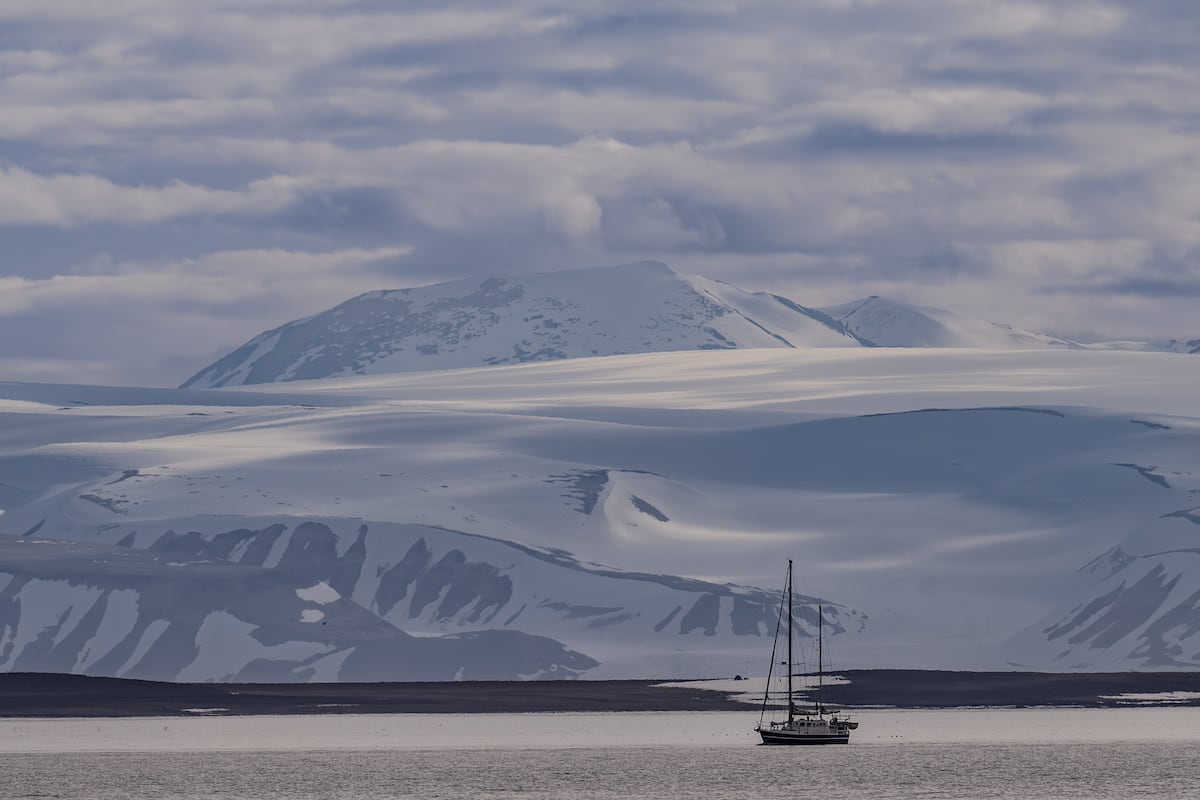
LONDON/WASHINGTON — Deep in Arctic waters near the remote Svalbard archipelago this spring, NATO allies caught Russian subs training to unleash a secret weapon designed to disable critical undersea cables without leaving any fingerprints.
The clandestine Russian operation, described to Reuters by two Western officials, was carried out by Moscow’s GUGI undersea warfare directorate, which used deep-sea submersibles to simulate the deployment of the sophisticated and destructive technology.
A joint operation involving Britain, Norway and the United States tracked and confronted the Russian vessels at sea, said the two officials, speaking on condition of anonymity. The vessels were prevented from completing their exercise and eventually left the area.
Britain and Norway disclosed in April that they had uncovered a covert Russian operation in Arctic waters. But the discovery of the new weapon, the location of the operation and the U.S. involvement have not been reported.
The deep-sea face-off comes at a time when some Western intelligence officials fear the Kremlin is ramping up sabotage operations in Europe and preparing for a conflict with NATO.
Some U.S. intelligence analysts are increasingly concerned Russia may test NATO’s mutual defense pact, known as Article 5, three U.S. officials said. If it does, destroying subsea cables could be a critical part of that effort, the Western officials said.
Cables no thicker than a garden hose, lying on the seabed or buried just below, are critical to global internet connectivity and financial transactions. Their economic and strategic importance has made them targets in past conflicts, including in the First and Second World Wars, when they were critical to delivering orders by telegraph or telephone.
An undated British Ministry of Defence handout shows surface and sub-surface satellite imagery of Russia's Main Directorate for Deep Sea Research (GUGI) associated vessels based at Olenya Guba in Russia. (UK MOD Crown copyright/Handout via REUTERS)
Two 1,400 km subsea fiber-optic cables linking Svalbard to mainland Norway lie as deep as 2,700 meters below the sea’s surface. They carry vast amounts of satellite data downloaded at the SvalSat satellite ground station, the world’s largest and part of NASA’s Near Space Network.
Russia’s Defense Ministry didn’t respond to a request for comment on the incident. The Kremlin consistently denies conducting sabotage operations in NATO countries or plotting any confrontation.
Some Western officials argue that Moscow’s targeting of European states has increased in recent months as the front line in Ukraine has become largely static.
Countries including Poland, Lithuania, and Romania have confirmed various violations. Most recently, an attempted drone attack on the Leipzig/Halle Airport in August triggered a series of responses from Germany, including the closure of a Russian consulate in Bonn and a cultural centre in Berlin.
In August, Central Intelligence Agency Director John Ratcliffe visited intelligence counterparts in Moscow, in part to warn Russia against escalating sabotage operations in Europe, said two people familiar with the matter.
Reuters couldn’t determine if Ratcliffe raised Russia’s covert subsea operations. The Kremlin declined to say what had been discussed or to provide any further details.
At the same time as the confrontations at sea, British and Norwegian officials took their findings to Moscow to show they were aware of the new technology – hoping it might make Russia hesitate to use it, the two Western officials said.
Russia didn’t damage any cables. The exercise focused on simulating the deployment of the technology in the event of a conflict with NATO, the officials said. They declined to detail how the technology works.
Asked for comment, NATO referred Reuters to Norwegian and U.K. authorities.
“Through our joint operation, we sent a clear message to Russia that they cannot operate covertly,” Norway’s Defence Minister Tore Sandvik said in a statement.
“We have made it unequivocally clear to Russian authorities that any attempt to target our critical infrastructure will be detected and met with consequences,” he said. “It is in no one’s interest to escalate tensions in the High North.”
Britain’s Defence Ministry pointed to April 9 statements acknowledging attempted covert activities in and near Norwegian and British waters by Russia’s Main Directorate of Deep-Sea Research, known by its Russian acronym GUGI. Washington and London have both imposed sanctions on the secretive directorate.
The White House didn’t respond to a comment request. The CIA declined to comment.
Any escalation between Russia and NATO could quickly underscore the strategic importance of an icy expanse of water between the southern tip of the Svalbard archipelago and mainland Norway known as the Bear Gap, one of the Western officials said.
To reach the Atlantic, Russian nuclear submarines based in the Kola Peninsula would cross the 400-mile-wide stretch of water before passing Norway’s remote volcanic island Jan Mayen.
Britain said this week it deployed forces to Jan Mayen in August alongside Norwegian and U.S. allies for an exercise to demonstrate NATO’s ability to operate jointly in the High North.
Norway plans to have new fiber-optic cable linking Svalbard and Jan Mayen to the mainland by 2028.
‘Burgeoning Russian threat’
NATO allies have focused on subsea infrastructure security since the 2022 destruction of three of the four Nord Stream subsea pipelines supplying Germany with Russian gas. German prosecutors have indicted a Ukrainian man who was a special forces officer at the time of the attack. Ukraine denies any role in the sabotage.
And since 2023, more ships have sailed slowly over or near sensitive subsea infrastructure including pipelines, power cables and telecoms cables to map their location, an activity known as drifting.
Last year, drifting in the North Sea rose 52% to 13,079 vessels from the previous year, data from maritime risk analytics firm Windward showed, while activity in the South China Sea region jumped 88% to 18,401 vessels.
It’s not illegal to survey infrastructure in international waters but security experts see such extensive mapping as preparation for sabotage.
The activity and suspected interference with some cables prompted new initiatives launched in January last year, including NATO’s Baltic Sentry monitoring system and the U.K.-led Nordic Warden, bringing navies together for increased patrols of critical infrastructure.
In the Baltic Sea – one focus area for monitoring – 2025 drifting activity was down 5% to 526 vessels from a year earlier, Windward data showed. It said at least 11 subsea cables had been damaged or cut in the Baltic from October 2023 through the end of last year.
“The current thinking is that Russia and China are probably the most active and critical underwater threats,” said Windward Chief Executive Ami Daniel.
The global network of power and telecoms cables running across seabeds is expanding each year, supported by increases in demand for data and electricity, partly driven by artificial intelligence, and some analysts say Europe remains vulnerable.
“In the last 25 years, Europe did two things simultaneously. It dramatically expanded the extent to which it relies on seabed infrastructure, and it dramatically shrunk its capacity to protect that infrastructure,” said Bruce Jones, a senior fellow with the Brookings Institution. “It’s belatedly rebuilding now, in the face of a burgeoning Russian threat.”
伦敦/华盛顿——今年春天,在偏远的斯瓦尔巴群岛附近的北极深海中,北约盟军发现俄罗斯潜艇正在训练释放一种秘密武器,该武器旨在破坏关键的海底电缆,且不留下任何痕迹。
据两名西方官员向路透社透露,俄罗斯秘密开展的这项行动由莫斯科的GUGI水下作战局执行,该局使用深海潜水器模拟部署这种复杂且具有破坏性的技术。
两名不愿透露姓名的官员表示,英国、挪威和美国联合开展行动,在海上追踪并拦截了俄罗斯船只。这些船只的演习被阻止,最终离开了该区域。
英国和挪威在四月份披露,他们发现俄罗斯在北极水域进行秘密行动。但关于新型武器的发现、行动地点以及美国是否参与其中,目前尚未公开报道。
此次深海对峙正值一些西方情报官员担心克里姆林宫正在加大在欧洲的破坏行动力度,并准备与北约发生冲突之际。
三位美国官员表示,一些美国情报分析人士越来越担心俄罗斯可能会试探北约的共同防御条约,即第五条。这些西方官员称,如果俄罗斯真的这么做,破坏海底电缆可能是其行动的关键环节。
海底电缆细如花园水管,或铺设于海底,或埋于海底之下,对全球互联网连接和金融交易至关重要。其经济和战略重要性使其在以往的冲突中成为攻击目标,包括第一次和第二次世界大战期间,这些电缆对于通过电报或电话传递命令至关重要。
一份日期不详的英国国防部新闻稿显示了俄罗斯深海研究总局(GUGI)相关船只在俄罗斯奥列尼亚古巴基地的水面和水下卫星图像。(英国国防部版权所有/路透社供图)
连接斯瓦尔巴群岛和挪威大陆的两条1400公里长的海底光缆埋设在海面以下2700米深处。它们传输着从斯瓦尔萨特卫星地面站下载的大量卫星数据,该地面站是世界上最大的地面站,也是美国宇航局近地空间网络的一部分。
俄罗斯国防部未回应就此事置评的请求。克里姆林宫一贯否认在北约国家进行破坏活动或策划任何对抗。
一些西方官员认为,随着乌克兰前线局势基本稳定,近几个月来莫斯科对欧洲国家的袭击有所增加。
包括波兰、立陶宛和罗马尼亚在内的多个国家已证实发生多起侵犯人权事件。最近,8月份莱比锡/哈勒机场遭遇无人机袭击未遂,引发德国一系列回应,包括关闭俄罗斯驻波恩领事馆和柏林一家文化中心。
据两位知情人士透露,今年8月,中央情报局局长约翰·拉特克利夫访问了莫斯科的情报同行,部分原因是警告俄罗斯不要在欧洲升级破坏行动。
路透社无法确定拉特克利夫是否提及了俄罗斯的秘密水下行动。克里姆林宫拒绝透露会谈内容或提供任何进一步细节。
据两位西方官员称,在海上发生冲突的同时,英国和挪威官员将他们的调查结果带到了莫斯科,以表明他们了解这项新技术——希望这能让俄罗斯在使用它时有所顾虑。
俄罗斯方面并未破坏任何电缆。官员们表示,此次演习的重点是模拟在与北约发生冲突时如何部署这项技术。他们拒绝透露该技术的具体工作原理。
北约方面就此事向路透社求证,称其应向挪威和英国当局询问。
挪威国防部长托雷·桑德维克在一份声明中表示:“通过我们的联合行动,我们向俄罗斯发出了一个明确的信息,那就是他们不能秘密行动。”
他说:“我们已明确告知俄罗斯当局,任何企图攻击我们关键基础设施的行为都将被发现,并将受到相应的惩罚。加剧北境紧张局势对任何人都没有好处。”
英国国防部指出,4月9日的声明承认,俄罗斯深海研究总局(简称GUGI)曾在挪威和英国水域及其附近海域进行秘密活动。华盛顿和伦敦均已对该秘密机构实施制裁。
白宫未回应置评请求。中央情报局拒绝置评。
一位西方官员表示,俄罗斯与北约之间的任何冲突升级都可能迅速凸显斯瓦尔巴群岛南端与挪威大陆之间被称为“熊峡”的冰冷水域的战略重要性。
俄罗斯核潜艇驻扎在科拉半岛,要抵达大西洋,就必须先穿越 400 英里宽的水域,然后再经过挪威偏远的火山岛扬马延岛。
英国本周表示,8 月份曾与挪威和美国盟友一起向扬马延岛部署部队,进行演习,以展示北约在高北地区联合行动的能力。
挪威计划在 2028 年前铺设新的光纤电缆,将斯瓦尔巴群岛和扬马延岛与挪威大陆连接起来。
“日益增长的俄罗斯威胁”
自2022年向德国输送俄罗斯天然气的“北溪”海底管道四条管道中的三条被破坏以来,北约盟国一直将海底基础设施安全视为重点。德国检察官已对一名乌克兰男子提起诉讼,该男子在袭击发生时是一名特种部队军官。乌克兰否认参与此次破坏活动。
自 2023 年以来,越来越多的船只缓慢地驶过或靠近敏感的海底基础设施,包括管道、电力电缆和电信电缆,以绘制其位置图,这种活动被称为漂移。
海事风险分析公司 Windward 的数据显示,去年北海的漂流船只数量比上一年增加了 52%,达到 13,079 艘;而南海地区的漂流船只数量则猛增了 88%,达到 18,401 艘。
在国际水域勘测基础设施并不违法,但安全专家认为这种广泛的测绘是为破坏活动做准备。
去年 1 月,一些海底电缆遭到破坏和干扰,促使各国启动了新的举措,包括北约的波罗的海哨兵监控系统和英国领导的北欧守卫者计划,将各国海军联合起来,加强对关键基础设施的巡逻。
据Windward公司的数据显示,在波罗的海(监测重点区域之一),2025年的漂流活动比上年下降了5%,至526艘。该公司还表示,从2023年10月到去年年底,波罗的海至少有11条海底电缆遭到损坏或切断。
“目前普遍认为,俄罗斯和中国可能是水下威胁最大、最活跃的威胁,”温德沃德首席执行官阿米·丹尼尔表示。
铺设在海底的全球电力和通信电缆网络每年都在扩张,这得益于数据和电力需求的增长,而人工智能在一定程度上推动了这种增长。一些分析人士表示,欧洲仍然很脆弱。
“过去25年里,欧洲同时做了两件事。一方面,它大幅增加了对海底基础设施的依赖程度;另一方面,它大幅削弱了保护这些基础设施的能力,”布鲁金斯学会高级研究员布鲁斯·琼斯说。“如今,面对日益增长的俄罗斯威胁,欧洲才姗姗来迟地开始重建。”