With reconciliation uncertain, Pentagon eyeing plan to retool FY27 priorities with Congress由于和解前景不明朗,五角大楼正考虑与国会协商调整2027财年的工作重点。
In exclusive comments to Breaking Defense, the Pentagon's comptroller acknowledged that some efforts may need to be pushed from FY27 into FY28 with help from lawmakers.
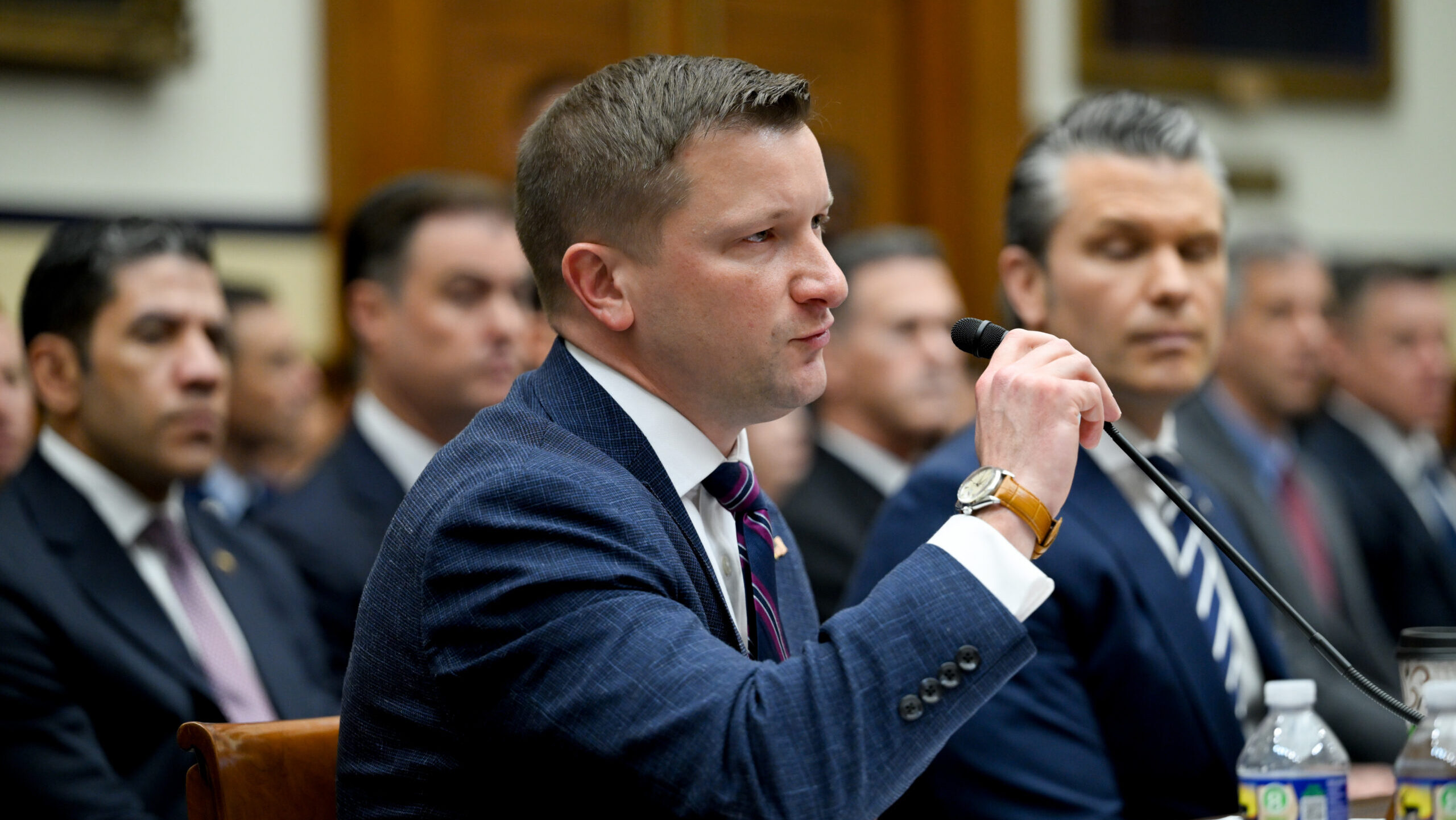
Jules Hurst, acting comptroller of the Pentagon, left, and Pete Hegseth, US secretary of defense, during a House Armed Services Committee hearing in Washington, DC, US, on Wednesday, April 29, 2026. The hearing is set to examine the Department of Defense 2027 budget request. Photographer: Daniel Heuer/Bloomberg via Getty Images
WASHINGTON — If Congress does not pass the full $350 billion reconciliation funding requested by the Pentagon, the department is prepared to work with lawmakers to figure out how to shuffle key priorities into the base budget, the department’s comptroller Jules Hurst told Breaking Defense today.
That plan, though, means the department would need to work with appropriators to cut investment in other places or defer them until 2028.
“If we really want to fund those things, then we have an opportunity to go back to the appropriators before they finalize the bill, at least I think we will…. it’s a conversation, obviously,” Hurst said on the sidelines of the NDIA Emerging Technologies Conference .
But at this point, Hurst said it is “too premature” to know exactly what those decisions will be and what the trade-offs will require. “The question would be, what’s more important to have money for in FY27 [or] can it wait for FY28,” he added. “And, a lot of these technological areas [are] evolving so fast. Some things we need the money right now to invest in change. … Other things we need to do a little more research and development.”
Hurst’s comments come as the Department of Defense weighs its options over a possible failed attempt to secure $1.5 trillion next year through two separate bills — $1.15 trillion in the base budget and $350 billion in a reconciliation bill. That strategic bet placed big-ticket priorities like Golden Dome , munitions and the Defense Autonomous Warfare Group (DAWG) inside that reconciliation pot. But with three weeks left until FY27 kicks off, Congress has only made incremental headway on the base request, while not moving forward with the reconciliation request. And with midterm elections looming in November, members opted to pass a continuing resolution (CR) until Dec. 11 to keep the department funded. However, past years have shown that the first CR may lead to a second CR, pushing final budget decisions into the next year. Hurst indicated the Pentagon is bracing for that, saying of the final budget decisions, “I think it’ll probably happen in the new calendar” year.
“The department’s going to make its priorities known because we think all these investments are important,” he said. Those conversations are already ongoing, he added, noting that they include things like autonomous warfare and space.
They also include securing dollars to ink the multi-year munition deals the department has been eyeing, both to refill US stockpiles, and provide allies and partners with the weapons they have ordered.
Island surge: the Army’s Next Generation Command and Control in action
Lightning Surge exercises are turning soldier feedback on NGC2 into operational software changes in days, not years.
“Those [munition deals] really fundamentally change when we buy things from contractors, because for the first time we’re making them put in CapEx …. If they don’t meet these targets, these production targets, it’s going to hurt their profitability, and they have a real incentive to meet them,” he said.
“A lot of these munitions that we want to buy, we’re not the only ones,” Hurst added. “There’s countries across the globe who are US allies and partners who are also involved. So we have a fundamental responsibility as America to make sure we can produce enough arms and armors for all of our partners and ourselves.” Any decisions on what to potentially cut or delay would require service leaders to weigh in, and officials have begun sounding the alarm in recent weeks.
Space Force Gen. Michael Guetlein, who is charged with making Golden Dome a reality, has warned that work on the national air defense shield could come to a grinding halt in October if lawmakers do not figure out a way to continue funding for the presidential initiative.
Lt. Gen. Steven Marks , who is working on the Pentagon’s ambitious drone development task force, warned Wednesday that the DAWG could stumble if it didn’t get “something.”
“We’re at a point where there is a potential for us to get, uh, some money out of the FY27 budget, the president’s budget, that will go directly to DAWG,” he said. “[I] don’t know if we’re going to get the full ask of $53.6 billion, but my greatest concern is, if we don’t get something, then the momentum that we have created since DAWG has been stood up, over a year ago , will be waning.
2026年4月29日星期三,五角大楼代理审计长朱尔斯·赫斯特(左)和美国国防部长皮特·赫格塞斯在美国华盛顿特区出席众议院军事委员会听证会。此次听证会旨在审查国防部2027财年预算申请。摄影:Daniel Heuer/Bloomberg via Getty Images
华盛顿——国防部主计长朱尔斯·赫斯特今天告诉《防务新闻》,如果国会不通过五角大楼要求的全部 3500 亿美元协调拨款,国防部准备与立法者合作,找出如何将关键优先事项纳入基本预算。
不过,该计划意味着该部门需要与拨款机构合作,削减其他领域的投资或将投资推迟到 2028 年。
“如果我们真的想为这些事情提供资金,那么我们就有机会在拨款委员会最终确定法案之前与他们重新沟通,至少我认为我们会这样做……这显然是一个讨论的话题,”赫斯特在 NDIA 新兴技术会议的间隙说道。
但赫斯特表示,目前要确切知道这些决定是什么以及需要权衡哪些因素还“为时尚早”。他补充道:“问题在于,2027财年哪些项目更需要资金,还是可以等到2028财年。而且,很多技术领域发展日新月异。有些项目我们需要立即投入资金进行变革……而另一些项目则需要投入更多研发精力。”
赫斯特发表上述评论之际,国防部正在权衡各种方案,以应对明年通过两项法案(1.15万亿美元的基本预算和3500亿美元的协调法案)争取1.5万亿美元预算可能失败的尝试。这项战略性举措将“金穹顶”、弹药和国防自主作战小组(DAWG)等高额优先事项纳入了协调法案的预算。但距离2027财年开始还有三周,国会仅在基本预算申请方面取得一些进展,而协调法案的申请则毫无进展。由于11月即将举行中期选举,议员们选择通过一项持续拨款决议(CR)将拨款期限延长至12月11日,以维持国防部的资金。然而,过去几年的经验表明,第一项持续拨款决议可能会导致第二项持续拨款决议的出台,从而将最终预算决定推迟到下一年。赫斯特表示,五角大楼正在为此做好准备,并表示最终预算决定“很可能会在新的一年里做出”。
“国防部将会公布其优先事项,因为我们认为所有这些投资都很重要,”他说道。他还补充说,相关讨论已经在进行中,并指出这些讨论涵盖了自主作战和太空等领域。
其中包括确保获得资金以签署该部门一直关注的多年期军火交易,既可以补充美国库存,也可以向盟友和伙伴提供他们订购的武器。
岛屿突击:陆军下一代指挥控制系统的实战演练
“闪电突击”演习将士兵对 NGC2 的反馈转化为几天内(而不是几年内)的操作软件变更。
他说:“当我们从承包商那里购买军火时,这些(军火交易)就发生了根本性的变化,因为我们第一次要求他们投入资本支出……如果他们达不到这些目标,这些生产目标,就会损害他们的盈利能力,他们就有真正的动力去实现这些目标。”
赫斯特补充道:“我们想采购的很多军火,并非只有我们一家。全球许多美国的盟友和伙伴国也参与其中。因此,作为美国,我们有根本的责任确保能够为所有伙伴国以及我们自身生产足够的武器装备。”任何关于削减或推迟采购哪些军火的决定都需要军方领导人权衡,而官员们最近几周已经开始发出警告。
负责将“金顶”计划变为现实的太空军将军迈克尔·盖特莱因警告说,如果立法者找不到继续为这项总统倡议提供资金的方法,国家防空盾牌的建设工作可能会在 10 月份陷入停滞。
参与五角大楼雄心勃勃的无人机开发工作组的史蒂文·马克斯中将周三警告说,如果无人机开发工作组得不到“一些东西”,它可能会遇到困难。
他说:“我们现在有机会从2027财年预算,也就是总统预算中,争取到一些直接拨给DAWG的资金。” “我不知道我们能否获得全部536亿美元的拨款,但我最担心的是,如果我们得不到任何资金,那么自DAWG成立一年多以来我们所取得的进展将会逐渐减弱。”